Published: 26 February 2026. The English Chronicle Desk. The English Chronicle Online.
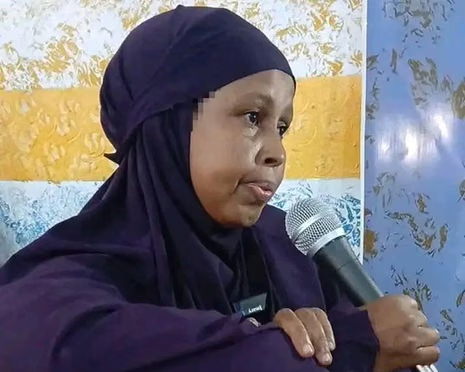
The execution of a woman convicted of child murder has sparked widespread debate across Somalia. Hodan Mohamud Diiriye, 34, was sentenced to death for the killing of her 14-year-old great niece, Saabirin Saylaan, in the central city of Galkayo. This case has drawn international attention because of its rarity and the allegations of procedural failings in a country struggling with a fragmented legal system. Experts and activists have questioned whether Diiriye received a fair trial, highlighting deep concerns about justice, gender bias, and the treatment of children in Somali society.
On 12 November 2025, Diiriye contacted her husband, Abdiaziz Nur Hashi, after finding Saabirin unconscious in their home. They rushed the girl to a hospital, where she was pronounced dead shortly afterward. Police were notified, and Diiriye was arrested on suspicion of murder. The death of Saabirin, who had been living with the couple after being orphaned, immediately prompted public outrage. Less than three months later, on 3 February 2026, Diiriye was executed by firing squad, sparking heated debate over the speed and fairness of her trial.
The Somali justice system is highly decentralised, and legal experts describe it as lacking proper oversight. Guleid Ahmed Jama, founder of the Human Rights Centre in Somaliland, explains that courts operate in fragmented ways, often influenced by clan systems and local power structures. Women are particularly disadvantaged because they are not regarded as equal members of their communities, which can limit their access to protections and legal recourse. Homicides are frequent, and the state’s limited capacity often means that traditional settlements, rather than formal justice, resolve disputes involving men. Diiriye’s case, therefore, attracted unusual attention precisely because the accused was female.
Saabirin had been under the care of Diiriye and Hashi after her previous guardian could no longer care for her. Authorities allege that police discovered numerous videos on Diiriye’s phone showing the girl being abused. These videos circulated online, intensifying public anger and prompting demands for swift justice. A postmortem report confirmed that Saabirin died from strangulation, with multiple marks and bruises found on her body. The severity of the abuse, combined with the victim’s young age, contributed to the case’s exceptional attention in the media.
The family’s response reflected the gravity of the situation, with relatives staging protests outside the hospital mortuary to prevent Saabirin’s burial. They feared that customary dispute-resolution mechanisms would result in inadequate punishment for the alleged perpetrator. Shukri Abdi Ali, head of the Women’s Peace Network in Galkayo, described the emotional impact on the community. She said that seeing a young girl suffer extreme violence at the hands of another woman shocked many, challenging societal assumptions that women are primarily protectors and nurturers.

The couple first appeared in court on 20 November 2025, and due to widespread public interest, proceedings were broadcast live. Hashi maintained that he had been largely unaware of any abuse, as he spent limited time at home. The couple had divorced shortly before Saabirin’s death, with Hashi moving out and staying at a hotel. Diiriye, in contrast, pleaded not guilty and reportedly stated she was mentally unstable and could not recall her actions. Her lawyer, Abdiaziz Mohamed Farah, emphasised that the defendant’s mental state was a critical factor that was not adequately considered during the proceedings.
On 15 December 2025, the court convicted Diiriye of murder and sentenced her to death. Hashi received a one-year prison term and a monetary fine for negligence, and he has since returned to live with his children. Farah criticised the trial, arguing that Diiriye was not afforded a lawyer at the time of arrest or during initial police questioning. He also highlighted the lack of time to prepare a proper defence, the absence of a medical assessment for mental health concerns, and the disappearance of a potential witness. Farah contends that Diiriye repeatedly claimed the videos presented in court did not feature Saabirin.
The speed and handling of the trial have raised questions about adherence to international legal standards. Farah insisted that murder cases require thorough investigation, proper evaluation of evidence, and careful consideration of mental health. He argued that Diiriye’s execution, carried out without sufficient scrutiny of these factors, was both rushed and unlawful. He attempted to appeal the verdict, but said his request was denied after Diiriye allegedly refused to challenge the sentence. Farah believes that her status as a woman contributed to her treatment, suggesting that Somali authorities viewed her as a lesser citizen.
The contrast between Diiriye’s execution and the delayed punishment of other convicted murderers has further fueled public debate. Sayid Ali Moalim Daud, sentenced to death for killing his pregnant wife in January 2024, has yet to be executed, despite exhausting all legal appeals. Advocates argue that Daud’s influence within his clan may explain the difference in treatment, raising concerns about inequality and potential bias within the justice system. Zakarie Abdirahman, of the Coalition of Somali Human Rights Defenders, emphasised that even if Diiriye committed the alleged crime, she should have received a meticulous legal process that included thorough examination of evidence and mental health evaluation.
The case illustrates broader issues in Somalia’s legal framework, where decentralisation, clan influence, and gender inequality intersect. Women are often disadvantaged in legal disputes, while public opinion and social norms can heavily influence judicial outcomes. Experts warn that this combination can result in miscarriages of justice, particularly in high-profile cases where media coverage intensifies public pressure. In Diiriye’s situation, the sensational nature of the case may have amplified the perception that swift execution was necessary, despite procedural shortcomings.
International observers have called for scrutiny of Somalia’s treatment of defendants, especially women and children. The execution of Diiriye, a rare instance of a woman receiving the death penalty for child abuse, highlights potential systemic flaws in legal processes. Advocates argue for reforms to ensure that trials comply with both local law and international standards, with attention to fairness, mental health assessments, and the right to adequate legal representation. Without such measures, cases like this could undermine public confidence in the justice system and perpetuate gender-based inequities.
The societal impact of the case is also significant. Families, activists, and broader communities in Somalia have been forced to confront difficult questions about child protection, accountability, and gender roles. Many women in Galkayo and elsewhere have expressed concerns that legal outcomes may not be equitable or predictable, particularly when cultural expectations intersect with formal law. The case has prompted discussion on the need for transparent judicial processes and the importance of ensuring that all defendants receive a fair and impartial trial, regardless of their gender or social standing.

While the immediate public outrage has subsided, the debate over Diiriye’s execution continues, reflecting wider concerns about justice in Somalia. The case has demonstrated how media coverage, public opinion, and systemic deficiencies can converge to shape judicial outcomes, often at the expense of thorough legal examination. Legal experts argue that for Somalia to develop a more reliable and equitable justice system, structural reforms are essential. These include strengthening central oversight, guaranteeing the rights of defendants, and protecting vulnerable populations from abuse and discrimination.
Diiriye’s case remains a stark reminder of the challenges facing Somalia’s courts, where gender, social hierarchy, and public perception intersect with legal decision-making. Her execution has ignited national and international conversations about fairness, the role of women in society, and the proper handling of cases involving vulnerable children. Advocates hope that this tragic incident will lead to meaningful reforms that prioritise justice, transparency, and human rights for all citizens, regardless of gender or clan affiliation.
The implications for Somali law and society are profound, highlighting the urgent need for an independent judiciary capable of resisting social pressure and ensuring procedural fairness. Legal observers continue to monitor how similar cases will be handled in the future and whether lessons from Diiriye’s trial will inform broader legal reforms. Her case stands as a critical example of the intersection between gender, justice, and human rights in Somalia, with implications for communities and policymakers alike.
Related News:
 Gambia Supreme Court Hears Case to Overturn FGM Ban
 Iran Death Toll Crisis Exposed: Bodies, Mass Graves, and Concealment
 Files Link Andrew to Epstein Dinner After Prison Release
 Thousands Protest ICE in New York Against Trump Deportation Campaign
 Concerns rise for Canberra boy amid Iran detention fears
 Brazilian Politician Brothers Sentenced for Marielle Murder
 Anthony Albanese Must Uphold Rights for All Australians
 Uganda Crackdown: Two Women Arrested for Public Kissing
 Slovenia Election: A Nation at a Crossroads
 Police Seek Immunity in Indigenous Custody Death Case
 Manila Transport Crisis: Fuel Costs Hit Breaking Point
 UN Warns Israeli Death Penalty Bill Could Be a War Crime
 Spain Faces Backlash Over Xenophobic Chants in Egypt Draw
 A Global Voice For Justice: Stephen Lewis Dies At Age 88
 Artist Sues in Paris Over Israeli Strike Killing Parents
 Canadian Mother and Daughter Released From ICE Detention
 Bondi Nanny Adriana Rivas to Face Extradition to Chile
 Queensland Youth Justice Debate: The Data Behind the Law
 Gaza Child Arrives in UK for Life-Changing Care
 Brisbane Rideshare Driver Faces Serious Assault Charges
 Tragedy in the Channel as Four Lives Lost in Boat Sinking
 Kyiv and Odesa Mourn After Deadly Wave of Russian Strikes
 France Urges Release of Elderly Widow Held by ICE
 Trump Weighs Sending Afghan Allies to the Congo
 Prominent Voices Challenge Palestine Action Ban
 Standoff Over Syria: Australia Defies Trump Repatriation Plea
 Desperation in Odisha: A Brother’s Grim Bank Protest
 Activists allege abuse after Gaza flotilla seizure
 Australia Faces Rising Tide of Modern Antisemitism
 Security Failures and the Road to the Bondi Inquiry
 Mexico’s Missing: State Complicity in a Growing Crisis
 Nobel Laureates Demand Release of Activist Narges Mohammadi
 Plea for Mercy: The Battle to Bring Ahmed al-Doush Home
 Court Upholds Landmark Win for Transgender Rights
 Taliban Codifies Strict New Marriage and Divorce Legislation
 Israeli Strikes in Lebanon Kill 10 Amid Ceasefire Strain
 US judge dismisses Kilmar Abrego Garcia indictment
 Former ICC prosecutor condemns US sanctions
 Trump Faces Legal Blow Over Global Tariffs
 Silenced Stitches: The Cost of Memory in Hong Kong
 Vision Lost Amid the Rubble of Modern Conflict
 Controversial London Property Show Sparks Legal Fury
 US Supreme Court Rejects Trump Attack on Birthright Law
 Gaza Doctor Unrecognisable After Brutal Israeli Detention
 UK Charity Funds Illegal Hebron Settlement Expansion
 Taliban global ties grow as rights fears mount
 Friedman Uninvited From 2024 Adelaide Writers’ Week
 African World Cup Fans Face $15,000 Entry Bond Fee
 Farage Shuns Truss as US Right-Wing Roadshow Hits London
 The Price of Hubris: Trump, Netanyahu, and the ‘Easy’ War
 Trump and Tehran Find Common Ground in Landmark Ceasefire
 Own an Entire Australian Town for the Price of a UK Flat
 Melania Trump Denies Ties to Epstein and Ghislaine Maxwell
 Reeves Slams Trump Over Iran War Lack Of Exit Plan
 Trump’s Presidency: A House of Cards Collapsing?
 US Forces Seize Iranian Ship Near Hormuz Blockade
 Trump Starts $166bn Tariff Refund Process
 Investigation: Offshore Loans and Sanctions
 Cross-Border Crisis Shatters Fragile Afghan Peace
 The Burning Lens: An Iranian Artist’s Visual Resistance
 FIFA Confirms Global Ban for Benfica Star Prestianni
 One Nation Candidate’s Surprising Ties to Independents
 Putin Signals War End as Russian Momentum Stalls
 Romania’s Judicial Crisis: A System Under Siege
 Scepticism and tight security as Beijing braces for Trump
 Philippine Senator Flees After Days Under Senate Siege
 Secrecy Down Under: Albanese Faces FoI Scandal
 Tony Abbott Returns as New Liberal Party President
 Discontent grows around Putin amid war strain
 Teaching Machines Right From Wrong in the Digital Age
 Oman Defies US Pressure Over Strategic Strait of Hormuz
 Ex-CIA Agent Accused of $40m Gold Theft and Fake Spy Unit
 Aukus Deal Facing Fierce Backing and Historic Criticism
 Tragic Loss of Australian Sprinter Jemma Stapleton
 Trump Urged to Condemn UFC Fighter Over Obama Slurs
 US Military Pacific Boat Strike Kills Three People
 Trump’s Mount Rushmore Speech: A Divisive Anniversary
 Trump Swaps Planes Amid Iran Tensions
 Yemen Accuses Iran of Violating National Sovereignty
 Houthis Strike Saudi Arabia as Middle East Tensions Rise