Published: 27 February 2026. The English Chronicle Desk. The English Chronicle Online.
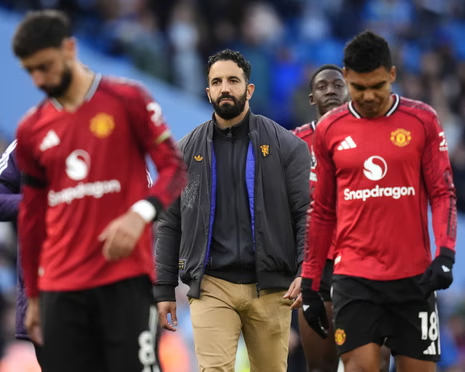
The financial landscape at Old Trafford has shifted dramatically following recent coaching changes within the club. Manchester United recently confirmed that the departure of their former manager might involve a significant financial settlement. This news follows a period of intense scrutiny regarding the leadership and direction of the first team squad. Financial experts believe the total cost for the Ruben Amorim sacking could eventually reach nearly sixteen million pounds. This figure represents a substantial commitment for a club attempting to balance its books this year. The decision to part ways came after a challenging tenure that lasted only fourteen months. Fans have expressed mixed emotions about the high price of this managerial transition period. The club remains focused on stabilizing its performance during this difficult financial reporting window.
Recent filings with the New York Stock Exchange have provided a transparent look at these costs. These documents suggest that the Ruben Amorim sacking involves payments to both him and his staff members. The timing of this disclosure is notable as it follows a positive quarterly profit report. United reported a profit of over thirty-two million pounds for the end of last year. However, the subsequent coaching changes will likely impact the net results for the next period. The legal language in the filing describes these costs as potential future settlement payments. Investors are closely monitoring how these expenses will affect the overall valuation of the club. The hierarchy at Old Trafford is working to manage these liabilities as efficiently as possible.

The total amount mentioned in the official records includes several different financial components and charges. A specific provision of nearly sixteen million pounds has been set aside for these settlements. This amount covers the maximum potential payout depending on various contractual clauses and legal agreements. Another charge involves writing off intangible assets related to the former coaching staff and manager. These accounting adjustments reflect the high stakes involved in elite modern football management today. The Ruben Amorim sacking represents one of the more expensive managerial departures in recent history. It highlights the financial risks associated with long-term contracts in the Premier League. The club must now navigate these waters while maintaining its competitive edge on the pitch.
There are certain conditions that could reduce the final amount the club actually pays out. For instance, the total cost might drop if the former manager finds new employment quickly. Many contracts include offset clauses that protect the club from paying the full remaining salary. This means the final bill for the Ruben Amorim sacking depends on his future career. If he secures a high-profile job elsewhere, United would benefit from a lower settlement. Such clauses are common in the industry to mitigate the impact of early terminations. Nevertheless, the club has prepared for the worst-case financial scenario in its latest accounts. This prudent approach ensures that the board can handle the maximum possible financial hit.
The history of this appointment suggests a very expensive cycle for the Manchester United board. They originally paid a significant compensation fee to Sporting CP to secure his managerial services. That initial investment of ten million pounds has now been coupled with exit costs. When added to the cost of removing the previous manager, the numbers are staggering. The entire process surrounding the Ruben Amorim sacking has led to a total cycle cost. Experts estimate the combined changes could cost the club over thirty-six million pounds recently. This figure includes hiring fees, payouts, and compensation for numerous departing coaching assistants. Such massive spending on leadership changes puts immense pressure on the current footballing department.
The performance on the pitch during this era did not justify the investment. United recorded their worst league finish in several decades during the previous full season. Winning only twenty-five games out of sixty-three led to a drop in the table. Fans were left frustrated by the lack of tactical consistency and poor results. The Ruben Amorim sacking became inevitable as the club slipped toward the bottom half. Internal conflicts also played a major role in the decision to change direction. A public disagreement with the director of football made the manager’s position entirely untenable. These cultural issues often lead to expensive legal separations in professional sports organizations.
Despite the heavy financial burden, there is a renewed sense of hope at Old Trafford. Michael Carrick has taken charge of the first team with great initial success lately. The team has climbed back into the top four of the league standings. This resurgence suggests that the Ruben Amorim sacking was a necessary step for progress. Qualifying for the Champions League would provide a massive boost to the club’s revenue. That extra income could help offset the costs of the recent coaching changes. Players seem more confident and the tactical approach appears much more suited to them. The atmosphere around the training ground has reportedly improved significantly over the last month.
Supporters are now looking forward to a period of much-needed stability and growth. The focus has shifted from boardroom drama to the quality of the football. While the Ruben Amorim sacking remains a talking point, the results are doing the talking. Winning five of the last six games has silenced many of the critics. The board is hopeful that the current upward trajectory will continue through the spring. Stability in the dugout is essential for building a long-term winning culture again. Every point earned brings the club closer to its goal of European football. Financial recovery will follow if the team can maintain this high level of play.

The lessons learned from this period will likely influence future hiring decisions at United. Paying massive compensation for managers who do not fit the culture is risky. The Ruben Amorim sacking serves as a stark reminder of the cost of failure. Modern football clubs must balance ambition with careful financial planning and due diligence. United remains one of the wealthiest clubs in the world despite these setbacks. Their ability to generate profit allows them to absorb such significant one-off exit costs. However, the goal will always be to spend money on players rather than settlements. The fans deserve a team that matches the massive financial scale of the club.
Looking ahead, the second half of the fiscal year will be very telling. The club will officially recognize the settlement charges in their next statement of loss. This transparency is required for a company listed on the New York Stock Exchange. The Ruben Amorim sacking will be a permanent part of the 2026 financial record. Analysts will compare these costs against the potential revenue from a successful league finish. If the club secures fourth place, the settlement will seem like a small price. If they fail to qualify for Europe, the financial pressure will intensify. The stakes have never been higher for the players and the interim staff.
In conclusion, the situation at Manchester United remains a complex mix of sport and finance. The high cost of changing managers is a burden the club chose to bear. While the Ruben Amorim sacking was expensive, the immediate improvement in results is clear. The club is now in a strong position to finish the season successfully. Maintaining this momentum is the only way to justify the massive exit payments. Football is a results business where the cost of standing still is often higher. United has chosen to move forward regardless of the immediate financial impact on them. The journey back to the top of English football continues with fresh energy.
Related News:
 Granit Xhaka Rescue Earns Everton Draw at Sunderland
 Bellingham has ‘the edge’ among England No 10s
 Man City Masterclass on Guardiola’s Milestone Day Exposes Liverpool Woes
 VAR Must Rein Its Neck In to Save Football’s Spirit
 Mary Earps’s Manchester United Return Faces Mixed Reception
 UK and Ireland Announce Venues for Euro 2028 Tournament
 Saka Solidifies Role as Tuchel’s Key England Lieutenant
 Former Lion Heskey Warns of Shortage of England Strikers
 Tiny Curacao Makes History as Smallest Nation to Reach World Cup
 Haiti Qualifies for World Cup Despite Coach Never Visiting Country
 Australia Face Big Changes as Cummins and Lyon Ruled Out of Ashes
 Van de Ven Tackle Leaves Isak with Fractured Leg
 ECB powerless to halt England’s recurring Ashes failures
 Stokes urges empathy for England players amid Ashes struggles
 Aston Villa Remain Arsenal’s Key Obstacle in Title Pursuit
 Salah Shines as Egypt Knock Out Ivory Coast at Afcon
 Raphinha doubles up as Barcelona beat Real Madrid in Super Cup
 Xabi Alonso leaves Real Madrid, Arbeloa Takes Over
 Maya Joint stunned by Valentová in Australian Open upset
 Chelsea warn fans of danger in Naples after hospital incidents
 Liverpool Chase Champions Glory With Stunning Qarabag Victory
 Carlos Alcaraz Triumphs Over Zverev in Five-Set Australian Open Epic
 Ben Stokes injury joke after brutal ball strike
 Wrestler at 60: A Powerful New Start in the Ring
 Infantino Faces Russia Threat and Trump Concerns at Uefa Congress
 Arsenal blow lead as Arteta rues Wolves draw
 England v Ireland: Scrum Battle Takes Centre Stage
 BBC World Cup Presenting Duties Shared Among Trio
 Craig Tiley Leaves Australian Open Legacy
 English Cricket Faces Moral Crisis Over Indian Investment
 Hudson-Odoi Sends Nottingham Forest Into Europa Last 16
 Buttler Eyes Vital Run Surge as England Face New Zealand
 Saka criticism response: Arsenal star dismisses outside noise
 Abramovich Chelsea Sale Cash Faces Jersey Probe
 Champions League Failure Sparking Premier League Crisis
 African World Cup Fans Face $15,000 Entry Bond Fee
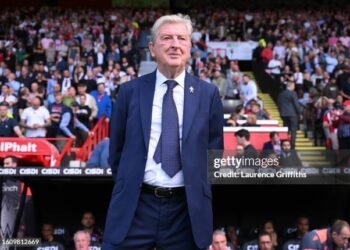 Roy Hodgson Returns to Bristol City in Sensational Move
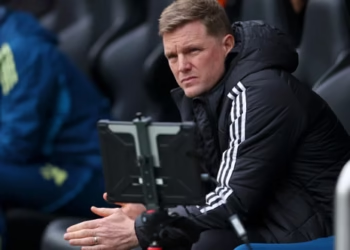 Eddie Howe Faces Seven Game Test to Secure Newcastle Future
 ECB Faces Backlash Over Disability Premier League Inclusion
 Brighton Stun Arsenal as Liverpool Edge Past Charlton
 Maguire Commits Future to Manchester United with New Deal
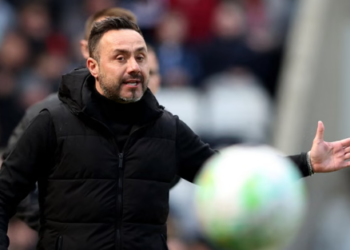 Can De Zerbi Restore Belief to Save Spurs From the Drop?
 Robots Outpace Humans in Beijing Half-Marathon
 Gianluigi Buffon: Reflections on a Legendary Career
 Ashley Cole: Finding His Voice and Vision in Italy
 A Nine-Goal Thriller Redefines European Football Brilliance
 George North Announces Retirement From Rugby
 $13bn World Cup Set to Break All Revenue Records
 Disney+ Wins Champions League Rights in Key Markets
 FIFA Confirms Global Ban for Benfica Star Prestianni
 The Global Battle for Control Over the Women’s Game
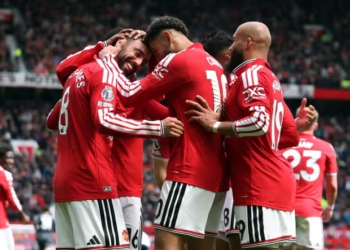 Fernandes Equals Assist Record as United Secure Third
 Bracing for the Cherries: Guardiola Likens Vital Bournemouth Trip to the Dentist
 De Zerbi Rallies Spurs To Fight Relegation Threat
 The Battle for Wembley Sparking Unprecedented Legal Warfare
 Chasing Glory: The Quest for a New World Cup Champion
 Tuchel Defends Tough England Squad Decisions
 Farewell to an Icon: Pep Guardiola to Exit Manchester City
 Chasing Paris Glory Amid Familiar Echoes
 Tom Pidcock On Chasing Tadej Pogacar And His Future Ambitions
 Is Ollie Robinson the Chaos English Cricket Needs Today?
 Saka Playing Through Pain As England World Cup Campaign Looms
 Iran Files Official Fifa Complaint Over World Cup Travel
 Women’s T20 World Cup Breaks Records But Gaps Remain
 Serena Williams Returns to Wimbledon Centre Court
 Martinelli Strikes Late as Brazil Edge Past Brave Japan
 Paraguay Shock Germany in Historic Penalty Shootout
 France Dominate Sweden as Deschamps’ New Era Takes Shape
 Mexico World Cup Joy Turns to Tragedy as Two Die in Crowds
 US Advance Past Bosnia in World Cup Thriller
 Kane Saves Tuchel as England Survive Dramatic Exit
 The Stokes Departure: A New Era or a Tactical Mistake?
 Taylor Swift and Travis Kelce Marry at Madison Square Garden
 Trump’s Red-Card Intervention Hurts the US World Cup
 Trump Intervenes in Fifa World Cup Balogun Ban
 NCAA Rules Unchanged After Supreme Court Transgender Ruling
 USA World Cup Heartbreak: Belgium Ends Their Dream
 Mbappé Brilliance Leads France Into Semi-Finals
 Spain’s Superstar Fan: Keyne Yamal Steals the Spotlight
 Lamine Yamal’s Birthday: Football, Fame, and France