Published: 13 March 2026. The English Chronicle Desk. The English Chronicle Online.
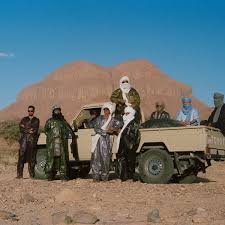
The vast and shimmering Saharan desert has long echoed with the soulful sounds of Tuareg music, a genre that blends ancient nomadic traditions with the raw power of the electric guitar. Since their formation in 1979, the legendary band Tinariwen has served as the global face of this movement, using their melodies to document the struggles of their people. Today, however, the music carries a heavier burden than ever before. Based variously in Mali, Libya, and Algeria over the decades, the Grammy-winning group has transformed their signature “desert blues” into a poignant lament for a refugee status that remains a painful reality for thousands.
Co-founder Abdallah Ag Alhousseyni recently shared the harrowing circumstances that forced the band to flee their ancestral lands. Currently seeking safety in Algeria, the members were displaced from their homes in Mali in late 2024. The situation on the ground is described as nothing short of catastrophic. Alhousseyni reports that the Malian military, supported by the Russian mercenary group Wagner, has been engaged in a campaign of terror. According to his testimony, villages are being burned to the ground, livestock are being systematically slaughtered, and civilians are facing unspeakable violence. He believes that because international politicians and journalists have largely remained silent, the responsibility to inform the world falls squarely on the shoulders of those who create Tuareg music.
The Tuareg people are traditionally nomadic, moving across borders that often feel arbitrary to their way of life. However, the increasingly volatile politics of the Sahel region have trapped them in a cycle of extreme violence. The northern Mali border has become a flashpoint for clashes involving Islamist militant groups, state military forces, and foreign mercenaries. These conflicts have resulted in mass displacements and documented human rights abuses. This dark chapter of history provides the emotional core of Tinariwen’s tenth studio album, Hoggar. The record serves as both a musical masterpiece and a desperate plea for intervention and recognition.

Across the eleven tracks of the new album, the group maintains their classic rhythmic style. This sound is often compared to the steady, swaying gait of a camel traveling across dunes. They pair this traditional foundation with intricate finger-picked guitar lines and the haunting power of collective vocal harmonies. On the track Aba Malik, a sparse and swelling melody provides the backdrop for a clattering drum rhythm. The time-worn baritone of co-founder Ibrahim Ag Alhabib rises above the instruments to directly condemn the actions of mercenary groups. It is a rare moment of explicit anger in a genre often defined by its meditative and hypnotic qualities.
The album does not shy away from internal complexities either. On the bluesy track Erghad Afewo, the group addresses the tragic reality of tribal in-fighting among the Tuareg people themselves. Yet, the record also offers glimpses of profound hope. The opening song, Amidinim Ehaf Solan, features soaring guitar tones that accompany lyrics dreaming of a “green and pleasant homeland.” This longing for a safe space is a central theme in modern Tuareg music. Alhousseyni clarifies that their goal is not necessarily total independence, but rather autonomy within the region known as Azawad, where their culture and people can finally exist without fear of persecution.
Despite the heavy political themes, the influence of this sound has reached far beyond the desert. Over the past forty-eight years, Tinariwen has attracted high-profile fans from the Western rock world. Robert Plant once famously remarked that this was the music he had been searching for his entire life. Jack White even invited the group to record at his Nashville studio in 2023. On the new album Hoggar, Swedish-Argentine singer-songwriter José González joins the ensemble. González has long been a devotee of their meditative songs and collective singing, having spent years trying to replicate their unique guitar rhythms in his own practice.
The history of the band is as dramatic as their lyrics. The founding members first met as teenagers in an Algerian refugee camp before being lured to Libya with promises of citizenship. Instead, they were briefly enlisted into paramilitary service. In 1989, upon relocating to Mali, they made the historic decision to trade their weapons for guitars. They began performing as a wedding band, and their bootleg cassettes quickly became a source of identity and pride for the displaced Tuareg community. Without the internet, they had no idea that their local protest songs would eventually lead them to the world’s biggest stages.
International recognition finally arrived in 1998 following a chance meeting with a French folk ensemble in Bamako. This led to European tours and the release of The Radio Tisdas Sessions in 2001. Since then, the band has performed in their signature flowing tunics and turbans across the globe. They secured a Grammy in 2011 for their record Tassili, proving that Tuareg music possesses a universal emotional language. Hoggar continues this legacy, but it also represents an intergenerational bridge. The album was recorded in a studio in Tamanrasset, Algeria, founded by the younger Tuareg group Imarhan.
Imarhan represents the next evolution of this cultural movement. Their frontman, Iyad “Sadam” Moussa Ben Abderahmane, grew up inspired by Tinariwen’s early recordings. He realized that for the music to survive, the community needed its own infrastructure. By building a studio named Aboogi, they provided a space where young artists could record without having to travel abroad. This local hub allowed for a unique collaboration during the Hoggar sessions. It brought together original elders and new innovators, creating an emotional environment where ideas were exchanged freely across different generations of desert musicians.

One of the most significant developments at the new studio is the re-emergence of female voices. Historically, women played a vital role in Tuareg musical traditions, but their participation had dwindled over the last decade due to social pressures and a lack of resources. The Aboogi studio has encouraged a new generation of women to explore their creativity. This revival is evident in the backing vocals on the new records. These voices add a necessary layer of depth and authenticity to the modern sound of Tuareg music, ensuring that the female perspective is not lost to history.
Imarhan is also pushing the boundaries of the genre by incorporating electronic elements. Their latest album, Essam, features synths and electronic textures alongside traditional hand percussion and electric guitars. This experimentation suggests a vibrant future for the culture. Sadam, who is currently touring as the youngest member of Tinariwen’s live band, is dedicated to archiving all aspects of their heritage. He hopes to preserve not just the songs, but also the poetry and the unique single-string fiddle music known as Imzad, which is traditionally played by women.
As the members of Tinariwen approach their seventies, the rigors of international touring become more difficult to manage. However, their resolve remains unshaken. They view their continued presence on the road as a vital mission to raise awareness for the Tuareg plight. For them, every performance is an opportunity to remind the world of the violence and displacement occurring in their homeland. Until peace is achieved and their people can return to a safe territory, they believe they have no choice but to keep singing. Their songs remain a powerful testament to the resilience of the human spirit.
Related News:
 UK Banks Granted Reprieve as BoE Delays Basel III Capital Rules Until 2028
 Singapore Corruption Scandal: Details Emerge on Iswaran’s Luxury Flight and Ties to Tycoon Ong Beng Seng
 Corfu Beyond the Crowds: Discovering Serenity in Southern Villages and Hidden Taverns
 Peter Andre Praises Son Junior’s ‘Quiet Season’ Amid Ongoing Family Dispute
 Massive 641-Mile Storm Set to Batter UK with 15 Hours of Rain and Strong Winds
 Jeremy Clarkson’s Pub: A Sunday Lunch Like No Other
 Scottish Government Mandates Single-Sex Toilets and Changing Facilities in Schools
 Reeves Faces Setback as Labour May Miss Homes Target
 Kate Winslet to Narrate Film Highlighting King’s Environmental Mission
 Trump’s UK Ambassador Urges North Sea Drilling to Strengthen US Ties
 UK Bans Fake Numbers: Scammers Lose Their Trick
 Federal Immigration Shift: Officers Leave Louisiana for Minneapolis
 Fatal Bolton Taxi Crash Claims Three Teens and Driver
 Australia grants Asio powers to designate hate groups under new laws
 Friedman Uninvited From 2024 Adelaide Writers’ Week
 ScottishPower Tops List of Worst UK Energy Suppliers
 Judi Dench Champions Fight to Save London’s Green Spaces
 Crowborough Camp Welcomes First Asylum Seekers
 BBC Funding Crisis: Tim Davie Warns of Jeopardy Ahead
 ABC Facebook Page Briefly Hacked, Adult Photos Posted
 Artificial intelligence will cost jobs, admits Liz Kendall
 Older Women Vanish from BBC Screens, Review Confirms Bias
 Meta trial over child exploitation claims begins
 Streeting moves on doctor pay to end strike dispute
 Ben Stokes injury joke after brutal ball strike
 UK and US Drop in Global Corruption Index Rankings
 Send spending gap leaves deprived areas behind
 Hidden Crisis: Domestic Abuse Suicide Toll in UK
 UK Unemployment Rate Climbs to 5.2% Peak
 Canberra Poster Seizure Sparks Free Speech Row
 BBC World Cup Presenting Duties Shared Among Trio
 Wales Approves Assisted Dying Bill Consent
 CPS Updates Guidance on Honour-Based and Dowry Abuse
 Stewart Brand on Musk, Bezos and a Life of Long Thinking
 English Cricket Faces Moral Crisis Over Indian Investment
 Jacinda Ardern Move Sparks Kiwi Reflection
 Middle East Airspace Crisis Strands Thousands
 Kelly Wilkinson Inquest Reveals Bail Failure
 Asylum Seekers to Work After Year-Long Wait
 Princess Eugenie steps down as patron of anti-slavery charity
 New Zealand Covid Response Praised Despite Lingering Scars
 Injured Mojtaba Khamenei Elevated as Iran Leader
 The Kill Line: A Shifting Vision of the American Dream
 NHS Plans to Cut Overseas Workers Labeled Overambitious
 Utah Woman Found Guilty of Poisoning Husband for Inheritance
 Oil Slides, Stocks Jump on Trump Peace Signals
 African World Cup Fans Face $15,000 Entry Bond Fee
 Middle East Deluge: Freak Storms Bangle Desert Nations
 Farage Shuns Truss as US Right-Wing Roadshow Hits London
 Artemis II: Humanity Returns to the Moon After Decades
 Italian Town Buys Mussolini Villa to Keep Away Fascist Fans
 The Price of Hubris: Trump, Netanyahu, and the ‘Easy’ War
 Trump and Tehran Find Common Ground in Landmark Ceasefire
 National Energy Grant Proposed to Slash UK Household Bills
 Stefano Gabbana Resigns as Chair of Italian Luxury Giant
 Rolls-Royce SMR Secures £600m Boost for Nuclear Future
 Kyiv and Odesa Mourn After Deadly Wave of Russian Strikes
 Medellín’s Green Revolution: A Global Climate Blueprint
 Robots Outpace Humans in Beijing Half-Marathon
 US Forces Seize Iranian Ship Near Hormuz Blockade
 Japan’s Youth Defend Pacifist Constitution
 Investigation: Offshore Loans and Sanctions
 Trump Defiant After Washington Hotel Shooting
 Cross-Border Crisis Shatters Fragile Afghan Peace
 Urban Flood Crisis: A Growing Threat to English Homes
 The Fear Gap: Why Europe Feels Less Safe Than It Is
 US Military Pacific Boat Strike Kills Three People
 Dettol Apologises for ‘Toxic Men’ Advert Backlash in China
 UK Care Crisis: Row Explodes Over New Visa Settlement Rules
 Sainsbury’s Boss Optimistic As Grocery Inflation Eases
 US Advance Past Bosnia in World Cup Thriller
 Trump’s Mount Rushmore Speech: A Divisive Anniversary
 Trump’s Red-Card Intervention Hurts the US World Cup
 US Airman Avoids British Court in Indecent Exposure Case
 Britain’s Mini Fan Craze Sparks Major Waste Crisis
 Trump Swaps Planes Amid Iran Tensions
 Ann Widdecombe, Formidable Political Figure, Dies at 78
 UK Schools Struggle as Classrooms Top 40C
 Yemen Accuses Iran of Violating National Sovereignty
 Houthis Strike Saudi Arabia as Middle East Tensions Rise