Published: 25 March 2026. The English Chronicle Desk. The English Chronicle Online.
The British landscape currently faces a massive challenge as an out-of-control plague of illegal dumping threatens our natural beauty. A powerful group of Members of Parliament has recently issued a stinging critique regarding the Environment Agency. These lawmakers argue that the current regulatory body is far too weak to tackle the growing crisis. The Public Accounts Committee published a report this Wednesday highlighting significant gaps in power and intelligence. These deficiencies mean the agency cannot effectively manage the rise in large-scale criminal waste operations. Our environment is suffering while the systems meant to protect it seem to be failing.
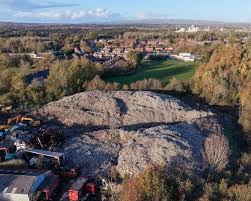
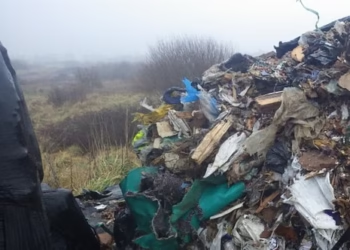
The committee wrote that the widespread issue of illegal sites far surpasses the agency’s current powers. The United Kingdom is currently battling a growing epidemic of trash that makes criminals millions. Recent research suggests there are now at least eight thousand illegal dumps across the entire country. Some of these sites are massive and contain up to thirty thousand tonnes of household rubbish. These tips represent a serious hazard to local communities and the surrounding natural habitats. Residents often find themselves living near mountains of waste that simply should not be there.
One high-profile example includes a massive dump located at Kidlington in the county of Oxfordshire. Another dangerous tip sits near a primary school just outside the busy town of Wigan. A third huge dump site has also been identified at Hoad’s Wood in Kent. Despite the scale of these problems, the agency is currently only clearing two of them. This lack of action has left many local residents feeling abandoned and very frustrated. Organised criminals are heavily involved in these activities because the profits are incredibly high. These illegal activities cost the British taxpayers approximately one billion pounds every single year.

The House of Lords has previously received evidence regarding the deep involvement of organised crime. The committee stated the agency was not acting on intelligence about waste dumping quickly enough. In the Kidlington case, the agency only acted after it received confirmed internal intelligence reports. This action came weeks after local bodies had already become fully aware of the problem. Such delays illustrate a significant lack of coordination between the different environmental and local authorities. The report suggests that the agency lacks the ability to collaborate effectively with others.
There is a clear need for better communication between the police and the environment regulators. The committee has recommended that the Department for the Environment should establish much closer cooperation. This would involve sharing vital intelligence between the agency and various local government authorities. Improving these relationships is essential to identifying illegal waste dumping risks before they escalate. Technology could also play a vital role in improving response times for environmental crimes. Using modern digital tools might help the authorities catch criminals in the act more often.
MPs on the committee believe regulators are simply not up to this massive task. The inquiry suggested that current officials are too stretched to protect our precious nature properly. This problem is just one example of a wider failure in environmental regulation systems. The inquiry began just before expected changes to the regulation system were due to start. These changes involve the Department for the Environment, the agency, and Natural England as well. However, the committee noted that these reforms are not being well coordinated at all.
There is deep scepticism regarding whether regulators have the necessary resources or professional skills. The committee chair, Geoffrey Clifton-Brown, spoke candidly about the findings within the detailed report. He noted that regulators are not sufficiently resourced to follow many different recommendations. They must still carry out their primary responsibilities toward the environment while managing these changes. There are obvious and glaring problems with how environmental regulation is currently being delivered. The public is already very aware of ongoing issues with sewage pollution in rivers.
Farmers also do not need reminding of the complex systems they must navigate daily. The current regulatory regime is undergoing a period of significant and somewhat confusing transformation. Changes include the creation of a new water regulator to oversee the utility companies. A national nature recovery fund is also being established to help manage protected sites. This fund allows developers to pay fees to sidestep certain environmental obligations for speed. The goal is to build new homes and infrastructure more quickly across the country.
Mr Clifton-Brown welcomed the news that the government wants to provide greater enforcement powers. However, he warned that without deeper cooperation, illegal waste will remain a major plague. Local councils and the police must work in unison to deter these professional criminals. Without a united front, the groups behind these dumps will continue to exploit the system. The financial burden on the public will only continue to grow if action stalls. Our communities deserve a landscape that is clean and safe for everyone to enjoy.
A spokesperson from the Department for the Environment has hit back at these specific claims. They argued that the committee’s report was actually out of date before it was published. The government claims the report does not reflect significant reforms that are already under way. New actions are being taken to give regulators the tools and investment they need. These tools are designed to protect nature while also driving economic growth for Britain. A new action plan has been published to crack down on the criminals.

The government is also investing in the agency to boost monitoring of water quality levels. Support for British farmers is also at a record high with a large budget. Earlier this March, a clear new direction was set for the primary environmental agencies. The focus is now on achieving real outcomes rather than just following slow processes. Over one hundred million pounds has been invested in specialist staff and digital systems. This investment aims to make decisions faster and smarter while cutting out costly delays.
Despite these assurances, many people remain concerned about the state of the British countryside. The presence of thousands of illegal sites suggests that the current strategy is not working. Criminals are often several steps ahead of the authorities who are trying to catch them. The impact on local wildlife and water sources can be devastating and very long-lasting. Cleanup operations for these massive sites are incredibly expensive and technically very difficult. The battle against waste dumping is far from over for the people of Britain.
Only time will tell if the new government investments will actually make a difference. For now, the report from the MPs serves as a very serious wake-up call. We must ensure that our environmental regulators have the teeth to bite back against crime. Protecting the environment is not just about rules but about taking swift physical action. If the agency remains weak, the plague of illegal rubbish will only continue to spread. We must protect our green spaces for the generations that will follow us.
Related News:
 Norfolk Coastal Graves at Risk as Erosion Deepens Family Anguish
 Winter plant bloom signals climate breakdown in UK
 Dog Food Emissions: 1% of UK Greenhouse Gas Revealed
 Storm Goretti leaves Cornwall homes without power
 Kent Residents Continue Facing Water Supply Disruptions
 Water firms may avoid fines under UK water reform plan
 No Gas Boiler Ban as UK Warm Homes Plan Backs Heat Pumps
 Judi Dench Champions Fight to Save London’s Green Spaces
 UK joins North Sea wind grid pact with nine European nations
 Devon hosts first high-density hydro power system
 Storm Chandra floods Somerset, triggers major incident declaration
 Storm Chandra flooding leaves England on high alert
 UK Pfas Action Plan Faces Criticism From Environmentalists
 Wigan Dump Crisis Sparks Health and Safety Alarm
 Fish disco plan could save 90% of fish at Hinkley C
 Flood risk homes surge across England builds
 Deer Shooting England: New Plan to Protect Woods
 Illegal Waste Dumping: New Drone Unit Launched
 Group Expands Legal Claim Over South West Water Pollution
 Scotland’s Climate Plans Face Scrutiny Over ‘Science Fiction’ Targets
 Wood burner legal threats spark council row
 South East Water Fined £22.5m for Repeated Supply Failures
 Yorkshire Water Funding Sparks Debate Amid Fines and Pay Row
 Net Zero Cheaper Than One Fossil Fuel Crisis, UK Told
 Welsh Water Faces £44.7m Enforcement Over Sewage Breaches
 London Considers New SUV Charges to Improve Road Safety
 New £10bn rescue plan offered for Thames Water
 RNLI Beach Rescues Surge as Coastal Popularity Hits New High
 UK Records Earliest Spring as Nature Awakens Fast
 RSPB Urges Summer Bird Feeder Removal to Curb Disease
 Britain Facing Sharp Decline in Rare Butterfly Species
 Toxic ‘Forever Chemicals’ Threaten Southern English Coast
 Toxic Flea Treatments Devastating UK Rivers and Wildlife
 UK Faces Mass Water Shortages by 2055, Lords Warn
 Saving Our Lost Rainforests: The Battle for Dartmoor
 Outrage in Surrey as Vital Nesting Colony of Endangered Swifts is Entirely Demolished
 The Hidden Cost of Our Oceans
 Whitehall Steps In: The Battle Over Thames Water Deepens
 UK Seas Face Extreme Heatwave as Global Temperatures Surge
 UK Pets Face Heatstroke Risks Even While Resting Indoors
 New Debt Limits Proposed for England’s Water Sector
 South East Water Faces £30.5m Penalty for Supply Failures
 Three-Quarters of England’s Riverbanks Still Off Limits
 Reeves Faces Setback as Labour May Miss Homes Target
 Kate Winslet to Narrate Film Highlighting King’s Environmental Mission
 Trump’s UK Ambassador Urges North Sea Drilling to Strengthen US Ties
 UK Bans Fake Numbers: Scammers Lose Their Trick
 Millionaires group urge Reeves to introduce wealth tax to ‘lift kids out of poverty’
 Reeves rejects £1bn plea for NHS redundancy payouts
 PM Condemns Leaks, Vows Loyalty to Ministers and Stability
 Inside the Helpline Protecting Missing Children in the UK
 PlayStation PS5 Deals Hit Lowest Prices Ahead of Black Friday
 Five-Year-Old Dies After Rare Tonsil Surgery Complication
 Starmer Says Labour’s Economic Plan Needs Years to Deliver
 ‘Extinct’ Antelope Returns to Sahara, Bringing Hope
 Starmer Faces Parliamentary Battles Over UK-EU ‘Reset’ Plan
 Met Police Vetting Failures Let Serial Rapists Remain
 Fatal Bolton Taxi Crash Claims Three Teens and Driver
 Inquiry into HMRC child benefit errors launched by NAO
 Rising Costs Force Families to Rethink Days Out
 Tropical Cyclone Narelle Batters the Western Australian Coast
 Middle East Deluge: Freak Storms Bangle Desert Nations
 National Energy Grant Proposed to Slash UK Household Bills
 Medellín’s Green Revolution: A Global Climate Blueprint
 Urban Flood Crisis: A Growing Threat to English Homes
 New AI Tool To Target Obesity Risk And Transform NHS Care
 Greens Face Internal Row Over Antisemitism Claims
 Met Officers Probed Over Al Fayed Abuse Allegations
 Reform UK Faces Crisis as Newly Elected Councillors Resign
 Starmer Strikes Back as 100 MPs Sign Support Pledge
 UK Firms Freeze Spending as Iran Conflict Bites
 Reeves to Fast-Track Clean Energy Amid Iran Crisis
 The Battle for Wembley Sparking Unprecedented Legal Warfare
 Secret Role of UK Security Services in Troubles Amnesty Law
 Tube Strike Brings Capital to a Standstill Over Shift Disputes
 Teaching Machines Right From Wrong in the Digital Age
 The Hidden Crisis Eroding Trust in British Communities
 Stolen Mobiles Could Soon Become Useless Bricks
 Clean Air Initiatives Spark Major Fall in London Hospital Admissions
 UK Care Crisis: Row Explodes Over New Visa Settlement Rules