Published: 27 March 2026. The English Chronicle Desk. The English Chronicle Online.
Four weeks into a conflict that was predicted to last only four days, the United States finds itself in a deep strategic quagmire. The current Iran war has already cost the American taxpayer an estimated forty billion dollars. Israel is spending three hundred million dollars every single day to maintain its front. Despite this massive expenditure, a diplomatic agreement remains much further away than in May 2025. The White House originally demanded a total dismantling of the Iranian nuclear programme. This was outlined in a rigid fifteen point paper tabled last May. Instead of compliance, the United States now faces a closed Strait of Hormuz. This vital waterway has remained open for decades with very few exceptions.
The regression in regional stability is proving to be deeply perplexing for the American high command. Secretary of Defense Pete Hegseth recently claimed that only Iranian hostility prohibits transit. However, his assessment does not match the complex reality on the water. Iran has not been frequently shooting at merchant shipping in recent weeks. Instead, the mere fear of potential strikes is scaring off global insurers. Tanker owners are unwilling to risk their vessels in such a volatile environment. This psychological blockade has effectively halted the flow of energy to the West. The Iran war has transformed a predictable trade route into a site of high stakes geopolitical gambling.

Worse still for Washington, Tehran has established a literal waterside stall for international diplomacy. Prime ministers and corporate owners are now forced to bargain with the Iranian navy. They are seeking “free passage” in exchange for significant tolls or political concessions. Iran plans to turn the strait into a massive money spinner. This would function much like the Egyptian model for the Suez Canal. Experts calculate that Iran could raise eighty billion dollars a year this way. A new law is currently being rushed through the Iranian parliament. It will grant cheaper rates to non-hostile nations like China and India. This move further isolates the United States and its allies.
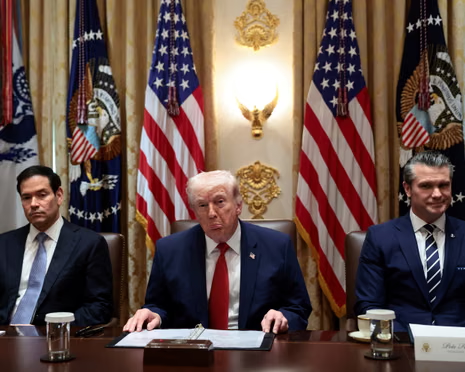
President Trump appears to be thrashing around as his initial strategy fails to deliver results. The United States and Israel continue to bomb targets across the Iranian landscape. However, the President has twice delayed threatened strikes on civilian power stations. Such an action would almost certainly constitute a major international war crime. He continues to insist that the enemy has been defeated on the battlefield. Yet, the leadership in Tehran continues to behave as if they hold the advantage. They see the Iran war as a struggle for economic survival and global relevance. This disconnect between American rhetoric and Iranian resilience is creating a dangerous stalemate.
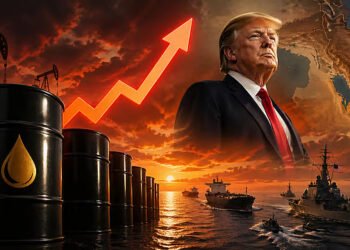
This struggle is not just being fought in command posts or bunkers. It is being fought every hour on the global trading floor. The price of oil is the primary metric for Iranian success. They also measure their power by the remaining supply of mobile missile launchers. Currently, ninety five percent of traffic through the strait remains completely blocked. This deprives the global markets of up to thirteen million barrels each day. The economic stranglehold is so tight that Trump calls any passage a “present.” The physical reality of oil loss is finally catching up with paper markets. No policy intervention can easily cope with a disruption of this magnitude.
For the leadership in Tehran, oil prices above one hundred dollars are ideal. Such high prices destroy global demand and disrupt the entire world economy. It is not just about crude oil or natural gas. The strait provides passage for essential chemicals, helium, and agricultural fertilisers. The world is discovering the terrifying interconnectedness of modern supply chains. Geography has blessed Iran with a unique chance to break these chains. This leverage makes the Iran war an existential threat to global financial stability. The Biden era diplomatic gains have been completely erased by this new escalation. The American presidency seems to have run aground in these narrow waters.
Very few serious commentators believe the advantage currently lies with the United States. Sir Alex Younger, the former head of MI6, recently shared his candid thoughts. He noted that the United States significantly underestimated the difficulty of the task. He believes Washington lost the strategic initiative to Tehran two weeks ago. The Iranian regime has proven far more resilient than western analysts expected. They took smart decisions last June about dispersing their advanced weaponry. By targeting the strait, they have globalised the conflict rather than keeping it local. They have played a very weak hand with remarkable tactical skill and patience.
Senior analysts at the International Crisis Group share this grim assessment. They describe the current situation as a massive strategic failure for the West. The consequences for regional geopolitics and the global economy are truly historic. The United States is nowhere near meeting its original strategic goals. Instead, the Iran war has only created a series of new problems. Domestic politics in America are also becoming increasingly ominous for the White House. Critics argue that Trump’s legacy is now firmly at stake in the desert. If this conflict drags on, it will define his second term. This mirrors the way the Iraq war ruined the record of George Bush.
American citizens, including many Republicans, want this costly conflict to end immediately. There is growing pressure to prove that troop deployments are not a mistake. Ten thousand troops are currently stationed in a potential Middle Eastern quagmire. Inside the Iranian regime, there is a growing sense of confidence. They feel the balance of power is finally tilting in their favour. Iranian media outlets are repeatedly highlighting stories from critical western thinkers. They use these reports to claim that the American strategy has failed. The speaker of the Iranian parliament remains defiant against any use of force. He warns that no country helping the US will be spared.

Trump denied he was ensnared during a long press conference last Thursday. He reiterated that his military campaign is moving well ahead of schedule. He claimed the Iranians are facing a total disaster and want to negotiate. He insisted that he is the opposite of being desperate right now. However, his special envoy Steve Witkoff continues to demand impossible concessions. These include no domestic uranium enrichment and no missile stockpiles. These demands take no account of the new counterproposals tabled by Tehran. The Iran war has shifted the goalposts for both sides in the last month. The US decision to attack has created entirely new diplomatic obstacles.
Former foreign policy advisers suggest there is no chance of Iranian surrender. They believe the longer the US holds out, the more pain everyone endures. Limits on nuclear programmes are better ensured through deterrence than formal papers. The former head of the Iran desk at Israeli intelligence agrees. He predicts that Iran will not accept the fifteen point framework. They will not relinquish control of the waterway or stop their attacks. Trump will soon face a very decisive and difficult choice. He can choose a further escalation or a negotiated settlement. The United Kingdom and Europe are unlikely to endorse further military force.
Some diplomats involved in peace talks fear a much darker outcome. They worry that a frustrated President might resort to using nuclear weapons. There is a sense that the Pentagon is offering high risk options. These options are designed to provide a single, massive blow to the enemy. Analysts compare this to the failed logic of the Gaza conflict. Officials then argued that one final strike would end the resistance. That theory proved to be tragically incorrect for everyone involved. The Iran war continues to defy simple military solutions or quick victories. It remains a war of regression for the United States and the world.
Related News:
 UPS Cargo Plane Crash in Kentucky Kills Seven
 US private equity set to acquire UK online retailer Very Group
 Switzerland Rolls Out Charm Offensive to Cut Trump’s 39% Tariffs
 Canada Passes Carney’s First Budget in Tight Parliamentary Vote
 India’s Labour Law Overhaul Sparks Fierce Debate
 Carney’s Alberta Pipeline Deal Sparks Immediate Pushback
 Mark Carney Walks Diplomatic Tightrope on China Visit
 Wall Street shaken by Trump tariff shock as markets tumble
 ‘Black Tax’: Burden, Pride and Survival for African Workers
 UK New Car Discounts Near £6,000 as Prices Are Slashed
 Coles Discounts Under Fire in Federal Court
 Trump Tower Gold Coast to Redefine Skyline
 Rory Amon Trial: Alleged Victim Speaks in Court
 Oil Prices Surge as Iran War Jolts Markets
 Gulf shipping crisis as war risk cover pulled
 Global markets face turmoil as Hormuz crisis deepens
 Gulf shipping crisis sparks food price fears
 Oil Prices Surge Above $100 Amid Iran War
 G7 Weighs Emergency Oil Reserves as Prices Surge
 Brazil Floods Warning as Scientists Urge Fossil Fuel Exit
 Asia Scrambles to Confront Energy Crisis Amid Iran War
 The Truth Behind Rising Energy Costs and Fossil Fuel Myths
 UniCredit’s Bold Move to Reshape European Banking
 RBA rate hike sparks fears amid global crisis
 UK Wage Growth Slows as Jobs Market Holds Firm
 Oil Slides, Stocks Jump on Trump Peace Signals
 ABC Staff Strike Over Pay and AI Concerns
 Middle East Conflict to Hit UK Economy Hardest
 Australian Growth Slows as Global Inflation Spike Looms
 Trump to Deploy “God Squad” Over Gulf Wildlife Protections
 Trump Threatens Iran With Total Infrastructure Destruction
 Iran Drone Strike Hits Kuwaiti Oil Tanker in Dubai Port
 Russia: The Unforeseen Winner of the Iran Conflict
 Albanese to Address Nation as War Sparks Economic Crisis
 US Senators Slam Ticketmaster Over Sneaky New Fee Hikes
 Apple at 50: Three Products That Changed How We Live
 California fireworks blast: murder charges filed in case
 IMF Warns Iran War Could Spark Deep Global Recession
 Trump Slams UK Ties and Threatens To Rewrite Trade Deal
 Athens Mayor Moves to Tackle Overtourism Crisis
 Southeast Asia Turns to Russia Amid Energy Crisis
 Ukraine Urges UK to Seize Russian Oil Tankers
 US Calls Australia Media Law “Foreign Extortion”
 Capitalism ‘Suicidal’, Warns Petro at Climate Summit
 Oil Prices Surge Above $120 Amid Iran Blockade Fears
 $13bn World Cup Set to Break All Revenue Records
 US to Escort Trapped Ships Through the Strait of Hormuz
 Trump approval plunges amid Iran war fears
 Infantino’s Grip Tightens as FIFA Eyes a $14bn Future in Vancouver
 Trump Threatens UN Budget Cuts as US Pushes ‘Trade Over Aid’ Agenda
 Global Conflict Hits Home As Bullock Warns Of Economic Pain
 Norway Doubles Down on Oil and Gas for Europe Energy Security
 US Awaits Iran Reply on New Ceasefire Proposal
 Trump’s Gold Coast Tower Dreams Crumble Amid Toxic Fallout
 Trump: Preventing Nuclear Iran Is ‘The Only Thing That Matters’
 High Street Crisis: Fears Grow Over Post Office Closures
 Beijing Becomes Centerstage for Global Diplomatic Ballet
 Oil Markets Face ‘Red Zone’ Threat Amid Iran Crisis
 Hormuz Talks Near Critical Stage
 UK Pushes for New EU Goods Trade Deal
 Reeves Fights to Keep Treasury Role Amid Labour Turmoil
 China mine blast death toll rises to 90
 Japan Suffers Plastic Shortage Due to Middle East Crisis
 UK Economy Suffers a Sharp Downturn as Iran Conflict Bites
 Europe Weighs Hormuz Navigation Fee Plan
 Ukraine Creates Long-Range Strike Command
 Reeves Faces Setback as Labour May Miss Homes Target
 Trump’s UK Ambassador Urges North Sea Drilling to Strengthen US Ties
BBC to Apologise Over Edited Trump Speech Amid Backlash
Trump’s UK Ambassador Urges North Sea Drilling to Strengthen US Ties
BBC to Apologise Over Edited Trump Speech Amid Backlash
 Millionaires group urge Reeves to introduce wealth tax to ‘lift kids out of poverty’
 Greene Pushes Epstein Files Amid Trump Fallout
 Zelenskyy Signs Fighter Jet Deal Amid Russian Drone Attacks
 Shadow Fleet at Sea: Europe’s Battle Against Illicit Oil Shipping
 Trump and Tehran Find Common Ground in Landmark Ceasefire
 Stefano Gabbana Resigns as Chair of Italian Luxury Giant
 Rolls-Royce SMR Secures £600m Boost for Nuclear Future
 Tough Fiscal Realities Await Next Scottish Government
 Aramco Surges as East-West Pipeline Counters Gulf Tensions
 Scepticism and tight security as Beijing braces for Trump
 Tensions Flare as Israeli Nationalists March in Jerusalem