Published: 09 April 2026. The English Chronicle Desk. The English Chronicle Online.
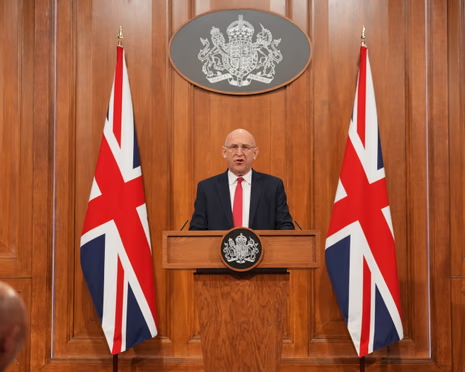
The cold depths of the North Atlantic recently became a high-stakes stage for a silent confrontation. British defense officials have revealed a significant military operation aimed at protecting vital undersea communications cables. For over a month, the Royal Navy engaged in a complex game of maritime cat and mouse. They successfully tracked and deterred Russian vessels that were surveying sensitive infrastructure beneath the ocean waves. Defence Secretary John Healey shared these striking details during a recent press conference at Downing Street. He explained that a British warship and P8 marine patrol aircraft led this prolonged surveillance effort. The mission focused on three Russian submarines that appeared to be conducting highly suspicious survey activities. These vessels were identified as potential threats to the pipelines and cables that power modern life. The operation underscores the growing tension between Western powers and the Kremlin over strategic maritime assets. Healey noted that this activity occurred while global attention was focused elsewhere in the world today. Specifically, he referenced the recent military escalations involving the United States, Israel, and Iran lately. Despite the distractions of Middle Eastern conflicts, the UK military remained vigilant in its northern waters. The Defence Secretary issued a direct and stern warning to the leadership within the Kremlin walls. He stated that the United Kingdom sees exactly what the Russian navy is doing right now. Any attempt to damage British infrastructure will result in very serious and immediate consequences for Russia. This public call-out is intended to demonstrate that the UK will not tolerate underwater sabotage. Healey confirmed that no physical damage has been detected on the cables or the pipelines yet. British forces are currently working with international allies to verify the integrity of the seabed equipment. The exact location of this military encounter remains classified to protect sensitive national security interests.
 However, officials confirmed that the Russian activity took place outside of sovereign British territorial waters today. The submarines involved included two specialized deep-sea vessels often used for sensitive and covert seabed missions. These Gugi class ships are known for their ability to operate at extreme ocean depths safely. Their presence near strategic infrastructure is always viewed as a provocative act by Western military leaders. The successful deterrence of these vessels shows the UK can protect its own interests effectively now. Healey used this incident to highlight the ongoing necessity for robust and modern national defense spending. He argued that the Royal Navy is fully capable of detecting and responding to foreign threats. This operation serves as a clear signal that Britain is ready to defend its vital connections. The discourse also touched upon the broader geopolitical landscape and the future of the NATO alliance. Reporters asked Healey about recent critical comments regarding European defense contributions from the American political sphere. The Defence Secretary chose to focus on his direct professional relationships with high-ranking American military officials. He mentioned positive and constructive conversations with the United States Secretary of War, Pete Hegseth, recently. According to Healey, the United States remains completely committed to the mutual defense of NATO allies. There is an equally strong expectation that European nations must increase their own military capabilities soon. Britain is positioning itself as a leader in this effort to bolster collective security in Europe. The defense of undersea cables is now a top priority for nations relying on digital connectivity. These cables carry the vast majority of international data and financial transactions across the globe today. Any disruption could cause massive economic chaos and sever vital communication links between allied western nations. Russia has long been suspected of mapping these vulnerabilities for potential use in a future conflict. By publicizing this intercept, the UK is moving toward a strategy of transparency and active deterrence. It signals to the world that the era of ignored underwater incursions has officially come to an end. The Royal Navy continues to patrol these cold northern waters to ensure the safety of all. This latest encounter proves that the silent war beneath the waves is more active than ever. British sailors and pilots remain the first line of defense against these sophisticated and hidden threats. The government remains committed to maintaining the technological edge required to win these underwater surveillance battles. As the geopolitical climate shifts, the importance of the North Atlantic remains a central strategic concern. The English Chronicle will continue to monitor these developments as more information becomes available to us. For now, the message from London is one of strength, vigilance, and unwavering national resolve. Britain stands ready to protect the invisible lines that hold the modern digital world together today.
Related News:
 George Clooney and Amal Clooney Receive French Citizenship
 Capitol Attack Anniversary Sparks Deep Political Divide
 Saudi Officials Report Zubaidi Flee Before Yemen Peace Talks
 UK Targets in New York Bomb Threat Hoax: Man Jailed
 Gambia Supreme Court Hears Case to Overturn FGM Ban
 Trump targets Iran trade with 25% tariff warning
 Rudd successor: Defence chief and former ministers considered
 US Senate rejects resolution limiting Trump military powers
 Venezuela regime claims release of political prisoners signals new era
 Gulf states warn Trump Iran strikes risk wider Middle East war
 Machado Trump medal gesture reshapes Venezuela power struggle
 Greenland defence seen as shared Nato duty amid troop arrivals
 Geopolitical football: Iran, Trump and the World Cup clash
 Canada-China trade gains momentum in new strategic partnership
 Trump Receives Machado’s Nobel Medal in White House Meeting
 Syria President Declares Victory as Ceasefire Reached with SDF
 US Considers Asylum for British Jews Amid Rising Antisemitism
 Trump slams UK ‘stupidity’ over Chagos Islands, eyes Greenland takeover
 More Than 100 Islamic State Inmates Escape Amid Syrian Clashes
 Trump Tightens Grip on EU and UK Energy Supply
 Shinzo Abe’s killer receives life sentence in Japan
 China General Under Investigation Amid Leadership Purge
 Philippines ferry disaster leaves 15 dead, dozens missing
 Crisis Looms as Liberals Debate Sussan Ley Future
 Cambridge Faces Scrutiny Over Arms Investment Transparency
 Files Link Andrew to Epstein Dinner After Prison Release
 Epstein UAE Emails Shake British Royal Andrew’s Legacy
 Minnesota Nurse Saves Refugees, Witnesses Tragedy Decades Later
 Christchurch gunman seeks to vacate guilty plea
 Liberal Fallout: Taylor Challenge Casts Shadow Over Sussan Ley’s Leadership
 Infantino Faces Russia Threat and Trump Concerns at Uefa Congress
 Concerns rise for Canberra boy amid Iran detention fears
 Ukraine, Russia Meet in Geneva Ahead of War Anniversary
 Caribbean Leaders Urge Dialogue Amid US Oil Embargo on Cuba
 Anthony Albanese Must Uphold Rights for All Australians
 DHS Probe Into Border Official Sparks National Debate
 Caffè Nero Warns Coffee Prices May Rise Again
 Ukraine Sends Drone Experts to Defend US Bases in Jordan
 New Zealand Covid Response Praised Despite Lingering Scars
 Abramovich Chelsea Sale Cash Faces Jersey Probe
 Yvette Cooper: UK Must Follow Principles, Not US Pressure
 US Strike on IRIS Dena Strains Strategic Indian Security Ties
 Slovenia Election: A Nation at a Crossroads
 Jury Rules Meta and YouTube Liable for Addictive Design
 Saudi Arabia Urging US to Keep Up Iran Attacks
 Trump Softens Cuba Oil Stance as Russian Tanker Nears
 Health & Social Affairs | International Development
 Police Seek Immunity in Indigenous Custody Death Case
 The Woman Guarding Earth From the Threat of Asteroids
 IMF Predicts Global Economic Crisis Due to Gulf Unrest
 Spain Shuts Airspace to US Military Over Iran Conflict
 California Defies Trump With Strict New AI Standards
 Germany Grapples With AI Abuse Following TV Star Scandal
 Florida Space Coast Awaits Historic Artemis Moon Launch
 Exiled Tycoon Warns of New Russian Attacks on UK Soil
 Labor Under Fire Over Stalled University Fee Reform
 LA 2028: Millions of Affordable Olympic Tickets Announced
 Trump Slams Europe as Transatlantic Tensions Boil Over
 Inside the Deceptive Machine: A Former Producer Speaks Out
 Italy Faces Third Successive World Cup Absence After Loss
 Turkey End Kosovo Dreams to Secure World Cup Return
 Starmer Urges Ambitious EU Ties Amid Middle East Conflict
 Spain Faces Backlash Over Xenophobic Chants in Egypt Draw
 A Global Voice For Justice: Stephen Lewis Dies At Age 88
 Trump Issues Stark Warning After Strike On Iran’s Largest Bridge
 Macron Urges Stability as Trump Jolts Nato and Iran
 Macron Rebukes Trump Following Mockery of His Marriage
 Hope and Fear as Iranians Flee Across the Turkish Border
 Trump Mocks Starmer and UK Carriers in White House Speech
 Tragic End to Outback Search as Floods Claim a Life
 Michigan Battleground: Middle East Crisis Stirs US Senate Race
 Ben Roberts-Smith Arrested Over Alleged War Crimes
 Reform UK Pledges To Halt Visas Over Reparations Demands
 ABC Ends Diversity Memberships to Protect Independence
 US and Iran Agree to Two-Week Provisional Ceasefire
 Starmer visits Gulf as US and Iran agree ceasefire
 Gaza Child Arrives in UK for Life-Changing Care
 Israel Defies Ceasefire as Lebanon Operations Persist
 Own an Entire Australian Town for the Price of a UK Flat
 Pakistan Brokers Historic Peace Deal Amid Rising Tensions