Published: 08 October 2026. The English Chronicle Desk. The English Chronicle Online
The ambitious plan to establish NBA Europe is attracting some of the biggest names in European football as the National Basketball Association prepares to reshape the continent’s basketball landscape with an investment programme worth around $10bn over the next decade.
The proposed competition, which is now expected to begin in 2028, will combine elements of the American franchise system with features of the European sporting pyramid. The league is planned to have 16 teams in its inaugural season, including 12 permanent franchises and four places reserved for clubs that qualify through European basketball competitions.
The project has already generated significant interest among wealthy investors, football clubs and existing basketball organisations. Several bids for the permanent franchises are understood to have exceeded the NBA’s expectations, with valuations ranging from around $500m to more than $1bn. The London franchise has attracted particularly strong interest, with several potential bids reportedly exceeding the $1bn mark.

Among those linked with the London opportunity are former Chelsea chairman Todd Boehly, a consortium involving former Tottenham chairman Daniel Levy and MSP Sports Capital, and Saudi Arabia’s Public Investment Fund. The strength of the interest highlights the growing belief among investors that European basketball could become a major global commercial asset.
The NBA has also held discussions with some of Europe’s most powerful football clubs, including Real Madrid, Barcelona, Paris Saint-Germain, Bayern Munich and Milan. Several of those clubs already have basketball operations, while others are considering entering the sport through the new competition.
The planned structure is designed to give NBA Europe a distinctive identity while avoiding a completely closed franchise system. Twelve teams would hold permanent positions, while four additional places would be available through qualification. A pre-qualifying competition is expected to take place in 2027 to determine the temporary members who would participate in the first season.
Under the proposed system, two places could go to the highest-ranked teams from a new second-tier European competition, while another two could be awarded through a tournament involving domestic champions from across Europe. The exact promotion and qualification mechanism remains subject to further agreement.
There could also be movement between the permanent franchises and temporary participants during the season-to-season cycle. The highest-ranked non-franchise team reaching the end-of-season playoffs could retain its place for the following campaign, while other temporary teams would have to return to the qualification process.
The model represents an attempt to combine the financial stability associated with American sports franchises with the competitive mobility traditionally associated with European football.
That approach has attracted comparisons with the European Super League, the controversial football project that collapsed after intense opposition from supporters, domestic leagues and governing bodies. However, NBA Europe is being presented as a more open structure because it would provide pathways for clubs outside the permanent membership to enter the competition.
The project is nevertheless creating tension within European basketball. EuroLeague shareholders recently rejected an initial proposal from the NBA and FIBA to establish a closer unified European operation. Instead, EuroLeague clubs have chosen to pursue their own expansion plans and move towards a more permanent franchise-based structure.
The disagreement has created a potentially significant divide between the NBA-backed project and Europe’s existing elite basketball competition. However, the NBA has indicated that discussions will continue, leaving open the possibility of some form of cooperation in the future.
NBA deputy commissioner Mark Tatum has argued that the organisation wants to bring together the different parts of European basketball rather than simply replace the existing system. The NBA’s broader vision includes working with FIBA, EuroLeague, domestic clubs and governing bodies to create a clearer pathway from grassroots and domestic competition to the highest level.
One of the NBA’s arguments is that European basketball lacks the unified promotion structure found in football. In European football, clubs can theoretically rise through multiple levels before reaching the Champions League and competing against the continent’s biggest teams. The NBA wants to create a comparable pathway in basketball while maintaining the commercial advantages of permanent franchises.
The financial scale of the project is one of its most striking features. The NBA is expected to invest approximately $10bn over 10 years, making NBA Europe one of the largest new investments ever attempted in professional sport. The franchise fees themselves could generate enormous valuations, while additional investment is expected to flow into arenas, academies, commercial operations and player development.
London is emerging as one of the most important markets. Despite the city’s enormous sporting economy, basketball has traditionally operated below football in terms of attendance, commercial revenue and media attention. An NBA-backed franchise could dramatically change that position and create a permanent top-level basketball presence in the British capital.
Manchester is another major target. A potential franchise could play at the 23,000-capacity Co-op Live, one of Europe’s largest indoor arenas. The venue is jointly connected to City Football Group and Oak View Group, creating an unusual link between the proposed basketball project and the ownership structure surrounding Manchester City.
City Football Group itself has not submitted a bid for the Manchester franchise, despite its close relationship with the NBA. The two organisations have already developed links through the NBA’s partnership with Abu Dhabi, while NBA regular-season basketball has become an increasingly visible part of the city’s sporting programme.
The NBA also sees infrastructure development as a central component of the European expansion. Tatum has pointed to the limited number of world-class indoor arenas across the continent and argued that investment in modern venues could create economic benefits for host cities.
New academies are also expected to form part of the strategy. The NBA wants to develop a deeper talent pipeline in Europe, helping young players progress through organised basketball while strengthening the sport’s commercial and cultural footprint.
The involvement of major football clubs adds another layer to the project. For football owners, NBA Europe offers an opportunity to diversify their sporting portfolios and participate in a rapidly expanding global basketball market. Many football organisations already possess the commercial infrastructure, sponsorship relationships and international fan bases needed to support a major basketball franchise.
For some clubs, however, the interest may extend beyond basketball. Real Madrid president Florentino Pérez is reportedly particularly enthusiastic about the project. His long-standing involvement in the European Super League debate has led to speculation that the structure of NBA Europe could provide useful lessons for the future organisation of elite European football.
A semi-closed competition with guaranteed participation for powerful clubs could offer greater financial certainty to Europe’s biggest football organisations. Although the European Super League project suffered a dramatic collapse, debates over the financial and competitive structure of European football have continued.
NBA Europe could therefore become more than a basketball experiment. Its success or failure may influence how investors, football clubs and governing bodies think about the future of elite sport across the continent.
The NBA’s relationship with Abu Dhabi and City Football Group also demonstrates how the European project fits into its broader international expansion strategy. The organisation has increasingly sought to establish basketball as a global entertainment product, with regular-season and pre-season games, commercial partnerships and development programmes expanding beyond North America.
The challenge now is to balance the interests of investors and permanent franchise owners with those of traditional European basketball clubs. If the new competition is perceived as threatening domestic leagues or EuroLeague, resistance could intensify. If it succeeds in bringing substantial new money, modern infrastructure and greater international exposure to European basketball, however, the project could fundamentally alter the sport’s economic landscape.

The NBA hopes to finalise the identities of the first franchise owners later this year, although the timetable remains subject to negotiations. The delay in the launch until 2028 provides additional time to resolve disagreements with European basketball organisations and establish the competition’s final structure.
For the football clubs and investors lining up to participate, the attraction is clear: NBA Europe offers access to a potentially enormous new sporting market backed by one of the world’s most powerful sports brands.
For European basketball, however, the stakes are considerably higher. The arrival of the NBA could bring unprecedented investment and global attention, but it could also challenge the institutions and competitions that have shaped the sport for decades. How those competing interests are reconciled could determine whether NBA Europe becomes a transformative success or another divisive experiment in the increasingly commercial world of European sport.
Related News:
 World Cup Fever Set to Boost UK Economy by £500m
 David Beckham Earns £39m Dividend Amid World Cup Boom
 FA Warns Manchester City Verdict Could Affect Game Integrity
 Abramovich Chelsea Sale Cash Faces Jersey Probe
 Can Congress Stop US Sports Teams From Moving Cities?
 World Cup 2026: Nike Faces Backlash Over Jersey Design
 Arise Capital Partners Seek Early Relief for Wednesday
 $13bn World Cup Set to Break All Revenue Records
 Disney+ Wins Champions League Rights in Key Markets
 Fifa’s Global TV Crisis: A Billion Fans Left in the Dark
 Nike Charges Fans Most for World Cup Replica Shirts
 Saka Playing Through Pain As England World Cup Campaign Looms
 England Cruise Past Costa Rica as World Cup Warm-Up Sharpens Tuchel’s Vision
 Erling Haaland Double Fires Norway To Victory On Debut
 Iran Files Official Fifa Complaint Over World Cup Travel
 Historic Victory for Canada as They Defeat Nine-Man Qatar
 Heartbreak for Canada as Koné Suffers Horrific Injury
 New Premier League Fixtures Set Stage for Thrilling Season
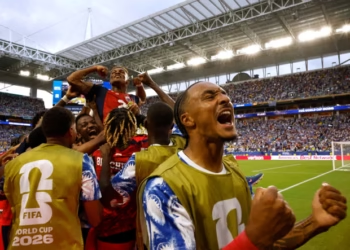 Cape Verde Hold Uruguay in Dramatic World Cup Clash
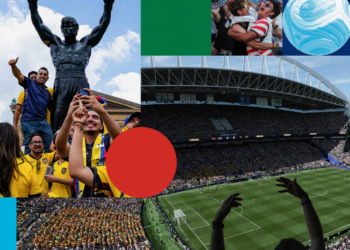 World Cup 2026: Reclaiming the American Dream
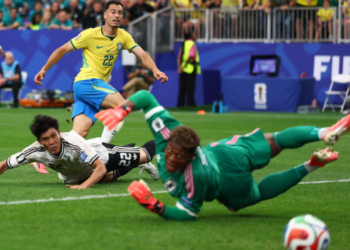 Martinelli Strikes Late as Brazil Edge Past Brave Japan
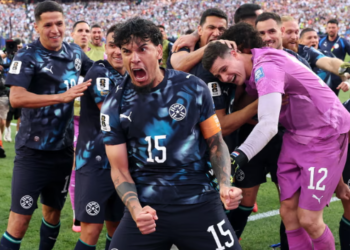 Paraguay Shock Germany in Historic Penalty Shootout
 Morocco Beat Dutch in Wild World Cup Penalty Drama
 France Dominate Sweden as Deschamps’ New Era Takes Shape
 Haaland Heroics Send Norway Into Historic Last 16 Knockout
 Kane Saves Tuchel as England Survive Dramatic Exit
 Ramos Sends Portugal into the Last 16
 Spain Dominates Austria to Reach Quarter-Finals
 Taylor Swift and Travis Kelce Marry at Madison Square Garden
 England Triumph in Azteca World Cup Thriller
 Trump’s Red-Card Intervention Hurts the US World Cup
 Trump Intervenes in Fifa World Cup Balogun Ban
 USA World Cup Heartbreak: Belgium Ends Their Dream
 Spanish Late Winner Sends Ronaldo Into Final Sunset
 Belgium Thrashes USA After Red Card Controversy
 Kylian Mbappé Slams Paraguayan Senator Over Racist Attack
 Egyptian Fury After Argentina World Cup Heartbreak
 World Cup 2026 Power Rankings: England on the Rise
 Mbappé Brilliance Leads France Into Semi-Finals
 Belgium Draws Global Support Before Spain Showdown
 Bryne Backs Haaland Before England World Cup Clash
 England and Norway Fans Turn Miami Into World Cup Carnival
 Spain’s Superstar Fan: Keyne Yamal Steals the Spotlight
 Lamine Yamal’s Birthday: Football, Fame, and France
 Rice Poised for England Semi-Final Clash Against Argentina
 Maradona’s ‘Hand of God’ ball sells for £2.5m
 UK Risks Falling Behind in AI Race
 Swedish Mining Push Puts Sami Land Rights Under Pressure
 Billionaire Chris Rokos poised to leave UK
 Oil nears $100 as Saudi attacks shake markets
 McLaren to Create 1,000 UK Jobs in £450m Investment
 Nats Boss Summoned as UK Flight Chaos Continues
 JPMorgan Boss Warns Against UK Bank Tax Rise
 Iceland to Open First UK High Street Store in Falklands
 John Lewis Losses Widen to £124m as Confidence Falls
 AI CEOs Call for Slower Development
 UK Retailers Accused of Breaking Refund Laws
 Chinese Hybrid Car Surge Raises EU Auto Industry Concerns
 AO Acquires Jessops in Camera Retail Expansion
 TalkTalk Races to Sell Arms as Administration Looms
 Avanti West Coast Set for Public Ownership in March
 Beaverbrooks Boss Calls for Relief on Business Costs
 Poundland Rescue Bid Could Protect 11,000 Jobs
 Bank Chief Calls for Power to Intervene in AI
 UK Bookmakers Linked to Offshore Casino Deal
 Boots Sale Nears as Weston Family Eyes $9bn Deal
 UK Diesel Reaches £2 as Inflation Surges Across Europe
 Minister Rejects Fears of UK Diesel Shortage
 BT Broadband Pauses Raise Digital Switchover Concerns
 UK Weighs Chinese Car Tariffs Amid EU Trade Push
 BT Agrees £400m TalkTalk Rescue Deal
 How City fandom became fiercely defensive
 Informa Agrees £2.24bn Deal to Buy Clarion
 EU-China Talks Target Surge in Hybrid Car Imports
 Shell Refineries Set for Record Refining Profits
 Royal Mail Plans Up to 2,500 Job Cuts
 Doubts Grow Over Trump’s $15bn Iowa Steel Plant
 Japan Beer Giants Face Cartel Probe
 Tesco Raises Profit Forecast as Consumer Confidence Holds
 Ministers Push ATO to Reconsider Credit Card Ban