Published: 11 December 2025. The English Chronicle Desk. The English Chronicle Online.
A marine pandemic is threatening the survival of sea urchin populations worldwide, scientists warn.
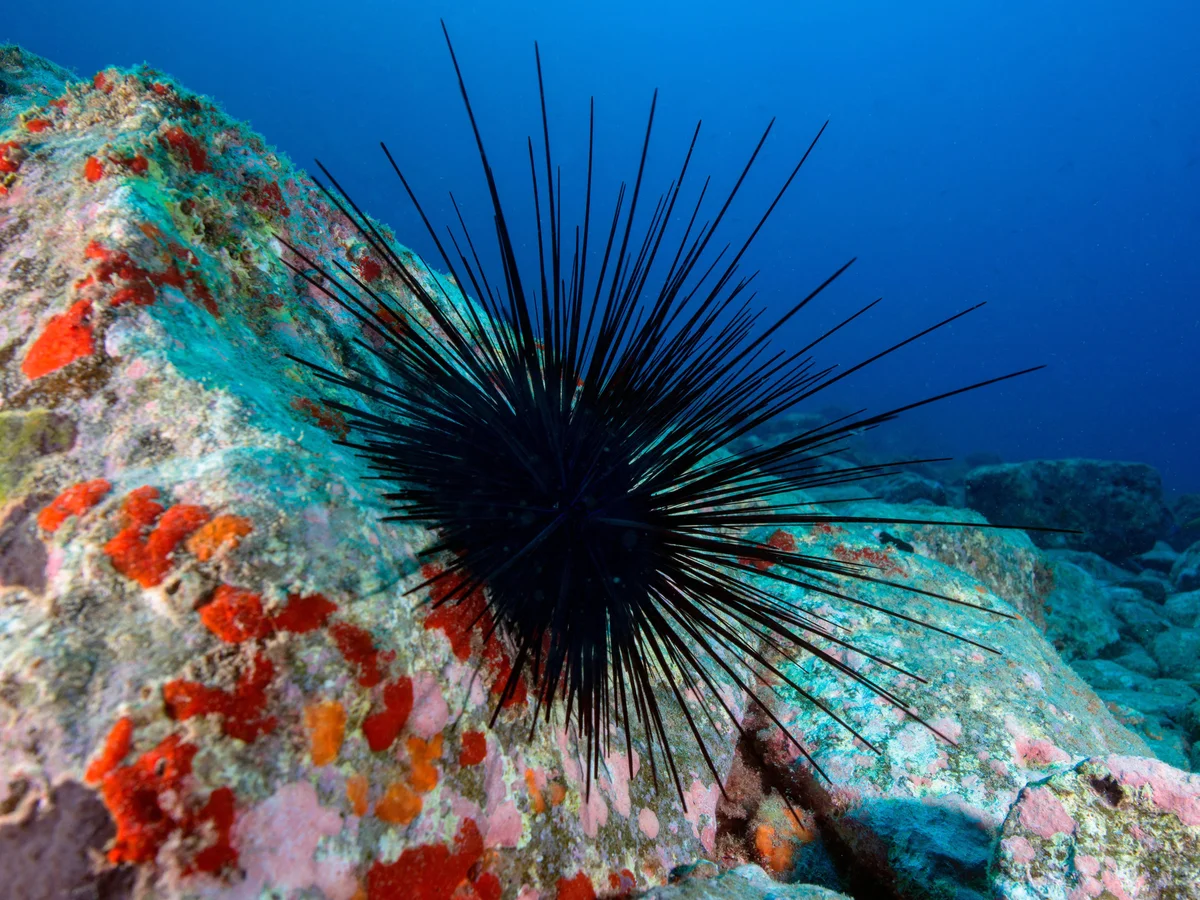
Since 2021, Diadema africanum urchins in the Canary Islands have almost entirely disappeared due to an unidentified disease. Populations in Tenerife have dropped by 99.7%, while those around the Madeira archipelago have declined by approximately 90%, according to a recent study. Researchers have also recorded mass mortalities of related species in the Red Sea, Mediterranean, Caribbean, and western Indian Ocean.

Iván Cano, a marine biologist at the University of La Laguna and lead author of the study, described the situation as alarming. He explained, “What we have seen since 2021 is really, really concerning. Several species are disappearing in an extremely short time.”
Sea urchins, relatives of starfish, are remarkable marine organisms. They breathe through their tube feet, and their protective spikes serve as effective defence against predators while also providing shelter for smaller creatures. Known as “ecosystem engineers,” they shape marine environments by grazing on algae, cycling nutrients, and providing food for other animals.
By controlling algal growth, sea urchins play a critical role in maintaining coral reef health. In the Caribbean, the loss of Diadema populations has coincided with a halving of coral cover and an 85% increase in algal coverage, creating cascading impacts on reef biodiversity.
Cano elaborated, “What fascinated me in the first place about this species is that they change their environment. Like humans, when they are present, they modify their habitat. We do not know the cascading effect this could have on other marine species.”
While the precise cause of this marine pandemic remains unknown, human activity is believed to have contributed to its spread. Theories suggest transmission may occur through shipping, altered ocean currents, or unusual wave activity.
Initially visiting the Canary Islands to study juvenile urchins, Cano discovered that populations had declined so drastically there were insufficient young urchins for research. This prompted him to shift his doctoral focus to investigating the rapid population collapse.
The Diadema genus, which is widespread across tropical waters, remains one of the most ecologically significant families of urchins. Despite the alarming losses, there are still isolated pockets where populations appear unaffected.
Cano stressed the uncertainty surrounding the pandemic’s future trajectory. “We are not yet sure how this pandemic will evolve. So far, it seems not to have spread to populations in Southeast Asia and Australia, which is positive. However, we cannot rule out the disease reappearing and potentially spreading further,” he said.

Marine ecologists emphasize that the ongoing decline in sea urchins could have profound consequences for ocean ecosystems. Their disappearance would disrupt food webs, alter habitats, and threaten the countless species that rely on them. The ecological imbalance caused by their loss underscores the urgent need for monitoring and intervention strategies to protect these crucial species.
Efforts to understand the disease’s origin and implement mitigation measures are now underway. Researchers hope that identifying transmission vectors will allow conservationists to protect remaining populations and restore affected reefs. The pandemic highlights the delicate interdependence of marine life and human influence on the oceans, calling for immediate attention to prevent further biodiversity loss.
The global scientific community is closely following the situation, concerned that similar outbreaks could emerge in other regions if preventative actions are not taken. Maintaining healthy sea urchin populations is vital for reef resilience, biodiversity preservation, and sustaining the livelihoods of communities dependent on marine ecosystems.