Published: 29 December 2025. The English Chronicle Desk. The English Chronicle Online.
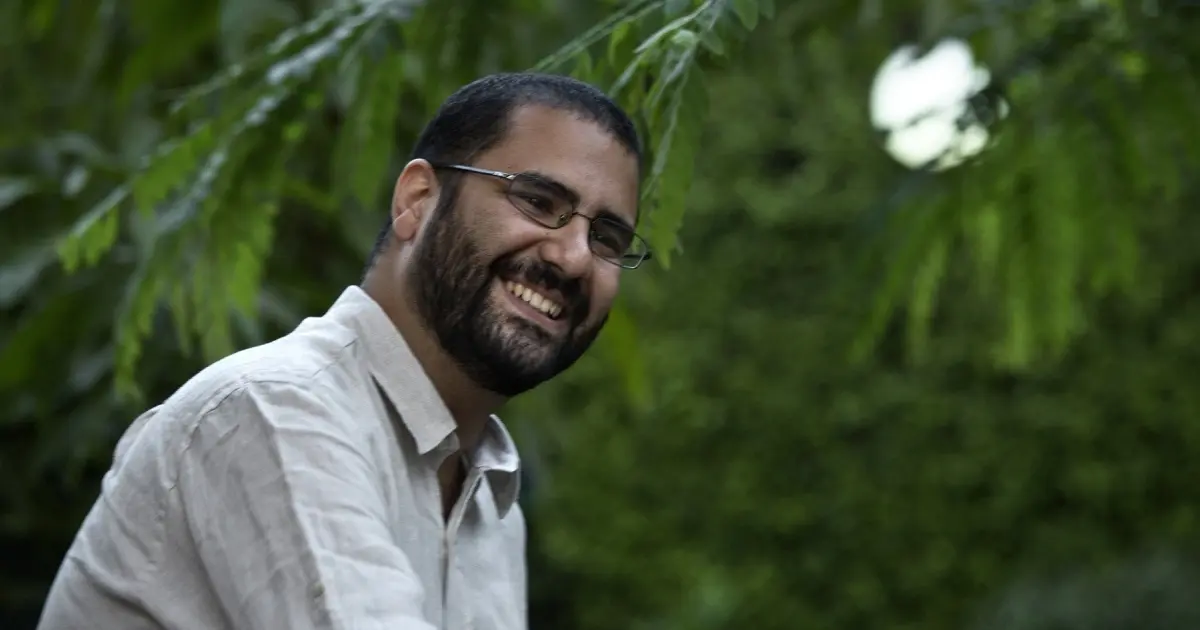
The long-running British campaign to secure the release of Alaa Abd el-Fattah has entered a fraught new chapter, as both Conservative and Labour politicians face mounting questions over their support for the activist. What was once framed as a principled stand against arbitrary detention has become a deeply uncomfortable political controversy, following the resurfacing of historic social media posts attributed to Abd el-Fattah that appeared to endorse violence and promote offensive rhetoric.
Abd el-Fattah, a British-Egyptian democracy activist and one of the most prominent figures of Egypt’s 2011 Arab Spring, arrived in London on Friday after years of detention in Egypt. His release, which had been lobbied for by successive UK governments, was initially welcomed across much of the political spectrum. However, the tone shifted rapidly when old posts circulated online, triggering condemnation from ministers, opposition figures, and community organisations alike.

The remarks, dating back more than a decade, included statements interpreted as calls for violence against “Zionists” and expressions of hostility towards police officers. Although these posts were already in the public domain, their renewed prominence has sparked a fierce debate about due diligence, political judgment, and the responsibilities of government when advocating for individuals abroad.
Prime Minister Keir Starmer came under immediate pressure after welcoming Abd el-Fattah’s return and describing his release as a government priority. Downing Street later clarified that Starmer had not been aware of the historic posts at the time of his comments. Nevertheless, critics argued that the government’s response appeared overly enthusiastic, given the content now under scrutiny.
Jewish organisations were among the first to express serious concern. Several groups criticised what they described as an “effusive” welcome and questioned how a cross-party campaign could have proceeded without a full assessment of Abd el-Fattah’s public record. They argued that the revelations undermined confidence in the processes used by successive administrations when supporting high-profile detainees.
The Foreign Office moved swiftly to distance itself from the views expressed in the posts, issuing a statement condemning the remarks as abhorrent. Officials stressed that Abd el-Fattah’s British citizenship, granted in 2021, obligated the government to seek his release from detention and reunite him with his family. At the same time, they emphasised that citizenship did not equate to endorsement of past statements.
Pressure has grown on both Labour and the Conservatives to explain why the campaign continued despite the existence of controversial material. The posts previously cost Abd el-Fattah a nomination for the European Parliament’s Sakharov Prize in 2014, after the nominating group withdrew its support upon discovering a tweet from 2012 that called for the murder of Israelis. In 2015, Abd el-Fattah said the comments had been taken out of context, describing them as part of a private exchange during an Israeli offensive in Gaza, though he acknowledged the language appeared shocking.
The decision to grant him British citizenship was taken under Boris Johnson’s Conservative government, with the Home Office led by Priti Patel and the Foreign Office overseen by Liz Truss, alongside regional minister James Cleverly. Since then, successive prime ministers, including Rishi Sunak, publicly described his release as a priority, citing concerns about human rights and the rule of law.
When Labour entered government, the pressure on Egypt intensified rather than eased. Starmer personally raised Abd el-Fattah’s case in multiple calls with President Abdel Fatah al-Sisi, while the UK’s national security adviser, Jonathan Powell, also urged Egyptian authorities to end the detention. The campaign gained significant public attention, particularly as Abd el-Fattah’s mother, Laila Soueif, undertook a prolonged hunger strike that left her seriously ill and drew widespread sympathy.
Abd el-Fattah had been sentenced in 2021 to five years in prison on charges of spreading false news, following a Facebook post alleging torture in Egyptian detention facilities. International human rights organisations and United Nations investigators later described his imprisonment as a breach of international law. Although he was released from prison in September, an Egyptian travel ban prevented him from leaving the country until it was lifted this month.
The political backlash in the UK has been swift and intense. Robert Jenrick, the shadow justice secretary, called for Abd el-Fattah to be stripped of his dual citizenship and deported, arguing that his record of extremist statements made any official welcome inappropriate. Writing to the prime minister, Jenrick said that while arbitrary imprisonment was wrong, it was equally wrong for government leaders to associate themselves with someone whose language crossed into racism and incitement.
Nigel Farage added to the controversy by claiming he had reported Abd el-Fattah to counter-terrorism police over the historic remarks. The Reform UK leader accused Labour of repeating a Conservative error, arguing that both major parties had failed to apply consistent standards. His intervention further amplified the debate, pushing the issue into a broader discussion about national security, free speech, and political accountability.
Several Conservative figures who had previously supported the campaign have since expressed regret. Former party leader Iain Duncan Smith said he would not have signed a letter backing Abd el-Fattah’s release had he known about the posts and urged police to investigate their nature. Alicia Kearns, a former chair of the foreign affairs select committee, said she felt deeply let down, adding that while arbitrary detention was unacceptable, Abd el-Fattah must now unequivocally reject the hatred he had expressed.
Labour MPs have also voiced discomfort. Tom Rutland, the MP for East Worthing and Shoreham, publicly questioned why Abd el-Fattah’s case had been prioritised and what vetting procedures were routinely applied. His comments reflected growing unease within the governing party about the political cost of the episode.

The Board of Deputies of British Jews said it had repeatedly raised concerns with the government and called for urgent clarification on whether Abd el-Fattah still held the views expressed in his posts. The organisation warned that the rhetoric was threatening to British Jews and damaging to public trust, describing the cross-party campaign as evidence of a broken system lacking proper scrutiny.
At the heart of the controversy lies a broader dilemma. Abd el-Fattah’s role in Egypt’s democratic movement and the injustice of his imprisonment are widely acknowledged. Yet the resurfacing of his past statements has complicated that narrative, forcing politicians and the public to confront uncomfortable questions about consistency, values, and the limits of solidarity.
As Abd el-Fattah begins a new chapter of his life in the UK, calls are growing for a clear apology and an unequivocal rejection of violence and antisemitism. Whether such steps would be sufficient to repair the political damage remains uncertain. What is clear is that the episode has exposed deep flaws in how successive governments assess and manage high-profile human rights cases, leaving both major parties facing searching questions that will not easily fade.
Related News:
 King Charles Pledges to Defend Europe Against Russia
 Sevenfold Rise in Gatwick Detention Centre Incidents
 Treasury Opens Inquiry into Autumn Budget Leak Claims
 Families to Receive Support to Exit Temporary Accommodation
 Labour MP’s Biscuit Debt Video Surges Past 3.3m Views
 UK Ends Haven Status for Dirty Money in Bold New Crackdown
 UK Asylum Crackdown Fuels Deaths and Violence
 Prince Harry’s Security Faces UK Review
 Farage Urged to Come Clean on Clacton Spending
 Reform campaign in Clacton faced ‘juggernaut’ scrutiny, say rivals
 Starmer Calls for Modern ECHR Curb to Counter Europe’s Populist Surge
 Youth Strategy Aims to End Decades of Political ‘Indifference’
 UK Borrowing Costs May Ease as Markets Gain Confidence
 Asylum Overhaul Could Worsen Homelessness, Whitehall Warns
 Javid Claims Johnson Was Cummings’ Puppet Before Resignation
 Conservatives Pledge to Scrap 2030 Petrol and Diesel Car Ban
 Ministers to back regulation of England’s funeral industry
 Starmer’s communications chief to outline media strategy overhaul
 Minister Rejects Claims of Abuse Against Hunger Strikers
 Farage avoids police investigation over election spending claims
 Kent Council Faces Scrutiny Over £40m Savings Claim
 Resident Doctors Seek Fresh Talks to Prevent New NHS Strikes
 Leaving ECHR Would Undermine UK Rights, Equality Chief Warns
 Farm Inheritance Tax U‑Turn Eases Burden After Months of Protests
 U‑Turn on Farmers’ Inheritance Tax Sparks Political Firestorm
 UK to Launch Military ‘Gap Year’ Scheme to Boost Recruitment