Published: 27 February 2026. The English Chronicle Desk. The English Chronicle Online.
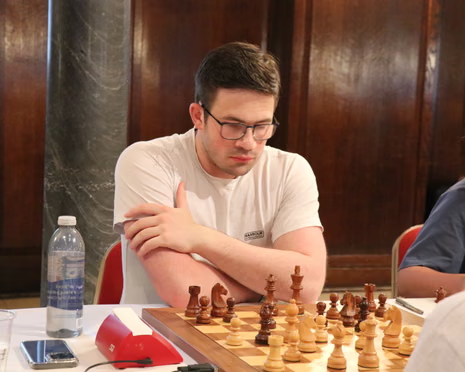
The scenic shores of the Isle of Wight recently played host to a remarkable display of tactical brilliance and competitive spirit. Within just two short years the Isle of Wight Masters at Ryde School has become a premier event. This tournament has quickly earned a reputation as one of the most popular fixtures in the British calendar. Its unique blend of coastal charm and professional organization attracts a high caliber of international grandmasters and masters. The most recent edition saw a thrilling conclusion that highlighted the rising strength of homegrown chess talent. Grandmaster Matthew Wadsworth secured a hard-fought victory to claim the prestigious title for the second consecutive year.
The final standings were incredibly tight as three players finished with an impressive score of seven points. Matthew Wadsworth edged out International Master Tobias Koelle of Germany and Grandmaster Matthew Turner of Scotland on tie-breaks. The seventh round proved to be the pivotal moment for the young British champion during the week. Wadsworth managed to defeat the formidable Dutch Grandmaster Thomas Beerdsen in a truly picturesque and complex finale. This encounter featured a high-stakes battle involving queens and rooks alongside a decisive newly promoted pawn. Such a victory against international opposition cements his status as a leading figure in the current national scene.
On a nearby board the experienced Matthew Turner produced a vintage performance against the tournament top seed. Turner defeated the highly respected Grandmaster Gawain Jones in a result that stunned many of the spectators. At fifty years of age Turner proved that deep strategic understanding remains a potent weapon in chess. This was described by many observers as a career-best result for the dedicated school teacher from Millfield. His success contributed to a memorable weekend for Scottish players who are currently enjoying a significant resurgence. The tournament provided a perfect platform for both established veterans and rising stars to test their skills.

The consistent form of players like Matthew Wadsworth raises interesting questions for the national team selectors. England is preparing for the upcoming Olympiad in Samarkand which is scheduled to take place this September. The current senior squad features legendary names who have served the country with great distinction for decades. Michael Adams and Luke McShane continue to perform at a high level despite being in their fifties. David Howell and Gawain Jones also remain core members of the team in their middle thirties. However the physical and mental demands of a long international tournament can be taxing for older players. Form can sometimes decline unexpectedly which makes the inclusion of younger talent a very serious consideration.
While the English veterans weigh their options the Scottish chess community is celebrating a new teenage sensation. Freddy Waldhausen Gordon recently completed his final requirements for the International Master title during the Graz Open. At only fifteen years old he is widely considered to be the greatest junior talent Scotland has produced. He even came close to securing a Grandmaster norm during the final round in Austria recently. Although he lost to a strong Polish opponent his performance throughout the event was remarkably mature. He previously showed his worth by preventing several losses for the Scottish team at the European championships.
Experts suggest that Waldhausen Gordon has the potential to exceed the achievements of the great Jonathan Rowson. Rowson remains the only Scotsman to have reached a peak world rating of nearly twenty-six hundred points. To reach such heights the young star will likely require significant financial backing for coaching and travel. Unlike his English counterparts he cannot access the substantial government funds recently allocated to support promising young players. The chess community in Edinburgh is now looking toward the financial sector for potential sponsorship opportunities. Historically corporate backing in the city helped propel many players toward the very top of the world rankings.
The theme of youthful dominance continued in the junior ranks with the ChessKids under-thirteen youth championship. Two of the most exciting prospects in the country secured the top spots in a global field. Supratit Banerjee took first place while the incredibly gifted Bodhana Sivanandan finished as the runner-up in style. This event is known for its intense competition and attracts the best young minds from around the world. Banerjee defeated Sivanandan in a tense final match to secure the winner’s trophy and a generous prize. Despite his heavy school workload the young champion manages to maintain a world-class level of play.
Banerjee often utilizes the opening move with the king’s knight pawn to simplify his technical opening preparation. This pragmatic approach allows him to balance his rigorous academic studies with the demands of elite chess. He is currently targeting the International Master title and a rating of twenty-four hundred points very soon. His rival Sivanandan is also breaking records and making history on the international stage at a young age. She recently became the second youngest woman ever to reach the rating required for the title of Master. Only the legendary Judit Polgar achieved this specific milestone at an earlier age than the young Briton.

The global chess scene is also bracing for the start of the Fide World Championship in Cyprus. Ahead of that massive event several elite grandmasters are competing in high-profile tournaments in Prague and Missouri. Fabiano Caruana remains the favorite for many as he continues his preparation for the upcoming Candidates tournament. Meanwhile the reigning world champion Gukesh Dommaraju is seeking to regain his best form in the Czech Republic. The level of competition in these modern tournaments is higher than it has ever been before. Fans are also looking forward to a new documentary about the famous rivalry involving Magnus Carlsen.
The digital world is also seeing the welcome return of the famous historical database known as Olimpbase. This essential resource contains the records of every chess Olympiad held since the year nineteen twenty-seven. Its restoration is a significant victory for those who value the rich history of the ancient game. Having access to these classic games allows the new generation to learn from the masters of old. The combination of historical reverence and youthful energy makes this an exciting era for the sport globally. British chess appears to be entering a golden age with talent flourishing at every age level.
The success at the Isle of Wight Masters is just one chapter in a much larger story. As the summer tournament season approaches the focus will shift toward the major international team events abroad. The blend of experienced grandmasters and fearless teenagers creates a dynamic and unpredictable competitive environment for all. Whether in a school hall in Ryde or a luxury hotel in Graz the passion remains. Supporters of the game in the United Kingdom have much to be optimistic about this year. The future of British chess looks brighter than it has for many generations of players past.
Related News:
 Tottenham shine at Everton but Frank wary of title push
 Matty Cash seals Villa win as City falter again at Villa Park
 Sarr Double Sinks Young Liverpool in Carabao Cup
 Nwaneri and Saka Secure Arsenal Win Over Brighton
 Woltemade Hot Streak Fires Newcastle Past Spurs
 Kieffer Moore Hat-Trick Ends Coventry’s Unbeaten Run
 Salah & Gravenberch Lead Liverpool to Win Against Villa
 Dyche Criticises Corner Decision as Forest Draw with United
 Caicedo Shines as Chelsea Edge Spurs in Chaotic Derby
 Granit Xhaka Rescue Earns Everton Draw at Sunderland
 Liverpool Edge Real Madrid 1-0 in Champions League Thriller
 Van de Ven Stunner Lifts 10-Man Spurs to UCL Glory
 Merino Shines as Arsenal Beat Slavia 3-0 Without Gyokeres
 Burn and Joelinton Head Newcastle to Victory Over Bilbao
 Foden shines as Man City dismantle Dortmund in dominant display
 Garnacho Spares Chelsea From Shock Champions League Loss in Baku
 Tension and Turmoil at Aston Villa v Maccabi Match
 Bellingham has ‘the edge’ among England No 10s
 Arteta Left Frustrated as Sunderland Deny Arsenal Late Win
Chelsea Cruise Past Wolves to Go Second in the Premier League
Man City Masterclass on Guardiola’s Milestone Day Exposes Liverpool Woes
Arteta Left Frustrated as Sunderland Deny Arsenal Late Win
Chelsea Cruise Past Wolves to Go Second in the Premier League
Man City Masterclass on Guardiola’s Milestone Day Exposes Liverpool Woes
 Lando Norris Dominates Brazil GP to Strengthen F1 Title Bid
 England cannot afford to be in awe of the All Blacks, warns Jamie George
 VAR Must Rein Its Neck In to Save Football’s Spirit
 Trescothick Hints Pope Will Keep Number Three Spot
 Ronaldo Confirms Final World Cup and Plans Retirement
 Mary Earps’s Manchester United Return Faces Mixed Reception
 Sam Kerr Stars in Chelsea Return with Champions League Double
 This kid is something else: Alex Scott’s rise to England call-up
 Anthony Joshua Faces Backlash Over Proposed Jake Paul Fight
 Former Lion Heskey Warns of Shortage of England Strikers
 Rogers Double Aston Villa as Leeds Slip Deeper into Trouble
 Moyes Defends Gueye After Dramatic Everton Bust-Up
 Gerrard warns Liverpool’s terrible run could worsen
 Jac Morgan to Miss Six Nations Start After Surgery
 Alexander Isak ends drought as Liverpool stop rot with win at West Ham
 Mbappe rescues Real Madrid with a penalty at Girona
 Wales hits 20,000-strong milestone in women’s football
 Stokes urges empathy for England players amid Ashes struggles
 Sports piracy surges in UK with 3.6bn illegal streams reported
 Chelsea fans inquiry launched after Charlton match policing concerns
 Arsenal vs Man Utd LIVE: Jesus Starts as Carrick Stays Loyal
 Arsenal Edge Closer to Ending ‘Nearly-Men’ Era After Cup Breakthrough
 Newcastle fans face bleak reality under Saudi ambitions
 Hugo Ekitike Becomes Liverpool’s New Cult Hero
 BBC World Cup Presenting Duties Shared Among Trio
 Steve Borthwick Turns to 2003 Icons for Inspiration
 Relegated and Then European Champions? Have I Got Spurs for You
 Japan Triumphs 1-0 Over Australia to Claim Women’s Asian Cup
 How Seven Premier League Teams Could Qualify for UCL
 Romero Vows Fight as Spurs Face Relegation Threat
 Middlesex Icons Launch Bold Revolt Against Club Leadership
 Farke’s Leeds revival: from pressure to FA Cup glory chase
 John Terry Faces Backlash Over Political Posts
 Scott Parker Leaves Burnley After Premier League Drop
 Premier League drama defines crucial weekend
 Foden Commits Future to Man City Until 2030
 Rugby Faces Crisis Over Referee Row Culture
 World Cup Ticket Price Surge Leaves Many National Teams Stunned
 Southampton Face Misconduct Charge Amid Spying Claims
 From Grassroots to Stamford Bridge: The Rise of McFarlane
 Aaron Rai Triumphs in Thrilling PGA Championship Finish
 De Zerbi Rallies Spurs To Fight Relegation Threat
 Southampton Face Player Legal Action Over Playoff Scandal
 The Battle for Wembley Sparking Unprecedented Legal Warfare
 Tuchel Defends Tough England Squad Decisions
 Guardiola to Leave Man City After Historic Era
 Farewell to an Icon: Pep Guardiola to Exit Manchester City
 Huddersfield Giants Face Fight to Save Super League Status Amid Stadium Crisis
 Safeguarding Probe Limits West Ham Owner’s Role
 England Cruise Past Costa Rica as World Cup Warm-Up Sharpens Tuchel’s Vision
 Inside the Three Lions: Bellingham Reveals Euro 2024 Flaws
 Blackpool Cricket Stands Firm Amid County Struggles
 Declan Rice Facing Burnout as Tuchel Confronts Midfield Crisis
 Ben Stokes Was Fallible But That Made Him Our Champion
 Morocco Beat Dutch in Wild World Cup Penalty Drama
 Ben Stokes Retires: The End of an Extraordinary Era
 The Last Stand of English Cricket’s Greatest Partners
 England’s 10 Men Hold Firm in World Cup Thriller
 World Cup Fever Set to Boost UK Economy by £500m