Published: 10 January 2026. The English Chronicle Desk. The English Chronicle Online.
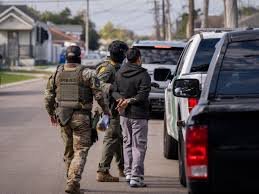
Federal immigration officers are leaving Louisiana for Minneapolis, marking a sudden shift in enforcement priorities. This federal immigration operation, which initially drew attention in New Orleans, has been closely watched for its impact on local communities and businesses. Focused on arrests of thousands, the Louisiana deployment, known as “Catahoula Crunch,” now appears to be winding down as officers are redeployed to Minnesota. Federal immigration enforcement has sparked protests and debates over legal and humanitarian implications, with immigrant communities raising concerns about profiling and safety.
Documents obtained by the Associated Press confirm that officers assigned to Louisiana began moving to Minneapolis late last week. The Department of Homeland Security stated, “For the safety of our law enforcement, operational details while under way cannot be disclosed,” when asked about the Louisiana operation’s conclusion. The original plan had anticipated thousands of arrests stretching into February, raising concerns among immigrant communities across New Orleans and surrounding areas. Many residents feared being racially profiled, with some businesses temporarily closing during the federal immigration sweep.

The Louisiana crackdown started in December with more than 200 officers deployed under border patrol chief Gregory Bovino. The operation aimed for 5,000 arrests, though by mid-December only about 370 had occurred, with many of those individuals having no criminal history. Local leaders criticized the approach, highlighting videos showing masked officers pursuing residents, including US citizens, near their homes. Governor Jeff Landry welcomed the initiative, contrasting with New Orleans’s Democratic officials who warned that the aggressive tactics risked community trust and public safety.
The federal immigration pivot to Minneapolis is part of a broader federal effort, reportedly involving more than 2,000 officers in what the Department of Homeland Security calls the largest immigration enforcement operation in US history. The Minnesota deployment has already faced protests after a federal officer fatally shot a woman, igniting local outrage. Activists argue that targeting specific immigrant communities, particularly Somali residents, could exacerbate tensions and heighten risks for civilians.
Meanwhile, in Louisiana, residents and business owners are cautiously reopening after the federal immigration crackdown. In Kenner, just outside New Orleans, many immigrant-run businesses had closed temporarily to avoid potential encounters with officers. Carmela Diaz, a US citizen born in El Salvador, has kept her restaurant, Taqueria La Conquistadora, closed for over a month but is now considering reopening. She remains apprehensive about a return of federal immigration officers, reflecting ongoing community anxiety tied to enforcement actions.
The operational shift underscores a recurring federal strategy to rapidly deploy officers to regions facing both local crime concerns and broader immigration policy objectives. While officials maintain that the efforts are lawfully focused on immigration violations, public reactions highlight the delicate balance between enforcing federal laws and protecting civil liberties. Local authorities in Louisiana had also requested National Guard assistance after recent violent incidents, including a deadly New Year’s Day attack on Bourbon Street, which killed 14 people. The Guard’s presence contrasts with immigration enforcement, offering more public reassurance compared to the highly visible federal immigration operation.
Observers note that the Louisiana deployment’s abrupt end signals a potential change in federal enforcement priorities, possibly influenced by ongoing criticism and the operational demands of Minneapolis. DHS documents suggest officers continue to be strategically repositioned as national immigration priorities evolve, especially in urban centers with diverse immigrant populations. Federal immigration remains central to national policy debates, with community leaders, politicians, and civil rights groups weighing the legal, social, and economic impacts of these large-scale operations.

Despite the operational uncertainty, many immigrant communities are cautiously resuming everyday life. Businesses that temporarily shuttered are reopening, and local leaders are working to rebuild trust with residents who felt threatened by aggressive enforcement tactics. Advocates argue that immigration policy must balance legal accountability with humanitarian considerations, ensuring that enforcement does not unfairly target citizens or disrupt community cohesion.
Federal officials maintain that the redeployment to Minneapolis is part of broader immigration enforcement, emphasizing that arrests are carried out according to established procedures. Critics continue to question the proportionality and transparency of these actions, citing video evidence and community accounts of fear and intimidation during the Louisiana sweep. Meanwhile, policymakers and civil rights organizations remain focused on ensuring that future operations respect both legal norms and public safety, while addressing systemic concerns surrounding immigration policy in the United States.
As federal officers continue their work in Minneapolis, the focus on federal immigration remains highly visible, with national debate intensifying around enforcement methods and community impact. The Louisiana deployment’s closure may provide lessons for both federal agencies and local leaders about managing enforcement in densely populated urban areas while minimizing social disruption. Federal immigration continues to spark controversy, demonstrating the challenges of balancing law enforcement, civil rights, and community trust.
Related News:
 Two National Guard Soldiers Critically Injured Near White House
 Putin Intensifies Territorial Demands Before US Talks
 US National Guard Member Killed in DC Shooting
 Trump to Recheck Green Cards from 19 Nations After DC Attack
 Trump to pause migration from ‘third-world countries’
 US Defence Chief on Drug Boat Strike: “Did Not See Survivors”
 Republicans Hold Tennessee Seat Despite Democratic Surge
 Franklin Turtle, Sabrina Carpenter Slam US Social Media Use
 American Mother Extradited From UK to U.S. on Murder Charges
 Russia losses Ukraine war peace talks intensify amid rising deaths
 US Cities Erupt in Protests Against Trump’s Venezuela Military Action
 Trump Escalates Minnesota Immigration Surge Amid Rising Tensions
 Capitol Attack Anniversary Sparks Deep Political Divide
 Portland Shooting: Federal Agents Open Fire Near Hospital
 Trump Labels Renee Good a ‘Paid Agitator’ After Minneapolis ICE Killing
 England Grapples with Unprecedented Bluetongue Virus Outbreak: Entire Nation Declared Infected Zone
 Whether You Win or Lose, Some Fights Are Worth Fighting’: The Unlikely Origins of the Largest-Ever Climate Case
 Tragedy Strikes Sylhet Airport: Technician Killed in Boarding Bridge Wheel Explosion
 Singapore Corruption Scandal: Details Emerge on Iswaran’s Luxury Flight and Ties to Tycoon Ong Beng Seng
 Hundreds of Swimming Pool Closures Leave Children ‘At Risk of Drowning’, Union Warns
 Reeves Faces Setback as Labour May Miss Homes Target
 Kate Winslet to Narrate Film Highlighting King’s Environmental Mission
 Army Officers Orders to Cut Ties with Men-Only Clubs
 Trump’s UK Ambassador Urges North Sea Drilling to Strengthen US Ties
 Ryanair Chief UK Economy ‘Doomed’ Under Labour
 UK Bans Fake Numbers: Scammers Lose Their Trick
 M&S Profits More Than Halve After Cyber-Attack
 Vibe coding’ named Collins dictionary’s word of the year
 Patients to Test Health at Home to Ease NHS Winter Pressure
BBC to Apologise Over Edited Trump Speech Amid Backlash
Patients to Test Health at Home to Ease NHS Winter Pressure
BBC to Apologise Over Edited Trump Speech Amid Backlash
 Britain deploys RAF specialists to assist Belgium with drone threats
 Millionaires group urge Reeves to introduce wealth tax to ‘lift kids out of poverty’
 From Lego to Pokémon: How Adults Are Driving UK Toy Market Growth
 Reeves rejects £1bn plea for NHS redundancy payouts
 Northern Lights may illuminate UK skies this week
 PM Condemns Leaks, Vows Loyalty to Ministers and Stability
 Phillipson Accused of Appeasing Unions by Diluting EBacc
 Major Rent Reform Ends No-Fault Evictions in England
 Saka Solidifies Role as Tuchel’s Key England Lieutenant
 Greene Pushes Epstein Files Amid Trump Fallout
 December Run-Off in Chile as Election Produces No Winner
 Zelenskyy Signs Fighter Jet Deal Amid Russian Drone Attacks
 Stroke Patient Mistaken for Drunk, Care Delayed
 Sundar Pichai Cautions on AI Hype and Market Risks
 What Now for the Queen’s Childhood Playhouse After Andrew’s Eviction?
 Shadow Fleet at Sea: Europe’s Battle Against Illicit Oil Shipping
 Tiny Curacao Makes History as Smallest Nation to Reach World Cup
 Snow and Ice Cause Travel Chaos in North Yorkshire
 Man Denies Stealing Bronze Age Gold from Museum
 Director Michael Caton-Jones Reflects on Career and Beginnings
 Inside the Helpline Protecting Missing Children in the UK
 Boots Showstopper Beauty Bundle Outshines Many Advent Calendars This Holiday Season
 PlayStation PS5 Deals Hit Lowest Prices Ahead of Black Friday
 Runaway Driver Caught by DNA Evidence
 US Suspends Afghan Immigration After White House Shooting
 Georgians Defy Government Crackdown After Year of Protests
 Five-Year-Old Dies After Rare Tonsil Surgery Complication
 ICC to Rule on Duterte’s Provisional Release
 Starmer Says Labour’s Economic Plan Needs Years to Deliver
 Rusty Bond-Era Aston Martin Restored to £1m Glory
 ‘Extinct’ Antelope Returns to Sahara, Bringing Hope
 IndiGo Cancels Hundreds of Flights Amid Pilot Shortages
 UK unemployment rises to four-year high of 5.1% before budget
 Young Britons Face Heaviest Burden from Ageing Population, Lords Warn
 Wiltshire Police Use Lasso to Catch Rampaging Village Goat
 Australia Face Big Changes as Cummins and Lyon Ruled Out of Ashes
 U‑Turn on Farmers’ Inheritance Tax Sparks Political Firestorm
 Khaleda Zia Death in Bangladesh: First Female PM Dies at 80
 Facebook Slow to Remove Bondi Attack Praise, Anti-Hate Group Claims
 Damien Martyn in Induced Coma After Meningitis Diagnosis
 Children to Receive Home Vaccines as England Acts
 Childhood Hypertension Sparks Urgent UK Testing Calls
 FTSE 100 Hits 10,000: UK Market Celebrates Record Year
 GMB Union Faces Turmoil Amid Female Leaders’ Claims
 Raducanu Battles Injury as Britain Exit United Cup
 Albanese Opens Door to Bondi Royal Commission Amid Rising Pressure
 MoJ Prison Leasing Scandal Triggers £100m Public Cost
 Saudi Officials Report Zubaidi Flee Before Yemen Peace Talks
 Cambridge College Faces Backlash Over Private School Recruitment
 Manchester United Fan Group Targets Jim Ratcliffe Over Club Chaos