Published: 20 January 2026. The English Chronicle Desk. The English Chronicle Online.
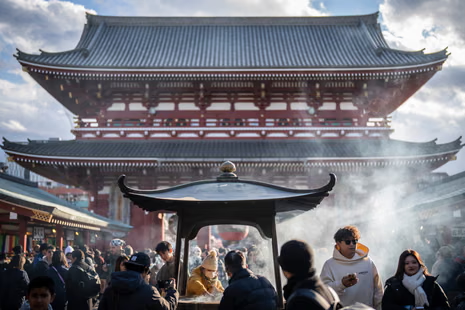
Chinese tourism to Japan has sharply declined, highlighting the growing impact of Taiwan tensions. The number of visitors from mainland China fell by approximately 45% in December compared to last year, dropping to roughly 330,000 tourists, according to Japan’s transport ministry. This decline reflects escalating diplomatic strains between Beijing and Tokyo, as security concerns over Taiwan dominate regional discourse. Despite this slump, Japan continues to attract international tourists, reaching a record 42.7 million visitors in 2025, surpassing the previous record of 37 million in 2024.
The downturn in Chinese tourism followed remarks by Japan’s Prime Minister, Sanae Takaichi, who suggested her country could intervene militarily if China attempted to invade Taiwan. Beijing considers Taiwan a Chinese province and has not excluded using force for reunification. Takaichi, a conservative with hawkish policies, stated that any crisis threatening Japan’s existence could trigger deployment of self-defence forces, alarming Chinese authorities and citizens alike.

Shortly after the statements, China urged its citizens to avoid travelling to Japan, citing potential safety risks. In addition, Beijing advised students to reconsider studying in Japan, postponed cultural exchanges, and delayed Japanese film releases in China. Japanese authorities responded by warning around 100,000 citizens living in China to exercise caution and respect local customs, emphasising safety in interactions with local communities.
China’s tourism historically represents a vital component of Japan’s travel economy. In 2025, almost 7.5 million Chinese visitors arrived in Japan during the first nine months alone, accounting for roughly a quarter of all foreign tourists. Chinese travellers are especially significant economically, with an average spend 22% higher than other visitors and total expenditure reaching $3.7 billion in the third quarter.
Although the December slump is notable, Japan’s transport minister, Yasushi Kaneko, stressed that overall international arrivals offset the reduction in Chinese tourists. He stated, “While the number of Chinese tourists in December decreased, we attracted sufficient visitors from other countries to maintain strong tourism performance. We hope Chinese visitors will return soon.”
The Taiwan dispute has increasingly influenced Japanese foreign and security policy. Japan has strengthened defences of its outlying islands, particularly Yonaguni, close to Taiwan, and the uninhabited Senkaku Islands in the East China Sea, claimed by China but administered by Japan. Military drills and surveillance operations near these islands have intensified amid China’s growing military activity.
Regional tensions have been further complicated by global geopolitics, including uncertainty over US commitments under the Trump administration and broader concerns stemming from Russia’s invasion of Ukraine. Japan faces the delicate task of balancing strong security measures while preserving essential economic and cultural ties with China.

Despite the diplomatic turbulence, Japan remains a major tourist magnet due to its appealing pop culture, cuisine, and historically significant sites. Travel operators and businesses continue to hope for the return of Chinese visitors, given their economic importance and longstanding travel patterns. Experts warn that the situation may persist if political rhetoric escalates further, potentially affecting inbound tourism for months or even years.
The ongoing debate over Japan’s role in a potential China-Taiwan conflict underscores the intertwined nature of security and economic interests in East Asia. Tourism, once considered apolitical, now faces direct consequences from international relations and military posturing. Local businesses, including hotels, restaurants, and cultural sites, are monitoring developments closely, as Chinese tourism has been an essential revenue source.
In response, Japanese officials continue to encourage alternative markets while seeking diplomatic channels to reassure Beijing. Efforts include promotional campaigns targeting visitors from Europe, North America, and Southeast Asia, aiming to sustain Japan’s record-breaking tourism momentum. Meanwhile, analysts predict that if tensions over Taiwan ease, Chinese tourism could recover quickly, given enduring cultural and culinary attractions that maintain Japan’s appeal.
For now, the tourism slump highlights the fragile balance between geopolitics and travel. The interplay between military caution and economic vitality presents ongoing challenges for policymakers, travel industries, and international stakeholders invested in maintaining both security and prosperity in the region.
Related News:
 George Clooney and Amal Clooney Receive French Citizenship
 Shock US Raid: Maduro Pleads Not Guilty in Manhattan Court
 UK and France Agree Troop Deployment Plan for Ukraine
 Capitol Attack Anniversary Sparks Deep Political Divide
 EU Weakens as Trump Targets Venezuela and Greenland
 Saudi Officials Report Zubaidi Flee Before Yemen Peace Talks
 Venezuela Oil Deal Opens Tensions with US Control
 UK Targets in New York Bomb Threat Hoax: Man Jailed
 Trump Plans Venezuela Meeting, Warns of Cartel Land Strikes
 Dutch Nationwide Fireworks Ban Expected to Transform New Year Traditions
 Gambia Supreme Court Hears Case to Overturn FGM Ban
 Trump Labels Renee Good a ‘Paid Agitator’ After Minneapolis ICE Killing
 Indonesia blocks Grok chatbot over sexual content risk
 US Citizens Warned to Venezuela Flee Amid Paramilitary Threats
 UK urges peaceful Iran transition amid escalating protests
 British skier killed in La Plagne avalanche tragedy
 UK Guantánamo Settlement Paid to Tortured Detainee
 Sikh Activist Warned Over Rising Security Threats in UK
 Mandelson apologises over Epstein ties after public scrutiny
 BBC moves to dismiss Trump $10bn lawsuit over Panorama edit
 Trump targets Iran trade with 25% tariff warning
 Rudd successor: Defence chief and former ministers considered
 Russia Moves to Bypass Sanctions, Securing India Oil Imports
 US Senate rejects resolution limiting Trump military powers
 Venezuela regime claims release of political prisoners signals new era
 Friedman Uninvited From 2024 Adelaide Writers’ Week
 Trump Calls Greenland Critical for US Security After Denmark Talks
 Trump: Iran Killing Has Stopped, Strike Threats Pulled Back
 Gulf states warn Trump Iran strikes risk wider Middle East war
 Machado Trump medal gesture reshapes Venezuela power struggle
 Greenland defence seen as shared Nato duty amid troop arrivals
 Gulf states warn Trump Iran strikes risk wider Middle East war
 Geopolitical football: Iran, Trump and the World Cup clash
 Canada-China trade gains momentum in new strategic partnership
 Trump Receives Machado’s Nobel Medal in White House Meeting
 Iran unrest slows under brutal crackdown and global tensions
 Trump Allies Pursue $200m European Gas Pipeline Deal
 Syria President Declares Victory as Ceasefire Reached with SDF
 US Considers Asylum for British Jews Amid Rising Antisemitism
 Starmer Challenges US Over Controversial Greenland Deal
 China embassy London approval expected this week
 UK Banks Granted Reprieve as BoE Delays Basel III Capital Rules Until 2028
 Singapore Corruption Scandal: Details Emerge on Iswaran’s Luxury Flight and Ties to Tycoon Ong Beng Seng
 Corfu Beyond the Crowds: Discovering Serenity in Southern Villages and Hidden Taverns
 Peter Andre Praises Son Junior’s ‘Quiet Season’ Amid Ongoing Family Dispute
 Massive 641-Mile Storm Set to Batter UK with 15 Hours of Rain and Strong Winds
 Jeremy Clarkson’s Pub: A Sunday Lunch Like No Other
 Scottish Government Mandates Single-Sex Toilets and Changing Facilities in Schools
 Reeves Faces Setback as Labour May Miss Homes Target
 Kate Winslet to Narrate Film Highlighting King’s Environmental Mission
 Trump’s UK Ambassador Urges North Sea Drilling to Strengthen US Ties
 UK Bans Fake Numbers: Scammers Lose Their Trick
 Vibe coding’ named Collins dictionary’s word of the year
BBC to Apologise Over Edited Trump Speech Amid Backlash
Vibe coding’ named Collins dictionary’s word of the year
BBC to Apologise Over Edited Trump Speech Amid Backlash
 Millionaires group urge Reeves to introduce wealth tax to ‘lift kids out of poverty’
 Reeves rejects £1bn plea for NHS redundancy payouts
 PM Condemns Leaks, Vows Loyalty to Ministers and Stability
 Phillipson Accused of Appeasing Unions by Diluting EBacc
 Saka Solidifies Role as Tuchel’s Key England Lieutenant
 Greene Pushes Epstein Files Amid Trump Fallout
 Zelenskyy Signs Fighter Jet Deal Amid Russian Drone Attacks
 Sundar Pichai Cautions on AI Hype and Market Risks
 Shadow Fleet at Sea: Europe’s Battle Against Illicit Oil Shipping
 Snow and Ice Cause Travel Chaos in North Yorkshire
 Director Michael Caton-Jones Reflects on Career and Beginnings
 Inside the Helpline Protecting Missing Children in the UK
 PlayStation PS5 Deals Hit Lowest Prices Ahead of Black Friday
 US Suspends Afghan Immigration After White House Shooting
 Five-Year-Old Dies After Rare Tonsil Surgery Complication
 Starmer Says Labour’s Economic Plan Needs Years to Deliver
 ‘Extinct’ Antelope Returns to Sahara, Bringing Hope
 IndiGo Cancels Hundreds of Flights Amid Pilot Shortages
 Young Britons Face Heaviest Burden from Ageing Population, Lords Warn
 U‑Turn on Farmers’ Inheritance Tax Sparks Political Firestorm
 Khaleda Zia Death in Bangladesh: First Female PM Dies at 80
 Cambridge College Faces Backlash Over Private School Recruitment
 Bereaved Fathers Gain New Paternity Leave Rights in UK
 Minnesota Sues Trump Administration Over ICE Surge
 Woman Jailed for Life After Killing E-Bike Rider in Tragic Mistaken Identity Case
 Sydney Shark Attack Surge Shocks Australia Beaches