Published: 31 January 2026. The English Chronicle Desk. The English Chronicle Online
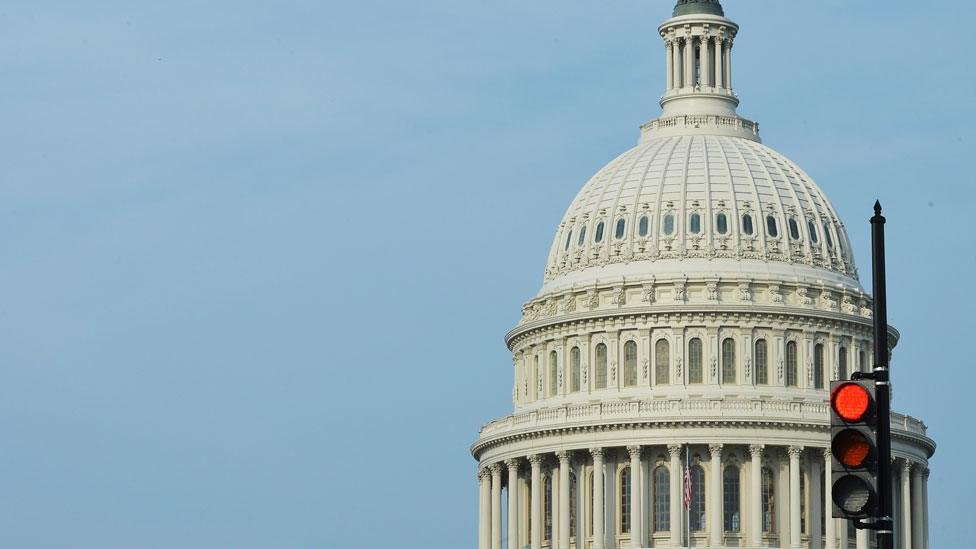
Parts of the United States federal government entered a partial shutdown on Saturday after funding expired for several departments, following a bitter congressional standoff centred on homeland security spending and immigration enforcement. The lapse marks another moment of political paralysis in Washington, highlighting deep divisions between Democrats and Republicans over border policy, federal accountability, and public trust in law enforcement.
The immediate trigger for the shutdown was the failure of Congress to pass a bill authorising continued funding for the Department of Homeland Security. Democratic senators refused to support the measure without amendments that would impose new restrictions on federal agents involved in immigration enforcement operations. Their stance follows the killings of two US citizens in recent weeks, incidents that have intensified scrutiny of enforcement practices linked to former president Donald Trump’s mass deportation campaign.
Alex Pretti was killed last week in Minneapolis, while Renee Good died earlier in January. Both deaths occurred amid a surge in federal immigration activity in Minnesota’s largest city, ordered under Trump-era directives that continue to shape enforcement priorities. Democrats argue these incidents exposed serious accountability gaps and demanded immediate legislative safeguards before approving further funding.

Because the Department of Homeland Security bill was tied to a broader spending package, the Democratic blockade also jeopardised funding for other departments. Republicans had sought approval for a larger bundle of appropriations that needed to clear the Senate before the government’s spending authority expired late on Friday. When negotiations collapsed, funding lapsed automatically, triggering a partial shutdown.
On Friday, the Senate managed to pass a package of five bills that would fund most government departments through September, alongside a short-term measure extending homeland security funding for two weeks. However, that legislation now awaits approval in the House of Representatives, which is not scheduled to reconvene until Monday. Until then, the funding lapse remains in place.
The immediate effects of the shutdown are expected to be limited over the weekend. The disruption is unlikely to be felt fully until Monday, when federal offices reopen for the next business week. Even then, officials suggest the practical consequences may be uneven and gradual rather than immediate.
In addition to homeland security, Congress has not yet finalised full-year appropriations for several major departments. These include defence, education, labour, health and human services, transportation, and housing and urban development. While some functions will continue under contingency plans, others may face delays, furloughs, or reduced operations.
Donald Trump has indicated he would sign the spending package approved by the Senate once it reaches his desk. The White House has publicly supported the legislation, framing the shutdown as a temporary disruption caused by partisan disagreement rather than executive resistance.
On Friday evening, Russell Vought, the director of the Office of Management and Budget, issued a memo instructing affected agencies to prepare for an orderly shutdown. The guidance applied to a wide range of departments, including defence, homeland security, labour, health, education, transportation, housing, national security, and state operations.
Vought said the administration would continue working with Congress to resolve the dispute and complete appropriations for the 2026 fiscal year. He expressed hope that the funding lapse would be short, though he acknowledged that negotiations remained unresolved.
Democratic leaders have framed their position as a matter of basic accountability rather than political brinkmanship. Senate minority leader Chuck Schumer said his party was seeking clear standards for federal agents, particularly those involved in immigration enforcement.
Schumer has called for a ban on officers wearing masks during operations, a requirement for body cameras, and the introduction of a formal code of conduct. He also wants alleged violations to be investigated by an independent body rather than internal review mechanisms.
Another key demand is a ban on so-called roving patrols, a practice where agents target individuals they believe are in the country unlawfully without specific warrants or prior intelligence. Democrats argue this approach increases the risk of profiling, wrongful detention, and unnecessary violence.
“These are not radical demands,” Schumer said, describing them as basic expectations that Americans already hold for law enforcement agencies. He argued that refusing to address these issues would further erode public confidence.
Republicans have rejected that characterisation, accusing Democrats of exploiting tragic incidents to weaken border enforcement. GOP leaders insist that restrictions proposed by Democrats would undermine agents’ ability to do their jobs effectively.
Negotiations over potential amendments to the homeland security bill are expected to continue over the next two weeks. Whether a compromise can be reached quickly remains uncertain, particularly given the narrow margins in both chambers of Congress.
The bill’s prospects in the Republican-controlled House are especially unclear. Speaker Mike Johnson acknowledged earlier this week that a short shutdown was possible before lawmakers returned to Washington. He said the House intended to do its job and expressed confidence that the government would eventually be funded.
However, Johnson faces internal pressure from his own party. Republicans hold the House by just one seat, with 218 seats compared to the Democrats’ 213. That slim margin gives significant leverage to small factions within the party.
Several rightwing lawmakers have demanded that any spending bill be paired with the Save Act. The proposed legislation would impose stricter identification requirements for voting, measures critics say would disenfranchise millions of eligible voters, particularly minorities and low-income Americans.
Democrats have strongly opposed linking the Save Act to government funding, warning that doing so could derail negotiations entirely. Their resistance adds another layer of complexity to an already fragile legislative process.
Despite the funding lapse, Immigration and Customs Enforcement is unlikely to suspend deportation operations. The agency received significant funding, estimated at $75bn, from the One Big Beautiful Bill Act passed last year. That money remains available for use.
In addition, the administration has the authority to require certain employees to continue working during a shutdown, particularly in areas deemed essential for national security or public safety. As a result, immigration enforcement is expected to continue largely uninterrupted.
The current shutdown follows a much longer and more disruptive funding lapse that began in October and lasted 43 days. That episode was the longest in recent US history and had widespread economic and social consequences.
The earlier shutdown stemmed from a Democratic push to link government funding to an extension of tax credits that reduced premiums for Affordable Care Act health plans. Those subsidies were due to expire at the end of 2025, raising concerns about healthcare affordability. After weeks of stalemate, seven moderate Democratic senators eventually joined Republicans to reopen the government. In exchange, Senate majority leader John Thune promised a vote on legislation extending the tax credits.
When the vote took place, Republicans blocked the measure, and the subsidies expired as scheduled. Democrats have since cited that episode as evidence that compromises made under pressure are not always honoured.

That history now looms over current negotiations. Democratic leaders say they are wary of accepting short-term assurances without concrete legislative commitments. For federal workers and the public, the uncertainty adds to frustration with repeated shutdowns. While many essential services continue, prolonged funding lapses can disrupt pay, planning, and public confidence in governance.
Economists warn that even short shutdowns carry hidden costs. Delayed contracts, postponed research, and interrupted services can ripple through the economy long after funding is restored.
Public reaction remains mixed. Some Americans blame Congress broadly for dysfunction, while others align strongly with one party’s stance on immigration and accountability. As lawmakers prepare to return to Washington, pressure is mounting to resolve the dispute quickly. Business groups, unions, and state governments have urged Congress to avoid prolonged disruption.
Whether the shutdown ends within days or drags on into February will depend on the willingness of both sides to compromise. With narrow margins and high political stakes, the path forward remains uncertain.
What is clear is that the shutdown reflects deeper structural conflicts in US politics. Immigration, law enforcement oversight, and voting rights continue to collide with the basic task of funding government operations. For now, the federal government is operating in partial shutdown mode. Americans are once again watching Congress struggle to perform one of its most fundamental responsibilities.
Related News:
 US National Guard Member Killed in DC Shooting
 Trump to pause migration from ‘third-world countries’
 Franklin Turtle, Sabrina Carpenter Slam US Social Media Use
 Trump officials continue false claims after Alex Pretti shooting
 Tories Push to Dilute Labour’s Workers’ Rights Bill
 It’s time to come clean on the China spy case
 Rachel Reeves Admits Renting Home Without Required Licence
 Experts Question HMRC Over Possible Child Benefit Privacy Breach
 Phillipson urges careful review of gender recognition guidance
 French Taxi Driver Cleared in David Lammy Theft Case After Fare Dispute
 China-critical UK academics face ‘extremely heavy’ pressure from Beijing
 Met Police Culture Makes Racial Harm ‘Inevitable’
 Remaining rebel Labour MPs have whip restored
 Tim Davie resigns as BBC director general amid bias claims
 Palace to reinstate hyphen in Andrew’s surname
 BBC Apologises to Trump but Rejects $1bn Compensation Claim
 Major Rent Reform Ends No-Fault Evictions in England
 Peers Flood Assisted Dying Bill with 942 Amendments
 US Justice Department Files Lawsuit Against California Over Partisan Voting Maps
 Your Party Turmoil Deepens Over Withheld Donations
 Mahmood Plans Major Crackdown on Illegal Migration
 UK Unveils Fast-Track Deportation and Asylum Overhaul
 Trump Deploys DHS to Charlotte in Major Arrest Operation
 UK Asylum Overhaul Sparks Debate Over Human Rights and Deportations
 UK Asylum Reforms: Temporary Refugee Status and Faster Deportations
 Mahmood Defends Tough Overhaul of UK Asylum System
 Scottish Ministers Express Alarm Over UK Asylum Reforms
 South African Detained After Neo-Nazi Rally in Australia
 Westminster Advances Legacy Bill Amid Criticism
 Minister Defends Tough New Asylum Reform Plan
 UK Net Migration Falls Sharply After ONS Revisions
 Federal Court Blocks Texas Republican Maps Over Racial Bias
 Only One Republican Opposes Mass Release of Epstein Files
 Congress Approves Release of Epstein Files, Trump Expected to Sign
 Senedd Suspends Politician Over Offensive Racial Slur
 Trump Signs Bill Releasing Justice Department Files on Epstein
 Trump Slams Democrats With ‘Seditious’ Death Claim
 Covid Response in NI ‘Chaotic’, Says Inquiry
 Texas Governor Faces Lawsuit From CAIR
 Peers Get Extra Time to Debate Assisted Dying Bill
 Putin Intensifies Territorial Demands Before US Talks
Trump to Recheck Green Cards from 19 Nations After DC Attack
Putin Intensifies Territorial Demands Before US Talks
Trump to Recheck Green Cards from 19 Nations After DC Attack
 ICC to Rule on Duterte’s Provisional Release
 Chinese & Japanese Boats Clash Near Disputed Islands
 Putin Meets US Envoy Amid Key Ukraine Peace Talks
 US Defence Chief on Drug Boat Strike: “Did Not See Survivors”
 Republicans Hold Tennessee Seat Despite Democratic Surge
 Russia losses Ukraine war peace talks intensify amid rising deaths
 Trump Escalates Minnesota Immigration Surge Amid Rising Tensions
 Homeland security agents deployed amid Minneapolis protests
 Democrats Push Affordability to Challenge Trump Ahead of Votes
 US Senator Mark Kelly Sues Pentagon Chief Hegseth Over Demotion Threats
 Plans to Limit Jury Trials Face Retreat After Mounting Opposition
 Australia grants Asio powers to designate hate groups under new laws
 Greenland Faces Pivotal Summit Over Arctic Power Struggle
 Trump Threatens Strong Action If Iran Executes Protesters
 Government Unveils Northern Powerhouse Rail Plans
 Labor’s Hate Speech and Gun Laws Face Federal Roadblocks
 Trump press secretary attacks reporter over ICE question
 Kyrsten Sinema Faces High-Profile Lawsuit Over Marriage Interference
 Trump Receives Machado’s Nobel Medal in White House Meeting
 ‘He Believed Help Was Coming’: Why Iran’s Protesters Feel Betrayed
 Criticism of Netanyahu Risks Offence Under Australia Law
 Trump Fed bid heads to Supreme Court
 EU Says US Ties Have Suffered ‘Big Blow’ After Greenland Crisis
 ‘Unfathomable’: Australian veterans rebuke Trump claims
 Tim Walz urges Trump to withdraw federal agents immediately
 Border Patrol Commander Leaves Minneapolis After Fatal Shooting
 ‘Evil is resilient’: Pressure Mounts on Stephen Miller
 Fulton election raid hits Georgia election office
 NSW Inquiry Targets “Globalise the Intifada” in Public Spaces
 UK and EU Signal Fresh Push for Defence Cooperation Talks
 Files Link Andrew to Epstein Dinner After Prison Release
 Labour Attacks Reform Candidate Over Tommy Robinson Backing
 Shadow Fleet at Sea: Europe’s Battle Against Illicit Oil Shipping
 Starmer Says Labour’s Economic Plan Needs Years to Deliver
 Khaleda Zia Death in Bangladesh: First Female PM Dies at 80
 Minnesota Sues Trump Administration Over ICE Surge
 US Senate rejects resolution limiting Trump military powers
 Woman Jailed for Life After Killing E-Bike Rider in Tragic Mistaken Identity Case