Published: 13 February 2026. The English Chronicle Desk. The English Chronicle Online
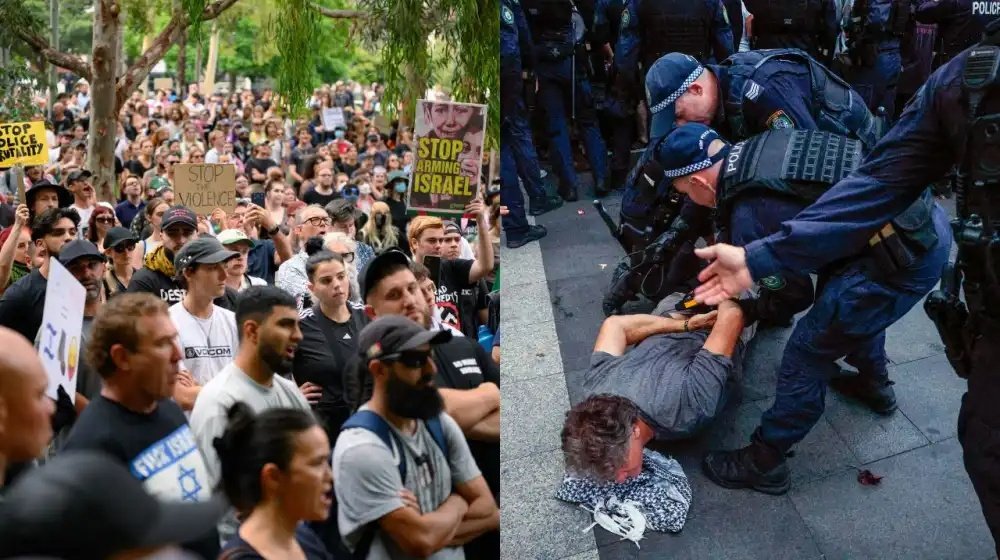
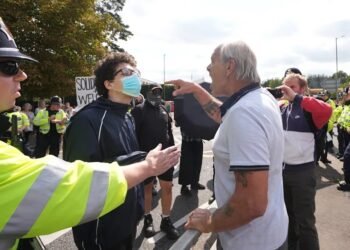
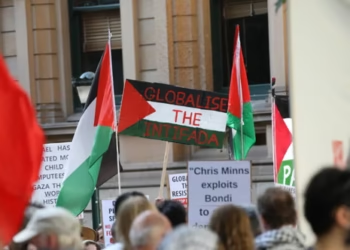
Authorities in New South Wales have launched a formal investigation into police conduct after violent confrontations erupted during a major protest in Sydney earlier this week, an incident that has intensified national debate over civil liberties, policing powers and the limits of public dissent. The inquiry, announced by the state’s independent oversight body, comes after widespread circulation of videos appearing to show officers striking demonstrators and forcibly dispersing a group of Muslim men who were praying during the rally.
The investigation will be carried out by the Law Enforcement Conduct Commission, which said it had received a significant number of complaints about the police operation. Officials stated that examining the matter was in the public interest and confirmed that investigators would review all available evidence, including video recordings, eyewitness accounts and operational documentation. Public hearings may also be held before a final report is delivered to the state parliament, a step that underscores the seriousness with which authorities are treating the allegations.

The protest itself drew thousands of demonstrators opposed to a visit by Isaac Herzog, whose presence in Australia has sparked strong reactions from both supporters and critics. Some activists accuse him of inflammatory rhetoric related to the war in Gaza, an allegation he has denied. The Australian government defended its decision to host him, arguing that the visit was intended to show solidarity with Jewish communities following a recent antisemitic attack at Bondi Beach. Officials said the invitation was meant to promote healing and unity, though critics argued it risked inflaming tensions.
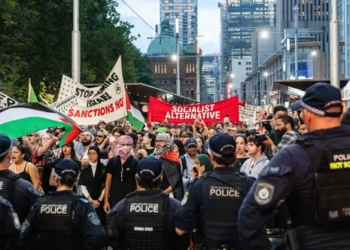
As demonstrators gathered, police enforced special restrictions introduced by the state government for what authorities classified as a major event. These temporary powers allowed officers to control movement in designated areas and required protesters to remain stationary rather than march. The rally began shortly after activists lost a last-minute legal challenge seeking to overturn that designation. Law enforcement officials later reported that several melees broke out when participants refused orders to disperse, leading to 27 arrests, nine criminal charges and reports that ten officers were assaulted.
Despite those claims, footage shared online painted a chaotic and contested picture of the confrontation. Clips appeared to show officers striking protesters and dragging individuals along the ground, scenes that quickly circulated on social media and drew sharp criticism from civil rights advocates. One state legislator said she was injured during the clashes, further fuelling calls for scrutiny. Supporters of the demonstrators argued that the images suggested excessive force and disproportionate policing of a largely peaceful gathering.
The NSW Police Force has defended its actions, maintaining that officers acted professionally in difficult circumstances. Police Commissioner Karen Webb said personnel displayed remarkable restraint despite provocation and emphasised that the crowd had repeatedly refused lawful directions. According to her account, the situation escalated only after demonstrators ignored instructions to move from restricted zones, forcing officers to intervene to maintain public order.
Political leaders have also weighed in, reflecting the sensitive balance between public safety and civil rights. State premier Chris Minns said officers had been placed in what he described as an impossible situation, urging the public not to judge the operation solely on brief video clips lacking full context. He rejected calls to apologise to Muslim community members who said their prayer gathering had been disrupted, stating that police would not have intervened unless they believed violence or disorder was imminent. At the same time, he acknowledged that perceptions matter and that transparency would be essential for restoring confidence.
Police Minister Yasmin Catley confirmed that authorities would cooperate fully with the inquiry, emphasising that independent oversight is a cornerstone of democratic policing. She described the commission as a strong and impartial body whose findings would be respected regardless of outcome. Such assurances are intended to reassure the public that the investigation will be thorough and unbiased, though critics remain sceptical until results are published.
Activist organisations have seized on the incident as evidence of what they describe as a troubling pattern. The protest was organised by the Palestine Action Group, whose spokesperson Amal Naser alleged that the police response resembled a riot carried out by authorities rather than demonstrators. She argued that the right to protest is fundamental and warned that heavy-handed tactics risk eroding democratic freedoms. Similar concerns were voiced by the Australia Palestine Advocacy Network, whose representative Katie Shammas said the events highlighted what she called a shrinking space for peaceful dissent.
Religious leaders also entered the debate. The Australian National Imams Council said the scenes did not reflect the inclusive society many Australians believe their country represents and reiterated its call for an apology. For many observers, the controversy has become about more than one protest. It has evolved into a wider discussion about how authorities manage demonstrations connected to international conflicts and whether communities feel equally protected by law enforcement.
Legal experts note that major-event powers, while not unprecedented, are always contentious because they temporarily expand police authority to restrict movement and control gatherings. Governments often justify such measures as necessary for security, especially when large crowds and visiting dignitaries are involved. Civil liberties advocates, however, argue that extraordinary powers can be misused or applied unevenly, particularly in politically sensitive situations. The Sydney clashes have therefore revived long-standing questions about where the line should be drawn between maintaining order and preserving the right to protest.
The timing of the incident has added to its political resonance. Public discourse in Australia has been increasingly shaped by debates over free speech, social cohesion and responses to international crises. Demonstrations linked to overseas conflicts frequently draw passionate crowds, reflecting the country’s diverse population and strong traditions of civic participation. Yet such gatherings can also test policing strategies, especially when emotions run high and opposing groups converge in close proximity.
Observers say the coming investigation will be closely watched not only for its findings but also for what it reveals about institutional accountability. Oversight bodies play a crucial role in democratic systems by ensuring that law enforcement agencies operate within legal and ethical boundaries. A transparent process, analysts suggest, could help restore trust regardless of whether it ultimately criticises or vindicates police actions. Conversely, any perception of bias or secrecy could deepen public mistrust and prolong controversy.
For demonstrators who attended the rally, the stakes feel personal. Many insist they were exercising their right to peaceful assembly and were met with unnecessary force. Some say they fear attending future protests if similar tactics are used. Police, on the other hand, maintain that they must be able to enforce lawful directions to prevent disorder and protect both participants and bystanders. The tension between those perspectives reflects a broader global challenge faced by democratic societies: how to safeguard both security and freedom in moments of heightened political tension.

The outcome of the inquiry is unlikely to satisfy all sides, yet it may provide clarity about what happened on the streets of Sydney and whether procedures were followed. Investigators are expected to examine operational planning, communication between commanders and officers, and the proportionality of force used. Their conclusions could lead to recommendations ranging from policy changes to disciplinary action, depending on what the evidence shows.
As the process unfolds, the episode stands as a reminder of how quickly local events can become national flashpoints in an age of instant video sharing and rapid public reaction. A confrontation lasting only minutes can generate days of headlines and spark debates that reach far beyond the original scene. Whether the inquiry ultimately reinforces confidence in policing or exposes serious shortcomings, it will likely shape discussions about protest rights and law enforcement accountability in Australia for months to come.
Related News:
 China-critical UK academics face ‘extremely heavy’ pressure from Beijing
 US Justice Department Files Lawsuit Against California Over Partisan Voting Maps
 Trump Deploys DHS to Charlotte in Major Arrest Operation
 Congress Approves Release of Epstein Files, Trump Expected to Sign
 Texas Governor Faces Lawsuit From CAIR
 Chinese & Japanese Boats Clash Near Disputed Islands
 Putin Meets US Envoy Amid Key Ukraine Peace Talks
 UK and EU Signal Fresh Push for Defence Cooperation Talks
 Thousands Protest ICE Operations in Nationwide US Day of Action
 Trump Administration Dismisses 17 Immigration Judges, Sparking Debate Over Judicial Independence
 Jailed Georgian Opposition Leaders Warn UK of Iranian Links to Ruling Party
 British Woman in Iran ‘Losing Hope’ Amid Ongoing Detention
 Johnson Approved China’s London ‘Super-Embassy’ in 2018
 BBC Journalist Held and Interrogated in Vietnam
 UK University Suspends Human Rights Research Following Pressure from China
 French Taxi Driver Cleared in David Lammy Theft Case After Fare Dispute
UK University Faces Counter-Terror Probe Over China Pressure
French Taxi Driver Cleared in David Lammy Theft Case After Fare Dispute
UK University Faces Counter-Terror Probe Over China Pressure
 Just Stop Oil Protesters Convicted Amid Climate Defence Row
 BBC to Apologise Over Edited Trump Speech Amid Backlash
 Britain deploys RAF specialists to assist Belgium with drone threats
 Ukraine-Russia war latest: Putin’s troops exploit bad weather to force Kyiv withdrawal from multiple towns
 Trump Urges Herzog to Grant Netanyahu Full Pardon
 Major Rent Reform Ends No-Fault Evictions in England
 Peers Flood Assisted Dying Bill with 942 Amendments
 Oklahoma Governor Grants Last-Minute Clemency to Death Row Inmate
 Greene Pushes Epstein Files Amid Trump Fallout
 December Run-Off in Chile as Election Produces No Winner
 UK Asylum Overhaul Sparks Debate Over Human Rights and Deportations
 UK Asylum Reforms: Temporary Refugee Status and Faster Deportations
 Mahmood Defends Tough Overhaul of UK Asylum System
 Canada Passes Carney’s First Budget in Tight Parliamentary Vote
 South African Detained After Neo-Nazi Rally in Australia
 Westminster Advances Legacy Bill Amid Criticism
 Federal Court Blocks Texas Republican Maps Over Racial Bias
 Shadow Fleet at Sea: Europe’s Battle Against Illicit Oil Shipping
 Rama Rebukes Mahmood for Targeting Albanian Families
 Pentagon Officials in Ukraine to Discuss War End
 Venezuela Threatens Nobel Winner Machado with Fugitive Status
 Trump Envoy to Discuss Ukraine Peace at Kremlin
 Peers Get Extra Time to Debate Assisted Dying Bill
 Georgians Defy Government Crackdown After Year of Protests
 US National Guard Member Killed in DC Shooting
 India’s Labour Law Overhaul Sparks Fierce Debate
 Video shows Israeli troops kill Palestinians after surrender
 ICC to Rule on Duterte’s Provisional Release
 Tokyo court rules Japan’s same-sex marriage ban constitutional
 Indonesia to Repatriate Two Dutch Drug Convicts
 EU plans $105bn Ukraine aid using frozen Russian assets
 Global campaign launched to free Palestinian leader Barghouti
 Russia losses Ukraine war peace talks intensify amid rising deaths
 Zelenskyy Accuses Russia of Sabotaging Peace Talks
 Khaleda Zia Laid to Rest with State Honour in Dhaka
 Maduro Faces Court in New York Over Drugs and Weapons Case
 Albanese Opens Door to Bondi Royal Commission Amid Rising Pressure
 Trump Escalates Minnesota Immigration Surge Amid Rising Tensions
 Iran Protesters Defy Crackdown as Violent Clashes Intensify
 Trump Eyes Strong Military Options Amid Iran Protest Crackdown
 Plans to Limit Jury Trials Face Retreat After Mounting Opposition
 Trump Threatens Strong Action If Iran Executes Protesters
 Labor’s Hate Speech and Gun Laws Face Federal Roadblocks
 Machado Trump medal gesture reshapes Venezuela power struggle
 Trump Receives Machado’s Nobel Medal in White House Meeting
 EU weighs response amid Greenland tariff crisis with Trump
 US Considers Asylum for British Jews Amid Rising Antisemitism
 ICE street raids expose a chilling future for public freedoms
 Trump Launches “Board of Peace” Amid Global Diplomacy Push
 EU Says US Ties Have Suffered ‘Big Blow’ After Greenland Crisis
 Andrew Hastie Emerges as Leadership Rival to Ley
 Starmer China visit underscores clear-eyed national security stance
 Starmer China visit raises human rights pressure on Beijing
 NSW Inquiry Targets “Globalise the Intifada” in Public Spaces
 Files Link Andrew to Epstein Dinner After Prison Release
 Emails Show Epstein Funded Mandelson’s Husband After Jail
 Israel Moves to Bar MSF From Gaza Operations
 Trump Praises ‘Terrific’ Petro After White House Talks
 Australia’s Opposition Coalition Reunites After Rift
 Sydney Protest Escalates and Elderly Woman Suffers Severe Injury
 Tarique Rahman’s Rise Toward Bangladesh’s Top Job
 Glass Cliff Debate After Ley’s Ouster
 Japan Seizes Chinese Boat Amid Rising Tensions