Published: 18 February 2026. The English Chronicle Desk. The English Chronicle Online
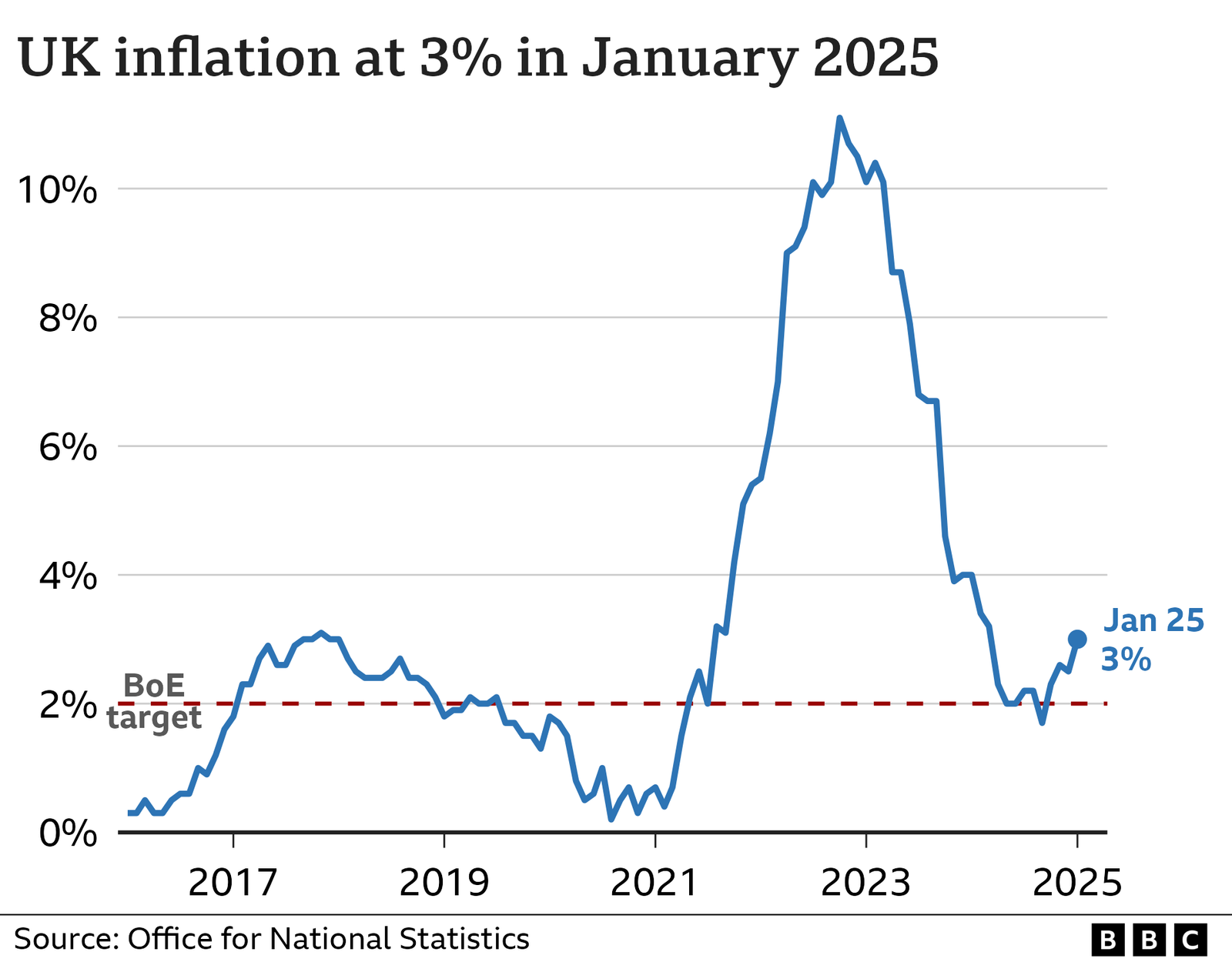
The United Kingdom’s consumer price inflation rate slowed sharply in the year to January 2026, dropping to 3.0%, the lowest rate in nearly a year, the latest official figures show. The decline from 3.4% in December 2025 marks a continued easing in price pressures on households and is widely expected to influence the Bank of England’s interest rate decisions later this year.
Official data from the Office for National Statistics (ONS) indicated that the Consumer Prices Index (CPI) — the UK’s key measure of inflation — eased to 3.0% in January, down from 3.4% in December and in line with most economist forecasts. This follows several months of slowing inflation, driven by softer increases in prices for transport, food and energy.

Analysts highlighted that falling petrol costs and cheaper airfares were significant contributors to the slowdown, alongside slower rises in everyday items such as bread and cereals. Although some categories, such as hotel and restaurant prices, saw modest increases, the overall trend points to easing price pressures that could benefit household budgets.
The January figure remains above the Bank of England’s 2% target but reinforces expectations that inflation is on a downward trajectory and could reach target levels by spring or early summer 2026. Investors and economists are now increasingly predicting that the Bank of England may cut interest rates as soon as its March meeting, potentially reducing the benchmark rate from 3.75% to 3.5% or lower.
Chancellor Rachel Reeves welcomed the data as a sign that government measures introduced last year — including reductions in energy costs and other living‑cost support — are helping to ease price pressures for households. Consumer spending, already under pressure from slower wage growth and a weakening labour market, could receive a further boost if inflation continues to moderate.

Despite the positive inflation news, other economic indicators remain mixed. The UK economy showed very modest growth at the end of 2025, and the unemployment rate has risen to its highest level in several years, adding complexity to the broader economic picture. Policymakers will need to balance progress on inflation with concerns about jobs and growth as they consider future monetary policy moves.
For consumers, the slowdown in price increases may start to ease the financial pressure of high living costs, particularly on essentials such as food and fuel. However, many households are still feeling the effects of several years of above‑target inflation, and analysts caution that sustained improvement will be needed before real gains in living standards are widely felt.
Related News:
 Reform Plans to Keep UK’s Budget Watchdog in Office
 Tories Call for Rethink of Parliament Revamp Plans
 How to Exit Your Broadband Contract Without Paying Exit Fees
 Supreme Court Ruling on Car Finance Scandal Poised to Impact Millions of Motorists and Banks
 Stunning Welsh Island with Historic Fort and Modern Luxuries Hits Market for £3 Million
 UK Jobs Market Faces Strain as Employers Cut Bonuses and Hiring Amid Economic Slowdown
 Wage Rises Slow as Retail and Hospitality Jobs Continue to Fall
 Chancellor Rachel Reeves Pushes for Sweeping Changes to Environmental Protections to Accelerate Development
 Inflation Latest: Cost of Living Expected to Rise Again in Key Figures Released Today
 Ed Davey Urges Government to Block Elon Musk’s Tesla from Supplying UK Home Energy
 Rachel Reeves to Deliver Autumn Budget on 26 November Amid Economic Challenges
 Retail Sales See Uptick Amid Errors and Delays as ONS Faces Scrutiny
 UK House Prices Hit Record £299,331 as Market Shows Steady Growth
Shein UK Faces Allegations of Shifting Majority of Profits to Singapore to Reduce UK Tax
UK House Prices Hit Record £299,331 as Market Shows Steady Growth
Shein UK Faces Allegations of Shifting Majority of Profits to Singapore to Reduce UK Tax
 UK Mobile Retailers Lock Doors Amid Surge in Organised Phone Thefts
 UK Retail Sales Rise in August, but Tax Concerns Loom Over Festive Period
 UK Could Generate Nearly £2bn Annually by Taxing SUVs, New Study Reveals
 Jaguar Land Rover Extends Production Halt Following Cyber-Attack
 UK Labour Market Shows Signs of Cooling as Wage Growth Slows and Redundancies Rise
 UK Wage Growth Remains High, But Cost of Living Pressures Bite
 British AI Startup Outshines Human Forecasters in Global Prediction Contest
 Dagenham Left in Limbo After Smithfield and Billingsgate Market Relocation Cancelled
 Vodafone Franchisees Sound Alarm: Mental Health Toll of Commission Cuts Revealed Years Before £120m Court Battle
 Great Britain’s Energy Operator Commits to Strengthening Grid to Prevent Blackouts
 UK Government Backs Return of International Rail Travel to Kent Stations
 AstraZeneca to List on New York Stock Exchange While Retaining London Ties
 Retailers Warn Tax Rises Could Prolong Inflation as Shop Prices Climb
 Royal Mail Owner Acquires Stake in Collect+ and Launches High Street Rebrand
 Marks & Spencer Staff to Work on Boxing Day for First Time in Five Years Amid Cost-Cutting Measures
 Senior Tories Condemn Badenoch’s Vow to Repeal Climate Change Act as Catastrophic
 Wetherspoon vows to keep prices low amid soaring energy and tax costs
 He-Man Set for Big Comeback as UK Toy Industry Rides ‘Newstalgia’ Wave
 Delivery Apps Could Double the Cost of Your Groceries, Warns Consumer Watchdog
 UK House Price Growth Slows as Buyers Exercise Caution Ahead of Autumn Budget
 Kemi Badenoch Unveils ‘Golden Rule’ to Halve Spending Cuts for Deficit Reduction at Tory Conference
 Royal Mail Fined £21m for Delivery Failures
 Parents spending £5,000 on special school assessments in England
 China warns UK over delayed London mega embassy decision
 New V-Level qualification to transform post-16 education
 Pizza Hut to shut 68 sites after collapsing into administration
 Real living wage set to rise nearly 7% for UK workers in 2026
 Lotto result jackpot draw halted due to technical glitch
Reeves Faces Setback as Labour May Miss Homes Target
Lotto result jackpot draw halted due to technical glitch
Reeves Faces Setback as Labour May Miss Homes Target
 Trump’s UK Ambassador Urges North Sea Drilling to Strengthen US Ties
 ABF May Split Primark from Food Division Amid Tough Market
 M&S Profits More Than Halve After Cyber-Attack
 Tony Blair think tank warns Rachel Reeves must cut taxes if manifesto broken
 Oprah enjoys Meghan’s jam on English muffins
 Millionaires group urge Reeves to introduce wealth tax to ‘lift kids out of poverty’
 UK toy market enjoys bumper year as ‘kidults’ fuel demand
 Global markets drop amid tech sell-off and China slowdown
 PM Highlights UK Business at G20 in South Africa
 Mossmorran Plant Closure Hits Cowdenbeath Hard
 Steel billionaire Lakshmi Mittal reportedly leaves UK
 Starmer Says Labour’s Economic Plan Needs Years to Deliver
 Virgin Media Fined £23.8m Over Telecare Safety Failures
 Rising Water Bills Lift Troubled Thames Back to Profit
 Historic £100-Weekly Pension Boost Brings Relief for UK Mineworkers
 UK Investment G7: Britain Records Lowest Level Under Starmer
 3,000 Jobs at Risk Without UK Helicopter Order
 HMRC Delays Leave Taxpayers Waiting Over a Year for Refunds
MPs warn AI financial risks threaten UK stability
HMRC Delays Leave Taxpayers Waiting Over a Year for Refunds
MPs warn AI financial risks threaten UK stability
 MPs warn AI financial risks threaten UK stability
 Labour Must Revive High Streets to Avoid Election Collapse
 Households in England Face Rising Water Bills in April
 UK New Car Discounts Near £6,000 as Prices Are Slashed
 Study Finds One in Seven England Takeaways Are Dark Kitchens
 Riverford sales surge as UK organic market booms
 Pound Sinks and Borrowing Costs Rise as Starmer Fights for Job
 London Loses Its Grip on Ambitious Young Workers
 Row at David Lloyd Clubs Over £140-a-Month ‘Queue-Jumping’ Pass
 Major UK Clothing Firm Collapses into Administration — 109 Jobs at Risk
 UK Housing Market Shows Early Recovery Signs
 UK economy struggles as growth stalls at 0.1% in late 2025
 Could Manchester Lead the UK’s Economic Revival?
 Bank of England Urged to Cut Rates to Spur Growth
 Royal Mail Blames Poor Weather and Sickness for Delayed Deliveries
 Woman Defrauded Aunt Out of £300k to Build Gym in Former Church
 British Steel wins Turkey rail boost
 Lloyds Boss Accepts Concern Over Use of Staff Data in Pay Talks