Published: 16 September ‘2025. The English Chronicle Desk
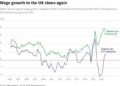
The latest snapshot of the UK labour market presents a familiar, yet increasingly concerning picture: wage growth remains strong, yet Britons continue to feel the strain of rising living costs amid slowing hiring and a modest uptick in unemployment. Figures from the Office for National Statistics (ONS) show that in the three months to July, regular pay, excluding bonuses, grew by 4.8% year-on-year, highlighting continued pressure on policymakers to balance inflationary risks with economic growth.
Despite robust pay growth, the labour market is showing signs of cooling. Between July and August, the total number of job vacancies fell by 119,000 compared with the previous year, while the unemployment rate edged up slightly to 4.7%, the highest level in four years. This rise translates to 2.3 unemployed individuals for every vacancy, up from 2.2 in the prior quarter, reflecting the increased competition for available roles.

The labour force itself is growing, driven in part by a reduction in economic inactivity. The economic inactivity rate has fallen to 21.1%, down 0.8 percentage points from a year earlier, though it remains elevated compared with pre-pandemic levels. Helen Gray, chief economist at the Learning and Work Institute, noted that many returning to the workforce are still actively seeking employment rather than immediately taking up jobs, highlighting ongoing challenges in matching labour supply with demand.
The persistence of strong wage growth is a double-edged sword. While it suggests that workers are continuing to see nominal income gains, it also contributes to inflationary pressures by enabling companies to maintain higher prices. The Bank of England, which meets on Thursday to set monetary policy, has repeatedly emphasised the importance of wage trends in guiding interest rate decisions. With wages remaining elevated, prospects for a rate cut appear limited in the near term. Governor Andrew Bailey has warned that sustained high pay growth could undermine efforts to bring inflation back to the Bank’s 2% target.
Yet the reality for households is markedly different from what these headline figures suggest. With rising energy bills and higher food costs, the impact of inflation has eroded much of the purchasing power of wage increases. The ONS calculates that real wages are only around 1% higher than a year ago, falling to 0.5% once housing costs are accounted for. In practical terms, this means that many UK workers continue to face financial pressure, with limited relief in sight.
Ben Harrison, director of the Work Foundation thinktank, highlighted the human consequences of these trends: “The combination of stagnant living standards and sticky inflation means that people are still likely to feel pessimistic about their household finances one year into the new parliament.” For households across the country, the tension between rising wages and rising costs underscores the fragility of economic recovery, even as policymakers seek to navigate the delicate balance between growth, employment, and inflation.

The latest data also comes amid broader economic uncertainty, with businesses exercising caution over hiring due to Labour’s £25 billion national insurance increase, upcoming fiscal decisions, and external pressures including potential AI-related disruption and tariffs under Donald Trump’s policies. Against this backdrop, the challenge for both government and central bank policymakers remains clear: how to stimulate growth while ensuring that wage increases translate into meaningful improvements in living standards.
Related News:
 UK Retail Sales Rise in August, but Tax Concerns Loom Over Festive Period
 Dagenham Left in Limbo After Smithfield and Billingsgate Market Relocation Cancelled
 Real living wage set to rise nearly 7% for UK workers in 2026
 Court Hears Challenge Over Water Bills Funding Sewage Fixes
 Bank of England Poised to Cut Interest Rates Amid Rising Unemployment and Global Trade Pressures
 Non-Dom Tax Crackdown Risks Backfiring as Exodus Threatens UK Revenue and Investment
 Inflation Latest: Cost of Living Expected to Rise Again in Key Figures Released Today
 Energy Users Could Save £5bn Annually if Gas Power Plants Are Removed from Market
 Retail Sales See Uptick Amid Errors and Delays as ONS Faces Scrutiny
 UK House Prices Hit Record £299,331 as Market Shows Steady Growth
Shein UK Faces Allegations of Shifting Majority of Profits to Singapore to Reduce UK Tax
UK House Prices Hit Record £299,331 as Market Shows Steady Growth
Shein UK Faces Allegations of Shifting Majority of Profits to Singapore to Reduce UK Tax
 Vodafone Faces Fourth Probe into Franchising Division Amid £120m Legal Battle
 John Lewis Partnership Posts £88m Loss as Costs and Restructuring Bite
 UK Economy Flatlines in July, Raising Pressure on Rachel Reeves Ahead of Autumn Budget
Business Rates Hike Could Threaten Hundreds of UK Retailers, Putting 100,000 Jobs at Risk
UK Economy Flatlines in July, Raising Pressure on Rachel Reeves Ahead of Autumn Budget
Business Rates Hike Could Threaten Hundreds of UK Retailers, Putting 100,000 Jobs at Risk
 Rachel Reeves Hosts Top UK and US Financial Executives as Trump’s State Visit Begins
 UK Labour Market Shows Signs of Cooling as Wage Growth Slows and Redundancies Rise
UK Inflation Holds Steady at 3.8% as Rising Fuel Costs Offset Falling Air Fares
UK Labour Market Shows Signs of Cooling as Wage Growth Slows and Redundancies Rise
UK Inflation Holds Steady at 3.8% as Rising Fuel Costs Offset Falling Air Fares
 Ben & Jerry’s Co-Founder Resigns, Accusing Unilever of Silencing Brand’s Social Mission
 UK Borrowing Surges to £18bn in August, Exceeding Forecasts
 Farage’s Reform UK Receives £100,000 from Design Firm with Past Tax Issues
Rachel Reeves Faces Criticism Over Appearance at Gambling Industry Event Amid Tax Review
Farage’s Reform UK Receives £100,000 from Design Firm with Past Tax Issues
Rachel Reeves Faces Criticism Over Appearance at Gambling Industry Event Amid Tax Review
 Gatwick Secures Approval for £2.2bn Second Runway Expansion
 Retailers Warn Tax Rises Could Prolong Inflation as Shop Prices Climb
 Marks & Spencer Staff to Work on Boxing Day for First Time in Five Years Amid Cost-Cutting Measures
UK Housing Market Returns to Growth Amid Signs of Stability and Regional Variation
Marks & Spencer Staff to Work on Boxing Day for First Time in Five Years Amid Cost-Cutting Measures
UK Housing Market Returns to Growth Amid Signs of Stability and Regional Variation
 UK Government Secures £122m Win Against Michelle Mone-Linked Firm Over Defective PPE
 Richard Desmond Begins High Court Battle Over National Lottery Licence
 UK households brace for October benefit payments and rising energy costs amid cost-of-living pressures
 Delivery Apps Could Double the Cost of Your Groceries, Warns Consumer Watchdog
 Jaguar Land Rover to Resume Production After Cyber-Attack, Launches Supplier Support Scheme
 Kemi Badenoch Unveils ‘Golden Rule’ to Halve Spending Cuts for Deficit Reduction at Tory Conference
 Gold Hits Historic $4,000 Amid Global Uncertainty
 Millions Face Higher Water Bills After Regulator Approves Hikes
 UK GDP edges up 0.1% in August as Reeves faces budget pressure
 Rachel Reeves urged to consider welfare cuts to boost fiscal credibility
 UK inflation update: New rate expected as Budget approaches
 Co-op Urged Staff to Promote Vapes After Cyber-Attack Hit Sales
 Lotto result jackpot draw halted due to technical glitch
 Rachel Reeves to lead UK trade push in Saudi Arabia amid rights debate
 UK Small Business Owner to Challenge L’Oréal in Tribunal
 Thinktanks Urge Rachel Reeves to Reform UK Tax System
 Tony Blair think tank warns Rachel Reeves must cut taxes if manifesto broken
MPs Press Rachel Reeves to Hike Gambling Taxes
Tony Blair think tank warns Rachel Reeves must cut taxes if manifesto broken
MPs Press Rachel Reeves to Hike Gambling Taxes
 Warning as Britons prepare to spend £4 billion this Black Friday
 Troubled drinks giant Diageo names former Tesco boss to lead turnaround push
 Global markets drop amid tech sell-off and China slowdown
 UK Energy Bills to Rise Slightly in January
 UK Government Borrowing Higher Than Expected
 Minister Denies Budget Leaks Have Harmed UK Economy
 Budget 2025: Reeves Drops Economic Growth Reference
 Expanded Version – Black Friday Shoppers Warned Over ‘Dud Deals’
 Black Friday Footfall Falls as UK Shoppers Hold Back Amid Economic Concerns
 Rising Water Bills Lift Troubled Thames Back to Profit
 MPs Warn Thousands Still Face Poverty Despite Labour’s Welfare Reform Retreat
 UK Jobs Market Faces Strain as Employers Cut Bonuses and Hiring Amid Economic Slowdown
 China’s crackdown on civil servant perks sparks economic concerns
 EuroMillions Record-Breaking £210m Jackpot Won by Lucky Lottery Ticket Holder
 Next Shares Slide Amid Warning on Weak UK Growth and Jobs
 Resolution Foundation Chief Urges Chancellor Reeves to Rethink Budget Before November
 King Charles Earns Over £1 Million from Duchy Land Linked to Scrapped HS2 Project
 Vodafone Franchisees Sound Alarm: Mental Health Toll of Commission Cuts Revealed Years Before £120m Court Battle
 Public Skepticism Over AI Poses Challenge to UK’s Superpower Ambitions, Says Tony Blair Institute
 UK Government Backs Return of International Rail Travel to Kent Stations
 GSK Chief Executive Emma Walmsley to Step Down After Eight Years at the Helm
 AstraZeneca to List on New York Stock Exchange While Retaining London Ties
Millions of households in England face looming water bill hikes amid regulatory scrutiny
AstraZeneca to List on New York Stock Exchange While Retaining London Ties
Millions of households in England face looming water bill hikes amid regulatory scrutiny
 Massive Vodafone Outage Disrupts Internet and Mobile Services Across the UK
 Millions of Brits Adjust Lifestyle to Afford Essentials
Rachel Reeves Set to Break Labour Pledge and Raise Income Tax
Millions of Brits Adjust Lifestyle to Afford Essentials
Rachel Reeves Set to Break Labour Pledge and Raise Income Tax
 Oprah enjoys Meghan’s jam on English muffins
 North Sea oil workers must lose weight or face job loss
 Crisis charity to become landlord amid UK housing emergency
 UK toy market enjoys bumper year as ‘kidults’ fuel demand
 PM Highlights UK Business at G20 in South Africa
 Mossmorran Plant Closure Hits Cowdenbeath Hard
Reeves to Crack Down on Benefit Fraud While Lifting Two-Child Limit
Mossmorran Plant Closure Hits Cowdenbeath Hard
Reeves to Crack Down on Benefit Fraud While Lifting Two-Child Limit
 Steel billionaire Lakshmi Mittal reportedly leaves UK
 Virgin Media Fined £23.8m Over Telecare Safety Failures
 Tesla Warns UK That Weak EV Rules Could Threaten Sales