Published: 16 October 2025. The English Chronicle Desk. The English Chronicle Online.
The United Kingdom’s economy inched forward in August, expanding by a modest 0.1%, according to data released by the Office for National Statistics (ONS). The slight growth offers cautious optimism for Chancellor Rachel Reeves as she prepares for a crucial budget next month, aimed at tackling a widening fiscal gap.
Revised figures show that July’s performance, previously thought to be flat, actually contracted by 0.1%. Over the three months to August, the economy managed a total expansion of just 0.3%, reflecting fragile momentum across key sectors. Growth was primarily supported by improvements in manufacturing and a steady performance in healthcare, while other sectors experienced mixed results.

The modest recovery provides some breathing space for Reeves, who faces the challenge of addressing a £20–30 billion shortfall in public finances. The 26 November budget is expected to include a combination of tax increases and spending adjustments, a delicate balancing act that could either reinforce or hinder the UK’s fragile economic recovery.
Economists had largely anticipated the 0.1% rise, citing a rebound in industrial output after months of weak performance. The growth figure aligns with broader expectations that the UK will remain on track to become the second-fastest-growing economy in the G7 this year, according to recent IMF forecasts.
However, persistent inflation continues to weigh heavily on households and businesses. The inflation rate remained steady at 3.8% in August, maintaining pressure on the Bank of England to keep interest rates high for the remainder of 2025. Analysts expect gradual rate cuts to begin in early 2026, potentially easing the strain on living costs and business borrowing.
Meanwhile, labour market data paints a mixed picture. Unemployment rose to 4.8% in the three months to August—the highest since 2021—while wage growth slowed noticeably. Economists warn that weakening consumer spending could dampen growth prospects heading into the final quarter of the year.

A Treasury spokesperson acknowledged the uneven nature of the recovery, saying: “We have seen the fastest growth in the G7 since the start of the year, but for too many people our economy still feels stuck. The chancellor is determined to turn this around by supporting businesses, investing in infrastructure, and cutting red tape to get Britain building again.”
The latest figures suggest that while the UK economy remains resilient, it is far from robust. As the government readies its budget next month, the challenge will be to sustain fragile growth without undermining fiscal stability—a balancing act that could define the political and economic landscape for the year ahead.
Related News:
 Bank of England Poised to Cut Interest Rates Amid Rising Unemployment and Global Trade Pressures
 Non-Dom Tax Crackdown Risks Backfiring as Exodus Threatens UK Revenue and Investment
 Inflation Latest: Cost of Living Expected to Rise Again in Key Figures Released Today
 Energy Users Could Save £5bn Annually if Gas Power Plants Are Removed from Market
 Retail Sales See Uptick Amid Errors and Delays as ONS Faces Scrutiny
 UK House Prices Hit Record £299,331 as Market Shows Steady Growth
Shein UK Faces Allegations of Shifting Majority of Profits to Singapore to Reduce UK Tax
UK House Prices Hit Record £299,331 as Market Shows Steady Growth
Shein UK Faces Allegations of Shifting Majority of Profits to Singapore to Reduce UK Tax
 UK Retail Sales Rise in August, but Tax Concerns Loom Over Festive Period
 Vodafone Faces Fourth Probe into Franchising Division Amid £120m Legal Battle
 John Lewis Partnership Posts £88m Loss as Costs and Restructuring Bite
 UK Economy Flatlines in July, Raising Pressure on Rachel Reeves Ahead of Autumn Budget
Business Rates Hike Could Threaten Hundreds of UK Retailers, Putting 100,000 Jobs at Risk
UK Economy Flatlines in July, Raising Pressure on Rachel Reeves Ahead of Autumn Budget
Business Rates Hike Could Threaten Hundreds of UK Retailers, Putting 100,000 Jobs at Risk
 Rachel Reeves Hosts Top UK and US Financial Executives as Trump’s State Visit Begins
 UK Labour Market Shows Signs of Cooling as Wage Growth Slows and Redundancies Rise
 UK Wage Growth Remains High, But Cost of Living Pressures Bite
UK Inflation Holds Steady at 3.8% as Rising Fuel Costs Offset Falling Air Fares
UK Wage Growth Remains High, But Cost of Living Pressures Bite
UK Inflation Holds Steady at 3.8% as Rising Fuel Costs Offset Falling Air Fares
 Ben & Jerry’s Co-Founder Resigns, Accusing Unilever of Silencing Brand’s Social Mission
 UK Borrowing Surges to £18bn in August, Exceeding Forecasts
 Farage’s Reform UK Receives £100,000 from Design Firm with Past Tax Issues
Rachel Reeves Faces Criticism Over Appearance at Gambling Industry Event Amid Tax Review
Farage’s Reform UK Receives £100,000 from Design Firm with Past Tax Issues
Rachel Reeves Faces Criticism Over Appearance at Gambling Industry Event Amid Tax Review
 Dagenham Left in Limbo After Smithfield and Billingsgate Market Relocation Cancelled
 Gatwick Secures Approval for £2.2bn Second Runway Expansion
 Retailers Warn Tax Rises Could Prolong Inflation as Shop Prices Climb
UK Housing Market Returns to Growth Amid Signs of Stability and Regional Variation
Retailers Warn Tax Rises Could Prolong Inflation as Shop Prices Climb
UK Housing Market Returns to Growth Amid Signs of Stability and Regional Variation
 Richard Desmond Begins High Court Battle Over National Lottery Licence
 Delivery Apps Could Double the Cost of Your Groceries, Warns Consumer Watchdog
 Jaguar Land Rover to Resume Production After Cyber-Attack, Launches Supplier Support Scheme
 Kemi Badenoch Unveils ‘Golden Rule’ to Halve Spending Cuts for Deficit Reduction at Tory Conference
 Gold Hits Historic $4,000 Amid Global Uncertainty
 Rachel Reeves urged to consider welfare cuts to boost fiscal credibility
 UK inflation update: New rate expected as Budget approaches
 Real living wage set to rise nearly 7% for UK workers in 2026
 Co-op Urged Staff to Promote Vapes After Cyber-Attack Hit Sales
 Rachel Reeves to lead UK trade push in Saudi Arabia amid rights debate
 UK Small Business Owner to Challenge L’Oréal in Tribunal
 Court Hears Challenge Over Water Bills Funding Sewage Fixes
 Thinktanks Urge Rachel Reeves to Reform UK Tax System
 Tony Blair think tank warns Rachel Reeves must cut taxes if manifesto broken
MPs Press Rachel Reeves to Hike Gambling Taxes
Tony Blair think tank warns Rachel Reeves must cut taxes if manifesto broken
MPs Press Rachel Reeves to Hike Gambling Taxes
 Warning as Britons prepare to spend £4 billion this Black Friday
 Troubled drinks giant Diageo names former Tesco boss to lead turnaround push
 Global markets drop amid tech sell-off and China slowdown
 UK Government Borrowing Higher Than Expected
 Minister Denies Budget Leaks Have Harmed UK Economy
 Budget 2025: Reeves Drops Economic Growth Reference
 Expanded Version – Black Friday Shoppers Warned Over ‘Dud Deals’
 Black Friday Footfall Falls as UK Shoppers Hold Back Amid Economic Concerns
 Rising Water Bills Lift Troubled Thames Back to Profit
 HSBC Chief Warns Bank Tax Hike Could Undermine UK Growth Prospects
 UK High Street Banks Lose £100bn as Savers Flock to Online Rivals
 UK Jobs Market Faces Strain as Employers Cut Bonuses and Hiring Amid Economic Slowdown
 China’s crackdown on civil servant perks sparks economic concerns
 Labour Members Push for Wealth Tax as Public Finance Crisis Deepens
 Family in Fear After Tommy Robinson Shares Video of Black Man With White Granddaughters
 WH Smith Market Value Plummets by £600m Following North American Accounting Error
 Aldi UK Chief Warns Shoppers Could Face Higher Food Prices if Budget Adds Costs for Retailers
 Next Shares Slide Amid Warning on Weak UK Growth and Jobs
 Resolution Foundation Chief Urges Chancellor Reeves to Rethink Budget Before November
 King Charles Earns Over £1 Million from Duchy Land Linked to Scrapped HS2 Project
 Vodafone Franchisees Sound Alarm: Mental Health Toll of Commission Cuts Revealed Years Before £120m Court Battle
 Public Skepticism Over AI Poses Challenge to UK’s Superpower Ambitions, Says Tony Blair Institute
 UK Government Backs Return of International Rail Travel to Kent Stations
 GSK Chief Executive Emma Walmsley to Step Down After Eight Years at the Helm
 AstraZeneca to List on New York Stock Exchange While Retaining London Ties
 Marks & Spencer Staff to Work on Boxing Day for First Time in Five Years Amid Cost-Cutting Measures
 UK Government Secures £122m Win Against Michelle Mone-Linked Firm Over Defective PPE
 UK households brace for October benefit payments and rising energy costs amid cost-of-living pressures
 Massive Vodafone Outage Disrupts Internet and Mobile Services Across the UK
 Lotto result jackpot draw halted due to technical glitch
 Aston Martin cuts £300m investment as Trump tariffs and weak China demand hit profits.
Rachel Reeves Eyes 20% Tax on Assets for UK Departures
Aston Martin cuts £300m investment as Trump tariffs and weak China demand hit profits.
Rachel Reeves Eyes 20% Tax on Assets for UK Departures
 Millions of Brits Adjust Lifestyle to Afford Essentials
Rachel Reeves Set to Break Labour Pledge and Raise Income Tax
Millions of Brits Adjust Lifestyle to Afford Essentials
Rachel Reeves Set to Break Labour Pledge and Raise Income Tax
 Cuts to home insulation funding threaten UK climate goals
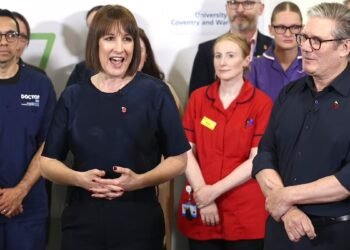 Reeves’s Tax U-Turn Triggers Fresh Jitters in UK Markets
 PM Highlights UK Business at G20 in South Africa
 Mossmorran Plant Closure Hits Cowdenbeath Hard
 UK Energy Bills to Rise Slightly in January
 Steel billionaire Lakshmi Mittal reportedly leaves UK
 Tesla Warns UK That Weak EV Rules Could Threaten Sales