Published: 1 May 2026. The English Chronicle Desk. The English Chronicle Online
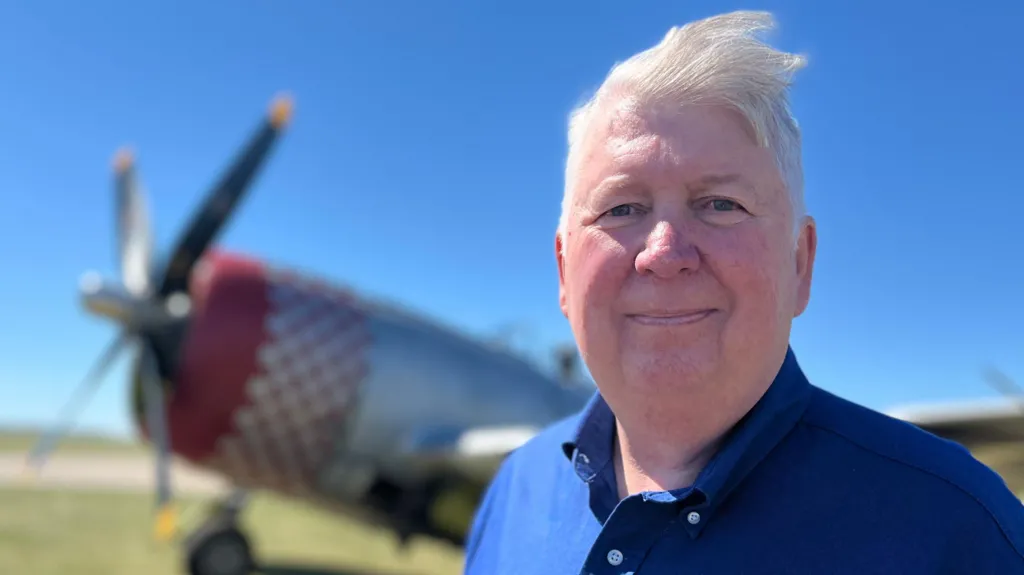
In a poignant bridge between the past and present, the son of a World War II fighter pilot has traveled from Utah to Cambridgeshire to visit an exhibition honoring his father’s extraordinary survival story. Richard Moseley visited IWM Duxford yesterday to see the newly installed archive of his father, 2nd Lt Lonnie Moseley, who evaded capture in Nazi-occupied France for months after his P-47 Thunderbolt crashed behind enemy lines in the summer of 1944.
The visit marks a ten-year effort by the museum and the Moseley family to preserve a collection that Richard says has been “cherished for years,” held in a family chest that was rarely opened since the end of the war.

Lonnie Moseley’s story is one of mechanical failure, narrow escapes, and the bravery of the French Resistance.
The Crash: On only his second mission with the 78th Fighter Group, Moseley’s engine failed multiple times before cutting out entirely near Hauville, roughly 40 miles east of the D-Day beachhead.
The Disguise: After bailing out, Moseley was taken in by a local French farmer and his family. The Resistance provided him with forged papers identifying him as a migrant worker, allowing him to hide in plain sight until his eventual liberation.
The Artifacts: The exhibition features the actual clothes Lonnie wore while in disguise, a “missing-in-action” telegram sent to his wife, and a remarkable photograph of the young pilot posing with the French farmer next to the wreckage of his aircraft.
For Richard Moseley, the visit to Duxford—where his father was stationed—was a sensory journey into history.
“Walking the Same Footsteps”: Museum curators noted that Duxford is so well-preserved that Richard was able to walk the same hangar floors and visit the same mess halls where his father ate and lived in 1944.
The Human Behind the Machine: IWM senior curator Adrian Kerrison highlighted the importance of the donation, noting that while the museum has many aircraft, stories like Lonnie’s provide the “human pulse” behind the cold steel.
The Donation: Richard chose to donate the family’s private archive to Duxford to ensure the story “remains true” for future generations. “As a poor farming boy, he became a fighter pilot and fought for freedom,” Richard said. “Duxford gave him his first opportunity to do so.”
The emotional reunion with his father’s legacy comes at a time when the UK is reflecting on its own historical “special relationships.”
A “Necessary Reset”: Much like the RHS Wisley wisteria tunnel, the Moseley exhibition is being viewed by locals as a “necessary reset”—a reminder of individual courage during a week of “national security emergencies” and the Iran war crisis.
The Accountability of History: While modern politics is often criticized for “accountability rot,” the meticulous preservation of Lonnie’s forged papers and letters represents a different kind of accountability: a commitment to the truth of the “Greatest Generation.”
The “Silent” Debt: The exhibition also pays tribute to the French family who risked execution to hide Moseley. For Richard, seeing the photos of his father with his rescuers was the most emotional part of the display.

As King Charles concludes his visit to Washington—emphasizing the enduring bonds between the US and the UK—Richard Moseley’s visit serves as a grassroots testament to that very alliance. While the world watches the $126 oil spike and the Strait of Hormuz blockade, the quiet hangars of Duxford offer a lesson in how the actions of one “poor farming boy” can ripple through a century.
“It is wonderful that Duxford is doing this,” Richard concluded. “My father would have been proud to know his story is back home.”
Related News:
 ‘Significant and Poignant’: Families Gather for 35th Anniversary of IRA Musgrave Bombing
 The Victorian aristocrat who became Britain’s first Muslim lord
 Police Assessing Stansted Airport Private Flights Over Epstein Ties
 Snow and Rain Warnings as Cold Snap Continues in the UK
 TfL Advert Banned for Harmful Racial Stereotype
 Break from Wintry Weather as UK Temperatures to Climb to 14 °C
 What’s Next for Andrew Mountbatten-Windsor’s Ex-Wife, Sarah Ferguson?
 Muslim Group Wants Mosques to Be Used as Polling Stations Ahead of UK Elections
 Boy, 12, Home After Being Stranded in Middle East
 Why Aren’t Our Dirtiest Roads Getting Cleaned?
 Murdered Student ‘Algasim’ Was ‘the Most Special Person’, Friends Say
 Manchester Students Mourn Ayatollah Amid Protest
 Rare Glimpse of Historic Bridge Thanks to Low Tide
 Teen Admits Filming Westfield Chair Prank
 A Slimmer Sunday: Beatrice and Eugenie to Skip Royal Easter Service Amid Family Health Focus
 Banana Bonanza: Orkney Town Flooded with 38,000 Bananas After Supermarket Blunder
 ‘Please Keep Her in Your Prayers’: Dad Describes Final Moments Before 7-Year-Old Was Swept to Sea
 ‘Something Wasn’t Right’: UK Families Devastated by Sperm Mix-Up at Northern Cyprus IVF Clinics
 From Fallout to Five-Star: Cold War Nuclear Bunker Gains Holiday Let Permission
 ‘The Final Word’: Kathleen Stock’s Polemic Against Assisted Dying Reshapes the UK Debate
 Debt Relief or Drop in the Ocean? UK Caps Student Loan Interest at 6%
 ‘Seismic Change’: How Nationalist Wins in Celtic Nations Could Reshape the UK
 The ‘Shredder’ Syndrome: Why the 2026 Job Market is Breaking Entry-Level Spirits
 Locked Away: The ‘Complete Nightmare’ Facing the Blair Mayne Archive
 Legacy of the Landscape: Vicar’s Gift Secures Future of South West Coast Path
 The Kitchen Table Crisis: How the 2026 Iran War Hits Your Wallet
 A Gentle Light Extinguished: Tributes Pour in for Sister Genevieve After Fatal Newport Collision
 The Hidden Hoard of 1692: Glencoe Massacre Coins to be Displayed at Folk Museum
 Dippy’s Sacred Sojourn: ‘Landmark’ Dinosaur Cast Arrives at Cathedral
 The Freedom Hub: Can a Former Women’s Jail Unlock This City’s Potential?
 The Sinking Heritage: The Dutch Village at Risk of Being Demolished
 A Nation in Mourning: Millions Gather for Iconic Indian Singer’s Final Journey
 Mediterranean Spirit in the Met: London’s Moroccan Jews Celebrate Mimouna
 Justice on Hold: Further Delay in Chloe Mitchell Murder Trial Sparks Local Frustration
 ‘The Last of the Greatest’: UK’s Oldest WWII Veteran Passes Away Aged 109
 ‘On Freedom’s Wings’: Final Touches for the ‘East Midlands’ Angel of the North’
 Black Forest Tragedy Remembered 90 Years On
 “A Zero-Value Home”: Seven Years of Sinkhole Stagnation Leaves Family Trapped
 “Three-Wheeled Triumph”: Mayor of Erewash Completes 2,000-Mile European Charity Run
 The “Charles Charm” Offensive: Did the Royals Find Their Mojo in D.C.?
 The Shadow of the Blitz: 1,200 Plymouth Homes Evacuated as “Very Large” WW2 Bomb Unearthed
 “A Tonic for the Nation” Reimagined: Southbank Centre Marks 75 Years of Artistic Rebellion
 UK Must Act with Courage and Clarity on Israel-Palestine Conflict, Says Foreign Affairs Committee Report
 Radioactive Leak at UK’s Nuclear Warhead Base Sparks Outcry Over Safety and Secrecy
 Terence Stamp, ’60s British Film Legend and Star of Superman, Dies at 87
 Is the UK Ready to Put Boots on the Ground in Ukraine? Assessing Military Capacity and Challenges
 UK New Car Discounts Near £6,000 as Prices Are Slashed
 Labour Utterly Humiliated by Straight-Talking Mum Who Cut Through Keir Starmer’s Insanity
 Renters Furious as Decent Homes Standard Delayed Until 2035
 Starmer Weighs Fast-Tracking Defence Boost
 Motorists Could Face ‘Mandatory’ Driving Ban for Road Offences Under Tougher Laws
 Epstein Eyed Record Label Investment to Access Women, Files Suggest
 Australian PM Says Former Prince Andrew Has Suffered ‘Extraordinary Fall’ but That Won’t Prompt Republic Referendum
 Farage Chagos Islands Row Sparks Fury
 Storm Hernando: Edinburgh Airport Flights Cancelled in US Travel Chaos
 ‘We’ve been paying for happy endings for Andrew for years’: inside the royal disgrace, biographer says
 Brit ‘in Good Spirits’ Amid Dubai Missile Attacks, Stranded but Safe
 Calls Grow to Remove Billboard Following Lyra McKee Graffiti
 ‘Every Day Feels Like a Month’: Iranians Describe Life Under ‘Constant’ US‑Israeli Strikes
 Minister Meets Crews Who Will ‘Take Out’ Iranian Drones
 Father Dies by Suicide Weeks After Wedding in Clitheroe
 Teen Wins Payout After TRNSMT Crush Horror
 UK Forces Ready to Seize Russian Shadow Fleet Vessels
 US Lawmaker Demands Testimony Over Sarah Ferguson’s ‘Close Epstein Ties’
 Woman Deported from China Over Manx Passport Mix-Up
 ‘My Hatred of Dogs is Ruining My Love Life’
 Net Closes on Lyons Clan: Partner Arrested in Dubai as Crime Boss Snared in Bali
 ‘The Cost of Living’: Asia’s Migrant Workers Debate if Gulf Jobs are Worth the Risk of War
 Open Justice Prevails as Court Rejects Bondi Gunman’s Family Anonymity Bid
 The Banbridge Rescue: 300 Sheep Saved from Massive Hay Shed Inferno
 The Suffocating Silhouette: Why Metal’s Mask Trend is Turning Deadly
 The Fallen Icon: Ben Roberts-Smith Charged with Five War-Crime Murders
 Paws on the Wheel: Driver Facing Fine After Dog Photographed on Lap
 The Miracle of Phoenix: ‘Half Dead’ Rescue Dog Defies the Odds in Worcestershire
 Moldova River Crisis Exposes War’s Hidden Cost
 The Waiting Ward: ‘Month of Worry’ as Doctor Strikes Trigger Seismic Surgery Delays
 Diplomatic Deadlock: Lebanon Enters High-Stakes Border Talks with ‘No Cards to Play’
 Tragedy in the Red Centre: Outback Search Ends in Discovery of Missing Girl’s Body
 Reality Check on Reform: Minister Says Outright Abolition of Leasehold “Impossible”
 The “Dry” Life: Teens Trialing Social Media Bans Call Initial Disconnection “Boring” and “Dry”