Published: 04 May 2026. The English Chronicle Desk. The English Chronicle Online.
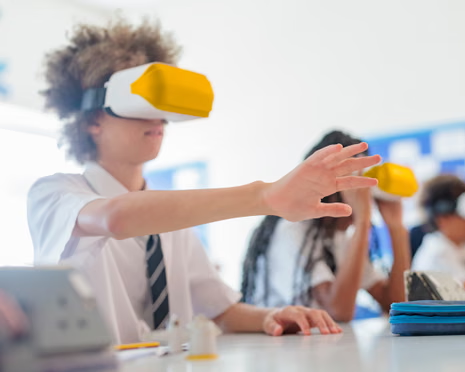
The traditional classroom environment is undergoing a digital revolution focused on student mental wellbeing. Educational institutions across London are now integrating virtual reality technology to support their young learners. This innovative approach targets the rising levels of anxiety found in modern secondary school settings. Pupils often face immense pressure from upcoming examinations or challenging situations at their own homes. Managing these complex emotions requires new tools that go beyond standard pastoral care methods today. Virtual reality offers a unique way for students to find peace during a busy day. The headsets provide a brief escape into a world designed specifically for deep emotional regulation.
All fifteen secondary schools in the London borough of Sutton are participating in this trial. They are working closely with the local NHS mental health trust to ensure safety standards. The technology comes from a firm called Phase Space which specializes in therapeutic digital experiences. This pilot programme represents a significant step forward for the integration of healthcare and education. Many students struggle with attention deficit hyperactivity disorder and find traditional classrooms quite overwhelming daily. Providing a high-tech solution allows these children to manage their symptoms in a discreet manner. The initiative has already shown remarkable promise within the first few months of its operation.
Students typically access the seven-minute VR programme during prearranged slots throughout their busy school week. Some pupils use the technology as a reactive measure when they feel suddenly very anxious. Leaving a lesson to reset can prevent a total emotional breakdown for a vulnerable child. The immersive nature of the experience helps them to calm down almost instantly after starting. Rebuilding confidence is a major goal for the educators who oversee this new digital project. Feeling ready to resume studies is essential for maintaining academic progress during high-pressure term times. The programme was designed specifically to help those who feel completely overwhelmed by their surroundings.

Zillah Watson is a co-creator of the programme and former head of VR at BBC. She explains that the system aims to ground students who are feeling particularly distressed today. Aelisha Needham serves as the vice-principal for ethics at the Ark Academy in North London. Her school has seen great success using these headsets with pupils who have ADHD symptoms. Many students arrive at the school gates feeling quite deregulated after a difficult morning. Changes to the usual structure such as a substitute teacher can cause significant distress. Issues at home or missing breakfast often contribute to a lack of emotional stability. Friendship conflicts and forgotten homework also add to the heavy burden these young people carry.
The school has noticed that students are much calmer after using the virtual reality kits. There has been a visible reduction in the number of pupils being relocated from lessons. Instead of walking out of class, students now ask to use the calming VR programme. This proactive behavior shows that children are learning to recognize their own internal stress signals. Using the headsets allows them to ground themselves before a small problem becomes much larger. The virtual environment acts as a buffer between the student and their immediate external pressures. Educators are pleased to see such a positive shift in how pupils manage difficulties. This method encourages self-reliance and emotional intelligence among the younger generation in our city.
Data suggests that nine out of ten pupils saw an immediate drop in stress. Watson noted that the technology has led to better attendance records across participating schools. Behavioural issues have decreased as students feel more supported by their local educational environment. Anxiety related to exams and formal assessments has also shown a very clear decline. These results are encouraging for policy makers looking for cost-effective mental health solutions today. Sixteen-year-old Lora Wilson shared her personal experience with the innovative Phase Space software recently. She described the sensation of being transported into a calm space filled with soft light. The experience is difficult to put into words but feels incredibly relaxing for her.
Lora mentioned that the virtual room starts empty and then slowly fades into darkness. Gentle light then moves toward the user to create a sense of deep peacefulness. This simple visual journey helps her to escape the frantic pace of school life. She feels as though she is somewhere else entirely while wearing the headset. This brief mental break has significantly boosted her confidence during the current exam season. Examinations used to be the most terrifying part of her life as a student. Now she uses the headset to process her feelings and remain focused on goals. The fear has not vanished completely but it is certainly much more manageable now.
The Sutton schools are exploring this technology alongside the education wellbeing team at CAMHS. This partnership involves South West London and St George’s NHS Trust experts and clinicians. With mental health services facing high demand, VR offers a very practical alternative path. It provides a low-cost way to help students who might otherwise wait for support. Younger pupils at Ark Academy find the programme helps them to maintain their focus. It clears their minds of the clutter that often prevents effective learning in class. Improved self-control is another benefit reported by the staff who monitor the trial results. Pupils feel freer in their mindsets and can process complex instructions much more easily.
Prior to using the VR, many children suffered from a sense of mental muddling. This internal confusion often led to frustration and poor academic performance over long periods. Being able to reset the mind in seven minutes is a powerful educational tool. Andy Bell is the chief executive of the Centre for Mental Health thinktank today. He believes it is very encouraging to see digital solutions being used this way. Schools have a massive impact on the long-term mental health of all young children. Those that prioritize wellbeing are better able to support inclusion and overall student attainment. Attendance and behaviour often improve when a child feels safe and understood at school.
The success of the London trial could lead to a wider rollout across England. Other boroughs are watching the results in Sutton with a great deal of interest. As technology becomes more affordable, more schools may adopt these therapeutic virtual reality systems. The goal is to create an environment where every child can thrive regardless of stress. Digital innovation is proving to be a valuable ally in the fight for wellbeing. By addressing anxiety early, schools can prevent more serious mental health issues in adulthood. This proactive approach marks a turning point in how we view the classroom experience. The future of education may well be defined by this blend of tech and care.

Teachers are also benefiting from the calmer atmosphere within their various learning spaces today. When students can manage their own stress, the entire class becomes much more productive. There is less disruption and more time dedicated to the actual curriculum and learning. This creates a virtuous cycle of success for both the educators and the pupils. The feedback from parents has also been overwhelmingly positive during the initial trial phase. They appreciate that the school is taking modern challenges seriously with modern technical solutions. It gives families peace of mind knowing their children have access to immediate support. The London pilot continues to gather data to refine the student experience further.
As we look ahead, the role of VR in schools seems set to expand. It is not just about entertainment but about building a resilient younger generation now. These seven-minute sessions are small investments that yield very large psychological rewards for pupils. The English Chronicle will continue to monitor the progress of this fascinating local story. For now, the students of Sutton are leading the way into a calmer future. Their journey shows that technology can be a force for good in our lives. With the right tools, the pressure of school can become a manageable challenge. London is proving that innovation and empathy go hand in hand for our children.
Related News:
 Six-Figure Tutors Teach Toddlers to ‘Be British’
 How Bringing Forests Into Preschools Boosts Children’s Health
 Is a two-week half-term a good deal? Some parents in England aren’t so sure
 Posthumous books are messy and fraught – but Virginia Giuffre’s gives her a voice
 The upcoming book-to-screen adaptations I’m most excited about
 Children to Learn Local History in Major Curriculum Overhaul
 UK University Suspends Human Rights Research Following Pressure from China
 My standout favourite book of 2025: The Names
 UK University Faces Counter-Terror Probe Over China Pressure
 Top Christmas Books Reads: Classics to Cozy Romcoms
 England Curriculum Review Recommends Major Changes
 Greta Thunberg Backs Student Facing UK Visa Revocation
 Audio Books deals and promo codes to explore in November 2025
China-critical UK academics face ‘extremely heavy’ pressure from Beijing
Audio Books deals and promo codes to explore in November 2025
China-critical UK academics face ‘extremely heavy’ pressure from Beijing
 Labour immigration crackdown could cost UK £4.4bn
 London’s Childlessness Crisis: Schools Closing as Families Shrink
 No link found between paracetamol in pregnancy and autism
 Government urges schools to ban phones to curb classroom disruption
 Stephen Fry backs SafeCall to protect missing children
 England schools to receive AI-generated attendance targets
 Nigeria’s $25m Museum Faces Political Storm Amid Benin Bronzes Debate
 Algeria Pardons French-Algerian Novelist Sansal After Year in Jail
 South Korea’s College Exam Tests Perseverance of Blind Students
 Phillipson Accused of Appeasing Unions by Diluting EBacc
‘I’ve Read 38 Books, but This Is My Standout Favourite’
Phillipson Accused of Appeasing Unions by Diluting EBacc
‘I’ve Read 38 Books, but This Is My Standout Favourite’
 England’s Special Needs Support Faces Breaking Point
 Nigerian Education Reversal: Mother-Tongue Teaching Scrapped
 Higgs Donates Nobel Medal to His Beloved University
 UK Schools Face Staff Exodus Amid Wellbeing Crash
 Ex-Harvard President Pauses Teaching Over Epstein Emails
 Scottish Families Take Legal Action Over School CO Leak
 Men Aren’t Vanishing From Fiction, But Misconceptions Persist
 Schools urged to trial four-day week to ease pressure on teachers in England and Wales
 Oxford Names ‘Rage Bait’ Word of the Year
 Cambridge College Faces Backlash Over Private School Recruitment
 Glasgow rector cleared by watchdog in antisemitism case
 Ban Social Media for Under-16s, Teachers Demand Action
 Pressure mounts on No 10 over under-16s social media ban
 UK Launches First Town of Culture Competition
 Guildford resignation sparks public trust debate in West Midlands
 UK Ministers Drop Foreign Student Targets for Global Education Push
 City & Guilds pay surge sparks backlash amid £22m cuts
 ‘Crunch time’ on rising Send costs in England, says thinktank
 Parents Fear Losing Support Amid England’s Send Reforms
 School Suspensions Now Reserved for Only Severe Misbehaviour
 Cambridge Faces Scrutiny Over Arms Investment Transparency
 Harvey Willgoose School Stabbing Red Flags Missed
 Kingsbury stabbing probe led by counter-terror police
 School phone policies drain English staff resources, study finds
 English secondary schools urged to expand Send inclusion bases
 Send spending gap leaves deprived areas behind
 Children’s vocabulary shrinking amid rising screen time concerns
 Councils Urge Means Testing for Send School Transport
 SEND overhaul gives schools new support funds
 NSW to Introduce Minimum Age for Ebike Riders
 Student Loan Crisis Sparks Outrage Among Graduates in England
 Larry Summers Resigns From Harvard Amid Epstein Files
 New Era for UK Special Needs Support
 London Pupils Warned Against ‘School Wars’ Posts
 Adelaide University Faces Backlash Over Event Cancellation
 New Survey Reveals Troubling Rise in Campus Antisemitism
 Sydney Teacher Arrested in Teenage Grooming Investigation
 Keir Starmer Vows Strong Action Against Online Tech Giants
 Is AI Eroding the Foundations of Learning in England?
 Exhibition Revisits Life of 18th-Century Black Court Figure
 Student Loan Interest May Rise Despite 6% Cap
 School Plate Revolution: England Bans Fried Menu Classics
 City & Guilds Sale Sparks Fees and Pay Uproar
 Canadian astronaut French words ease language row
 UK Universities Face Fines for Speech Failures
 Schools Struggling to Support SEN Pupils Amid Crisis
 NHS Safety Fears as Nurses Cover Doctor Gaps
 Urgent Calls for a New 16-19 Student Premium Funding
 Elite School Teacher Claims Misogynistic Culture Fuels Abuse
 Ability Grouping Boosts High-Flyers Without Harming Others
 Older Than Dinosaurs: Secrets of Mayfly Dance Revealed
 Teacher Alleges Misogyny at Elite School
 Sussex Wins Landmark High Court Battle Against OfS Fine
 FBI Links Brown University Shooting to Long-Term Grievances
 Germany to Return Rare Irritator Dinosaur Skull to Brazil