Published: 26 February 2026. The English Chronicle Desk. The English Chronicle Online.
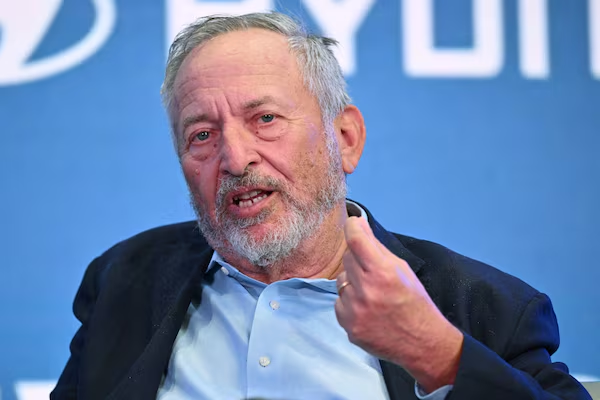
The academic world faces a significant shift as Larry Summers prepares to depart Harvard. This decision follows a rigorous review of documents involving his past ties to Jeffrey Epstein. A university spokesperson confirmed that the former president will officially resign his teaching position soon. This departure marks the end of an era for the historic institution in Massachusetts. Larry Summers remains a central figure in modern economic thought and high-level American politics. His career at the university spanned several decades of teaching and influential administrative leadership.
The formal announcement of this resignation comes after months of intense internal investigation processes. University officials looked closely at government files released regarding the disgraced financier Jeffrey Epstein. These documents raised serious questions about the nature of their long-term professional relationship. Harvard spokesperson Jason Newton clarified that the resignation is directly linked to this ongoing review. Summers has already stepped down from his leadership role at the Kennedy School center. He had served as a co-director there since two thousand and eleven with great distinction.
According to official statements, the economist will remain on leave until the academic year ends. This transition allows the university to manage the fallout from the recently released legal files. The Harvard Crimson was the first news outlet to report on these developing internal matters. Students and faculty members have expressed a mixture of surprise and somber reflection today. Summers had previously paused his teaching duties in late November of two thousand and twenty-five. That initial step occurred as the school began its deep dive into the archives.

In a personal statement, Larry Summers described the choice to leave as a difficult moment. He expressed deep gratitude toward the thousands of students he has mentored over the years. His history with the prestigious Ivy League institution began five decades ago as a student. He noted that working with talented colleagues was a highlight of his long professional life. The economist looks forward to focusing on research and global analysis in his retirement. He will retain the title of President Emeritus while stepping away from formal duties.
The controversy centers on a series of emails released by the US House oversight committee. These messages suggest a friendship between the two men that lasted until mid-two thousand and nineteen. Jeffrey Epstein died in a jail cell while awaiting trial for serious federal crimes. The documents indicate that contact only ceased shortly before the arrest of the financier. This timeline contradicts previous assumptions about when their social and professional interactions had finally concluded. Public scrutiny has intensified as more details about these private exchanges have become common knowledge.
Larry Summers was once a dominant and respected voice within the American Democratic political party. He served as the Treasury Secretary during the administration of President Bill Clinton years ago. Later, he guided the nation through the financial crisis as a key economic advisor. His influence on national policy during the Obama years was considered vital for stability. However, the nature of his correspondence with Epstein has cast a shadow over this legacy. The emails discuss various topics ranging from global politics to deeply personal romantic advice.
In one notable exchange from two thousand and eighteen, Epstein referred to himself as a wingman. They discussed philanthropic efforts and shared thoughts on various individuals within their elite social circles. Summers reportedly confided in the financier about his personal life and specific romantic pursuits. These revelations have deeply troubled many members of the Harvard community and the general public. The proximity of such a high-profile educator to a convicted offender remains a sensitive issue. Critics argue that such ties are incompatible with the values of a leading university.
During the presidency of Larry Summers, Epstein donated more than nine million dollars to Harvard. These significant financial contributions occurred between the years of nineteen ninety-eight and two thousand and eight. Some of these donations overlapped directly with the time Summers spent leading the entire university. Epstein also managed to secure an appointment as a visiting fellow in the psychology department. A later university audit found that the financier lacked the necessary academic qualifications for this. The school concluded he was unqualified to pursue the research he had originally proposed.
Harvard officially stopped accepting money from the donor after his two thousand and eight conviction. However, the recent files suggest that informal communication continued for over a decade after that. This extended period of contact is what prompted the current administration to take action now. The university aims to maintain its reputation for integrity and transparency through this investigation. Removing a figure as prominent as Summers represents a major step in that specific direction. It signals a commitment to addressing past mistakes regardless of the status of individuals.
The departure of such a famous professor will likely spark debate across global academic circles. Many scholars wonder how this will affect the future of economic research at the school. Others believe the resignation is a necessary step for the healing of the campus. The legacy of Larry Summers will forever be tied to both brilliance and this controversy. As the academic year concludes, the focus remains on the findings of the review. The university continues to distance itself from the ghost of the Epstein era today.

The transition to a new chapter for the Harvard Kennedy School is already underway. Faculty members are working to ensure that student research continues without any further major disruptions. The global economic community still values the intellectual contributions made by Summers over his career. His insights into market trends and fiscal policy have shaped many modern financial strategies. However, the ethical questions raised by the government files cannot be ignored by the board. This resignation serves as a formal conclusion to a very complex and storied career.
Moving forward, the institution plans to implement stricter vetting processes for all major private donations. This policy change aims to prevent similar situations from occurring in the future at Harvard. The goal is to ensure that all associates reflect the high ethical standards of the school. Larry Summers will likely continue to publish his thoughts on global markets from afar. His voice will remain part of the public discourse, albeit from a different platform. The story of his resignation remains a cautionary tale for those in high positions.
As the sun sets on this particular chapter of Ivy League history, questions still remain. The full impact of the Epstein files may not be known for many years. For now, the university moves ahead with a renewed focus on its core educational mission. The departure of Larry Summers marks a clear boundary between the past and the future. Students will continue to learn, and the institution will continue to evolve through time. This news marks a definitive end to one of the most discussed tenures in academia.
Related News:
 Posthumous books are messy and fraught – but Virginia Giuffre’s gives her a voice
 UK University Suspends Human Rights Research Following Pressure from China
 UK University Faces Counter-Terror Probe Over China Pressure
 Top Christmas Books Reads: Classics to Cozy Romcoms
China-critical UK academics face ‘extremely heavy’ pressure from Beijing
Top Christmas Books Reads: Classics to Cozy Romcoms
China-critical UK academics face ‘extremely heavy’ pressure from Beijing
 Algeria Pardons French-Algerian Novelist Sansal After Year in Jail
 Nigerian Education Reversal: Mother-Tongue Teaching Scrapped
 Canadian astronaut French words ease language row
 Germany to Return Rare Irritator Dinosaur Skull to Brazil
 BBC to Apologise Over Edited Trump Speech Amid Backlash
 Britain deploys RAF specialists to assist Belgium with drone threats
 Palace May Restore Hyphen to Andrew Mountbatten-Windsor’s Name
 Phillipson Accused of Appeasing Unions by Diluting EBacc
 Greene Pushes Epstein Files Amid Trump Fallout
 December Run-Off in Chile as Election Produces No Winner
 Zelenskyy Signs Fighter Jet Deal Amid Russian Drone Attacks
 Canada Passes Carney’s First Budget in Tight Parliamentary Vote
 Shadow Fleet at Sea: Europe’s Battle Against Illicit Oil Shipping
 Tiny Curacao Makes History as Smallest Nation to Reach World Cup
 Deadly Russian Strikes Hit Western Ukraine, 20 Killed in Ternopil
 US Suspends Afghan Immigration After White House Shooting
 Georgians Defy Government Crackdown After Year of Protests
 ‘Extinct’ Antelope Returns to Sahara, Bringing Hope
 Irish Beach Tragedy: Irish Drown at Whitehaven Beach in Australia
 Sanctioned oil tankers sail Channel amid Russia scrutiny
 Pentagon Signals Reduced Role in Deterring North Korea
 UK and US Drop in Global Corruption Index Rankings
 Send spending gap leaves deprived areas behind
 SA Police Intensify Search in Gus Lamont Case
 Canberra Poster Seizure Sparks Free Speech Row
 Evo Morales Returns After Mysterious Absence
 Greenpeace $345m Ruling Sparks Appeal Battle
 The Dangerous Rise of Remigration Across Modern Europe
 US to offer passport services in West Bank settlements
 Seeking Truth: The Vital Battle for Honest Journalism
 Iranian Australian community divided after vigils
 UK Rescue Flight Delayed Amid Middle East War
 Seventh US Service Member Killed in Iran Conflict Identified
 Iran Defiance Grows Amid US-Israel War Pressure
 US Missile Strike on Iran School Sparks Global Shock
 Canada Plasma Deaths Raise Safety Concerns After Two Donors Die
 US Attack on IRIS Dena Shocks Indian Ocean Security
 Australian Petrol Crisis Deepens as Local Stations Run Dry
 Gulf Tensions Rise as Iran Alleges Covert Support
 Oil Slides, Stocks Jump on Trump Peace Signals
 Danish Election Deadlock Shakes Frederiksen’s Grip
 Bondi terror attack linked to global rise in IS plots
 Pope Rebukes Leaders for War as Middle East Tensions Rise
 Army Probes Apache Flyover at Kid Rock’s Nashville Estate
 Iran Drone Strike Hits Kuwaiti Oil Tanker in Dubai Port
 Artemis II: Humanity Returns to the Moon After Decades
 Nuns of Schloss Goldenstein Move Closer to Staying Home
 Italian Town Buys Mussolini Villa to Keep Away Fascist Fans
 Report Says Pezzullo Acted ‘Recklessly’ in Dealings
 Trump and Tehran Find Common Ground in Landmark Ceasefire
 Trump Employs Nixon’s Madman Theory Amid Iran Crisis
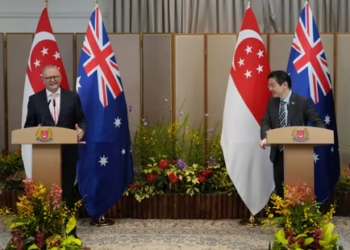 Singapore Pledges Stable Fuel Supply for Australia
 Suspected Plot Targets Pipeline Before Hungary Vote
 Reeves Slams Trump Over Iran War Lack Of Exit Plan
 Learner Driver Charged After Expo Tragedy
 Coalition pushes fossil fuel phaseout plan
 Trump approval plunges amid Iran war fears
 Ohio’s Battle for Trust: Democrats Vying to Flip the Buckeye State
 US ‘Narco Boat’ Strikes Draw Global Outcry
 FIFA Confirms Global Ban for Benfica Star Prestianni
 US Awaits Iran Reply on New Ceasefire Proposal
 US and Mexico Face Heatwave as Floods Batter South Africa
 Putin Signals War End as Russian Momentum Stalls
 Australia Welcomes the Iconic Michelin Guide
 Scepticism and tight security as Beijing braces for Trump
 Philippine Senator Flees After Days Under Senate Siege
 Tensions Flare as Israeli Nationalists March in Jerusalem
 High Street Crisis: Fears Grow Over Post Office Closures
 Oil Markets Face ‘Red Zone’ Threat Amid Iran Crisis
 Pope Meets Families in Italy Toxic Waste Zone
 Discontent grows around Putin amid war strain
 Aukus Deal Facing Fierce Backing and Historic Criticism
 The Hybrid School Revolution Defying the Social Media Ban
 UK Schools Struggle as Classrooms Top 40C
 Houthis Strike Saudi Arabia as Middle East Tensions Rise