
Published: 18 February 2026. The English Chronicle Desk. The English Chronicle Online
UK Chancellor Rachel Reeves is resisting growing pressure from military leaders and parts of the government to agree to a substantial and immediate boost in defence spending, as debates intensify over how to fund the nation’s armed forces amid rising security challenges. The report says Reeves is sticking firmly to strict Treasury fiscal rules, frustrating defence chiefs and some in Downing Street who argue that current budgetary constraints are hurting the UK’s ability to modernise and prepare for future threats.
Prime Minister Sir Keir Starmer has publicly signalled that Britain “needs to go faster” on increasing defence expenditure, including discussions about raising total defence outlays towards 3 per cent of gross domestic product — a level NATO allies regard as a strong commitment to collective security — potentially by the end of the next parliament. However, officials face a growing fiscal gap in the Ministry of Defence budget, projected to be as much as £28 billion over the next decade, prompting urgent calls for a funding strategy.

Reeves has emphasised she will not relax the government’s self‑imposed borrowing rules — regarded within Whitehall as critical to maintaining investor confidence and controlling long‑term interest costs — even if that means defence spending increases only gradually or through reprioritisation within existing budgets. This stance has drawn criticism from some defence figures and MPs who say urgent threats require a more immediate and substantial uplift in military investment.
The chancellor’s position reflects broader tensions within government over how to balance fiscal prudence with strategic security commitments. While Reeves has previously overseen increases to defence funding — including a multi‑billion‑pound uplift in the Spring Statement 2025 and moves towards planned targets of 2.5 per cent of GDP by 2027 — critics argue that these steps are insufficient in the face of evolving geopolitical risks.
In recent days, investors and financial analysts have also voiced concerns about potential proposals to ease fiscal rules specifically to pay for defence spending, warning that such a move could trigger higher borrowing costs and unsettle bond markets, which already face the highest gilt yields among the G7. Supporters of tighter fiscal controls say Reeves’s caution is necessary to protect the UK economy’s health, even as security demands grow.
Reeves’s refusal to green‑light a large, immediate defence spending boost appears to be creating a political rift within the governing Labour Party and between the government and the armed forces. Some MPs from all parties have publicly urged quicker action on defence funding, arguing that rising threats — from Russia’s ongoing war in Ukraine to tensions in the Indo‑Pacific — necessitate robust and timely investment in capabilities ranging from conventional forces to cutting‑edge technologies.

Downing Street has so far sought to strike a careful balance, reiterating Starmer’s view that the UK must uphold its commitments to NATO and global security while managing public finances responsibly. As pressures mount, the government is expected to outline more detailed plans for defence investment later this spring, with ongoing debates about how to pay for accelerated spending likely to shape fiscal policy ahead of the next general election.
Related News:
 Reform Plans to Keep UK’s Budget Watchdog in Office
 Tories Call for Rethink of Parliament Revamp Plans
 George Osborne Warns UK Is Falling Behind in Global Cryptocurrency Race
 David Lammy Faces Possible Legal Challenge Over Foreign Office Secondment Scheme
 Grant Shapps Cleared to Join Defence Startup Despite Ethical Concerns
 Chancellor Rachel Reeves Pushes for Sweeping Changes to Environmental Protections to Accelerate Development
 Scotland Bans Arms Firms Supplying IDF from Receiving Financial Support
 Government Launches £338m Scheme to Support Sick and Disabled People Back into Work
 Starmer Urged to Champion Workers’ Rights Amid Low Public Awareness
 Rachel Reeves Hosts Top UK and US Financial Executives as Trump’s State Visit Begins
 Donald Trump’s UK State Visit Kicks Off Amid Major Tech Investments and Business Engagements
 Farage’s Reform UK Receives £100,000 from Design Firm with Past Tax Issues
 Rachel Reeves Faces Criticism Over Appearance at Gambling Industry Event Amid Tax Review
 King Charles Earns Over £1 Million from Duchy Land Linked to Scrapped HS2 Project
 Gatwick Secures Approval for £2.2bn Second Runway Expansion
 Labour to Unveil Ambitious Plan for 12 New Towns to Tackle England’s Housing Crisis
 Senior Tories Condemn Badenoch’s Vow to Repeal Climate Change Act as Catastrophic
 Labour Faces Budget Dilemma as Reeves Urged to Break Manifesto Promises
 Kemi Badenoch Unveils ‘Golden Rule’ to Halve Spending Cuts for Deficit Reduction at Tory Conference
 Richard Tice’s Business Record Contrasts with His ‘Net Stupid Zero’ Criticism
 UK Labour Market Shows Signs of Stabilising After Job Losses
Rachel Reeves urged to consider welfare cuts to boost fiscal credibility
UK Labour Market Shows Signs of Stabilising After Job Losses
Rachel Reeves urged to consider welfare cuts to boost fiscal credibility
 Lucy Powell urged ministers to reconsider costly legal case for Labour donor’s firm
 Miliband Promises New Nuclear Stations if SNP Ousted
 Tories Push to Dilute Labour’s Workers’ Rights Bill
 Rachel Reeves to lead UK trade push in Saudi Arabia amid rights debate
 Trump’s UK Ambassador Urges North Sea Drilling to Strengthen US Ties
 Rachel Reeves Set to Break Labour Pledge and Raise Income Tax
 Thinktanks Urge Rachel Reeves to Reform UK Tax System
 Company linked to Michelle Mone owes £39m in tax
MPs Press Rachel Reeves to Hike Gambling Taxes
Company linked to Michelle Mone owes £39m in tax
MPs Press Rachel Reeves to Hike Gambling Taxes
 Cuts to home insulation funding threaten UK climate goals
 Millionaires group urge Reeves to introduce wealth tax to ‘lift kids out of poverty’
 PM Highlights UK Business at G20 in South Africa
 English Mayors Set to Introduce Tourist Taxes
 Starmer Says Labour’s Economic Plan Needs Years to Deliver
BBC bosses ‘right to stick by their guns’ against Trump, says minister
Starmer Says Labour’s Economic Plan Needs Years to Deliver
BBC bosses ‘right to stick by their guns’ against Trump, says minister
 China Dependence Threatens UK Energy Supply Chains and Jobs
 MPs warn AI financial risks threaten UK stability
 MPs warn AI financial risks threaten UK stability
 UK Government Borrowing Drops to £11.6bn in December
 Labour Must Revive High Streets to Avoid Election Collapse
 Barclays drops Global Counsel after Mandelson link scrutiny
 Unsustainable gaps in franchise policing, MPs warn
 Could Manchester Lead the UK’s Economic Revival?
 Starmer Weighs Fast-Tracking Defence Boost
 Robert Jenrick to Be Unveiled as Reform UK’s Treasury Spokesman, Reports Say
 UK shelves £110m border project amid trade strain
 UK Inflation Rate Falls to 3% in Year to January
 UK Must Act with Courage and Clarity on Israel-Palestine Conflict, Says Foreign Affairs Committee Report
 Radioactive Leak at UK’s Nuclear Warhead Base Sparks Outcry Over Safety and Secrecy
 Is the UK Ready to Put Boots on the Ground in Ukraine? Assessing Military Capacity and Challenges
 Police Scotland Spends £500,000 Compensating Officers Over Trump Visit
 Urgent Action Needed on Windrush Compensation as Survivors Speak of “Waiting to Die”
 Tanni Grey-Thompson Faces Abuse Over Opposition to Assisted Dying Bill
 TfL Invites RMT to Resume Talks as London Tube Strikes End
 Nigel Farage Unveils Controversial Immigration and Welfare Plans at Reform UK Press Conference
 Great Britain’s Energy Operator Commits to Strengthening Grid to Prevent Blackouts
 Ed Miliband Warns UK Government on X, Citing Elon Musk as a “Dangerous Influence”
UK House Price Growth Slows as Buyers Exercise Caution Ahead of Autumn Budget
Ed Miliband Warns UK Government on X, Citing Elon Musk as a “Dangerous Influence”
UK House Price Growth Slows as Buyers Exercise Caution Ahead of Autumn Budget
 UK border officers deployed to Balkans to tackle migrant smuggling
 UK MPs warn of repeat riots over online misinformation
 New V-Level qualification to transform post-16 education
 Real living wage set to rise nearly 7% for UK workers in 2026
 Army Barracks to House Migrants as Hotels Phase Out
Reeves Faces Setback as Labour May Miss Homes Target
M&S Profits More Than Halve After Cyber-Attack
Army Barracks to House Migrants as Hotels Phase Out
Reeves Faces Setback as Labour May Miss Homes Target
M&S Profits More Than Halve After Cyber-Attack
 Reeves rejects £1bn plea for NHS redundancy payouts
 PM Condemns Leaks, Vows Loyalty to Ministers and Stability
 England delays four mayoral elections amid criticism
 Historic £100-Weekly Pension Boost Brings Relief for UK Mineworkers
 UK Ministers Drop Foreign Student Targets for Global Education Push
 No Gas Boiler Ban as UK Warm Homes Plan Backs Heat Pumps
 Shinzo Abe’s killer receives life sentence in Japan
 Police response times face strict new national limits
 UK New Car Discounts Near £6,000 as Prices Are Slashed
 Pound Sinks and Borrowing Costs Rise as Starmer Fights for Job
 Major UK Clothing Firm Collapses into Administration — 109 Jobs at Risk
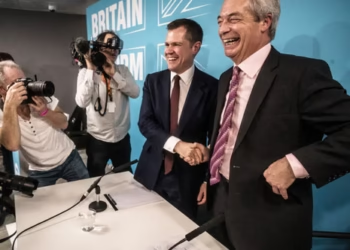 Farage to Name Jenrick as Reform Chancellor Pick
 Lloyds Boss Accepts Concern Over Use of Staff Data in Pay Talks