Published: 18 February 2026. The English Chronicle Desk. The English Chronicle Online.
Europe is confronting a new and unsettling reality as Chikungunya virus expansion emerges across the continent due to rising temperatures and the northward march of its mosquito vectors. Chikungunya virus expansion is the focus of intense scientific scrutiny because ever‑warmer seasons have extended the period and geographical breadth in which infected Aedes mosquitoes can transmit the virus to humans.
The painful and debilitating disease known as chikungunya was historically confined to tropical regions but is increasingly being reported in temperate climates due to climate change. Recent research shows that the minimum temperature at which the virus can incubate inside its mosquito hosts is lower than previously thought, meaning the virus now poses a threat to parts of Europe once deemed too cool for sustained transmission. This shift in chikungunya virus expansion has alarmed public health officials, who warn that Europe must adapt to the evolving threat of mosquito‑borne diseases.
Scientists have documented that these infections are now possible for several months each year in places like Spain, Italy and Greece, and even for shorter windows in northern regions such as south‑east England. This climatic shift has been driven by warmer average temperatures, which allow the mosquito to thrive for longer periods and shorten the time required for the virus to become infectious within the mosquito itself. As a result, outbreaks that used to be limited to the tropics are now being seen at latitudes previously considered safe from such risks. Climate and epidemiological models indicate that this pattern of chikungunya virus expansion will continue as global temperatures climb, potentially drawing new populations into areas of risk unless comprehensive mosquito control and public health measures are enacted.

In south‑western Europe, local transmission has already been recorded, with some regions reporting hundreds of cases during recent seasons. Southern France and northern Italy have seen significant numbers of locally acquired infections, meaning the virus was spread by mosquitoes within Europe without direct importation from tropical zones. These events exemplify how chikungunya virus expansion has crossed a threshold from sporadic imported cases to established local transmission in multiple locations. Public health agencies are now grappling with the implications of this shift, urging enhanced surveillance, community engagement in mosquito control efforts, and awareness of prevention strategies.
The primary vector responsible for this spread, the Asian tiger mosquito (Aedes albopictus), has proliferated across southern and central Europe. Warmer climates have lengthened the active season of this species, allowing it to survive and breed earlier in spring and later into autumn. The acceleration of chikungunya virus expansion is linked directly to this ecological change, because a mosquito’s capacity to transmit viruses depends on both its presence and the ambient conditions that support viral replication within its body. This expanding mosquito range is mirrored by similar trends for other mosquito‑borne threats such as dengue and Zika, escalating the overall burden of vector‑borne disease risk across Europe.
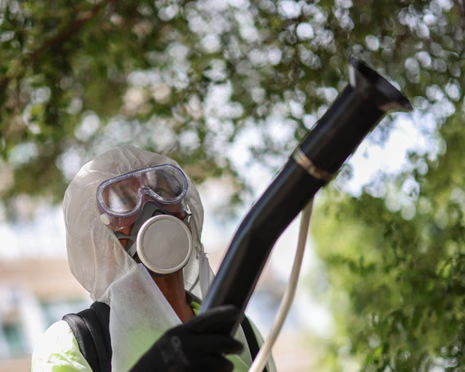
Public health experts stress that although chikungunya rarely proves fatal, the disease can inflict severe symptoms such as high fever, debilitating joint pain, rash and fatigue. In many cases, joint pain can persist long after the initial infection, reducing quality of life and placing strains on health services and vulnerable populations. There is currently no specific antiviral treatment for chikungunya, and while vaccines exist, they are not yet widely distributed or readily available to all at‑risk populations. Given these constraints, preventative measures such as reducing mosquito breeding sites, using repellents, and wearing protective clothing remain crucial components of public health advice.

Worldwide trends reinforce the urgency of addressing chikungunya virus expansion. Although recent data shows a decline in global case counts compared with the previous year, the virus continues to be reported in new settings and in regions where mosquito vectors are now established. In the Americas and parts of Asia, surges in local transmission have been observed, affirming that the spread of chikungunya is a global concern that demands coordinated action. The World Health Organization and regional health bodies have reiterated the need for integrated surveillance systems, vector management strategies and preparedness procedures to mitigate the risk of larger epidemics in coming years.
As Europe warms further, the challenge of chikungunya virus expansion illustrates the complex interplay between climate change and infectious disease dynamics. Health authorities and communities alike must adapt to this shifting landscape, improving infrastructure to detect and respond to cases promptly, while equipping individuals with the knowledge and tools necessary to protect themselves. Failure to act could see chikungunya and other mosquito‑borne threats become entrenched features of public health in regions once free from such risks. The urgency of confronting chikungunya virus expansion underlines the broader need for climate resilience and robust epidemic preparedness as global environments continue to transform.
Related News:
 Traces of Glyphosate Found in UK Playground Tests
 Polycrisis Anxiety Leaves Many Feeling Trapped in the Present
 James Valentine Retires from ABC After Cancer Battle
 Hospice Cuts Raise Alarm Across England Amid Funding Crisis
 Celebrities and Charities Demand UK Government Act on Child Poverty
 Experts Warn on Home Birth Risks, Call for Skilled Midwives
 Experts Urge Legal Right to Timely Cancer Care
 Patients to Test Health at Home to Ease NHS Winter Pressure
 London’s Childlessness Crisis: Schools Closing as Families Shrink
 North Sea oil workers must lose weight or face job loss
 Crisis charity to become landlord amid UK housing emergency
 Seven Conditions That Automatically Qualify You for a Free Bus Pass
 Shouting Works Best to Deter Gulls, UK Study Finds
 Reeves rejects £1bn plea for NHS redundancy payouts
 Leading doctors issue warning amid ‘bad’ flu season
 Working-Class Men with Prostate Cancer Left Behind by NHS
 Senator John Fetterman Hospitalized After Fall from Heart Flare-Up, Keeps Sense of Humor
 New AI tool could cut wasted efforts in organ transplants
 From Baby Teeth to Bioengineering: The Future of Self-Healing Teeth
 Stroke Patient Mistaken for Drunk, Care Delayed
 107-Year-Old Veteran Credits Whiskey for Longevity
 ‘Traumatic Wait’: Northern Ireland Women Face Breast Cancer Delays
 Healthy Habits in Your 30s That Boost Life in Your 70s
 Woman Meets Boy Whose Life She Saved with Kidney
 Scottish Families Take Legal Action Over School CO Leak
 Welsh Government Christmas 2020 Lockdown Criticised
 Coffins Now Too Large to Cremate Amid Rising Obesity Crisis
 NHS paediatric leave parents waiting months for answers
 Vicki Fears Losing Motability Car
 Delhi’s Toxic Air Crisis Leaves Children Sick and Vulnerable
 Five-Year-Old Dies After Rare Tonsil Surgery Complication
 Fibromyalgia Patients Struggle as NHS Fails to Provide Care
 “Enough is Enough”: Local MP Vows to Fight Rainham Quarry Plans
 More Patients Now Contacting GPs Online, Data Shows
 ‘Extinct’ Antelope Returns to Sahara, Bringing Hope
 Kenya Signs $2.5bn Health Deal with US Amid Data Concerns
 People in England’s Poorest Areas Face Higher Lung Health Emergencies
 Damien Martyn in Induced Coma After Meningitis Diagnosis
 Minor A&E Visits Surge Across England as Hospitals Face Pressure
 Children to Receive Home Vaccines as England Acts
 Eden Project Founder Celebrates 25 Years of Nature’s Hope
 Ethnic Minorities Face Gaps in Diabetes Tech Access
 Childhood Hypertension Sparks Urgent UK Testing Calls
 Salt Intake England: Crisps Comparison Sparks Health Alarm
 Avocado Crisis: The Hidden Violence Behind Exports
 Smaller farms funding prioritised in England nature plans
 Local Fish Could Boost UK Health and Economy Significantly
 Offenders to Receive Health Support During Probation Appointments
 NHS Violence Crisis: Staff Face Daily Assaults
 Celebrity Campaign Highlights SMA Screening Failures
 Google Removes Some AI Health Summaries Over Safety Concerns
 Storm Goretti leaves Cornwall homes without power
 BP’s Influence Sparks Controversy in UK STEM Education
 Robo-Vaccination Could Transform Fight Against Bovine TB
 No Gas Boiler Ban as UK Warm Homes Plan Backs Heat Pumps
 UK Glaucoma Rise Signals Looming Eye Health Crisis by 2060
 Judi Dench Champions Fight to Save London’s Green Spaces
 UK ADHD medication use triples over 13 years, landmark study finds
 Record-Breaking Heat Looms Over South-East Australia as Catastrophic Fire Risk Escalates
 Reform UK Health Plan ‘Would Cost £1.7bn’, Streeting Says
 NHS boosts bowel screening accuracy with FIT reform
 UK joins North Sea wind grid pact with nine European nations
 UK loses measles-free status amid deaths and jab decline
 Devon hosts first high-density hydro power system
 US-Style Pickup Trucks Surge on UK Roads
 Nottingham survivor warns of repeat attacks without mental health reform
 UK vets face reforms to tackle high pet care costs
 AstraZeneca China Investment Signals Strategic Shift Abroad
 AI breast screening cuts later cancer diagnoses by 12%, study finds
 Reform UK Taps Boris Ally to Shape Party Nature Agenda
 Study Finds One in Seven England Takeaways Are Dark Kitchens
 Deadly Cancer Postcode Lottery Limits NHS Care
 Pneumonia Surge Pushes England Emergency Cases Higher
 Wigan Dump Crisis Sparks Health and Safety Alarm
 Most Statin Side-Effects Are Not Caused by Drugs, Study Confirms
 Headline: Measles Alert: Dr Oz Urges Americans to Vaccinate
 Children of Close-Relative Parents Face Higher Mortality Risk in England
 Santos Wins Landmark Greenwashing Case in Court
 Gentoo Penguins First Birds on Australian Territory Hit by Bird Flu
 UK MPs Demand Ban on Brazilian Butt Lifts