Published: 20 February 2026, The English Chronicle Desk, The English Chronicle Online
In the far western reaches of the UK, the village of Talysarn stands today as a testament to history, industry, and resilience. Home to around 2,000 people, Talysarn might appear at first glance to be a typical Welsh village, surrounded by stunning natural landscapes. Yet its origins tell a very different story: around a century ago, the village was relocated wholesale to this site from a location slightly to the east, leaving behind the ruins of cottages, villas, and other structures that remain remarkably intact today.
The relocation of Talysarn reflects broader historical trends in Wales, where communities were often moved or erased to accommodate reservoirs supplying England with water, or to make way for the booming slate industry of the 19th century. Perhaps the most famous case of such displacement is Capel Celyn, which was flooded to supply Liverpool, but Talysarn’s story is equally compelling. Its original site was enveloped by expanding quarries in the Dyffryn Nantlle valley, which were gradually consolidated into massive operations like Dorothea Quarry, now part of the Slate Landscape of Northwest Wales World Heritage Site.

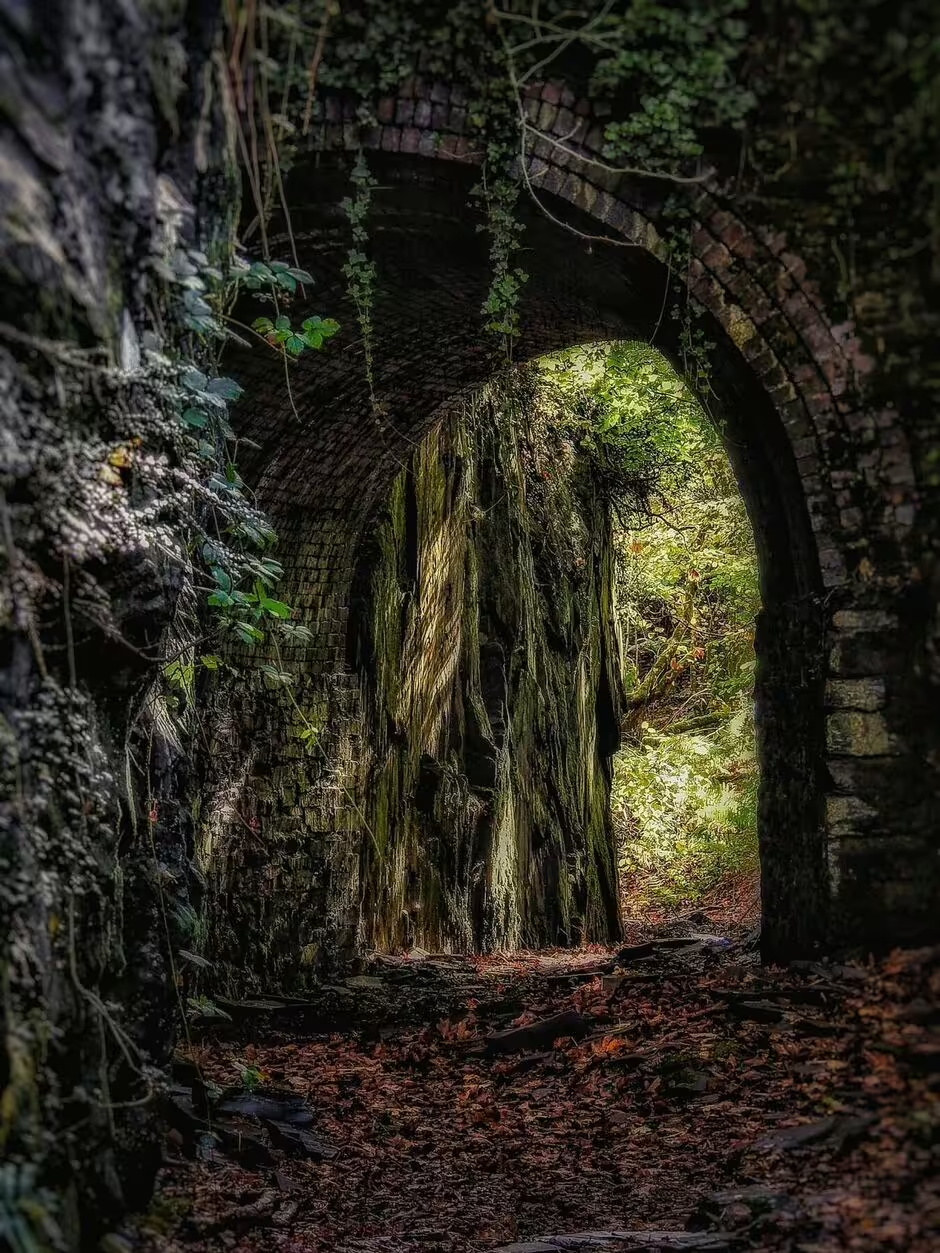
Many of the old buildings, including Plas Talysarn—a country house later expanded into a Victorian villa—remain in ruins. These overgrown structures, cloaked in moss and vines, have fascinated explorers and photographers alike. Tony Harnett, who runs the Gems of Snowdonia website, described stumbling upon the ruins during a short visit as a breathtaking experience. “I thought that’s all there was, but I found so many other buildings scattered around the site. I could have easily stayed all day,” he said.
Photographer and author Daniel Start likened the site to a “Welsh Angkor Wat,” noting the scale, wildness, and sheer intrigue of the ruins. Among the remnants are a Cornish beam engine, a gothic chapel or folly, and the overgrown remains of Plas Talysarn’s chapel. Once the grand home of the Robinson family, Plas Talysarn boasted a fountain and was linked to the Nantlle horse tramway, traces of which still remain. The estate later became part of the quarry operations, finally abandoned when landslips from Dorothea Quarry made the site unsafe.
Dorothea Quarry itself opened in 1820 and remained productive until 1970. At its peak, it was one of the most significant slate operations in the world, providing roofing materials for the 19th-century global market. Over time, floods, accidents, and wartime production declines led to its closure, leaving a flooded quarry pit more than 100 meters deep, now a striking feature of the landscape.
The relocation of Talysarn reflects a poignant chapter in Welsh history, blending industrial development, cultural upheaval, and community resilience. The village today remains a bastion of the Welsh language, just as it was when first re-established in the early 20th century. Its road, shifted south in 1927, still retains traces of the original “Yr Hen Lon” or “old road,” while the surrounding ruins stand as reminders of lives uprooted but histories preserved.
Even beyond its industrial past, Talysarn and the ruins of its former site continue to captivate visitors. Photographer Tony Harnett and others have highlighted the hidden treasures that make Snowdonia so unique. Visitors explore moss-draped buildings, former boiler houses, stable blocks, and kennels, all evoking the rhythm of village and quarry life long past. The site tells a story spanning 500 million years, from Cambrian slate formations to human endeavor and industrialization, leaving behind a landscape both beautiful and haunting.

Talysarn’s legacy is not merely historical; it is a living testament to human adaptation and the passage of time. The village, while modernized in its new location, is inseparable from the stories of its original site, its displaced inhabitants, and the relentless march of nature reclaiming the ruins. For explorers, historians, and nature enthusiasts alike, Talysarn offers a rare glimpse into a world where industrial heritage and natural reclamation meet in a setting described as “vast, wild and fascinating.”
Related News:
 What Happened to Bathroom Doors in Hotels?
 South Africa’s Garden Route Gem Faces Looming Water Crisis
 EXCLUSIVE: Shamed Andrew’s New Humiliation as King Lays Down New Rule After Royal Lodge Boot
 Labour Utterly Humiliated by Straight-Talking Mum Who Cut Through Keir Starmer’s Insanity
 Royal Family LIVE: ‘Pariah’ Andrew Mountbatten-Windsor Sparks Fresh Revolt Among Staff
 GMB Issues Bombshell Andrew Update Minutes Into Show as Furious Viewers ‘Switch Off’
 Possessions Stuck in Unsafe Flats Two Years On
 Stay Away from Collapsed Road, Council Urges
 Tributes to Hospital’s First Black Ward Sister
 Renters Furious as Decent Homes Standard Delayed Until 2035
 The Victorian aristocrat who became Britain’s first Muslim lord
 Gender Pay Gap Won’t Close for Another 30 Years, Warns Union
 UP IN FLAMES: Huge Blaze Rips Through Odeon Cinema, Students Evacuated
 Stop Releasing Phone Thieves Who Reoffend, Met Police Chief Urges Courts
 Motorists Could Face ‘Mandatory’ Driving Ban for Road Offences Under Tougher Laws
 Royal Mail Blames Poor Weather and Sickness for Delayed Deliveries
 Disability and LGBT Hate Crimes Set to Become Aggravated Offences
 Police Assessing Stansted Airport Private Flights Over Epstein Ties
 Snow and Rain Warnings as Cold Snap Continues in the UK
 Flooding May Worsen Before It Improves as More Rain Forecast for the UK
 Teacher Who Lied About Cambridge Degree Banned From Profession
 Illegal Skin Lightening Cream Being Sold in UK Butchers, Watchdog Warns
 ‘Just Push Us Into the Sea’: The Frustration of an Area Failed by Politics
 Man Who Threw Kittens Into River Thames Sentenced
 TfL Advert Banned for Harmful Racial Stereotype
 Last‑ditch Call to Save Police Front Counters in London
 Deaf Woman Killed After Night Out With Strangers, Court Hears
 Jet2 Hands Passengers Life Ban After Mid‑Air Brawl
 Adoption Breakdown Ended My Career and Relationship – ‘We’re Told to Get On With It’
 Valentine ‘Unrecognisable’ a Year After Rescue
 Dual Nationals Face Scramble for UK Passports as New Rules Come Into Force
 Britain’s Special Needs Spending Crisis Will Be Labour’s Ruin
 Singapore Offers to Set Up Single Americans with ‘Epic’ First Dates – There’s Just One Catch
 Inland Australia Town Turns Streets into a Beach for Volleyball Contest
 Break from Wintry Weather as UK Temperatures to Climb to 14 °C
 Two Teens Found Dead at East Yorkshire Holiday Park
 Popular UK Service Station Announces Closures Amid Another’s Liquidation
 UK Must Act with Courage and Clarity on Israel-Palestine Conflict, Says Foreign Affairs Committee Report
 London Set to Honour Euro 2025 Champions as Lionesses Take Victory Parade Through the Capital
 Targeted Attack in Bury Sparks Murder Investigation as Community Awaits Justice
 Princess of Wales Launches Animated Video Series to Support Early Childhood Development
 Heartbreak in the New Forest as Shetland Ponies Vanish, Community on Edge
 Fire Contained at Edinburgh’s Arthur’s Seat After Overnight Battle by Firefighters
 Premier League Supercomputer Predicts Tough Season for Man Utd Amid Three-Team Title Battle
 UK Weather: Heat Alerts Extended as Temperatures Set to Reach 30°C This Weekend
 Merseyside Police Helicopter Crew Cleared After Low-Altitude Pursuit of Suspect
 Education Leaders Call for End to Compulsory GCSE Resits in English and Maths
 Thousands of New School Nursery Places to Be Rolled Out Across England
 Tanni Grey-Thompson Faces Abuse Over Opposition to Assisted Dying Bill
 Birmingham Bin Strike Enters Sixth Month as Negotiations Stall
 Over 40% of Private Renters Forced to Ration Energy to Afford Bills, Study Reveals
 Systemic Racism in Maternity Care Continues to Endanger Black Women in England, MPs Warn
 Northern Ireland Faces Fears of Prolonged Race Riot “Permacrisis”
 Nigel Farage Unveils Controversial Immigration and Welfare Plans at Reform UK Press Conference
 Scottish Teenager’s Petition on Single-Use Plastics Gains Parliamentary Support
 White Low-Income Pupils in England Show Lowest Levels of School Engagement, Study Finds
 No Evidence Found to Substantiate Alleged Rape in Oxfordshire Churchyard, Police Confirm
 UK House Price Growth Slows as Buyers Exercise Caution Ahead of Autumn Budget
 Massive London Poundland Fire Engulfs High Street
 Paedophile Singer Ian Watkins Dies After Prison Attack
 UK border officers deployed to Balkans to tackle migrant smuggling
 UK MPs warn of repeat riots over online misinformation
 Giuffre’s bombshell memoir names Prince Andrew 88 times in shocking revelations
 M&S and Morrisons Lead Christmas Supermarket Taste Test
 Historic £100-Weekly Pension Boost Brings Relief for UK Mineworkers
 Children to Receive Home Vaccines as England Acts
 Cambridge College Faces Backlash Over Private School Recruitment
 Bereaved Fathers Gain New Paternity Leave Rights in UK
 Woman Jailed for Life After Killing E-Bike Rider in Tragic Mistaken Identity Case
 No Gas Boiler Ban as UK Warm Homes Plan Backs Heat Pumps
 Police response times face strict new national limits
 Devon hosts first high-density hydro power system
 Draft Severe Weather Plan Following Storm Flooding
 Major UK Clothing Firm Collapses into Administration — 109 Jobs at Risk
 Send spending gap leaves deprived areas behind
 Could Manchester Lead the UK’s Economic Revival?
 Lloyds Boss Accepts Concern Over Use of Staff Data in Pay Talks
 With Scottish Freebies Under Threat, University Tuition Is on the ‘Hit List’
 Civil Service Pay: Union Urges Ministers to End ‘Barking Mad’ Limits
 Epstein Eyed Record Label Investment to Access Women, Files Suggest