Published: 20 February 2026. The English Chronicle Desk. The English Chronicle Online.
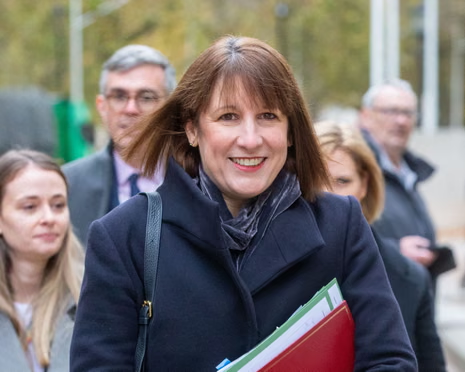
The UK government has recorded an unprecedented UK budget surplus of £30.4bn in January 2026. This figure, confirmed by the Office for National Statistics (ONS), surpasses all previous January totals since records began in 1993 and reflects a dramatic £15.9bn increase compared to January 2025. Analysts say the UK budget surplus exceeds forecasts from the Office for Budget Responsibility and City economists, who had expected £24bn, providing a welcome boost for Chancellor Rachel Reeves ahead of her spring statement next month. January traditionally sees higher tax receipts due to self-assessment submissions, but this year’s UK budget surplus is unusually large, driven by strong capital gains tax inflows alongside routine income tax revenue.
Chief economist Grant Fitzner explained that the January UK budget surplus was “the highest since monthly records began,” emphasising that revenue growth outpaced public spending. While the costs of public services and benefits rose slightly, these were largely offset by lower debt interest payments, contributing to the unexpected increase in net revenue. Analysts note that this pattern is partly cyclical, as many taxpayers submit self-assessments at the start of the year, yet the scale of the UK budget surplus indicates broader economic and fiscal dynamics at play.
Capital gains tax receipts played a key role in the January UK budget surplus, with many investors selling assets ahead of anticipated rate increases. In her 2024 autumn budget, Reeves raised the lower capital gains rate from 10% to 18% and the higher rate from 20% to 24%, with immediate effect. This prompted a surge in disposals as taxpayers sought to avoid the higher rates, generating significant revenue for the Treasury. Combined with the continuation of income tax threshold freezes since 2022, more taxpayers were pushed into higher brackets, further lifting receipts in the month.

Other factors contributed to the UK budget surplus, including last April’s increases in national insurance contributions and stronger-than-expected wage growth. These elements combined to push tax revenues higher while expenditure remained broadly stable. James Murray, the Treasury’s chief secretary, highlighted the government’s strategy to maintain fiscal discipline, reduce borrowing, and redirect funds toward public priorities. He stressed that the UK budget surplus demonstrates the benefits of careful financial planning, even as borrowing levels remain a key policy concern.
Public sector borrowing trends show a marked shift from December 2025, when net borrowing stood at £11.6bn. The surplus in January reduced the deficit for the first ten months of the fiscal year to £112.1bn, lower than the £120.4bn forecast by the OBR. This improvement offers the government additional flexibility to manage public finances, invest in essential services, and plan for medium-term debt reduction strategies. Reeves has emphasised that keeping borrowing under control is essential to ensuring sustainable public finances.
The national debt has been a persistent concern, reaching 92.9% of gross domestic product in January 2026, a level not seen since the early 1960s. High debt servicing costs have placed pressure on public spending, with approximately £1 in every £10 of government expenditure devoted to interest payments. The January UK budget surplus reduces some immediate pressure, but policymakers remain focused on long-term strategies to bring borrowing down and protect public services.
Murray explained that the government aims to more than halve borrowing by 2030-31, allowing greater funding for policing, education, and the NHS. He highlighted that this approach reflects a careful balance between fiscal responsibility and investing in areas critical to economic growth and social welfare. Analysts say the January UK budget surplus provides a positive signal for financial stability, demonstrating that targeted fiscal measures can generate significant short-term gains without stifling economic activity.
The surplus also reflects broader economic conditions, including resilience in wage growth and consumer income, which has supported higher tax contributions. Despite global economic uncertainties, the UK labour market has maintained relatively strong earnings growth, contributing to increased income tax and national insurance payments. These factors, combined with proactive fiscal policies, have created a situation where revenues exceeded expectations by a considerable margin.
Reeves’ focus on reducing borrowing and controlling national debt aligns with her broader economic agenda, which prioritises stability and growth. The government has been careful to balance increased revenue collection with measures to protect households from excessive tax burdens, particularly in light of inflationary pressures. Economic commentators note that these policies appear to be producing tangible results, as evidenced by the record January UK budget surplus and the reduction in projected deficits.
Financial experts emphasise that while January figures are seasonally high, the scale of this year’s UK budget surplus is exceptional. The combination of capital gains tax timing, income tax threshold freezes, national insurance adjustments, and robust wage growth has amplified typical January patterns. This has created an opportunity for the government to demonstrate fiscal prudence and strengthen public confidence ahead of upcoming budget announcements.
The Office for National Statistics’ detailed reporting shows that spending pressures remain contained, with debt interest savings offsetting increased costs for public services. Analysts believe that if these trends persist, the government may be able to maintain lower borrowing levels while continuing investment in infrastructure and social services. Reeves’ fiscal management will likely remain under scrutiny, but early indicators suggest the strategy is yielding measurable benefits.
City economists have also highlighted that the surplus may influence market perceptions of UK government debt sustainability. Higher-than-expected revenue and controlled borrowing reduce concerns about future deficits, potentially lowering borrowing costs and improving investor confidence. This positive financial momentum comes at a critical time, as policymakers plan for upcoming economic challenges and the spring statement, where further measures may be introduced to support growth and stability.

The January surplus represents a convergence of policy decisions, economic conditions, and taxpayer behaviour that together produced an exceptional fiscal outcome. Analysts note that the government’s proactive approach, including targeted tax adjustments and careful debt management, has directly contributed to this result. Reeves and her team can leverage this momentum to reinforce commitments to reducing borrowing and ensuring public funds are allocated efficiently.
While the surplus is a cause for optimism, officials stress that long-term sustainability remains essential. Borrowing reductions and debt management must continue alongside responsible public spending to avoid future fiscal pressures. Reeves’ approach demonstrates that careful policy design, combined with attention to economic trends, can produce significant improvements in public finances without imposing undue burdens on citizens.
As the UK prepares for the spring statement, the record surplus provides a strong foundation for the chancellor to outline fiscal priorities, including borrowing reduction, investment in public services, and sustainable growth strategies. Economists and policymakers will closely watch how these measures interact with ongoing economic trends, particularly inflation, wage growth, and capital gains activity. The early success in January provides optimism that strategic fiscal planning can deliver tangible results.
In conclusion, the UK budget surplus of £30.4bn in January 2026 marks an extraordinary fiscal achievement. A combination of increased capital gains and income tax revenues, national insurance adjustments, and stable spending produced the largest January surplus on record. Chancellor Rachel Reeves now has additional fiscal flexibility to manage borrowing, reduce debt interest pressures, and support critical public services, demonstrating effective policy execution at a crucial time for the economy.
Related News:
 Tories Push to Dilute Labour’s Workers’ Rights Bill
 Trump’s UK Ambassador Urges North Sea Drilling to Strengthen US Ties
 Rachel Reeves Set to Break Labour Pledge and Raise Income Tax
 Thinktanks Urge Rachel Reeves to Reform UK Tax System
 Company linked to Michelle Mone owes £39m in tax
MPs Press Rachel Reeves to Hike Gambling Taxes
Company linked to Michelle Mone owes £39m in tax
MPs Press Rachel Reeves to Hike Gambling Taxes
 Cuts to home insulation funding threaten UK climate goals
 Millionaires group urge Reeves to introduce wealth tax to ‘lift kids out of poverty’
 PM Highlights UK Business at G20 in South Africa
 English Mayors Set to Introduce Tourist Taxes
 Starmer Says Labour’s Economic Plan Needs Years to Deliver
BBC bosses ‘right to stick by their guns’ against Trump, says minister
Starmer Says Labour’s Economic Plan Needs Years to Deliver
BBC bosses ‘right to stick by their guns’ against Trump, says minister
 China Dependence Threatens UK Energy Supply Chains and Jobs
 MPs warn AI financial risks threaten UK stability
 MPs warn AI financial risks threaten UK stability
 UK Government Borrowing Drops to £11.6bn in December
 Labour Must Revive High Streets to Avoid Election Collapse
 Barclays drops Global Counsel after Mandelson link scrutiny
 Unsustainable gaps in franchise policing, MPs warn
 UK shelves £110m border project amid trade strain
 Chancellor Rachel Reeves Pushes for Sweeping Changes to Environmental Protections to Accelerate Development
 Senior Tories Condemn Badenoch’s Vow to Repeal Climate Change Act as Catastrophic
 Kemi Badenoch Unveils ‘Golden Rule’ to Halve Spending Cuts for Deficit Reduction at Tory Conference
 Reeves Faces Setback as Labour May Miss Homes Target
 Green Party Surges Past Labour in Latest UK Poll
 Celebrities and Charities Demand UK Government Act on Child Poverty
 FBI Director Kash Patel Defends Girlfriend Amid Government Jet Claims
 French Taxi Driver Cleared in David Lammy Theft Case After Fare Dispute
M&S Profits More Than Halve After Cyber-Attack
French Taxi Driver Cleared in David Lammy Theft Case After Fare Dispute
M&S Profits More Than Halve After Cyber-Attack
 Tony Blair think tank warns Rachel Reeves must cut taxes if manifesto broken
 ‘Reckless’ cuts to victims’ services will cost more than they save
 Starmer Faces Growing Dissent as Labour MPs Weigh Leadership Challenge
 Reeves rejects £1bn plea for NHS redundancy payouts
 Politics latest: Starmer ‘will fight any leadership coup’ as Streeting denies attempt to oust Labour PM
 PM Condemns Leaks, Vows Loyalty to Ministers and Stability
 Major Rent Reform Ends No-Fault Evictions in England
 Peers Flood Assisted Dying Bill with 942 Amendments
 England’s Special Needs Support Faces Breaking Point
 MoD warned over Excel risks before Afghan data breach
 Global markets drop amid tech sell-off and China slowdown
 Canada Passes Carney’s First Budget in Tight Parliamentary Vote
 Mossmorran Plant Closure Hits Cowdenbeath Hard
 Most Tories Expect to Support a Farage-Led Government
 Labour MP claims devolution bill is ‘blatant discrimination’ against Cornwall
 Millions Face Higher Taxes Under Reeves New Budget
 Virgin Media Fined £23.8m Over Telecare Safety Failures
 Rising Water Bills Lift Troubled Thames Back to Profit
 Culture secretary to review Telegraph takeover by Daily Mail owner
 Plans to Limit Jury Trials Face Retreat After Mounting Opposition
 Right Must Unite After Jenrick Defection, Urges Rees-Mogg
 UK Ministers Drop Foreign Student Targets for Global Education Push
 No Gas Boiler Ban as UK Warm Homes Plan Backs Heat Pumps
 Hugh Grant Joins Call for Under-16 Social Media Ban in UK
 Shinzo Abe’s killer receives life sentence in Japan
 Lords Vote Piles Pressure on Starmer Over Social Media Ban
 Reform UK Health Plan ‘Would Cost £1.7bn’, Streeting Says
 Police response times face strict new national limits
 Labour policing overhaul sparks fears over growing central control
 Tories criticised after Braverman defection sparks mental health row
 Burnham Westminster return hopes fade amid Labour rift
 Starmer warns of toxic division politics in Reform challenge
 Starmer China visit raises human rights pressure on Beijing
 Households in England Face Rising Water Bills in April
 UK New Car Discounts Near £6,000 as Prices Are Slashed
 Study Finds One in Seven England Takeaways Are Dark Kitchens
 Palantir contracts face UK halt calls over transparency
 Labour Thinktank Row Deepens Over Journalist Probe Claims
 Labour Lord Doyle Apologises Over Paedophile Ties in Political Storm
 Cabinet Secretary Shake-Up Triggers Due Diligence Warning
 UK economy struggles as growth stalls at 0.1% in late 2025
 Could Manchester Lead the UK’s Economic Revival?
 Starmer Faces Inquiry Calls Over Thinktank Probe
 Royal Mail Delivery Crisis Deepens Amid Weather Chaos
 Royal Mail Blames Poor Weather and Sickness for Delayed Deliveries
 Farage to Name Jenrick as Reform Chancellor Pick
 Jenrick: I’ll Back OBR but There’ll Be No More Cosy Consensus
 NHS Negligence Ruling Raises Payout Costs
 Civil Service Pay: Union Urges Ministers to End ‘Barking Mad’ Limits
 Antonia Romeo appointment sparks criticism
 Trump and Chagos Deal Rift Over Iran Strikes