Published: 23 February 2026. The English Chronicle Desk. The English Chronicle Online.
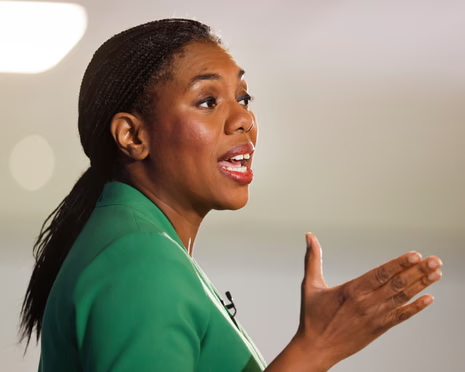
The debate over student loan interest has returned to centre stage in Westminster politics. The issue resurfaced after Kemi Badenoch pledged that a future Conservative government would scrap what she described as an unfair debt trap. Her remarks have intensified pressure on Labour ministers already facing criticism over rising repayment costs. For many graduates across Britain, student loan interest remains a growing concern rather than a distant policy argument.
Under the current system, graduates on so-called plan 2 loans can see balances rise despite steady repayments. These loans, introduced in 2012, apply real interest rates linked to inflation and income levels. Critics argue that this structure leaves many borrowers paying far more than they originally borrowed. Supporters of reform say the mounting student loan interest undermines confidence in higher education.
Badenoch insisted that the Conservatives would abolish real interest rates for plan 2 borrowers. She argued that loans should not increase faster than retail price index inflation. According to her proposal, this shift would significantly reduce lifetime repayment totals. Graduates who began university after 2013 would see their balances grow more slowly. The policy, she suggested, would restore fairness and transparency to the system.
The proposal drew a swift response from Bridget Phillipson, the Education Secretary. She acknowledged that the plan 2 framework contains weaknesses and unresolved tensions. However, she emphasised that the current government inherited the system from the Conservatives. In media interviews, she said reform must be approached carefully to avoid unintended consequences. Her comments highlighted the political complexity surrounding student loan interest.

Phillipson suggested that Labour’s priority lies elsewhere within higher education policy. She indicated that maintenance grants for disadvantaged students may receive greater focus. For ministers, widening access remains a central mission alongside fiscal responsibility. Adjusting student loan interest, she implied, is not straightforward given public finance pressures. Freezing thresholds and managing university funding complicate the landscape further.
The shadow education secretary, Laura Trott, reinforced Badenoch’s stance during broadcast interviews. She argued that interest rates rising above inflation create disproportionate burdens. Trott claimed millions of graduates would benefit from capping rates at RPI. She maintained that the change could be funded through difficult decisions elsewhere. Specifically, she suggested cutting courses that fail to deliver strong employment outcomes.
Such remarks have reignited debate over value for money in higher education. Some Conservatives argue that certain degrees leave students with limited career prospects. They contend that high student loan interest compounds this perceived imbalance. Critics of that approach warn against narrowing opportunities for creative and vocational study. Universities themselves caution that broad course reductions could damage regional economies.
Badenoch framed the issue within a wider narrative about generational fairness. She said youth unemployment is at its highest level in a decade. Graduate recruitment, she argued, stands at historically low levels. In that climate, she described university departure as a moment of despair for many families. Rising student loan interest, she claimed, intensifies that anxiety and erodes hope.
Labour ministers counter that reform cannot ignore fiscal realities. The Treasury must consider long-term sustainability of public finances. Freezing the salary threshold for repayments has already drawn criticism. That decision means more graduates will begin repaying earlier in their careers. Some analysts argue it effectively increases the burden without altering headline rates. For borrowers, the practical effect often feels similar to rising student loan interest.
The controversy gained fresh momentum after comments from Nadia Whittome. She revealed that she left university with nearly £50,000 in debt. Despite earning a salary placing her among the country’s top earners, her repayments reduced the balance only modestly. Interest accumulation offset much of her contribution. Her experience resonated widely on social media and reignited frustration about student loan interest.
Phillipson responded by reiterating that the system developed over many years. She stressed that Labour did not design the original structure. Nevertheless, she conceded that flaws exist within the repayment model. Balancing reform with fiscal discipline presents a persistent challenge. Ministers appear wary of committing to sweeping changes without clear funding solutions.
The Conservative proposal would rely partly on reducing the number of courses deemed low value. Trott argued that some degrees leave graduates worse off financially. She suggested apprenticeships offer a debt-free alternative with strong job prospects. Supporters of this view say rebalancing pathways could strengthen the economy. Critics fear such rhetoric may stigmatise certain academic disciplines unfairly.
Treasury minister Torsten Bell warned of severe consequences for universities. Writing on social media, he argued that large student number reductions could close institutions. He suggested the savings required would necessitate dramatic caps on enrolment. Such measures, he implied, risk destabilising the higher education sector. The warning underscores how student loan interest policy intersects with university funding models.
Behind the political exchanges lies a broader economic question. Britain’s income-contingent loan system was designed to share costs between graduates and taxpayers. Those earning more repay more, while lower earners may repay little. Yet rising inflation in recent years has pushed interest rates upward. For many borrowers, balances now grow faster than repayments during early career stages.
Supporters of reform argue that this dynamic creates psychological strain. Watching debt increase despite consistent payments can feel demoralising. Economists note that most graduates will not repay the full balance before write-off. However, the visible accumulation of student loan interest shapes perceptions strongly. Political leaders on both sides acknowledge the emotional weight of that reality.
Some policy experts propose alternative models, including graduate taxes or fixed interest caps. Others recommend restoring maintenance grants to reduce borrowing from the outset. Any significant change would require substantial public spending or reallocation. With tight budgets and competing priorities, consensus remains elusive. Yet public scrutiny of student loan interest continues to intensify.
Badenoch has urged the Chancellor to adopt the Conservative proposal in the forthcoming spring statement. She framed the move as a signal of fairness to younger voters. Labour, however, appears cautious about adopting opposition ideas wholesale. Ministers stress that long-term stability for universities and students must guide reform. The debate therefore extends beyond headline interest rates alone.
Across the country, graduates are watching closely. Many entered university believing higher education guaranteed improved prospects. While degrees still offer advantages, the financial arithmetic feels harsher today. Housing costs, inflation and taxation all compound pressures on young professionals. Within that context, student loan interest has become a symbol of wider generational strain.

Universities UK and other sector bodies have urged calm discussion rather than partisan confrontation. They argue that higher education remains a public good delivering economic and cultural benefits. Sustainable funding, they say, requires collaboration across parties. Rapid shifts risk unintended disruption to teaching and research capacity. Policymakers therefore face a delicate balancing act.
As Parliament prepares for fiscal announcements, the issue shows no sign of fading. Both major parties recognise the electoral salience of graduate finances. Young voters represent an increasingly influential demographic. Whether through capped rates, restored grants or structural overhaul, change seems inevitable. The precise direction of reform, however, remains uncertain.
For now, the argument over student loan interest encapsulates broader tensions in British politics. It touches questions of fairness, opportunity and economic strategy. Graduates seek reassurance that their investment in education was worthwhile. Governments must reconcile that expectation with fiscal responsibility. The coming months may determine whether meaningful reform materialises or remains rhetorical.
Related News:
 British Woman in Iran ‘Losing Hope’ Amid Ongoing Detention
 BBC Journalist Held and Interrogated in Vietnam
 Green Party Surges Past Labour in Latest UK Poll
 Celebrities and Charities Demand UK Government Act on Child Poverty
 Trump’s UK Ambassador Urges North Sea Drilling to Strengthen US Ties
 FBI Director Kash Patel Defends Girlfriend Amid Government Jet Claims
 French Taxi Driver Cleared in David Lammy Theft Case After Fare Dispute
 MPs Press Rachel Reeves to Hike Gambling Taxes
 Boris Johnson accused of undermining BBC leadership
 ‘Reckless’ cuts to victims’ services will cost more than they save
 Millionaires group urge Reeves to introduce wealth tax to ‘lift kids out of poverty’
 Starmer Faces Growing Dissent as Labour MPs Weigh Leadership Challenge
 Reeves rejects £1bn plea for NHS redundancy payouts
 Farage appointee to lead Reform youth accused of anti-British views
 Politics latest: Starmer ‘will fight any leadership coup’ as Streeting denies attempt to oust Labour PM
 PM Condemns Leaks, Vows Loyalty to Ministers and Stability
 Major Rent Reform Ends No-Fault Evictions in England
 Peers Flood Assisted Dying Bill with 942 Amendments
 England’s Special Needs Support Faces Breaking Point
 MoD warned over Excel risks before Afghan data breach
 UK Asylum Overhaul Sparks Debate Over Human Rights and Deportations
 UK Candidate Moved to Safe House After Election Threats
 Mahmood Defends Tough Overhaul of UK Asylum System
 UK Warns China After MI5 Issues Espionage Alert
 UK Vulnerable to Attack, Defence Committee Finds
 Labour Faces Historic Decline in Wales
 Rama Rebukes Mahmood for Targeting Albanian Families
 PM Highlights UK Business at G20 in South Africa
 Kate Forbes: Motherhood Harder Than Politics
 Welsh Government Christmas 2020 Lockdown Criticised
 Most Tories Expect to Support a Farage-Led Government
 Labour MP claims devolution bill is ‘blatant discrimination’ against Cornwall
 Millions Face Higher Taxes Under Reeves New Budget
 Peers Get Extra Time to Debate Assisted Dying Bill
 Planned Palestinian Flag Raising at Belfast City Hall Faces Delay Amid Legal Concerns
 Government righting decades-old injustice for miners
 Starmer Says Labour’s Economic Plan Needs Years to Deliver
 Culture secretary to review Telegraph takeover by Daily Mail owner
 Andy Burnham Apologises for Past LGBTQ+ Police Discrimination
 Plans to Limit Jury Trials Face Retreat After Mounting Opposition
 Jenrick Reform defection deepens Tory civil war
 China Dependence Threatens UK Energy Supply Chains and Jobs
 Right Must Unite After Jenrick Defection, Urges Rees-Mogg
 UK Ministers Drop Foreign Student Targets for Global Education Push
 MPs warn AI financial risks threaten UK stability
 MPs warn AI financial risks threaten UK stability
 No Gas Boiler Ban as UK Warm Homes Plan Backs Heat Pumps
 Hugh Grant Joins Call for Under-16 Social Media Ban in UK
 Shinzo Abe’s killer receives life sentence in Japan
 Lords Vote Piles Pressure on Starmer Over Social Media Ban
 Planned Troubles Board Game Sparks Outrage in Northern Ireland
 Reform UK Health Plan ‘Would Cost £1.7bn’, Streeting Says
 Police response times face strict new national limits
 Labour policing overhaul sparks fears over growing central control
 Tories criticised after Braverman defection sparks mental health row
 Burnham Westminster return hopes fade amid Labour rift
 Starmer warns of toxic division politics in Reform challenge
 Starmer China visit raises human rights pressure on Beijing
 Labour Must Revive High Streets to Avoid Election Collapse
 Conservative Party Rejects Centrism Under Badenoch’s Leadership
 Calls Grow for King Charles to Apologise for Crown’s Role in Slavery
 Starmer Signals UK Return to EU Defence Pact Talks
 Starmer crisis deepens as Labour MPs turn on PM
 Palantir contracts face UK halt calls over transparency
 Labour Thinktank Row Deepens Over Journalist Probe Claims
 Morgan McSweeney downfall shocks Labour leadership
 Sarwar call shakes Labour as No 10 calms fears
 Labour Lord Doyle Apologises Over Paedophile Ties in Political Storm
 Palestine Action Verdict Sparks Debate on Activist Tactics
 Cabinet Secretary Shake-Up Triggers Due Diligence Warning
 Starmer Faces Inquiry Calls Over Thinktank Probe
 Royal Mail Delivery Crisis Deepens Amid Weather Chaos
 Labour Together probe scandal sparks fresh Cabinet Office investigation
 Farage to Name Jenrick as Reform Chancellor Pick
 Farage Unveils Reform UK Frontbench Team
 NHS Negligence Ruling Raises Payout Costs
 Civil Service Pay: Union Urges Ministers to End ‘Barking Mad’ Limits
 Antonia Romeo appointment sparks criticism
 Trump and Chagos Deal Rift Over Iran Strikes
 Andrew Mountbatten-Windsor Arrest After FBI Radar