Published: 23 February 2026. The English Chronicle Desk. The English Chronicle Online.
California Democrats gathered in San Francisco this weekend with a singular message about Trump reckoning. Anger at President Donald Trump dominated speeches, strategy sessions and private conversations throughout the convention halls. Delegates said the coming midterm elections would deliver a decisive Trump reckoning across America. Within the first hour, speakers framed their mission as a national turning point. They argued that California would once again shape the country’s political direction.
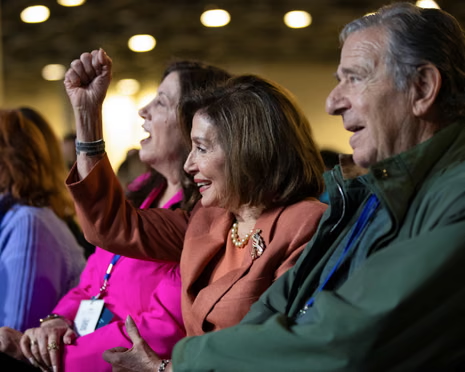
Thousands of activists and elected officials streamed into the Moscone Center carrying banners and bold slogans. Lanyards bearing Gavin Newsom’s name were visible across the packed exhibition floors. Tote bags displayed one of Nancy Pelosi’s favourite rallying cries about organising instead of agonising. The mood blended celebration with urgency as party leaders plotted their next steps. Many attendees described the gathering as a launchpad for coordinated resistance.
Pelosi, honoured repeatedly as a historic figure, delivered one of the weekend’s most forceful speeches. She declared that what she called Trump’s reign of terror must end. Her remarks drew standing ovations from delegates who see her as a guiding force. Tributes highlighted her decades of influence in Washington and her role in impeachment battles. Yet even as she approaches retirement, her voice still commands deep loyalty.

California senator Adam Schiff struck a combative tone that electrified the hall. Invoking the grizzly bear on the state flag, he warned against provoking California. His blunt language reflected a party increasingly comfortable with sharper rhetoric. Schiff predicted that November would bring a reckoning at the ballot box. Supporters responded with chants that echoed through the vast auditorium.
The anger fuelling calls for a Trump reckoning stems from sweeping policy changes. Democrats cited healthcare cuts, aggressive deportation campaigns and expanded federal powers. Many argued that blue states have been unfairly targeted by the administration. In California, leaders say the confrontation feels deeply personal and politically defining. The state has often been portrayed by Trump as emblematic of liberal excess.
Tensions escalated last summer when federal forces were deployed to Los Angeles. Critics saw the move as an alarming preview of federal intervention elsewhere. Similar deployments later followed in cities including Chicago and Minneapolis. California officials insisted that state sovereignty and civil liberties were at stake. Those memories shaped much of the convention’s emotional intensity.
Representative Robert Garcia received a celebrity’s welcome from progressive activists. As the ranking Democrat on the House oversight committee, he has scrutinised administration conduct. He has also pressed for transparency around the Jeffrey Epstein files. Fellow Californian Ro Khanna drew loud cheers for demanding accountability from elites. Both men symbolise a younger generation pushing for institutional reform.
Newsom’s national profile hovered over the proceedings despite his term limits. His combative social media presence has energised supporters beyond California. Delegates speculated openly about his presidential ambitions in 2028. Yet attention also focused on who might succeed him in Sacramento. The looming primary has intensified internal calculations and quiet rivalries.
California’s jungle primary system adds an unusual twist to the governor’s race. Under the rules, the top two vote-getters advance regardless of party affiliation. Some Democrats fear a fractured field could allow two Republicans to progress. Such an outcome would be shocking in the country’s largest reliably blue state. Party officials urged unity to avoid splitting the vote.
Democratic National Committee chair Ken Martin addressed those anxieties directly from the main stage. He emphasised neutrality while encouraging swift consolidation behind a viable candidate. His warning about not undermining their own chances drew murmurs of agreement. Several recent polls have shown Republicans polling competitively statewide. Commentator Steve Hilton and Riverside County sheriff Chad Bianco currently lead some surveys.
Among Democrats, Congressman Eric Swalwell secured the largest share of delegate backing. Former state controller Betty Yee performed unexpectedly well in internal tallies. Former health secretary Xavier Becerra also attracted notable support from activists. Businessman Tom Steyer and former congresswoman Katie Porter remain prominent contenders. Yet none secured enough delegates to claim an official endorsement.
On stage, candidates competed to deliver the fiercest critique of the president. Porter flipped her trademark whiteboard to reveal a blunt anti-Trump message. Swalwell promised to keep federal immigration agents off California streets. Yee, however, cautioned that opposing Trump cannot be the sole qualification. She argued that chronic budget deficits require managerial competence and fiscal discipline. Her comments highlighted a pragmatic strand within the party.
Beyond electoral strategy, a broader debate simmered about economic power. California’s relationship with Silicon Valley has grown more complicated in recent years. The tech sector remains central to the state’s prosperity and tax base. However, some executives have shifted rightward during Trump’s second term. Their political donations have unsettled traditional Democratic alliances.
Labour leader Lorena Gonzalez delivered one of the convention’s most pointed warnings. She argued that Democrats must stop bending to technology billionaires. According to her, structural inequalities helped pave the way for Trump’s return. Her remarks connected working-class frustrations with corporate influence. Many activists applauded calls for a tougher stance on concentrated wealth.
The ideological tug-of-war was visible in down-ballot contests across the state. Progressive newcomer Randy Villegas framed his campaign as a fight for the party’s soul. He faces moderate state senator Jasmeet Bains in a closely watched race. Bains has occasionally broken with party leadership on redistricting issues. That dispute involved changes affecting Republican congressman David Valadao’s district boundaries. Such local battles mirror the national struggle over Democratic identity.
Outside the convention centre, activists staged theatrical protests demanding stronger action. Some dressed as sea creatures to symbolise what they see as spineless leadership. They urged Democrats to protect transgender children and immigrant families more forcefully. Leaflets warned that compromise with cruelty only strengthens Trumpism. The demonstrations underscored pressure from the party’s energetic grassroots.
Throughout the weekend, talk of Trump reckoning served as both slogan and strategy. Delegates believe California can again act as a national blueprint. They point to the state’s redistricting reforms and policy experiments as models. Proposition 50, passed last year, was cited as evidence of organisational muscle. Supporters argue it countered Republican gerrymandering efforts in Texas.

Yet confidence is tempered by recognition of internal divisions. Some fear that excessive infighting could dilute the broader message. Others insist robust debate ultimately strengthens democratic institutions. What unites most attendees is a determination to regain congressional ground. They see the midterms as a referendum on Trump’s second term.
As the convention closed, organisers emphasised disciplined voter outreach and fundraising. Volunteers signed up for phone banks and neighbourhood canvassing drives. Elected officials pledged to coordinate messaging across districts and media markets. The sense of urgency was palpable as delegates filtered into San Francisco’s evening air. Many left convinced that momentum is building toward a decisive moment.
Whether that anticipated Trump reckoning materialises will depend on turnout and unity. California Democrats appear energised, yet the political landscape remains volatile. Republicans are investing heavily in outreach to suburban and working-class voters. National polls suggest a competitive environment heading into autumn. The coming months will test whether anger can translate into electoral gains.
For now, California’s party leaders project confidence and defiance in equal measure. They believe demographic trends and grassroots energy favour their cause. At the same time, they acknowledge the need for disciplined strategy. The convention revealed both the strengths and strains within America’s largest state delegation. As November approaches, all eyes will be on whether this promised Trump reckoning reshapes national power.
Related News:
 British Woman in Iran ‘Losing Hope’ Amid Ongoing Detention
 BBC Journalist Held and Interrogated in Vietnam
 Green Party Surges Past Labour in Latest UK Poll
 Celebrities and Charities Demand UK Government Act on Child Poverty
 Trump’s UK Ambassador Urges North Sea Drilling to Strengthen US Ties
 FBI Director Kash Patel Defends Girlfriend Amid Government Jet Claims
 French Taxi Driver Cleared in David Lammy Theft Case After Fare Dispute
 Boris Johnson accused of undermining BBC leadership
 ‘Reckless’ cuts to victims’ services will cost more than they save
 Millionaires group urge Reeves to introduce wealth tax to ‘lift kids out of poverty’
 Starmer Faces Growing Dissent as Labour MPs Weigh Leadership Challenge
 Reeves rejects £1bn plea for NHS redundancy payouts
 Politics latest: Starmer ‘will fight any leadership coup’ as Streeting denies attempt to oust Labour PM
 PM Condemns Leaks, Vows Loyalty to Ministers and Stability
 Major Rent Reform Ends No-Fault Evictions in England
 Peers Flood Assisted Dying Bill with 942 Amendments
 England’s Special Needs Support Faces Breaking Point
 MoD warned over Excel risks before Afghan data breach
 UK Asylum Overhaul Sparks Debate Over Human Rights and Deportations
 UK Candidate Moved to Safe House After Election Threats
 UK Warns China After MI5 Issues Espionage Alert
 Labour Faces Historic Decline in Wales
 Rama Rebukes Mahmood for Targeting Albanian Families
 PM Highlights UK Business at G20 in South Africa
 Kate Forbes: Motherhood Harder Than Politics
 Most Tories Expect to Support a Farage-Led Government
 Labour MP claims devolution bill is ‘blatant discrimination’ against Cornwall
 Millions Face Higher Taxes Under Reeves New Budget
 Peers Get Extra Time to Debate Assisted Dying Bill
 Planned Palestinian Flag Raising at Belfast City Hall Faces Delay Amid Legal Concerns
 US National Guard Member Killed in DC Shooting
 Starmer Says Labour’s Economic Plan Needs Years to Deliver
 Culture secretary to review Telegraph takeover by Daily Mail owner
 Andy Burnham Apologises for Past LGBTQ+ Police Discrimination
 Russia losses Ukraine war peace talks intensify amid rising deaths
 Trump Escalates Minnesota Immigration Surge Amid Rising Tensions
 Homeland security agents deployed amid Minneapolis protests
 Plans to Limit Jury Trials Face Retreat After Mounting Opposition
 Trump Threatens Strong Action If Iran Executes Protesters
 Jenrick Reform defection deepens Tory civil war
 Trump Receives Machado’s Nobel Medal in White House Meeting
 Right Must Unite After Jenrick Defection, Urges Rees-Mogg
 UK Ministers Drop Foreign Student Targets for Global Education Push
 MPs warn AI financial risks threaten UK stability
 MPs warn AI financial risks threaten UK stability
 No Gas Boiler Ban as UK Warm Homes Plan Backs Heat Pumps
 Hugh Grant Joins Call for Under-16 Social Media Ban in UK
 Shinzo Abe’s killer receives life sentence in Japan
 Lords Vote Piles Pressure on Starmer Over Social Media Ban
 EU Says US Ties Have Suffered ‘Big Blow’ After Greenland Crisis
 Planned Troubles Board Game Sparks Outrage in Northern Ireland
 Reform UK Health Plan ‘Would Cost £1.7bn’, Streeting Says
 ‘Unfathomable’: Australian veterans rebuke Trump claims
 Police response times face strict new national limits
 Labour policing overhaul sparks fears over growing central control
 Tories criticised after Braverman defection sparks mental health row
 Burnham Westminster return hopes fade amid Labour rift
 Starmer warns of toxic division politics in Reform challenge
 Starmer China visit raises human rights pressure on Beijing
 Labour Must Revive High Streets to Avoid Election Collapse
 Calls Grow for King Charles to Apologise for Crown’s Role in Slavery
 Trump Praises ‘Terrific’ Petro After White House Talks
 Palantir contracts face UK halt calls over transparency
 Labour Thinktank Row Deepens Over Journalist Probe Claims
 Sarwar call shakes Labour as No 10 calms fears
 Nurses’ families fear breakup under UK immigration crackdown
 Labour Lord Doyle Apologises Over Paedophile Ties in Political Storm
 Cabinet Secretary Shake-Up Triggers Due Diligence Warning
 Starmer Faces Inquiry Calls Over Thinktank Probe
 Royal Mail Delivery Crisis Deepens Amid Weather Chaos
 Labour Together probe scandal sparks fresh Cabinet Office investigation
 Farage to Name Jenrick as Reform Chancellor Pick
 Farage Unveils Reform UK Frontbench Team
 NHS Negligence Ruling Raises Payout Costs
 Civil Service Pay: Union Urges Ministers to End ‘Barking Mad’ Limits
 Sanders Condemns Billionaire ‘Greed’ in California Tax Debate
 Antonia Romeo appointment sparks criticism
 Trump and Chagos Deal Rift Over Iran Strikes
 Andrew Mountbatten-Windsor Arrest After FBI Radar
 Farage Chagos Islands Row Sparks Fury