Published: 25 February 2026 . The English Chronicle Desk. The English Chronicle Online
Thailand’s progressive political movement has run headlong into one of the country’s most enduring power structures: a deeply embedded provincial patronage system that continues to shape electoral outcomes across much of the kingdom. For defeated MP Chutiphong Pipoppinyo, the lesson has been blunt and personal.

“One time I went to a Children’s Day fair and found myself sitting next to another politician,” he recalled. “He was holding a stack of 100 baht notes to hand out to the children, while I had come empty-handed. How could I compete with that?”
Chutiphong was part of the so-called “orange wave” that swept Thailand during the 2023 general election, when the reformist Move Forward Party stunned observers by winning more seats than any other party. Its youthful candidates, fluent in social media and reformist rhetoric, appeared to signal a generational shift in Thai politics. In the eastern province of Rayong, the party captured all five constituencies.
Yet in the most recent election, Chutiphong lost his seat in Rayong’s fourth district to a candidate from a long-established political dynasty. The setback reflects a broader reversal for the movement, now rebranded as the People’s Party. Preliminary results indicate the party suffered a decline of more than 20 percent in constituency seats, while the conservative Bhumjaithai Party surged dramatically, increasing its parliamentary presence from 71 seats in 2023 to an estimated 193 in the 500-seat House of Representatives.
“In 2023 we were like a storm that swept through,” Chutiphong said. “The other parties weren’t ready to fight back. They thought I was just a no-name candidate. The wave of support in the final stretch really encouraged voters to try something new.”
The initial momentum, however, collided with entrenched networks that have governed provincial politics for decades. In Rayong, political authority has long revolved around the influential Pitutecha clan, a textbook example of what Thais call “Baan Yai” or “big house” politics. These local dynasties combine business interests, control of regional administrative bodies, and extensive canvassing networks to maintain dominance.
Rayong forms part of Thailand’s Eastern Economic Corridor, the country’s flagship industrial zone. The region hosts major manufacturing facilities that underpin Thailand’s export-driven economy. Industrial growth has drawn migrant workers and fostered an urban middle class receptive to reformist ideas. But beyond the urban centres lie extensive rural districts of farmers and fruit growers, communities where traditional patronage networks retain strong influence.
The Pitutecha family has dominated Rayong’s political landscape for decades. Piya Pitutecha, known locally as “Chang,” currently serves as head of the Provincial Administration Organisation, a powerful post overseeing much of the province’s public expenditure. Members of the family have cycled through multiple political parties over the years, demonstrating flexibility rather than ideological commitment. Until 2023, they consistently secured parliamentary representation, including positions in ministerial ranks.
Such families rely on well-organised canvasser networks embedded in villages and neighbourhoods. These local intermediaries mobilise voters and maintain day-to-day contact with communities. Although direct vote-buying is illegal, the distribution of money and gifts during election cycles remains a persistent allegation in Thai politics. Established dynasties often possess the financial resources to sustain these practices. Reformist newcomers, by contrast, typically do not.
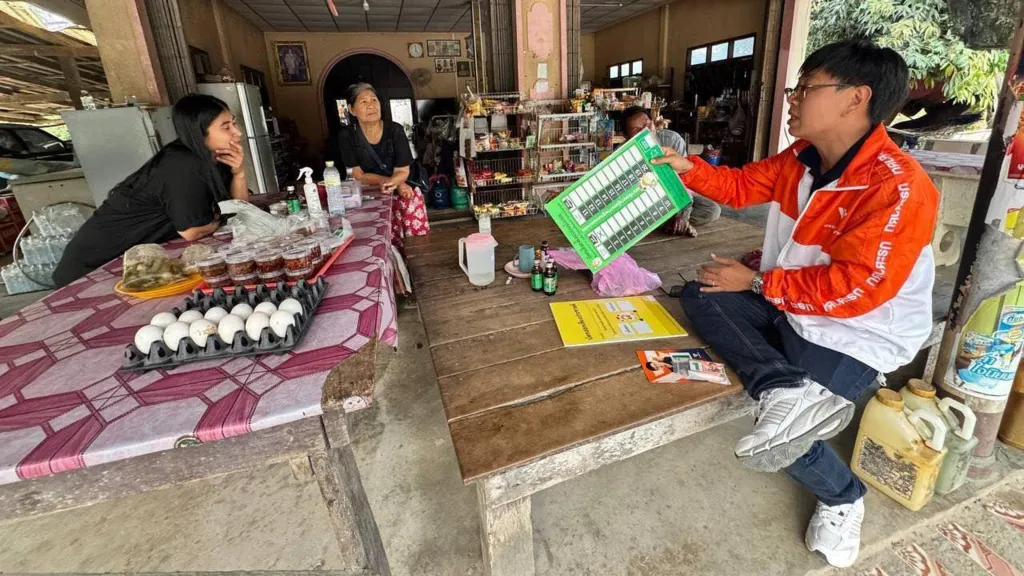
After his 2023 victory, Chutiphong attempted to adopt a service-oriented approach. He travelled extensively across his constituency, responding quickly to complaints about infrastructure failures, water shortages, and electricity outages. He hoped practical responsiveness would build trust. Instead, he encountered resistance from networks loyal to established power brokers.
In one instance, he was invited to a local women’s empowerment event but told he would need to contribute 25,000 baht to attend. “I told them I didn’t have that money,” he said. “They were very unhappy. They said I was cold-hearted.” Attempts to offer non-financial support were rejected. Communication ceased.
Villagers who sought his assistance sometimes faced pressure. According to Chutiphong, individuals who contacted him were criticised in community chat groups or rebuked through village loudspeaker systems for bringing in an “outsider.” When he attempted to investigate pollution complaints involving local factories, backlash followed. Some residents, he alleged, were reluctant to jeopardise informal payments they received from industrial operators.
By the 2026 campaign cycle, the Pitutecha clan had recalibrated its strategy. Younger, better-educated family members entered the race, projecting a modernised image. In District 4, 34-year-old Chatchai Pitutecha ran under the banner of the Bhumjaithai Party, led nationally by Prime Minister Anutin Charnvirakul. The party has cultivated close ties with provincial power brokers and is widely regarded as adept at consolidating “Baan Yai” alliances.
The result was decisive. The Pitutechas reclaimed both contested seats, though the People’s Party retained three constituencies in Rayong. Nationally, the reformists performed strongly in urban centres. In Bangkok, they secured every seat, improving on their previous performance. They also dominated in Chiang Mai, Thailand’s second-largest city. Their share of the nationwide party-list vote remained the highest among all parties.
Yet Thailand’s mixed electoral system allocates only a portion of parliamentary seats through proportional representation. The majority are determined by constituency races, where local networks often outweigh national vote share. As a consequence, despite leading in party-list votes, the People’s Party now holds only around one fifth of parliamentary seats.
Political scientist Olarn Thinbangtieo of Burapha University argues that structural factors reinforce patronage politics. Thailand’s centralised administrative system, he notes, limits equitable local access to state resources. Villagers frequently rely on intermediaries to secure assistance for infrastructure, welfare, or economic security. In such an environment, established families possess social capital that new parties struggle to replicate.
The broader political context has also shifted. After the 2023 election, Move Forward was blocked from forming a government by court rulings and resistance from conservative institutions. The episode deepened cynicism among some voters about the prospects for systemic reform. Facing economic pressures, many appear to have prioritised stability and immediate material benefits over long-term structural change.
For Chutiphong, the choice was stark. “They would have welcomed me if I had given them money,” he reflected. “But I could not do that forever. I had to decide whether I would be the representative they wanted, or whether I would keep my principles.” The electorate, at least in his district, chose otherwise.
Thailand’s electoral map now illustrates a pronounced urban–rural divide. In metropolitan centres, reformist messages continue to resonate with younger and middle-class voters. In many provinces, however, patronage networks remain decisive. The resilience of “Baan Yai” politics suggests that any movement seeking national power must either dismantle or accommodate these local systems.

For now, political outsiders remain at a structural disadvantage. The orange wave has not disappeared, but it has met a durable breakwater in Thailand’s provinces—one built not only on money, but on relationships, obligation, and decades of accumulated influence.
Related News:
 Kinnock’s Rebuke Echoes Loudly as Corbyn Allies Launch Left-Wing Breakaway: “A Gift to Farage”
 UK and Norway Forge Stronger Ties Through Joint Sanctions and Enhanced Defence Cooperation
 Trump Administration Dismisses 17 Immigration Judges, Sparking Debate Over Judicial Independence
 Modi’s London Visit Seals Historic UK-India Trade Pact Amid Global Tensions
 UK Must Act with Courage and Clarity on Israel-Palestine Conflict, Says Foreign Affairs Committee Report
 Trump Threatens 100% Tariff on Nations Importing Russian Oil Amid India Standoff Over Ukraine War
 Netanyahu Announces Plan to Take Over Gaza City, Escalating Conflict Further
 Radioactive Leak at UK’s Nuclear Warhead Base Sparks Outcry Over Safety and Secrecy
 Mutual Inconvenience: Why Alaska Was Chosen for the Trump-Putin Summit on Ukraine
 Hong Kong Summons UK and Australian Envoys Following Asylum Grants to Democracy Activists
 Is the UK Ready to Put Boots on the Ground in Ukraine? Assessing Military Capacity and Challenges
 Protests Expected as Israeli Arms Firms Join Global Defence Trade Fair in London
 Trump Appears Sidelined as Israel’s Unprecedented Strikes Hit Qatar
 Conservative Influencer Charlie Kirk Fatally Shot During University Debate
 Thousands Gather in London to Protest Donald Trump’s Second UK State Visit
 Channel Crossings Surge: Over 1,000 People Arrive in the UK in Small Boats in a Single Day
 Widow of Charlie Kirk Forgives Killer at Emotional Memorial Service
 Denmark Investigates Professional Drone Incursions Across Multiple Airports, No Evidence of Russian Involvement
 Yvette Cooper Signals Global Momentum Towards Gaza Peace Deal Amid Humanitarian Crisis
 A Third of EU Citizens in UK Report Discrimination by Public Bodies Post-Brexit
 Public Trust in SNP Hits Historic Low Amid NHS Concerns
 Johnson Suggests Mandelson Linked to China Spy Controversy
 Rachel Reeves signals welfare reform ahead of key budget
 Ireland Votes as Two Women Compete for Presidency
 Russia’s Latest Push to Win US Favors Shows Deep Desperation
 Experts Warn Russia’s Burevestnik Missile Could Destabilise Arms Control
 BBC to Apologise Over Edited Trump Speech Amid Backlash
 Britain deploys RAF specialists to assist Belgium with drone threats
 Trump Urges Herzog to Grant Netanyahu Full Pardon
 US Justice Department Files Lawsuit Against California Over Partisan Voting Maps
 Indian authorities demolish Kashmir home linked to Red Fort blast
 Greene Pushes Epstein Files Amid Trump Fallout
 Trump Deploys DHS to Charlotte in Major Arrest Operation
 December Run-Off in Chile as Election Produces No Winner
 Canada Passes Carney’s First Budget in Tight Parliamentary Vote
 Shadow Fleet at Sea: Europe’s Battle Against Illicit Oil Shipping
 Pentagon Officials in Ukraine to Discuss War End
 India’s COP30 Delay Raises Global Climate Concerns
 Venezuela Threatens Nobel Winner Machado with Fugitive Status
 Georgians Defy Government Crackdown After Year of Protests
 EU plans $105bn Ukraine aid using frozen Russian assets
 Russia losses Ukraine war peace talks intensify amid rising deaths
 Albanese Opens Door to Bondi Royal Commission Amid Rising Pressure
 Trump Escalates Minnesota Immigration Surge Amid Rising Tensions
 Iran Protesters Defy Crackdown as Violent Clashes Intensify
 Trump Threatens Strong Action If Iran Executes Protesters
 Machado Trump medal gesture reshapes Venezuela power struggle
 EU weighs response amid Greenland tariff crisis with Trump
 ICE street raids expose a chilling future for public freedoms
 EU Says US Ties Have Suffered ‘Big Blow’ After Greenland Crisis
 Andrew Hastie Emerges as Leadership Rival to Ley
 Starmer China visit raises human rights pressure on Beijing
 Israel Moves to Bar MSF From Gaza Operations
 Trump Praises ‘Terrific’ Petro After White House Talks
 Fears of New Arms Race as US-Russia Nuclear Weapons Treaty Expires
 Sydney Protest Escalates and Elderly Woman Suffers Severe Injury
 Tarique Rahman’s Rise Toward Bangladesh’s Top Job
 After the Landslide: Can India Reset Ties with BNP Bangladesh?
 Australian Families Leave Syrian Camp for Home
 Starmer Weighs Fast-Tracking Defence Boost
 Macron Rebuked in Franco-German Defence Row
 Trump Attacks UK-California Energy Pact
 Lunar New Year 2026: Celebrations Around the World
 Kim Jong-un Unveils Housing for War Families
 Stephen Colbert Says CBS Spiked Interview With Democrat Over FCC Fears
 Nine Arrested in France Over Death of Far‑Right Student
 China Shows Off Nunchuck‑Wielding Humanoid Robots for Lunar New Year
 South Korea’s Ex-President Faces Death Penalty in Insurrection Trial
 Trump and Chagos Deal Rift Over Iran Strikes
 Andrew Arrest Sparks Republic Debate in Australia
 Australian PM Says Former Prince Andrew Has Suffered ‘Extraordinary Fall’ but That Won’t Prompt Republic Referendum
 Global corruption crisis: Who Washington shields
 Musk Cuts Starlink Access for Russian Forces – Giving Ukraine an Edge at the Front
 Farage Chagos Islands Row Sparks Fury
 How South Korea’s Democracy Rebounded After Martial Law Attempt
 Ukraine Negotiator Reveals What It Feels Like Facing Russia
 ‘We Pray for Peace’: Indian Filmmaker From Troubled State Who Won a BAFTA
 Chad Shuts Border With Sudan in Bid to Stop Conflict Spreading
 French Minister Moves to Block US Envoy Kushner from Government Access
 ‘Anyone who runs is shot’: Russian soldiers describe killings of troops who refuse orders