Published: 26 February 2026. The English Chronicle Desk. The English Chronicle Online.
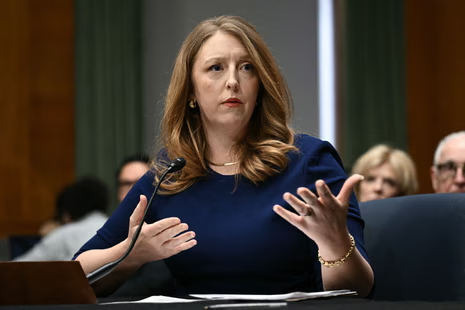
Donald Trump’s nominee for US surgeon general, Casey Means, faced intense scrutiny during a Senate health committee hearing, avoiding clear answers on vaccines while defending her medical experience. The focus on vaccine guidance has raised concern among Democrats and public-health experts, who warn that misinformation could endanger Americans’ health at a critical time. Means, 38, emphasised that chronic disease in the United States stems largely from lifestyle factors, urging a broader approach to public health beyond standard medical treatment. Her hearing, originally scheduled for October, was postponed after she went into labour, delaying what has become a highly anticipated confirmation process.
During her opening remarks, Means called for a “great national healing,” describing Americans as “angry, exhausted, and hurting from preventable diseases.” She highlighted her commitment to wellness and holistic health, framing her vision as a departure from conventional medical models dominated by prescriptions and procedures. Democratic senators, however, voiced serious doubts over her ability to counter misinformation, particularly from Health Secretary Robert F. Kennedy Jr., whose claims about vaccines have alarmed health authorities nationwide. Senator Bernie Sanders questioned whether Means could serve effectively as the country’s top doctor, underscoring concerns about her capacity to advocate for evidence-based public-health practices.
Means’ medical credentials were a focal point of discussion. Although she graduated from Stanford School of Medicine, she did not complete her residency in head and neck surgery at Oregon Health and Science University, is not board-certified, and holds an inactive medical license. Her professional background is heavily weighted toward wellness advocacy and digital health entrepreneurship rather than traditional clinical experience. Means has become a prominent figure within the Make America Healthy Again (Maha) initiative, a central component of the Trump administration’s health policy framework.
Questions about vaccine advocacy proved particularly challenging for Means. When asked by Republican committee chair Bill Cassidy if she would encourage parents to vaccinate children with routine immunisations such as MMR, she declined a direct yes-or-no response. She instead emphasised the need for individual discussions between parents and pediatricians, citing patient autonomy as a guiding principle. This stance coincides with ongoing measles outbreaks, notably in South Carolina, which has experienced its worst outbreak in more than three decades amid declining vaccination rates. Public-health officials, including Mehmet Oz, administrator of the Centers for Medicare & Medicaid Services, have stressed the critical importance of vaccination, warning that measles remains a highly contagious and potentially severe disease.

Means repeated her position on the hepatitis B vaccine for children, signalling support for “recommendations at some time” in childhood rather than universal immediate immunisation. Her comments followed recent CDC changes to vaccine guidelines, which no longer require newborns to receive hepatitis B vaccinations immediately after birth. Likewise, Means navigated questions about influenza vaccines cautiously, acknowledging that the flu shot can prevent severe illness at a population level, but avoiding direct agreement with Kennedy’s previous assertions about the vaccine’s efficacy in preventing hospitalisation.
Throughout the hearing, Means underscored her commitment to holistic approaches to health, focusing on nutrition, lifestyle, and metabolic wellbeing. She has co-authored the book Good Energy with her brother Calley, promoting diet and behavioural changes as primary tools for addressing chronic illness. Critics have characterised these claims as bordering on pseudoscience, arguing that her public-health philosophy emphasises personal wellness over proven medical interventions. Her entrepreneurial ventures, including the health tracking company Levels, reflect a belief in data-driven health insights as a way for individuals to monitor and improve metabolic function.
Means’ historical caution around vaccines reflects alignment with Kennedy’s administration-wide skepticism of routine childhood immunisations. She has publicly questioned the safety of multiple injections, advocating for informed parental choice. Earlier this year, the administration announced a reduction of recommended childhood vaccines from seventeen to eleven, prompting criticism from experts concerned about weakening herd immunity and allowing preventable diseases to spread more easily.
In addition to public-health concerns, Means faced questioning about potential conflicts of interest. Senators highlighted her financial partnerships promoting wellness products through social media and newsletters, suggesting she may have obscured compensation details in violation of FTC regulations. Means stated she had worked with the Office of Government Ethics to address any conflicts and pledged to correct any inadvertent errors. Letters from Senators Elizabeth Warren and Andy Kim seeking clarification on her previous disclosures reportedly went unanswered.
Means’ nomination has provoked strong criticism from the scientific community. Former surgeon general Richard Carmona called the selection a “disgrace” to America’s public-health system, highlighting her lack of experience in leadership or scalable public-health initiatives. Carmona warned that ideological priorities have overshadowed scientific guidance, creating risk at a moment when reliable public-health leadership is critically needed. He expressed muted optimism that lawmakers could counterbalance the nomination, reflecting deep concern about the administration’s approach to health policy.
During the hearing, Means addressed questions regarding her inactive medical license, noting she voluntarily placed it on hold because she is not currently seeing patients. She stated no plans exist to reactivate it, arguing that the surgeon general role does not require individual clinical practice. However, critics point out that overseeing the US Public Health Service Commissioned Corps, a uniformed service of over 6,000 officers, typically necessitates active licensure and certification to ensure credibility in managing large-scale public-health responsibilities.
The hearing also shed light on the broader turbulence within the Department of Health and Human Services under Kennedy’s leadership. Grants have been terminated, senior officials have departed, and anti-vaccine loyalists have been appointed to key advisory positions. Cassidy, who initially voted to confirm Kennedy despite reservations about his anti-vaccine stance, has witnessed a reshaping of the department and sidelining of experienced career public-health professionals. This internal upheaval has amplified concerns about Means’ capacity to navigate complex federal health systems effectively.

Trump’s choice of Means marks his second nominee for surgeon general, following the withdrawal of Dr Janette Nesheiwat amid criticism of her credentials. Means’ confirmation process will likely remain contentious, reflecting ongoing debates over the balance between wellness advocacy, scientific rigor, and evidence-based public-health leadership. Observers anticipate that her nomination could set a precedent for the administration’s approach to health policy, particularly in areas relating to vaccine guidance and chronic disease prevention.
While Means defended her holistic health perspective and praised Trump and Kennedy for fostering dialogue around medical reform, questions remain about her ability to provide authoritative guidance on critical public-health issues. Democratic senators expressed ongoing concern that public trust in vaccination and other health interventions could be undermined if scientific rigor is sidelined. The hearing illustrated the tension between promoting personal wellness philosophies and maintaining rigorous federal public-health standards in a time of heightened scrutiny and infectious disease outbreaks.
As the nation watches, Means’ confirmation could signal a significant shift in the surgeon general’s office, moving from traditional evidence-based policy toward a model emphasising lifestyle, autonomy, and alternative health perspectives. Public-health experts continue to monitor her statements and potential policy influence closely, emphasising that clear guidance on vaccination remains vital to protecting communities across the United States. The Senate hearing revealed not only Means’ philosophy but also the broader challenges facing public-health governance under a highly politicised administration.
Related News:
 Putin Intensifies Territorial Demands Before US Talks
 US National Guard Member Killed in DC Shooting
 Trump to Recheck Green Cards from 19 Nations After DC Attack
 Trump to pause migration from ‘third-world countries’
 Republicans Hold Tennessee Seat Despite Democratic Surge
 Franklin Turtle, Sabrina Carpenter Slam US Social Media Use
 Russia losses Ukraine war peace talks intensify amid rising deaths
 Trump Escalates Minnesota Immigration Surge Amid Rising Tensions
 Homeland security agents deployed amid Minneapolis protests
 Democrats Push Affordability to Challenge Trump Ahead of Votes
 Greenland Faces Pivotal Summit Over Arctic Power Struggle
 Trump Threatens Strong Action If Iran Executes Protesters
 Government Unveils Northern Powerhouse Rail Plans
 Trump press secretary attacks reporter over ICE question
 Kyrsten Sinema Faces High-Profile Lawsuit Over Marriage Interference
 Trump Receives Machado’s Nobel Medal in White House Meeting
 ‘He Believed Help Was Coming’: Why Iran’s Protesters Feel Betrayed
 Trump Fed bid heads to Supreme Court
 EU Says US Ties Have Suffered ‘Big Blow’ After Greenland Crisis
 ‘Unfathomable’: Australian veterans rebuke Trump claims
 Trump officials continue false claims after Alex Pretti shooting
 ‘Evil is resilient’: Pressure Mounts on Stephen Miller
 Fulton election raid hits Georgia election office
 Partial US Government Shutdown Hits Homeland Security Funding
 Thousands Protest ICE Operations in Nationwide US Day of Action
 Epstein Files Reveal Trump Officials’ Emails with Financier
 Thousands Protest ICE in New York Against Trump Deportation Campaign
 Sinema payment row deepens after $9,000 transfer claim
 Trump Praises ‘Terrific’ Petro After White House Talks
 Nurses’ families fear breakup under UK immigration crackdown
 Sanders Condemns Billionaire ‘Greed’ in California Tax Debate
 California Democrats Vow Trump Reckoning
 Army Officers Orders to Cut Ties with Men-Only Clubs
 Trump’s UK Ambassador Urges North Sea Drilling to Strengthen US Ties
 French Taxi Driver Cleared in David Lammy Theft Case After Fare Dispute
BBC to Apologise Over Edited Trump Speech Amid Backlash
French Taxi Driver Cleared in David Lammy Theft Case After Fare Dispute
BBC to Apologise Over Edited Trump Speech Amid Backlash
 Britain deploys RAF specialists to assist Belgium with drone threats
 Millionaires group urge Reeves to introduce wealth tax to ‘lift kids out of poverty’
 Reeves rejects £1bn plea for NHS redundancy payouts
 PM Condemns Leaks, Vows Loyalty to Ministers and Stability
 Major Rent Reform Ends No-Fault Evictions in England
 Senator John Fetterman Hospitalized After Fall from Heart Flare-Up, Keeps Sense of Humor
 Greene Pushes Epstein Files Amid Trump Fallout
 December Run-Off in Chile as Election Produces No Winner
 Canada Passes Carney’s First Budget in Tight Parliamentary Vote
 Shadow Fleet at Sea: Europe’s Battle Against Illicit Oil Shipping
 Georgians Defy Government Crackdown After Year of Protests
 ICC to Rule on Duterte’s Provisional Release
 Starmer Says Labour’s Economic Plan Needs Years to Deliver
 American Mother Extradited From UK to U.S. on Murder Charges
 Khaleda Zia Death in Bangladesh: First Female PM Dies at 80
 Albanese Opens Door to Bondi Royal Commission Amid Rising Pressure
 Minnesota Sues Trump Administration Over ICE Surge
 US Clears Nvidia AI Chip Sales to China in Policy Shift
 US Senate rejects resolution limiting Trump military powers
 EU weighs response amid Greenland tariff crisis with Trump
 UK Ministers Drop Foreign Student Targets for Global Education Push
 No Gas Boiler Ban as UK Warm Homes Plan Backs Heat Pumps
 Shinzo Abe’s killer receives life sentence in Japan
 Sussan Ley leadership milestone shakes Liberal future
 Satire Can Skewer Trump, But It Won’t Save Democracy
 Police response times face strict new national limits
 Labour policing overhaul sparks fears over growing central control
 Starmer warns of toxic division politics in Reform challenge
 Videos reveal earlier clash before Alex Pretti shooting
 Israel Moves to Bar MSF From Gaza Operations
 Palantir contracts face UK halt calls over transparency
 Australia’s Opposition Coalition Reunites After Rift
 Headline: Measles Alert: Dr Oz Urges Americans to Vaccinate
 ‘Trump Will Be Gone in Three Years,’ Top Democrats Tell Europe
 Australian Families Leave Syrian Camp for Home
 US Civil Rights Leader Jesse Jackson Dies Aged 84
 Farage to Name Jenrick as Reform Chancellor Pick
 Civil Service Pay: Union Urges Ministers to End ‘Barking Mad’ Limits
 Antonia Romeo appointment sparks criticism
 Andrew Arrest Sparks Republic Debate in Australia
 Farage Chagos Islands Row Sparks Fury
 Reform UK targets workers’ rights repeal
 Russian Trade Routed Through British Islands Exposed
 Mandelson Arrest: Met Apologises to Hoyle