Published: 26 February 2026. The English Chronicle Desk. The English Chronicle Online.
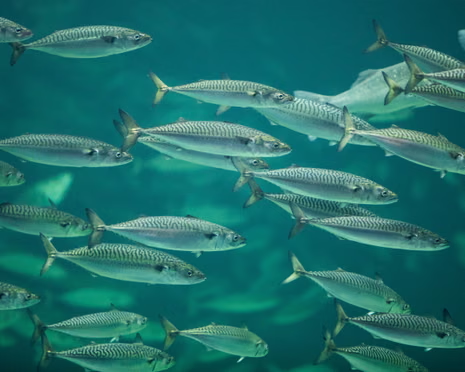
Chronic ocean heating is driving a rapid and unprecedented loss of marine life worldwide, researchers have confirmed. Scientists found fish populations fell by 7.2% for every 0.1C of decadal warming, a pattern that could accelerate as temperatures rise. The study, published in Nature Ecology & Evolution, examined more than 33,000 populations across the northern hemisphere between 1993 and 2021. By separating long-term warming trends from short-lived heatwave effects, the team revealed that chronic seabed heating caused biomass declines of up to 19.8% in a single year.
“To put it simply, the faster the ocean floor warms, the faster we lose fish,” explained Shahar Chaikin, lead author and marine ecologist at the National Museum of Natural Sciences in Spain. He emphasised that even a seemingly modest 0.1C rise per decade compounds across time, creating “a staggering and deeply concerning loss of marine life.” This pattern highlights the insidious nature of gradual ocean heating, which steadily undermines ecosystems without the dramatic immediacy of extreme weather events.

The research team utilised long-term population records to pinpoint the effect of chronic warming apart from temporary fluctuations caused by marine heatwaves. Chaikin and colleagues discovered that heatwaves sometimes produce short-term population booms, particularly in cold-edge ranges of certain species. For example, sprat populations in the Mediterranean Sea, already near the warm edge of their habitat, decline during heatwaves, while the North Sea sees temporary increases where conditions are cooler. These localized gains, however, mask the broader trend of overall biomass loss caused by persistent warming.
Carlos García-Soto, a scientist at the Spanish National Research Council and co-author of the United Nations’ world ocean assessment, warned that these short-term fluctuations can lead to misinterpretation of long-term trends. “Overall warming reduces fish biomass, while heatwaves can generate temporary increases that mask the underlying trend,” García-Soto said. He noted that policymakers and marine managers may risk making poor decisions if they fail to account for the slow but relentless impact of chronic heating.
Despite this, the study’s authors cautioned that ocean warming is not the sole driver of declining fish populations. Guillermo Ortuño Crespo, a marine biologist and co-director of a high seas specialist group at the International Union for Conservation of Nature, described the research as “methodologically sound and highly valuable” but emphasised the historical context. Overfishing has long been the primary cause of biomass declines in many fisheries, and the proportion of overexploited stocks continues to rise globally, according to the United Nations Food and Agriculture Organization. He stressed that warming and oxygen depletion now compound existing pressures on marine ecosystems, creating a multifaceted crisis that demands urgent attention.
The study underscores the extreme vulnerability of marine life to even minor shifts in ocean temperature caused by fossil fuel emissions. Scientists have repeatedly highlighted the importance of limiting global heating, warning that every fraction of a degree matters. As global temperatures approach the 1.5C threshold targeted by international agreements, the pace of ocean warming becomes increasingly critical. Chaikin stressed that without interventions to slow this warming, fish populations face losses that cannot be easily remedied through management or conservation measures alone.
“Our research proves exactly what that biological cost looks like underwater,” Chaikin said. He added that allowing ocean temperatures to rise by even a tenth of a degree per decade could trigger declines far beyond current estimates, impacting fisheries, food security, and ecosystem services worldwide. The gradual but cumulative effects of warming underscore the urgency of reducing greenhouse gas emissions to prevent irreversible harm to ocean ecosystems.
Marine ecologists emphasise that chronic warming interacts with other environmental stressors, magnifying its impact on biodiversity. For instance, deoxygenation caused by rising temperatures and nutrient pollution can exacerbate mortality in already stressed fish populations. This dual challenge highlights the interconnected nature of marine threats and the need for comprehensive monitoring, regulation, and habitat protection to maintain ecosystem resilience. The study’s findings suggest that relying solely on short-term recovery trends observed during heatwaves may mislead policymakers about the long-term health of fish stocks.
The broader consequences of declining marine biomass extend beyond individual species, affecting entire food webs and human societies. Fisheries provide vital protein sources for millions worldwide, and reductions in fish stocks could trigger economic and nutritional insecurity. Moreover, the loss of keystone species can disrupt ecological balance, leading to unforeseen cascading effects across ocean ecosystems. Scientists warn that even minor changes in average ocean temperatures can initiate shifts that alter species distributions, breeding patterns, and predator-prey interactions, compounding long-term ecological instability.
International collaboration and policy adaptation will be essential to mitigate these threats. Conservation strategies must integrate long-term climate projections with localized management of fisheries, marine protected areas, and pollution controls. García-Soto noted that understanding the nuanced effects of chronic warming is crucial for informed decision-making and adaptive governance. Policymakers face the challenge of reconciling temporary population booms in some regions with the broader, persistent declines that threaten global biodiversity and food security.

As global temperatures continue to climb, chronic ocean heating is likely to intensify, disproportionately affecting species with limited thermal tolerance. Fish in colder regions may temporarily benefit from warming, but these gains are neither uniform nor sufficient to offset losses in warmer waters. Long-term monitoring and research will be necessary to anticipate and respond to these complex ecological shifts. Chaikin emphasized that delaying action on emissions reductions will only magnify the biological costs observed in this study, leaving ecosystems increasingly vulnerable to irreversible damage.
The study’s insights also call attention to the compounding risks of human activity on ocean health. Overfishing, habitat destruction, and pollution all interact with climate-driven warming to heighten the vulnerability of marine life. By quantifying the precise impact of chronic temperature increases on fish populations, the research provides a critical benchmark for evaluating the effectiveness of conservation and management policies. Experts stress that only through sustained, science-informed interventions can the trajectory of ocean biodiversity loss be altered.
In conclusion, this comprehensive study demonstrates the profound and escalating threat posed by chronic ocean warming to marine life. Even minimal temperature rises produce measurable declines in biomass, with effects amplified by ongoing environmental pressures. While temporary population increases may obscure the underlying trends, long-term monitoring reveals a clear and concerning pattern of loss. Protecting ocean ecosystems will require urgent, coordinated action to curb emissions, manage fisheries responsibly, and address interconnected stressors. The findings reinforce the vital importance of integrating climate science into marine policy to safeguard the oceans for future generations.
Related News:
 BP’s Influence Sparks Controversy in UK STEM Education
 AI Climate Claims Face Greenwashing Backlash
 Brace for Trump’s Brave New World of 1.7°C Global Warming
 Scotland’s Climate Plans Face Scrutiny Over ‘Science Fiction’ Targets
 Virgin Trains Moves Closer to Challenging Eurostar Monopoly
 UK Bans Fake Numbers: Scammers Lose Their Trick
 Vibe coding’ named Collins dictionary’s word of the year
 Patients to Test Health at Home to Ease NHS Winter Pressure
 One of world’s last dinosaurs on sale for £3m
 Britain deploys RAF specialists to assist Belgium with drone threats
 Government urges schools to ban phones to curb classroom disruption
 Stop using ChatGPT to write speeches, AI minister tells MPs
 Northern Lights may illuminate UK skies this week
 New laws to bolster UK’s defences against cyber attacks on NHS, transport and energy
 Hitler’s DNA Confirms He Truly Had Only One Testicle
 Working-Class Men with Prostate Cancer Left Behind by NHS
 New AI tool could cut wasted efforts in organ transplants
 How Cultures Interpreted the Aurora Through History
 From War to Wales: Teen Innovator Eyes Net Zero Future
 From Baby Teeth to Bioengineering: The Future of Self-Healing Teeth
 Sundar Pichai Cautions on AI Hype and Market Risks
 Google Chief Urges Caution: Don’t Trust AI Blindly
 US Judge Says Meta Did Not Hold Illegal Social Media Monopoly
 Healthy Habits in Your 30s That Boost Life in Your 70s
 Raccoons Could Become America’s Next Pet
 Australia to Ban Social Media for Kids Under-16 Starting December
 Coffins Now Too Large to Cremate Amid Rising Obesity Crisis
 UK Taskforce Unveils Plan to Streamline Nuclear Reactor Rules
 NHS paediatric leave parents waiting months for answers
 Ofcom urges platforms to limit abuse and curb online ‘pile-ons’
 AI Actress Creator Says Tilly Norwood Won’t Replace Actors
 ‘Extinct’ Antelope Returns to Sahara, Bringing Hope
 Starmer’s communications chief to outline media strategy overhaul
 Eden Project Founder Celebrates 25 Years of Nature’s Hope
 UK Car Sales Pass 2 Million as Chinese Brands Surge
 Avocado Crisis: The Hidden Violence Behind Exports
 Smaller farms funding prioritised in England nature plans
 AI Grok Sparks Child Safety Alarm in the UK
 Indonesia blocks Grok chatbot over sexual content risk
 Google Removes Some AI Health Summaries Over Safety Concerns
 Nasa ISS Medical Evacuation: Crew-11 To Return Early
 Storm Goretti leaves Cornwall homes without power
 US Clears Nvidia AI Chip Sales to China in Policy Shift
 Amazon Milton Keynes closure sparks concern for UK warehouse workforce
 Astronomers Prepare for First-Ever Movie of a Black Hole
 Robo-Vaccination Could Transform Fight Against Bovine TB
 MPs warn AI financial risks threaten UK stability
 MPs warn AI financial risks threaten UK stability
 No Gas Boiler Ban as UK Warm Homes Plan Backs Heat Pumps
 Record-Breaking Heat Looms Over South-East Australia as Catastrophic Fire Risk Escalates
 UK joins North Sea wind grid pact with nine European nations
 Devon hosts first high-density hydro power system
 US-Style Pickup Trucks Surge on UK Roads
 Pornhub blocks new UK users over age checks dispute
 Amazon mistakenly signals new global layoffs to employees
 AI breast screening cuts later cancer diagnoses by 12%, study finds
 UK Launches First Rapid-Charging Battery Train This Weekend
 Reform UK Taps Boris Ally to Shape Party Nature Agenda
 UK New Car Discounts Near £6,000 as Prices Are Slashed
 James Valentine Retires from ABC After Cancer Battle
 Wigan Dump Crisis Sparks Health and Safety Alarm
 What is Groundwater Flooding and Why Dorset is Seeing ‘Historical Highs’
 Most Statin Side-Effects Are Not Caused by Drugs, Study Confirms
 Dozens of Flood Warnings in England After Days of Non-Stop Rain
 BT Names New Openreach Chief Amid Major Fibre Expansion
 AI fears hit UK wealth and comparison sites
 Tech Trends Set to Transform Life in 2026
 Aberdeen Chosen for GB Energy HQ at Marischal Square
 Starmer Targets AI Chatbots Over Child Safety Concerns
 Santos Wins Landmark Greenwashing Case in Court
 Gentoo Penguins First Birds on Australian Territory Hit by Bird Flu
 Temperatures Dip Below Freezing as Arctic Air Sweeps Across the UK
 Chikungunya Spread in Europe Climbs as Climate Warms
 Deer Shooting England: New Plan to Protect Woods
 Illegal Waste Dumping: New Drone Unit Launched
 How Do You Modernise Mango Farming? India’s Growers Urged to Innovate as Climate Change Hits
 Scotland’s Emissions Plans Face Criticism for Over-Reliance on Technology
 Germany Faces Backlash Over Scrapped Renewable Heating Mandate
 Group Expands Legal Claim Over South West Water Pollution
 Toxic e-waste found in dolphins raises urgent health concerns