Published: 26 February 2026. The English Chronicle Desk. The English Chronicle Online.
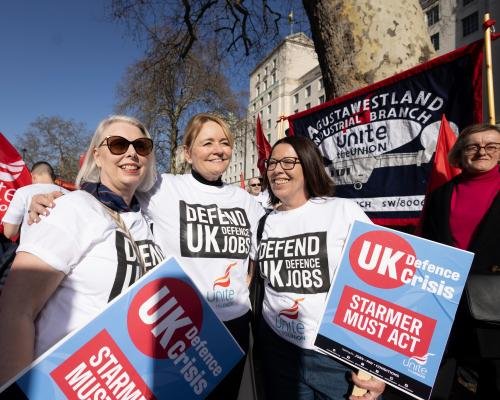
The head of Britain’s largest trade union has issued a stark warning to Rachel Reeves, demanding decisive action on a multibillion-pound defence investment plan. Sharon Graham, general secretary of Unite, stressed that tens of thousands of jobs could be jeopardised by political hesitation, urging ministers to fully commit to future defence contracts that support British industry. Graham argued that if Reeves cannot recognise the importance of domestic manufacturing and safeguarding employment, she should be removed from her post as chancellor without delay.
Speaking outside Downing Street during a protest organised by Unite, Graham emphasised that government vision is essential for national prosperity, stating that political inertia risks undermining both defence capabilities and economic stability. She insisted that leadership requires more than merely occupying office; it demands strategic foresight and commitment to long-term objectives. Her comments came amid growing frustration within industrial communities affected by delays in awarding critical defence contracts.
Graham also addressed Prime Minister Keir Starmer directly, reminding him of promises made in February last year to raise annual military spending to 2.5 percent of GDP by 2027. Starmer later pledged to further increase defence expenditure to 3.5 percent by 2035, translating into an additional £30 billion in real terms. Despite these commitments, Graham highlighted that relatively few new contracts have been formalised, leaving key manufacturers in uncertainty and threatening employment across several sectors.

The Leonardo helicopter factory in Yeovil has become the focal point of concerns, as it remains the sole bidder on a stalled £1 billion manufacturing contract. Employing 3,300 staff with an average salary of £58,000, the plant’s Italian owners warned that closure would be inevitable unless the contract is confirmed before 1 March. The prospect of job losses has triggered anxiety in the local economy, affecting everything from housing to hospitality. Adam Dance, Yeovil’s Liberal Democrat MP, noted that even a local hotel may be forced to shut due to the knock-on effects of potential redundancies.
Graham’s critique extends beyond individual projects, reflecting broader frustration over the government’s delay in publishing the defence industrial strategy. Originally anticipated in the autumn and then postponed to just before Christmas, the plan has now been deferred to March or April. The strategy is intended to outline funding for £67 billion in commitments stemming from last summer’s strategic defence review, providing clarity on long-term procurement and investment priorities.
Treasury officials have reportedly raised concerns over the affordability of the overall package, weighing the immediate fiscal impact against broader economic benefits. Meanwhile, the Ministry of Defence has indicated it will require an additional £28 billion over the next four years to meet forecast costs and fulfil strategic obligations. This tension between departmental priorities has contributed to the stagnation in decision-making, heightening anxiety among manufacturers and workers dependent on defence contracts.
The protest outside Downing Street showcased the intensity of industrial pressure, with Graham asserting that Labour’s credibility as a party for working-class interests is being tested. She claimed that indecision in the Treasury undermines confidence in the government’s commitment to creating high-value, skilled jobs across the country. The uncertainty surrounding contract awards, she said, is creating tangible consequences in communities like Yeovil, where livelihoods, local services, and housing stability are directly affected by delays.
Political observers note that Graham’s public ultimatum places Starmer in a delicate position, balancing fiscal responsibility with the need to maintain support among union members and industrial constituencies. Critics argue that repeated postponements of defence spending decisions could erode trust in Labour’s ability to deliver on its promises, especially given high-profile pledges to enhance military capability and secure domestic jobs.
The Leonardo factory exemplifies the wider challenge facing the government, as it is not only a hub for aerospace expertise but also a vital economic anchor in its region. The potential closure would ripple through supply chains, affecting subcontractors and related businesses, demonstrating the wider economic stakes of delayed investment. Industry leaders have consistently warned that uncertainty over government procurement decisions risks driving skilled workers overseas, where long-term contracts offer more stability and security.
Graham further highlighted that the issue is symbolic of broader inefficiencies in government planning, reflecting a pattern of delays in implementing industrial strategies that can strengthen the UK’s manufacturing sector. She stressed that timely action is crucial to maintaining both employment and technological capabilities within critical sectors, underscoring the interconnected nature of defence investment, industrial growth, and regional economic health.
Despite promises of increased defence spending, the apparent mismatch between policy announcements and practical delivery continues to frustrate unions and industry stakeholders alike. Graham’s demands for immediate action are rooted not just in safeguarding jobs but also in preserving confidence that the government prioritises British manufacturing over political considerations. She argued that without clear commitment, Britain risks losing not only contracts but also credibility as a reliable industrial partner on the global stage.
The situation has prompted calls for greater transparency in government decision-making, with stakeholders emphasising the need for clear timelines and accountability. Industry representatives contend that the absence of published plans creates a climate of uncertainty that can discourage investment, slow innovation, and hinder workforce development. Graham’s public statements reinforce the urgency for political leaders to demonstrate that promises translate into practical, timely actions benefiting both workers and the wider economy.

Yeovil’s predicament has drawn national attention, illustrating the human dimension of delayed government action. Staff uncertainty has reportedly affected personal financial decisions, including property purchases and long-term planning, highlighting how policy indecision resonates beyond boardrooms into the lives of ordinary workers. Local businesses reliant on employee spending are already reporting caution, reflecting broader anxieties about future economic stability.
As March approaches, the pressure mounts on Reeves and the Treasury to approve the stalled contract and deliver the comprehensive defence investment plan. Unite’s intervention underscores the political stakes, framing the debate around accountability, leadership, and the government’s commitment to British jobs. Graham’s call for decisive action resonates with wider public expectations that elected officials act promptly in the national interest, balancing economic prudence with industrial strategy.
The unfolding controversy highlights the complexities of balancing fiscal responsibility with industrial policy, while emphasising the social and economic consequences of inaction. It also reflects ongoing scrutiny of Labour’s ability to translate policy promises into concrete outcomes, particularly when high-profile contracts and strategic investments are involved. With Unite continuing to champion workers’ interests, the spotlight on Reeves intensifies, marking a defining moment for both the chancellor and the government’s approach to defence and manufacturing.
Related News:
 Tories Push to Dilute Labour’s Workers’ Rights Bill
 Trump’s UK Ambassador Urges North Sea Drilling to Strengthen US Ties
 Rachel Reeves Set to Break Labour Pledge and Raise Income Tax
 Thinktanks Urge Rachel Reeves to Reform UK Tax System
 Company linked to Michelle Mone owes £39m in tax
MPs Press Rachel Reeves to Hike Gambling Taxes
Company linked to Michelle Mone owes £39m in tax
MPs Press Rachel Reeves to Hike Gambling Taxes
 Cuts to home insulation funding threaten UK climate goals
 Millionaires group urge Reeves to introduce wealth tax to ‘lift kids out of poverty’
 PM Highlights UK Business at G20 in South Africa
 English Mayors Set to Introduce Tourist Taxes
 Starmer Says Labour’s Economic Plan Needs Years to Deliver
BBC bosses ‘right to stick by their guns’ against Trump, says minister
Starmer Says Labour’s Economic Plan Needs Years to Deliver
BBC bosses ‘right to stick by their guns’ against Trump, says minister
 China Dependence Threatens UK Energy Supply Chains and Jobs
 MPs warn AI financial risks threaten UK stability
 MPs warn AI financial risks threaten UK stability
 UK Government Borrowing Drops to £11.6bn in December
 Labour Must Revive High Streets to Avoid Election Collapse
 Barclays drops Global Counsel after Mandelson link scrutiny
 Unsustainable gaps in franchise policing, MPs warn
 UK shelves £110m border project amid trade strain
 UK Sees Record £30.4bn Budget Surplus, Boosting Reeves’ Position
 SNP Charging £750 per Ticket for Business Event Featuring ‘Beer and Blether’ with Stephen Flynn
 Ministers Urged to Ban Crypto Political Donations
 Chancellor Rachel Reeves Pushes for Sweeping Changes to Environmental Protections to Accelerate Development
 Senior Tories Condemn Badenoch’s Vow to Repeal Climate Change Act as Catastrophic
 Kemi Badenoch Unveils ‘Golden Rule’ to Halve Spending Cuts for Deficit Reduction at Tory Conference
 Reeves Faces Setback as Labour May Miss Homes Target
 Green Party Surges Past Labour in Latest UK Poll
 French Taxi Driver Cleared in David Lammy Theft Case After Fare Dispute
M&S Profits More Than Halve After Cyber-Attack
French Taxi Driver Cleared in David Lammy Theft Case After Fare Dispute
M&S Profits More Than Halve After Cyber-Attack
 Tony Blair think tank warns Rachel Reeves must cut taxes if manifesto broken
 Starmer Faces Growing Dissent as Labour MPs Weigh Leadership Challenge
 Reeves rejects £1bn plea for NHS redundancy payouts
 PM Condemns Leaks, Vows Loyalty to Ministers and Stability
 Major Rent Reform Ends No-Fault Evictions in England
 Peers Flood Assisted Dying Bill with 942 Amendments
 Global markets drop amid tech sell-off and China slowdown
 Canada Passes Carney’s First Budget in Tight Parliamentary Vote
 Mossmorran Plant Closure Hits Cowdenbeath Hard
 Most Tories Expect to Support a Farage-Led Government
 Labour MP claims devolution bill is ‘blatant discrimination’ against Cornwall
 Millions Face Higher Taxes Under Reeves New Budget
 Virgin Media Fined £23.8m Over Telecare Safety Failures
 Rising Water Bills Lift Troubled Thames Back to Profit
 Culture secretary to review Telegraph takeover by Daily Mail owner
 Plans to Limit Jury Trials Face Retreat After Mounting Opposition
 Right Must Unite After Jenrick Defection, Urges Rees-Mogg
 UK Ministers Drop Foreign Student Targets for Global Education Push
 No Gas Boiler Ban as UK Warm Homes Plan Backs Heat Pumps
 Hugh Grant Joins Call for Under-16 Social Media Ban in UK
 Shinzo Abe’s killer receives life sentence in Japan
 Lords Vote Piles Pressure on Starmer Over Social Media Ban
 Reform UK Health Plan ‘Would Cost £1.7bn’, Streeting Says
 Police response times face strict new national limits
 Labour policing overhaul sparks fears over growing central control
 Tories criticised after Braverman defection sparks mental health row
 Starmer warns of toxic division politics in Reform challenge
 Starmer China visit raises human rights pressure on Beijing
 Households in England Face Rising Water Bills in April
 UK New Car Discounts Near £6,000 as Prices Are Slashed
 Palantir contracts face UK halt calls over transparency
 Labour Lord Doyle Apologises Over Paedophile Ties in Political Storm
 Cabinet Secretary Shake-Up Triggers Due Diligence Warning
 Could Manchester Lead the UK’s Economic Revival?
 Starmer Faces Inquiry Calls Over Thinktank Probe
 Royal Mail Delivery Crisis Deepens Amid Weather Chaos
 Royal Mail Blames Poor Weather and Sickness for Delayed Deliveries
 Farage to Name Jenrick as Reform Chancellor Pick
 Civil Service Pay: Union Urges Ministers to End ‘Barking Mad’ Limits
 Antonia Romeo appointment sparks criticism
 Trump and Chagos Deal Rift Over Iran Strikes
 Farage Chagos Islands Row Sparks Fury
 UK Job Vacancies Hit Five-Year Pandemic Low
 Gasfield Deal Sparks Debate Over Fracking in Lincolnshire
 UK Youth Unemployment Surges Amid Tax Changes
 Reform UK targets workers’ rights repeal
 Strong Rebound for UK Housing Market Sees 6% More Homes
 Russian Trade Routed Through British Islands Exposed
 Mandelson Arrest: Met Apologises to Hoyle
 Palestine Action ban appeal moves forward