Published: 26 February 2026. The English Chronicle Desk. The English Chronicle Online.
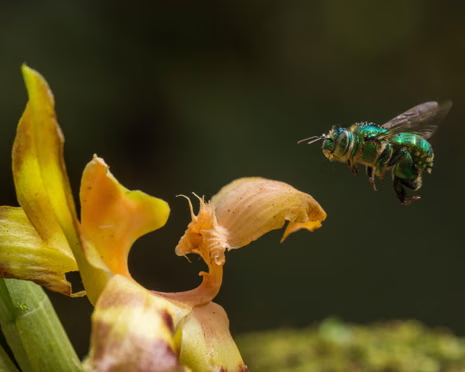
Tropical flowers are now blooming months earlier or later than historical norms because of climate change. This shift has been identified in a comprehensive study analysing over 8,000 plant specimens spanning more than two centuries. Researchers focused on species from Brazil, Ecuador, Ghana, and Thailand, regions known for unparalleled biodiversity yet historically understudied in climate impact research. The Brazilian amaranth tree, for example, now flowers roughly eighty days later than it did during the 1950s, while the Ghanaian rattlepod shrub has moved its flowering seventeen days earlier between the same periods. These variations challenge long-held assumptions that tropical regions remain largely stable in flowering times due to smaller temperature fluctuations over the year. Skylar Graves, lead researcher from the University of Colorado Boulder, emphasised that “nowhere on Earth is unaffected by climate change,” underscoring the global scale of the problem.
The study highlights the fragility of tropical ecosystems, which host some of the planet’s most diverse plant life. Nearly 180 previously unknown species are recorded annually in these regions, yet climate-induced disruptions could threaten their survival. By analysing museum collections of 33 species dating from 1794 to 2024, researchers found flowering timings have shifted on average two days per decade. These subtle changes, compounded over decades, may fracture communities and food chains, producing cascading effects throughout entire ecosystems. The researchers warned that the tropics remain a significant blind spot in understanding global climate impacts, despite comprising roughly a third of Earth’s surface.

Disruptions in flowering cycles are particularly concerning because they can fall out of sync with the life cycles of pollinators and seed-dispersing animals. For instance, flowers that rely on migratory birds for pollination may miss the narrow window when the birds are present, leaving flowers unpollinated and birds deprived of nectar. Graves explained that ecosystems operate as intricate webs where a single mismatch can cascade, affecting multiple species levels. Tropical primates and other animals dependent on these plants are especially vulnerable, as their food sources may no longer align with natural cycles.
The findings echo trends observed in temperate, boreal, and alpine desert plants, revealing that climate change disrupts floral timing across diverse ecosystems. Different species respond to varying environmental cues, such as daytime warmth or nighttime cooling, to trigger flowering. If climate shifts accelerate or delay these cues, species can bloom either earlier or later than expected. This mechanism explains why researchers observed both advances and delays in flowering, even within the same geographic region. Such shifts in timing may appear minor but can severely destabilise interactions between plants, pollinators, and fruit-eating species.
The broader consequences extend beyond local ecosystems. Tropical regions play critical roles in global ecological health, acting as carbon sinks and biodiversity reservoirs. Alterations in these ecosystems may indirectly influence climate regulation, nutrient cycling, and wildlife populations worldwide. Graves emphasised that tropical ecosystems are as susceptible to climate impacts as temperate areas, urging equal conservation efforts to protect these vital habitats. He noted that safeguarding these regions is essential to maintaining planetary stability and mitigating further ecological disruption.
Experts not involved in the study have echoed these concerns. Dr Emma Bush of the Royal Botanic Garden Edinburgh noted that tropical seasonality has been long overlooked and poorly understood. She highlighted the importance of documenting these ecosystems to clarify how climate change differentially affects plants, insects, and animals. According to Dr Bush, asynchronous responses among species could result in widespread biodiversity loss, with repercussions for ecosystems and human populations alike. Such losses threaten not only ecological balance but also the natural resources and ecosystem services upon which communities rely.
This research contributes to growing evidence that tropical ecosystems face serious, previously underestimated threats. The shifts in flowering times signal that plants may no longer align with pollinators, seed dispersers, or other critical ecological interactions. As flowering becomes more unpredictable, food chains and reproduction cycles could be severely disrupted, triggering long-term consequences for both flora and fauna. Tropical regions, once considered relatively resilient due to minimal seasonal variation, are now exposed to the same ecological pressures as areas with more pronounced seasonal climates.
Graves also warned that these findings reflect the broader, global nature of climate change impacts. The synchrony between plant and animal life is delicate, and even minor temporal mismatches can propagate through entire ecosystems. Tropical biodiversity is particularly important because it supports ecosystem resilience and provides genetic resources that underpin agriculture, medicine, and climate adaptation strategies. Protecting these species from climate-driven disruptions is critical for sustaining both ecological and human wellbeing.
Historical data played a key role in understanding these patterns. Researchers meticulously examined preserved specimens, revealing long-term shifts in flowering that had previously gone unnoticed. By comparing specimens across decades, they demonstrated that climate change has already altered flowering patterns significantly. The study provides compelling evidence that these shifts are not isolated events but part of a broader trend with potentially lasting consequences for tropical biodiversity.
Beyond the immediate ecological effects, disruptions in tropical flowering have socio-economic implications. Many communities rely on tropical plants for food, medicine, and cultural practices. Unpredictable flowering and fruiting cycles could directly impact local livelihoods, as well as global trade in plant-derived resources. The study suggests that conservation strategies must integrate these climatic realities, recognising that ecological timing is as vital as species protection.
Efforts to address these challenges must be global in scope. Tropical forests, wetlands, and savannahs must be preserved not only for their inherent biodiversity but also for their contribution to climate regulation. Effective conservation requires collaboration between governments, scientific institutions, and local communities, ensuring that policy and practice align with the urgent need to protect these ecosystems. Without immediate attention, cascading impacts on flora, fauna, and human societies are likely to intensify.

This study illustrates that no ecosystem remains untouched by climate change. Tropical flowers, often perceived as emblematic of stability, are now revealing the vulnerability of even the most biodiverse regions. The evidence highlights that climate change effects are universal, manifesting in subtle yet profound shifts across ecosystems worldwide. By understanding and responding to these changes, scientists, policymakers, and communities can work together to safeguard the planet’s intricate ecological networks.
Ultimately, the research underscores the urgency of addressing climate change comprehensively. The tropics, as a cornerstone of global biodiversity, require both targeted conservation efforts and wider climate action. Protecting flowering patterns is not merely about preserving plants but ensuring the survival of interconnected species and maintaining ecological balance. With rising global temperatures, ongoing habitat loss, and unpredictable weather patterns, the survival of tropical ecosystems is increasingly uncertain.
The study reminds us that even small temporal shifts in flowering can trigger significant ecological consequences. Conservation initiatives must therefore consider the timing of natural events as part of broader environmental protection strategies. By integrating this understanding into conservation planning, scientists can better predict ecosystem responses and mitigate adverse effects on biodiversity. Tropical ecosystems, though distant to many, are foundational to planetary health and must be preserved with urgency.
Related News:
 Scotland’s Climate Plans Face Scrutiny Over ‘Science Fiction’ Targets
 Ocean Warming Drives Massive Marine Life Loss, Study Warns
 ‘Extinct’ Antelope Returns to Sahara, Bringing Hope
 Norfolk Coastal Graves at Risk as Erosion Deepens Family Anguish
 Eden Project Founder Celebrates 25 Years of Nature’s Hope
 Winter plant bloom signals climate breakdown in UK
 UK Homes May Skip Batteries in New Green Rules
 Avocado Crisis: The Hidden Violence Behind Exports
 Smaller farms funding prioritised in England nature plans
 Dog Food Emissions: 1% of UK Greenhouse Gas Revealed
 Dutch Nationwide Fireworks Ban Expected to Transform New Year Traditions
 Storm Goretti leaves Cornwall homes without power
 Wildlife Targets at Risk in England and Northern Ireland
 Dubai Chocolate Craze Inspires South Korea’s Latest Dessert Obsession
 Traces of Glyphosate Found in UK Playground Tests
 BP’s Influence Sparks Controversy in UK STEM Education
 Polycrisis Anxiety Leaves Many Feeling Trapped in the Present
 Japan Prepares for Kashiwazaki Restart After Fukushima Legacy
 Kent Residents Continue Facing Water Supply Disruptions
 Water firms may avoid fines under UK water reform plan
 Antarctic Penguins Shift Breeding Season Amid Climate Change
 No Gas Boiler Ban as UK Warm Homes Plan Backs Heat Pumps
 Judi Dench Champions Fight to Save London’s Green Spaces
 Half the World’s Largest Cities Face Rising Water Stress
 The Sound of Mayhem’: Terror and Loss at Mount Maunganui
 Record-Breaking Heat Looms Over South-East Australia as Catastrophic Fire Risk Escalates
 Reindeer Deaths Rise as Finnish Herders Blame Border Wolves
 UK joins North Sea wind grid pact with nine European nations
 Devon hosts first high-density hydro power system
 US-Style Pickup Trucks Surge on UK Roads
 Storm Chandra floods Somerset, triggers major incident declaration
 How Sandhill Ashes Rebuilt a Bushfire-Hit Rural Community
 Storm Chandra flooding leaves England on high alert
 Reform UK Taps Boris Ally to Shape Party Nature Agenda
 James Valentine Retires from ABC After Cancer Battle
 UK Pfas Action Plan Faces Criticism From Environmentalists
 Wigan Dump Crisis Sparks Health and Safety Alarm
 What is Groundwater Flooding and Why Dorset is Seeing ‘Historical Highs’
 Norway’s Petrol Car Sales Hit Record Low Amid EV Surge
 Dozens of Flood Warnings in England After Days of Non-Stop Rain
 Fish disco plan could save 90% of fish at Hinkley C
 Aberdeen Chosen for GB Energy HQ at Marischal Square
 Santos Wins Landmark Greenwashing Case in Court
 Gentoo Penguins First Birds on Australian Territory Hit by Bird Flu
 AI Climate Claims Face Greenwashing Backlash
 Temperatures Dip Below Freezing as Arctic Air Sweeps Across the UK
 Fast-moving Wildfires Rage Across Southwestern US
 Flood risk homes surge across England builds
 Chikungunya Spread in Europe Climbs as Climate Warms
 Brace for Trump’s Brave New World of 1.7°C Global Warming
 As Trump Retreats from Climate Goals, China Is Becoming a Green Superpower
 Deer Shooting England: New Plan to Protect Woods
 Illegal Waste Dumping: New Drone Unit Launched
 ‘The New Tobacco’: Cities Ban Fossil Fuel Adverts
 Scotland’s Emissions Plans Face Criticism for Over-Reliance on Technology
 Germany Faces Backlash Over Scrapped Renewable Heating Mandate
 Group Expands Legal Claim Over South West Water Pollution
 Humans – not Mimmo the dolphin – need managing in Venice lagoon
 Ancient Stepwells Revived Amid India’s Deepening Water Crisis
 Reeves Faces Setback as Labour May Miss Homes Target
 Kate Winslet to Narrate Film Highlighting King’s Environmental Mission
 Trump’s UK Ambassador Urges North Sea Drilling to Strengthen US Ties
 UK Bans Fake Numbers: Scammers Lose Their Trick
 Vibe coding’ named Collins dictionary’s word of the year
BBC to Apologise Over Edited Trump Speech Amid Backlash
Vibe coding’ named Collins dictionary’s word of the year
BBC to Apologise Over Edited Trump Speech Amid Backlash
 Millionaires group urge Reeves to introduce wealth tax to ‘lift kids out of poverty’
 Reeves rejects £1bn plea for NHS redundancy payouts
 PM Condemns Leaks, Vows Loyalty to Ministers and Stability
 Phillipson Accused of Appeasing Unions by Diluting EBacc
 Saka Solidifies Role as Tuchel’s Key England Lieutenant
 Greene Pushes Epstein Files Amid Trump Fallout
 Zelenskyy Signs Fighter Jet Deal Amid Russian Drone Attacks
 Sundar Pichai Cautions on AI Hype and Market Risks
 Shadow Fleet at Sea: Europe’s Battle Against Illicit Oil Shipping
 Snow and Ice Cause Travel Chaos in North Yorkshire
 Director Michael Caton-Jones Reflects on Career and Beginnings
 Inside the Helpline Protecting Missing Children in the UK
 PlayStation PS5 Deals Hit Lowest Prices Ahead of Black Friday
 US Suspends Afghan Immigration After White House Shooting
 Five-Year-Old Dies After Rare Tonsil Surgery Complication