Published: 2 March 2026 . The English Chronicle Desk.
The English Chronicle Online
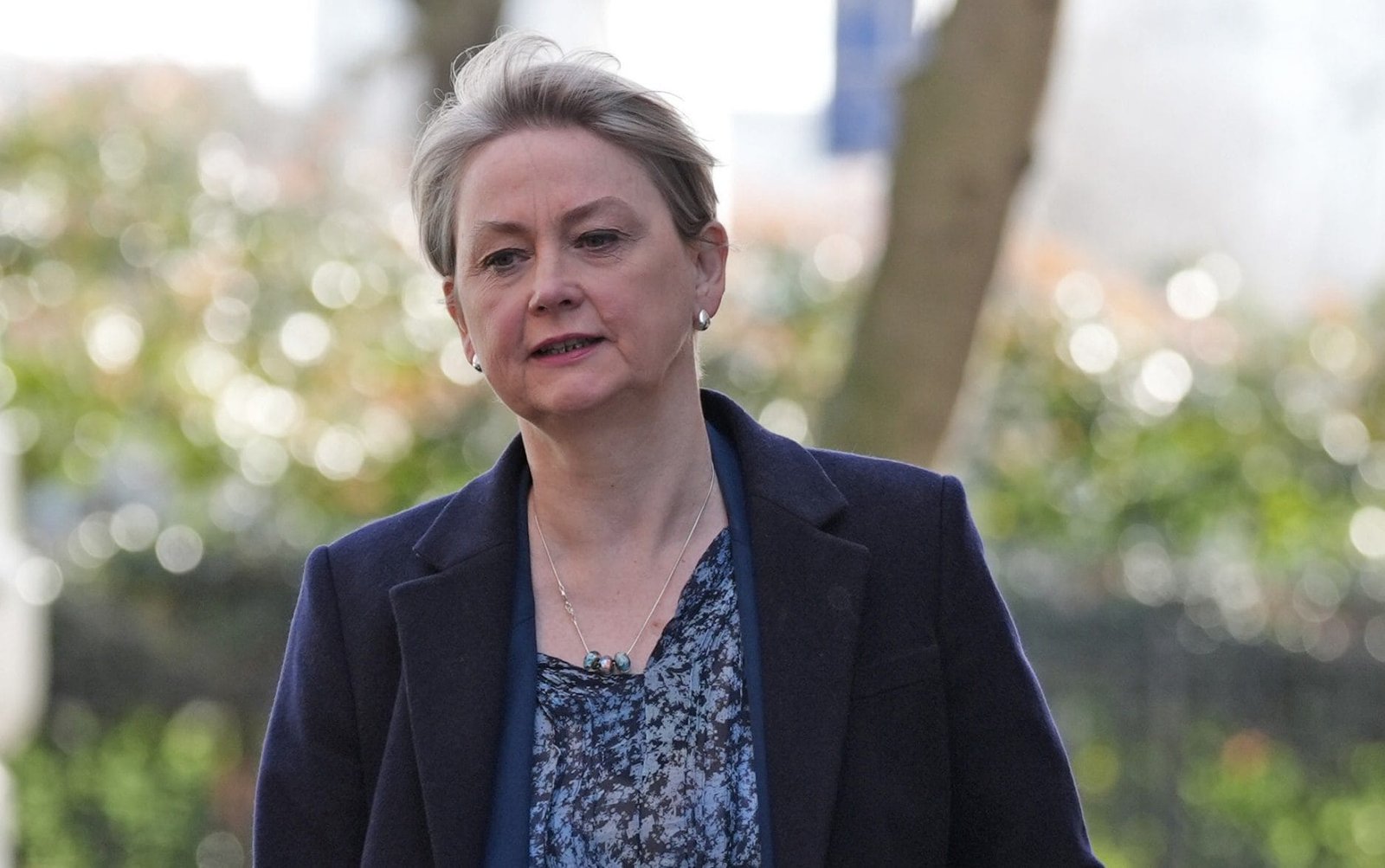
Britain’s foreign secretary Yvette Cooper has made clear that direct participation by the United Kingdom in offensive strikes against Iran is “not in Britain’s interest”, even as tensions escalate across the Middle East following recent US and Israeli military action. Cooper’s comments reflect a cautious UK stance that seeks to balance alliance commitments with national security considerations and domestic political sensitivities.

In remarks issued on Monday, Cooper emphasised that while the UK government supports defensive measures to protect British citizens and regional partners from Iranian missile and drone attacks, it does not intend to join US‑led offensive operations against Iran’s territory. Her position comes amid wider debate in Westminster over the legality, strategic value and risks of deeper military involvement.
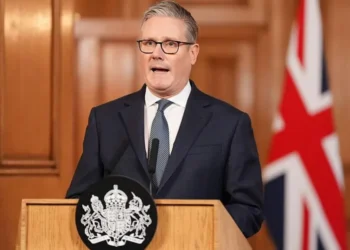
Cooper’s statement followed Prime Minister Keir Starmer’s announcement that the UK had authorised the United States to use British bases for limited defensive strikes targeting Iranian missile depots and launchers — a decision positioned explicitly as protective rather than offensive in nature. Starmer has stressed that British forces are engaged in defensive operations, including intercepting Iranian missiles aimed at regional allies and sites where British nationals are present.
The foreign secretary reiterated that Britain’s priority lies in avoiding further escalation while ensuring the safety of approximately 200,000 British citizens residing or travelling in countries now seeing repeated Iranian attacks, including the United Arab Emirates, Qatar, Bahrain and Kuwait. Cooper and Starmer both framed their policies in the context of collective self‑defence and international law, drawing a distinction between allowing defensive use of bases and participating in offensive campaigns.
Cooper’s remarks are part of a broader UK effort to maintain diplomatic equilibrium. While London and other European partners have condemned Iranian missile and drone attacks — and affirmed solidarity with the United States and other allies — officials have also stressed the urgency of pursuing a negotiated settlement that addresses underlying tensions without triggering a wider war.
Critics of the government’s position argue that permission for US forces to use British bases, even for so‑called defensive purposes, risks drawing the UK into a conflict it did not start and has limited strategic interest in. Supporters counter that Britain must act to protect its citizens and partners, particularly in light of Iran’s expanding military responses following the killing of Iran’s supreme leader in a joint US‑Israeli operation.

Cooper’s assertion that joining US offensive strikes “is not in Britain’s interest” underscores a strategic posture that seeks to reduce the risk of entanglement in a protracted Middle East conflict — while still aligning with allies on security and civilian protection, and emphasising diplomatic avenues as the preferred means of resolving the crisis.
Related News:
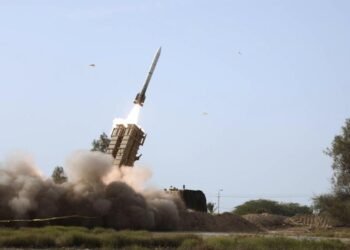 UK Will Allow US to Use Bases to Strike Iranian Missile Sites, PM Says
 Emails Show Epstein Funded Mandelson’s Husband After Jail
 Starmer Weighs Fast-Tracking Defence Boost
 Britain’s Reliance on China Makes Us ‘Weak Link in the West’, Warn MPs
 UK Has Not Given US Permission to Use RAF Bases for Iran Strikes
 Israel and Hezbollah Exchange Fire as Conflict Worsens
 Iran’s Regime Still Intact — Coming Days Will Test Its Survival
 Allies of US in the Gulf Bear Brunt of Iran Attacks
 Hopes and Fears as US Iranians Take to Streets After Toppling of Supreme Leader
 Retaliations Continue on Day Two of US-Israel Attacks on Iran
 At Least 153 Dead After Reported Strike on School, Iran Says
 At Least 153 Dead After Reported Strike on School, Iran Says
 ‘It’s Eerie’ – Dubai on Edge as City Comes Under Attack
 BBC Reports from Beit Shemesh After Deadly Iranian Missile Strike
 Iran, the US, and a World Cup That Starts in Three Months
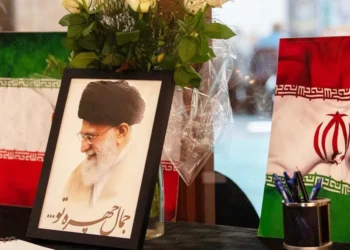 Months of Planning Behind US‑Israeli Mission to Target Iran’s Supreme Leader
 UK Must Act with Courage and Clarity on Israel-Palestine Conflict, Says Foreign Affairs Committee Report
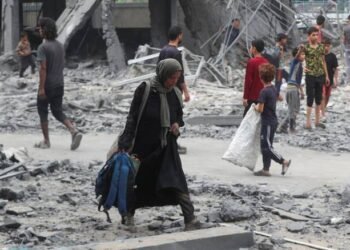 MPs Call on UK Government to Delay Biometric Visa Checks for Gaza Students Amid Humanitarian Crisis
 Radioactive Leak at UK’s Nuclear Warhead Base Sparks Outcry Over Safety and Secrecy
 Mutual Inconvenience: Why Alaska Was Chosen for the Trump-Putin Summit on Ukraine
 “I Don’t Expect to Live a Normal Life”: How a Leeds Teenager Became the Target of a Chinese Bounty
 Is the UK Ready to Put Boots on the Ground in Ukraine? Assessing Military Capacity and Challenges
 Protests Expected as Israeli Arms Firms Join Global Defence Trade Fair in London
 UK Immigration Figures: Separating Facts from Perceptions
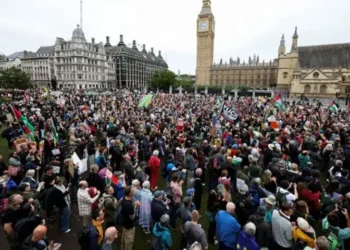 Thousands Gather in London to Protest Donald Trump’s Second UK State Visit
 Trump Urges UK to “Call Out the Military” to Secure Borders Amid State Visit
Trump’s UN Speech Criticises London and UK Policies, Draws Far-Right Attention
Trump Urges UK to “Call Out the Military” to Secure Borders Amid State Visit
Trump’s UN Speech Criticises London and UK Policies, Draws Far-Right Attention
 UK Fighter Jet Purchase Could Breach Nuclear Treaty, Warns CND
 A Third of EU Citizens in UK Report Discrimination by Public Bodies Post-Brexit
 Jailed Georgian Opposition Leaders Warn UK of Iranian Links to Ruling Party
 Russia repeatedly targets UK military satellites, warns Space Command chief
 Pro-Palestine March to Proceed in London Despite Calls to Cancel After Manchester Attack
 UK Universities Warn Students Ahead of 7 October Pro-Palestine Protests
 Public Trust in SNP Hits Historic Low Amid NHS Concerns
 Johnson Suggests Mandelson Linked to China Spy Controversy
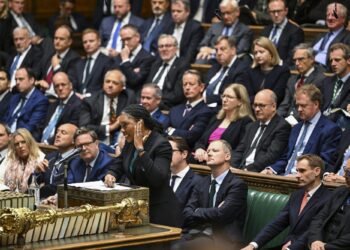 Witness statements reveal the CPS China spy row collapse in the UK
 Nigel Farage Calls Vladimir Putin ‘A Very Bad Dude’
 Rachel Reeves signals welfare reform ahead of key budget
 Kosovo agrees to host Britain’s refused asylum seekers
 Rachel Reeves to lead UK trade push in Saudi Arabia amid rights debate
 British Woman in Iran ‘Losing Hope’ Amid Ongoing Detention
 Johnson Approved China’s London ‘Super-Embassy’ in 2018
 BBC Journalist Held and Interrogated in Vietnam
 New review urges UK to repatriate Shamima Begum, others from Syria
 Rama Rebukes Mahmood for Targeting Albanian Families
 Russian Vessel Used Lasers on RAF Pilots, UK Claims
 Britain Demands Israel Reverse Ban on Aid Groups
 Machado Trump medal gesture reshapes Venezuela power struggle
 Trump Receives Machado’s Nobel Medal in White House Meeting
 US Considers Asylum for British Jews Amid Rising Antisemitism
 Starmer tariffs stance rejects US trade retaliation
 Shinzo Abe’s killer receives life sentence in Japan
 US Africa aid remarks spark anger after leaked State email
 Russia Strikes Kyiv and Kharkiv as Peace Talks Enter Day Two
 Starmer China visit raises human rights pressure on Beijing
 Cory Bernardi joins One Nation for SA election
 Fears of New Arms Race as US-Russia Nuclear Weapons Treaty Expires
 Macron Rebuked in Franco-German Defence Row
 Iran Says ‘Guiding Principles’ Agreed With US at Nuclear Talks
 Japan Braces as Takaichi Begins New Term with Huge Mandate for Low‑Tax, Ultra‑Conservative Agenda
 US Urges Iran to Make Deal as Military Presence Rises
 Trump Warns Over Chagos Islands Deal
 Trump and Chagos Deal Rift Over Iran Strikes
 How Much Could Andrew’s Arrest Hurt the Royal Family?
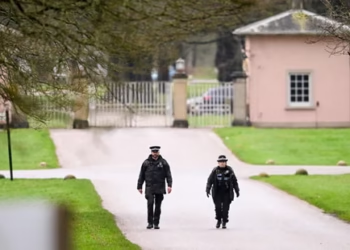 Andrew Mountbatten-Windsor Arrest After FBI Radar
 Australian PM Says Former Prince Andrew Has Suffered ‘Extraordinary Fall’ but That Won’t Prompt Republic Referendum
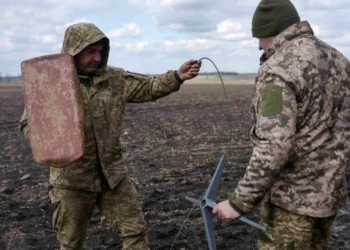 Musk Cuts Starlink Access for Russian Forces – Giving Ukraine an Edge at the Front
 Farage Chagos Islands Row Sparks Fury
 Trump Tariffs Threat Spark UK and EU Alarm
 Ukraine Negotiator Reveals What It Feels Like Facing Russia
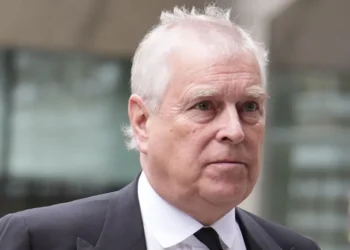 New Zealand Backs Removing Andrew From Royal Line of Succession
 Mandelson Arrested Amid Political Turmoil as Ukraine Marks Four Years of Conflict
 Russian Troops Executed by Commanders, Soldiers Tell BBC
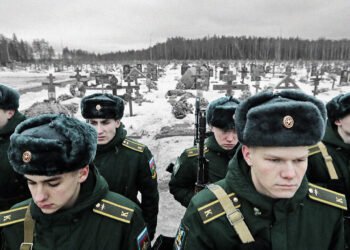 ‘Anyone who runs is shot’: Russian soldiers describe killings of troops who refuse orders
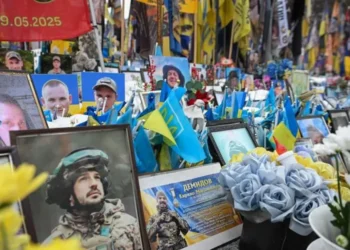 Ukraine remembers its dead as war enters a fifth year
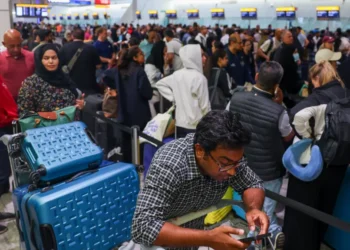 Middle East Flights Halted After Iran Strikes
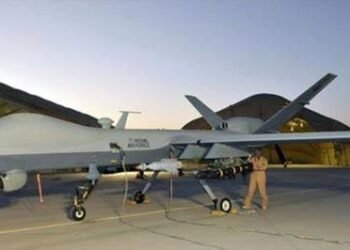 RAF Responding to Suspected Drone Strike at UK Cyprus Base
 Starmer Speaks to Trump After UK Joins Defensive Operation
 Israeli Attacks Kill 31 in Lebanon, Iran Strikes Across Region, US Warplanes Crash in Kuwait
 In Maps: Strikes Across Iran and the Middle East