Published: 03 March 2026. The English Chronicle Desk. The English Chronicle Online.
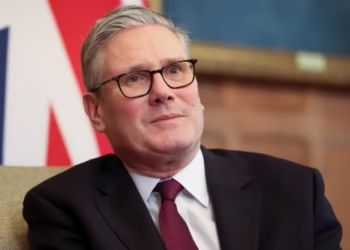
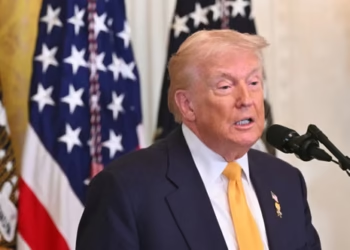
Donald Trump has sharply criticised Sir Keir Starmer over the UK’s refusal to support direct military action against Iran, deepening tensions in what he described as a once special relationship. The latest Trump rebukes Starmer remarks came after Britain declined to back offensive strikes on Iranian targets. The dispute has raised fresh questions about transatlantic unity at a moment of heightened instability across the Middle East.
In an interview with The Sun, Trump said the relationship with Britain was “not what it was” and suggested Starmer had failed to stand alongside key allies. He compared the UK’s stance unfavourably with that of France and the head of NATO, portraying Britain as unusually hesitant. His remarks followed Starmer’s firm statement in the House of Commons rejecting “regime change from the skies.”
The American president argued that the UK should have allowed its bases to be used for the initial US and Israeli strikes. Those attacks targeted senior Iranian leadership and military infrastructure in Tehran and beyond. Starmer, however, insisted any British involvement must have a lawful basis and a clear strategic objective. He referenced the lessons of Iraq, warning against repeating past mistakes driven by haste.
The Trump rebukes Starmer episode centres on Britain’s refusal to authorise offensive operations from its territory. While the UK permitted defensive measures to protect allied forces, it drew a clear line at joining proactive attacks. This distinction has become the core of the political disagreement between Washington and London.

Starmer told MPs that Britain would deploy assets only to defend its personnel and allies under threat. He confirmed that the Royal Air Force had intercepted an Iranian drone aimed at a coalition base in Iraq. Two additional drones targeted RAF Akrotiri in Cyprus, underscoring the immediate risks facing British forces. These developments, he said, justified defensive readiness but not escalation.
Trump suggested that Britain’s absence from the offensive campaign would not alter US objectives significantly. Nevertheless, he insisted that solidarity mattered symbolically and diplomatically. “He should have helped,” Trump said, referring to Starmer’s refusal. The tone of his remarks reflected clear frustration at what he views as British divergence.
The American leader also broadened his criticism to include domestic and foreign policy issues in the UK. He questioned the Chagos Islands agreement, despite earlier US backing for the arrangement. He further urged a rethink on North Sea oil and gas exploration and called for tougher immigration policies. These comments extended the Trump rebukes Starmer narrative beyond military cooperation.
Downing Street responded swiftly to the criticism. Darren Jones, Chief Secretary to the Treasury, reiterated that Britain would not participate in offensive strikes. He stressed that British armed forces would act only when national interests were directly at stake. According to Jones, public opinion strongly favours avoiding a wider Middle East war.
Starmer’s position has been shaped by both legal caution and strategic calculation. He emphasised that any use of force must rest on international law and a credible plan. The memory of the Iraq conflict continues to influence British political judgement on overseas interventions. By invoking those lessons, Starmer signalled continuity with a more restrained doctrine.
The regional backdrop to this dispute remains volatile and dangerous. Following the US-Israeli strikes, Iran launched retaliatory missile and drone attacks across the Gulf. Targets reportedly included the United Arab Emirates, Saudi Arabia, Kuwait, Qatar, Iraq, Bahrain and Oman. The scale of retaliation heightened fears of a broader regional confrontation.
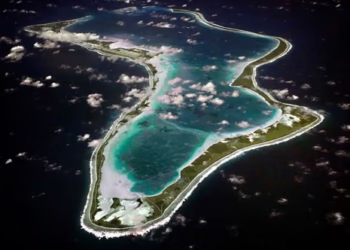
British bases have played a significant logistical role in previous American operations. RAF Fairford in Gloucestershire and Diego Garcia in the Chagos Islands are strategically important facilities. Reports suggest they may still support defensive or logistical missions linked to ongoing tensions. However, Starmer has maintained that their use for offensive bombing remains off the table.
Trump’s remarks also referenced support from NATO’s secretary general, Mark Rutte. By highlighting Rutte’s comments, Trump sought to isolate Britain diplomatically. He portrayed other allies as aligned with Washington’s objectives, leaving London conspicuously apart. The comparison was intended to underline what he sees as British reluctance.
The Trump rebukes Starmer confrontation comes at a delicate moment for both leaders domestically. Starmer has worked carefully to maintain functional ties with Washington despite political differences. Trump, meanwhile, has framed foreign policy in terms of strength and visible alliance commitments. Each leader faces pressures from distinct constituencies at home.
Security analysts note that Britain’s defensive engagement still signals support for allied stability. Intercepting drones and protecting coalition bases demonstrates tangible commitment. Yet the refusal to join offensive strikes marks a significant boundary in policy. That boundary reflects both legal advice and political caution.
Critics of Starmer argue that Britain risks appearing marginalised in global decision making. Supporters counter that measured restraint enhances credibility and prevents entanglement. The Trump rebukes Starmer dispute therefore embodies a broader debate about Britain’s global posture. Should the UK prioritise alliance alignment or independent judgement in crises?
Diplomats privately acknowledge that differences between allies are not unusual. However, public airing of disagreements can strain perceptions of unity. Trump’s direct language has amplified the sense of discord. Whether this represents a temporary rift or a deeper shift remains uncertain.
In the Commons, Starmer emphasised that defensive deployments were necessary after Iranian retaliation intensified. He confirmed that British aircraft were positioned to shield allies from further attacks. This measured explanation aimed to reassure Parliament without endorsing escalation. It also reinforced the government’s consistent message about legality and planning.
The Trump rebukes Starmer saga may have implications for future cooperation beyond the Middle East. Intelligence sharing, trade discussions and climate initiatives could all be influenced by political mood. Historically, the US-UK relationship has endured policy differences without lasting damage. Yet tone and trust often shape diplomatic resilience.
Public reaction in Britain appears divided but cautious. Many voters remain wary of another prolonged conflict abroad. Memories of past interventions continue to shape political sentiment. This domestic reality informs Starmer’s careful balancing act.
International observers are watching closely for signs of further escalation. Iran’s retaliatory strikes have already widened the geographic scope of tension. Gulf states face renewed security concerns, and global markets are alert to disruption. Against this backdrop, allied coordination remains crucial.

Despite the heated rhetoric, channels between London and Washington remain open. Officials on both sides continue discussions on defence and regional stability. Practical cooperation on defensive measures persists even amid political disagreement. This suggests the foundation of the alliance still holds.
Ultimately, the Trump rebukes Starmer confrontation highlights the complexity of modern alliance politics. Shared values do not eliminate strategic divergence. Leaders must navigate domestic expectations while managing international risk. In this instance, Britain has chosen caution over confrontation.
Whether that decision strengthens or strains the partnership will unfold in coming weeks. Much depends on developments in Iran and the broader Middle East. If tensions subside, the dispute may fade into diplomatic memory. If conflict widens, allied unity will face renewed tests.
For now, Britain stands firm on its refusal to support offensive strikes. The United States continues its campaign with selected allies. The special relationship endures, but under visible strain. The world watches as two longstanding partners chart slightly different courses through a dangerous moment.
Related News:
 British Woman in Iran ‘Losing Hope’ Amid Ongoing Detention
 BBC Journalist Held and Interrogated in Vietnam
 The diet that can significantly ease symptoms of IBS
 Trump Speaks on Prince Andrew’s Royal Scandal Fallout
 Pregnant UK Teen to Be Freed from Georgian Jail
 Zohran Mamdani becomes New York City’s first Muslim mayor
 Top Christmas Books Reads: Classics to Cozy Romcoms
 UPS Cargo Plane Crash in Kentucky Kills Seven
 Just Stop Oil Protesters Convicted Amid Climate Defence Row
Zohran Mamdani names all-female transition team for NYC mayoralty
Just Stop Oil Protesters Convicted Amid Climate Defence Row
Zohran Mamdani names all-female transition team for NYC mayoralty
 Tension and Turmoil at Aston Villa v Maccabi Match
 British Grandmother to Return Home After Death Sentence in Bali
 Parents Urge Home Office to Reunite Daughter After Hurricane
 Lando Norris Dominates Brazil GP to Strengthen F1 Title Bid
 Second world war veterans honoured as King leads Remembrance Sunday
 BBC director-general and news chief resign amid bias row
 Palace May Restore Hyphen to Andrew Mountbatten-Windsor’s Name
 Ronaldo Confirms Final World Cup and Plans Retirement
 Rama Rebukes Mahmood for Targeting Albanian Families
 Russian Vessel Used Lasers on RAF Pilots, UK Claims
 Royal Navy Shadows Russian Warships Entering the Channel
 Ireland Boosts Ukraine Aid as Zelensky Visits Dublin
 UK and France Agree Troop Deployment Plan for Ukraine
 US Africa aid remarks spark anger after leaked State email
 Starmer China visit raises human rights pressure on Beijing
 UK and EU Signal Fresh Push for Defence Cooperation Talks
 UK New Car Discounts Near £6,000 as Prices Are Slashed
 Cory Bernardi joins One Nation for SA election
 Starmer Condemns ‘Depraved’ Russian Strikes on Ukraine
 Sydney Protest Pepper Spray Clash During Herzog Visit
 Mexico Challenges UK Asylum Decision
 Trump Warns Over Chagos Islands Deal
 NSW Mental Health Crisis: Escapes Spark Alarm
 Trump and Chagos Deal Rift Over Iran Strikes
 Andrew Mountbatten-Windsor Arrest After FBI Radar
 Farage Chagos Islands Row Sparks Fury
 Trump Tariffs Threat Spark UK and EU Alarm
 Mediterranean Storms: A New Era of Climate Tragedies
 UK Allows US Base Use Amid Iran Tensions
 Middle East evacuation plans for Britons
 Iranian Australian community divided after vigils
 UK Must Act with Courage and Clarity on Israel-Palestine Conflict, Says Foreign Affairs Committee Report
 Reeves Faces Setback as Labour May Miss Homes Target
 Kate Winslet to Narrate Film Highlighting King’s Environmental Mission
 Trump’s UK Ambassador Urges North Sea Drilling to Strengthen US Ties
 UK Bans Fake Numbers: Scammers Lose Their Trick
BBC to Apologise Over Edited Trump Speech Amid Backlash
UK Bans Fake Numbers: Scammers Lose Their Trick
BBC to Apologise Over Edited Trump Speech Amid Backlash
 Millionaires group urge Reeves to introduce wealth tax to ‘lift kids out of poverty’
 Reeves rejects £1bn plea for NHS redundancy payouts
 PM Condemns Leaks, Vows Loyalty to Ministers and Stability
 Greene Pushes Epstein Files Amid Trump Fallout
 Zelenskyy Signs Fighter Jet Deal Amid Russian Drone Attacks
 Shadow Fleet at Sea: Europe’s Battle Against Illicit Oil Shipping
 Inside the Helpline Protecting Missing Children in the UK
 PlayStation PS5 Deals Hit Lowest Prices Ahead of Black Friday
 US Suspends Afghan Immigration After White House Shooting
 Five-Year-Old Dies After Rare Tonsil Surgery Complication
 Starmer Says Labour’s Economic Plan Needs Years to Deliver
 ‘Extinct’ Antelope Returns to Sahara, Bringing Hope
 Children to Receive Home Vaccines as England Acts
 Cambridge College Faces Backlash Over Private School Recruitment
 Bereaved Fathers Gain New Paternity Leave Rights in UK
 Woman Jailed for Life After Killing E-Bike Rider in Tragic Mistaken Identity Case
 Sydney Shark Attack Surge Shocks Australia Beaches
 No Gas Boiler Ban as UK Warm Homes Plan Backs Heat Pumps
 Police response times face strict new national limits
 Devon hosts first high-density hydro power system
 Pornhub blocks new UK users over age checks dispute
 Pneumonia Surge Pushes England Emergency Cases Higher
 Portugal Election Delivers Socialist Win as Far Right Surges
 Send spending gap leaves deprived areas behind
 Australian Families Leave Syrian Camp for Home
 Civil Service Pay: Union Urges Ministers to End ‘Barking Mad’ Limits
 UK Job Vacancies Hit Five-Year Pandemic Low
 UK Youth Unemployment Surges Amid Tax Changes
 Half of Britons Avoid GP When Ill, Survey Reveals Growing Concern
 Russian Trade Routed Through British Islands Exposed
 Hilary Knight speaks out on Trump’s recent hockey remarks
 Mother Says ‘I Hugged My Daughter’s Killer’ as They Cried Together in Prison
 Brit ‘in Good Spirits’ Amid Dubai Missile Attacks, Stranded but Safe