Published: 04 March 2026. The English Chronicle Desk. The English Chronicle Online.
A significant study into the internal views of Reform UK members has highlighted a sharp divide regarding the status of non-white British citizens. This research comes from a recent report published by the anti-racism group Hope Not Hate as part of their annual assessment. The findings suggest that a majority of party members hold firm views on who should remain within the United Kingdom today. According to the data, 54% of members believe non-white citizens born abroad should be removed or encouraged to leave. This specific viewpoint is often discussed within the party as a method to protect national identity and social cohesion. The survey was conducted by Survation and involved 629 paid members of the political party earlier this year. It provides a rare look into the core beliefs of a rapidly growing British political movement.
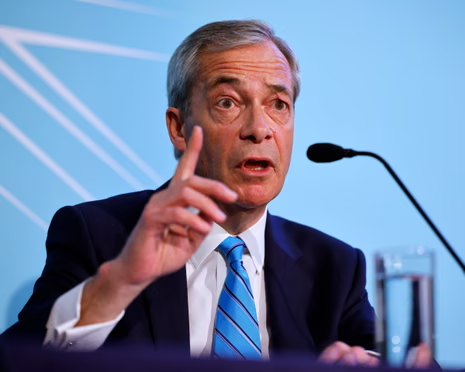
Nigel Farage currently leads the party while trying to appeal to more moderate centre-ground voters across Britain. However, these new statistics suggest his base remains focused on much more hardline immigration and repatriation policies. The report indicates that one in five members also support similar measures for those born in the UK. This means 22% of surveyed members feel that even second-generation non-white citizens should potentially face some form of relocation. Such views represent a significant portion of the party that Farage must manage while seeking broader electoral success. The tension between leadership rhetoric and member belief is becoming a central theme in modern British politics. Experts suggest this internal pressure could lead to future instability or shifts in official party policy.

The concept of British citizenship is being redefined by those who prioritise ancestry over legal status or documents. This shift is noted by Hope Not Hate as a move toward a more explicit form of racial nationalism. The report warns that ideas once considered extreme are now entering the mainstream of UK political discourse. This trend is often referred to as remigration by those who advocate for its implementation in law. It involves using bureaucratic language to describe the forced or encouraged departure of specific groups of people. The study highlights how these ideas have gained traction among many members of the Reform UK party. Critics argue that this rhetoric undermines the very definition of what it means to be a citizen. Meanwhile, supporters believe it is a necessary conversation about the future of the British Isles and culture.
External figures like Rupert Lowe have also influenced the current ideological landscape within the right-wing political sphere. Lowe recently launched a new party called Restore Britain which advocates for much more aggressive mass deportation strategies. Two-thirds of Reform members surveyed expressed a positive view of Lowe and his new political venture. This suggests that a large portion of the base is sympathetic to even more radical policy shifts. Farage faces a challenge from his right flank as these new movements gain more popular support. The data shows that the membership is not entirely unified behind the current leadership’s more cautious approach. This internal competition could force the party to adopt even more controversial positions to keep its voters.
The debate over British identity has been further fueled by prominent figures and high-profile social media commentators. For example, Matthew Goodwin recently refused to disown claims that minority ethnic backgrounds impact one’s true British status. He argued that a piece of paper is not enough to make someone truly part of the nation. Such comments have resonated with a significant number of people who feel the national culture is fading. Former Home Secretary Suella Braverman also contributed to this ongoing conversation regarding Englishness and broader British identity. She noted that while she is a proud British Asian, she does not identify as being English. These distinctions are becoming increasingly important to voters who are concerned about the rapid pace of change.
The rise of large-scale protests has also signaled a change in the intensity of the far-right movement. Last year, the “unite the kingdom” rally in London saw over 150,000 people take to the streets. This event was led by Stephen Yaxley-Lennon, who is more commonly known by the name Tommy Robinson. It was described as the largest far-right protest in the history of the United Kingdom to date. Polling by Focaldata suggests that a quarter of the British population identifies positively with this specific movement. This widespread support indicates that the issues raised by Reform UK members are shared by many others. The presence of international figures like Elon Musk has also brought more global attention to these rallies.
Anti-migrant protests have continued throughout the winter months, showing a level of persistence not seen in previous years. The Hope Not Hate report tracked 251 such demonstrations across various locations in the UK during 2025. Many of these protests centered on hotels housing asylum seekers, specifically in areas like Epping and the north. There is a concern that activity will surge as the weather becomes warmer in the coming months. The movement appears to be becoming bigger, bolder, and much more confrontational than it was before. This environment provides a fertile ground for parties that promise radical changes to immigration and border control. The British citizenship debate is likely to remain at the forefront of the upcoming political cycle.

The term remigration is being used more frequently to package old ideas in a new and modern way. It is often presented as a logical solution to the pressures of a growing and diverse population. However, civil rights groups warn that this language masks the harsh reality of ethnic cleansing and displacement. They argue that the spread of such ideas is dangerous for the long-term stability of the country. The report suggests that the UK is currently facing a significant realignment on the political right wing. Different factions are competing to see who can offer the most robust defense of traditional national values. This competition is driving the conversation toward topics that were once seen as entirely off-limits in Parliament.
Reform UK officials have noted that their membership has grown to approximately 270,000 paid-up individuals as of December. This large base gives the party significant financial and social power to influence the national political agenda. The views held by these members will likely dictate the direction of the party for years to come. If the leadership ignores the wishes of the majority, they risk losing supporters to more radical groups. This creates a difficult balancing act for any leader trying to win a general election in Britain. The desire for a more exclusive definition of British citizenship is clearly a primary motivator for many. As the 2026 political season continues, these internal party dynamics will be watched very closely by all.
The English Chronicle will continue to monitor these developments and provide updates on the changing political landscape. Understanding the motivations of voters is essential for any clear analysis of the current state of the nation. The data provided by Hope Not Hate offers a stark look at the opinions shaping the right. Whether these views will lead to policy changes or further social division remains to be seen. What is certain is that the conversation around identity and belonging is far from being resolved. The British public remains deeply divided on these fundamental questions of national heritage and the future.
Related News:
 Two National Guard Soldiers Critically Injured Near White House
 Putin Intensifies Territorial Demands Before US Talks
 US National Guard Member Killed in DC Shooting
 Trump to Recheck Green Cards from 19 Nations After DC Attack
 Trump to pause migration from ‘third-world countries’
 US Defence Chief on Drug Boat Strike: “Did Not See Survivors”
 Republicans Hold Tennessee Seat Despite Democratic Surge
 Franklin Turtle, Sabrina Carpenter Slam US Social Media Use
 American Mother Extradited From UK to U.S. on Murder Charges
 Russia losses Ukraine war peace talks intensify amid rising deaths
 US Cities Erupt in Protests Against Trump’s Venezuela Military Action
 Trump Escalates Minnesota Immigration Surge Amid Rising Tensions
 Capitol Attack Anniversary Sparks Deep Political Divide
 Portland Shooting: Federal Agents Open Fire Near Hospital
 Trump Labels Renee Good a ‘Paid Agitator’ After Minneapolis ICE Killing
 Federal Immigration Shift: Officers Leave Louisiana for Minneapolis
 Trump Says US Must ‘Own’ Greenland to Block Russia, China
 Homeland security agents deployed amid Minneapolis protests
 Minneapolis mayor demands state access to Renee Good probe
 Democrats Push Affordability to Challenge Trump Ahead of Votes
 German Supermarket Aldi to Open 180 US Stores This Year
 US judge allows Ørsted to resume Rhode Island offshore wind project
 Minnesota Sues Trump Administration Over ICE Surge
 Trump targets Iran trade with 25% tariff warning
 Greenland Faces Pivotal Summit Over Arctic Power Struggle
 US Clears Nvidia AI Chip Sales to China in Policy Shift
 Trump Threatens Strong Action If Iran Executes Protesters
 Government Unveils Northern Powerhouse Rail Plans
 Portland man pleads not guilty after Border Patrol shooting
 Trump press secretary attacks reporter over ICE question
 Kyrsten Sinema Faces High-Profile Lawsuit Over Marriage Interference
 ICE detainee death may be investigated as homicide in Texas camp
 Trump Receives Machado’s Nobel Medal in White House Meeting
 ‘He Believed Help Was Coming’: Why Iran’s Protesters Feel Betrayed
 Trump Aide Sparks Fury as Greenland Dispute Intensifies
 Trump Fed bid heads to Supreme Court
 EU Says US Ties Have Suffered ‘Big Blow’ After Greenland Crisis
 ‘A long time coming’: US table tennis finds its moment
 ‘Unfathomable’: Australian veterans rebuke Trump claims
 Trump officials continue false claims after Alex Pretti shooting
 Minneapolis pushes back against ICE’s federal crackdown
 Border Patrol Commander Leaves Minneapolis After Fatal Shooting
 Arizona border shooting leaves suspect hospitalised after agent pursuit
 ‘Evil is resilient’: Pressure Mounts on Stephen Miller
 Fulton election raid hits Georgia election office
 Videos reveal earlier clash before Alex Pretti shooting
 Partial US Government Shutdown Hits Homeland Security Funding
 Thousands Protest ICE Operations in Nationwide US Day of Action
 Epstein Files Reveal Trump Officials’ Emails with Financier
 Thousands Protest ICE in New York Against Trump Deportation Campaign
 Sinema payment row deepens after $9,000 transfer claim
 US-Cuba Negotiations Shift as Oil Blockade Looms
 Portland Mayor Demands ICE Leave After Protest Violence
 ‘Painful Times’ as Melinda Gates Responds to Epstein Files
 Trump Praises ‘Terrific’ Petro After White House Talks
 Headline: Measles Alert: Dr Oz Urges Americans to Vaccinate
 Nurses’ families fear breakup under UK immigration crackdown
 Trans Youth Care Crisis: NY Hospital Ends Gender‑Affirming Treatment
 Coca‑Cola lawsuit challenges male exclusion at corporate event
 Sanders Condemns Billionaire ‘Greed’ in California Tax Debate
 California Democrats Vow Trump Reckoning
 Missing North Carolina Woman Found Alive After 24 Years
 Hero Rescuer Saves Baby from Icy Chicago Lake
 Trump’s Surgeon General Pick Evades Vaccine Questions
 Buffalo Refugee Tragedy: Border Patrol Neglect Leads to Death
 Minnesota Medicaid Funding Blocked Amid New ‘Fraud’ Crackdown
 Trump Probe Fallout: Patel Fires FBI Staff Tied to Documents Case
 Meta’s AI tips overwhelm US child abuse investigators
 Minnesota Medicaid funds halted in fraud row
 Clinton Testimony Erupts in Fiery Exchange
 Trump Faces Questions Over Iran Conflict Plan
 Scaramucci on Trump: ‘Epstein files won’t end him’
 Kate Winslet to Narrate Film Highlighting King’s Environmental Mission
 Trump’s UK Ambassador Urges North Sea Drilling to Strengthen US Ties
 UK Bans Fake Numbers: Scammers Lose Their Trick
 Vibe coding’ named Collins dictionary’s word of the year
BBC to Apologise Over Edited Trump Speech Amid Backlash
Vibe coding’ named Collins dictionary’s word of the year
BBC to Apologise Over Edited Trump Speech Amid Backlash
 Millionaires group urge Reeves to introduce wealth tax to ‘lift kids out of poverty’
 Reeves rejects £1bn plea for NHS redundancy payouts
 PM Condemns Leaks, Vows Loyalty to Ministers and Stability