Published: 05 March 2026. The English Chronicle Desk. The English Chronicle Online.
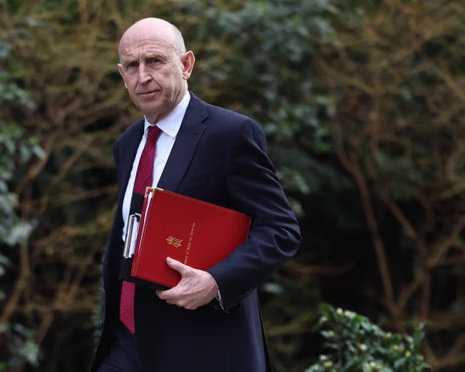
The Cyprus drone strike has triggered urgent diplomacy and rising public anxiety. Britain’s Defence Secretary, John Healey, flew into Cyprus late Wednesday to calm tensions after an unmanned aircraft struck RAF Akrotiri. The incident marked a rare and alarming breach of security at a British military installation. It also stirred political anger in Nicosia and raised difficult questions in London.
The Cyprus drone strike unfolded against a volatile regional backdrop. Over the weekend, Iran launched retaliatory attacks following joint US and Israeli strikes. Those earlier operations reportedly killed Iran’s supreme leader, Ali Khamenei, sending shockwaves through the Middle East. As missiles and drones crossed skies across the region, a single low-flying aircraft slipped past defences near Britain’s sovereign base.
UK officials believe the drone flew low and slow to avoid radar detection. Early assessments suggest it was a Shahed-type model, often used as a one-way attack weapon. Investigators suspect pro-Iranian militias may have launched it from Lebanon or western Iraq. However, they have not conclusively identified the launch site. The lack of certainty has fuelled speculation and diplomatic strain.
The aircraft struck RAF Akrotiri on Sunday evening. Though damage was limited and no injuries were reported, the psychological impact proved significant. The Cyprus drone strike became the first direct attack on a British installation on the island in four decades. That historical context deepened public concern and intensified scrutiny of defence preparedness.

In response, families living on the bases were evacuated as a precaution. Security measures were immediately strengthened around the installation. British authorities confirmed that additional air defence systems were deployed to reduce future risks. The move aimed to reassure personnel and their relatives amid heightened tensions.
Healey met Cypriot defence officials in Nicosia shortly after arriving. His visit followed sharp criticism from Cypriot leaders, who expressed disappointment over communication failures. The Cypriot government argued it had not received timely warning of the imminent threat. That criticism resonated strongly with residents living near the base.
Cyprus’s High Commissioner to the UK, Kyriacos Kouros, voiced the public mood during an interview on BBC Newsnight. He said many people felt scared and expected greater cooperation. His remarks underscored a perception that communication channels had not functioned smoothly during the crisis.
Cyprus President Nikos Christodoulides also addressed the matter publicly. He emphasised that Cyprus did not intend to participate in broader military operations. His spokesperson, Konstantinos Letymbiotis, expressed dissatisfaction with how Britain framed its Sunday statement. Officials in Nicosia stressed that humanitarian purposes should remain the bases’ primary function.
Prime Minister Keir Starmer clarified that the drone was launched before Britain authorised defensive cooperation with the United States. He stated that no RAF bases in Cyprus were being used by US bombers. That clarification aimed to counter suggestions that British facilities had become active participants in offensive operations.
Despite those assurances, critics questioned whether the island risked being drawn deeper into regional conflict. Cyprus occupies a strategic position in the eastern Mediterranean. Its sovereign base areas remain crucial for British operations across the Middle East. That importance inevitably places the island within the orbit of geopolitical rivalry.
The Cyprus drone strike also raised technical concerns about air defence capabilities. Defence sources indicated that low-altitude, slow-moving drones present unique detection challenges. Traditional radar systems are optimised for faster, higher-altitude threats. Smaller drones can exploit terrain and fly beneath coverage thresholds.
To strengthen protection, Britain has dispatched the destroyer HMS Dragon to the region. The vessel is expected to arrive in Cypriot waters next week. Two Wildcat helicopters equipped with counter-drone systems will accompany the reinforcement effort. Officials believe these assets will enhance surveillance and interception capacity.
Allied nations have also offered assistance. France and Greece deployed F-16 fighter jets and advanced anti-missile systems. Their involvement signals wider European concern about instability in the eastern Mediterranean. The cooperative response highlights how regional security challenges often demand multinational coordination.
Investigators are examining whether the drone originated from Hezbollah, a Shia militia backed by Iran. The group has previously demonstrated capacity to launch long-range projectiles. However, attribution remains complex in a theatre crowded with armed actors. Officials caution against premature conclusions while evidence is reviewed.
The broader regional crisis began after the United States and Israel targeted Iranian facilities. Those strikes triggered a wave of retaliation from Tehran and its allies. Military analysts describe the situation as one of the most volatile in recent years. Each escalation risks miscalculation and unintended consequences.
Within Cyprus, public sentiment reflects both fear and frustration. Residents near Akrotiri reported hearing explosions and witnessing heightened security. The evacuation of families underscored the seriousness of the perceived threat. Community leaders have called for transparent communication to restore confidence.
British diplomats face the delicate task of balancing reassurance with strategic necessity. Sovereign base areas remain under UK jurisdiction, yet they exist within Cypriot territory. That arrangement requires careful coordination and mutual trust. The Cyprus drone strike tested that relationship at a sensitive moment.
Healey’s visit aimed to reaffirm Britain’s commitment to partnership. Meetings focused on intelligence sharing and improved early-warning mechanisms. Both sides expressed determination to prevent similar incidents in future. Officials described the talks as constructive, though tensions linger beneath the surface.
Security experts argue that drone warfare is reshaping modern conflict. Inexpensive unmanned systems can bypass traditional deterrence models. Their accessibility empowers non-state actors and smaller groups. As technology spreads, protecting fixed installations becomes increasingly complex.

For Britain, the incident prompts reflection on defence investment priorities. Counter-drone technologies require continuous adaptation and funding. The Cyprus drone strike may accelerate procurement and research decisions. It also reinforces the need for integrated air defence across allied networks.
Politically, the episode places pressure on the government to demonstrate control. Opposition figures have demanded thorough investigation and public accountability. Ministers insist that lessons are already being implemented. They stress that no lives were lost and damage remained contained.
International observers note that Cyprus has long navigated regional tensions carefully. The island balances relations with European partners and Middle Eastern neighbours. Any perception of involvement in broader hostilities complicates that equilibrium. Maintaining neutrality while hosting foreign bases presents enduring challenges.
As reinforcements arrive and investigations continue, attention remains fixed on preventing escalation. Diplomats hope clear communication will ease public anxiety. Military planners are refining detection systems and reviewing operational protocols. The Cyprus drone strike stands as a stark reminder of evolving threats.
While immediate danger appears contained, the strategic implications endure. Regional dynamics remain fluid, shaped by rivalry and retaliation. Britain’s relationship with Cyprus must now weather this unexpected test. The coming weeks will reveal whether diplomatic engagement can restore full confidence and stability.
Related News:
 Peterborough Mosques Tighten Security After Attack
 Reeves Faces Setback as Labour May Miss Homes Target
 Hospice Cuts Raise Alarm Across England Amid Funding Crisis
 Kate Winslet to Narrate Film Highlighting King’s Environmental Mission
 Green Party Surges Past Labour in Latest UK Poll
 Trump’s UK Ambassador Urges North Sea Drilling to Strengthen US Ties
 Children to Learn Local History in Major Curriculum Overhaul
 French Taxi Driver Cleared in David Lammy Theft Case After Fare Dispute
 UK Bans Fake Numbers: Scammers Lose Their Trick
 Prince William Plants Trees with Brazil’s Nature Heroes
 M&S Profits More Than Halve After Cyber-Attack
 Kent village told to remove flags before Christmas lights go up
 Patients to Test Health at Home to Ease NHS Winter Pressure
 King Charles to Lead Nation in Remembrance Sunday Service
 Palace May Restore Hyphen to Andrew Mountbatten-Windsor’s Name
 Millionaires group urge Reeves to introduce wealth tax to ‘lift kids out of poverty’
 Starmer Faces Growing Dissent as Labour MPs Weigh Leadership Challenge
 Shouting Works Best to Deter Gulls, UK Study Finds
 Reeves rejects £1bn plea for NHS redundancy payouts
 Northern Lights may illuminate UK skies this week
 PM Condemns Leaks, Vows Loyalty to Ministers and Stability
 Son Reveals UK Couple in Iran Resort to Hunger Strike for Help
 Major Rent Reform Ends No-Fault Evictions in England
 Former Lion Heskey Warns of Shortage of England Strikers
 Criminal Gangs Pose as Truckers to Hijack UK Supply Chains
 Stroke Patient Mistaken for Drunk, Care Delayed
 Van Dwellers Face Eviction After Park Misuse Sparks Outcry
 ‘Traumatic Wait’: Northern Ireland Women Face Breast Cancer Delays
 Serial Rapist and Former Cop Found Guilty Again
 Royal Navy Shadows Russian Warships Entering the Channel
 Inside the Helpline Protecting Missing Children in the UK
 Boots Showstopper Beauty Bundle Outshines Many Advent Calendars This Holiday Season
 Labour’s ‘blinkered’ drive to build risks pushing wildlife to point of no return, nature experts warn
 PlayStation PS5 Deals Hit Lowest Prices Ahead of Black Friday
 Five-Year-Old Dies After Rare Tonsil Surgery Complication
 Starmer Says Labour’s Economic Plan Needs Years to Deliver
 More Patients Now Contacting GPs Online, Data Shows
 UK unemployment rises to four-year high of 5.1% before budget
 Wiltshire Police Use Lasso to Catch Rampaging Village Goat
 Children to Receive Home Vaccines as England Acts
 Cambridge College Faces Backlash Over Private School Recruitment
 NHS Violence Crisis: Staff Face Daily Assaults
 Celebrity Campaign Highlights SMA Screening Failures
 Bereaved Fathers Gain New Paternity Leave Rights in UK
 Storm Goretti leaves Cornwall homes without power
 New Documentary Examines Teen’s Zombie Knife Murder
 Woman Jailed for Life After Killing E-Bike Rider in Tragic Mistaken Identity Case
 UK Ministers Drop Foreign Student Targets for Global Education Push
 No Gas Boiler Ban as UK Warm Homes Plan Backs Heat Pumps
 Shinzo Abe’s killer receives life sentence in Japan
 Police response times face strict new national limits
 Labour policing overhaul sparks fears over growing central control
 Devon hosts first high-density hydro power system
 Pornhub blocks new UK users over age checks dispute
 Starmer warns of toxic division politics in Reform challenge
 UK New Car Discounts Near £6,000 as Prices Are Slashed
 Pneumonia Surge Pushes England Emergency Cases Higher
 Palantir contracts face UK halt calls over transparency
 Send spending gap leaves deprived areas behind
 Hidden Crisis: Domestic Abuse Suicide Toll in UK
 Farage to Name Jenrick as Reform Chancellor Pick
 UK MPs Demand Ban on Brazilian Butt Lifts
 Civil Service Pay: Union Urges Ministers to End ‘Barking Mad’ Limits
 Antonia Romeo appointment sparks criticism
 Farage Chagos Islands Row Sparks Fury
 UK Job Vacancies Hit Five-Year Pandemic Low
 UK Youth Unemployment Surges Amid Tax Changes
 Reform UK targets workers’ rights repeal
 Half of Britons Avoid GP When Ill, Survey Reveals Growing Concern
 Strong Rebound for UK Housing Market Sees 6% More Homes
 Russian Trade Routed Through British Islands Exposed
 Mandelson Arrest: Met Apologises to Hoyle
 Facial Recognition Error Leads to Wrongful Arrest in Milton Keynes
 Rolling Hills and Heritage: A Car-Free Break in Leicestershire
 Switching Energy Deal Can Save £200 as Price Cap Falls
 Mother Says ‘I Hugged My Daughter’s Killer’ as They Cried Together in Prison
 Insulin Evidence in Letby Trial Under Scrutiny After Expert’s GMC Probe Emerges
 Trump rebukes Starmer over Iran strikes
 Gen Z Binge Drinking Surges in Early 20s
 BBC Charter Reform Sparks Independence Battle