Published: March 5, 2026
The English Chronicle Desk
The English Chronicle Online
As the US‑Iran‑Israel conflict escalates, Tehran appears to be exploiting its strategic position along the Strait of Hormuz in a bid to impose serious costs on the United States and its allies — and, according to one analysis, potentially entangle US President Donald Trump in a prolonged and perilous maritime confrontation. The narrow waterway between Oman and Iran is a vital chokepoint through which about a fifth of the world’s oil and gas shipments transit daily, giving Iran significant leverage in the conflict.

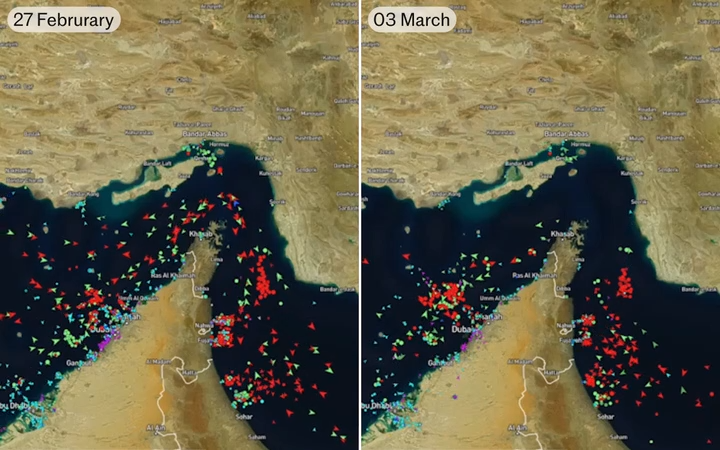
In recent days, Iran’s Islamic Revolutionary Guard Corps (IRGC) has asserted what it views as control over the strait and warned that any vessel attempting normal passage may be at risk of attack amid the ongoing war. Iranian leaders have publicly vowed to strike any ships trying to navigate the corridor if they consider them associated with hostile action, a stance that has effectively disrupted normal shipping flows and alarmed global markets.
The strategy reflects more than a symbolic gesture: by threatening or impeding passage through the Strait of Hormuz, Tehran can raise the stakes for the United States and force Washington into difficult tactical decisions. President Trump has responded by offering US Navy escorts for commercial tankers and political risk insurance for maritime trade in the Gulf, a move intended to reassure global markets and maintain the free flow of energy supplies. However, such escorts would place US naval assets directly in harm’s way, potentially creating opportunities for Iran to strike at American forces themselves.
Some analysts describe Iran’s approach as an attempt to turn the strait into what one commentator called a “death trap” — a theatre where Iranian missiles, drones, fast boats and even naval mines make any transit hazardous. In that scenario, by forcing the United States to defend commercial traffic, Tehran would draw US forces deeper into a contested maritime environment, increasing the risk of accidents, engagements or losses that could erode domestic support for the war and complicate Trump’s political position at home.
The threat to commercial shipping also has global economic ramifications. Energy markets reacted sharply to early stirrings of disruption, with Brent crude prices jumping and insurers raising premiums or withdrawing coverage for tankers in the Gulf. The effective disruption of vessel traffic has raised broader concerns about oil supply chains and financial volatility, particularly as the strait’s closure or even partial blockade would inject sustained uncertainty into global energy markets.
Historically, Iran has threatened to close or constrain the strait in response to geopolitical pressure — a tactic that balances strategic leverage against its own dependence on maritime exports. While imposition of a full blockade would have profound consequences for global trade and Iran’s own economy, Tehran’s willingness to intermittently disrupt the route underscores its broader approach to leveraging geography to offset conventional military disadvantages against superior US naval power.

The evolving dynamics in the Gulf suggest that the Strait of Hormuz will remain central to the conflict’s trajectory. For now, the combination of Iranian threats, disrupted shipping traffic and US efforts to protect commercial vessels highlights how control of this narrow passage could transform a regional dispute into a maritime flash point with global implications.
Related News:
 Months of Planning Behind US‑Israeli Mission to Target Iran’s Supreme Leader
 UK Will Allow US to Use Bases to Strike Iranian Missile Sites, PM Says
 Cooper: Joining US Strikes on Iran ‘Not in Britain’s Interest’
 What Khamenei’s Death Means for Russia and China
 Trump’s Iran Endgame Unclear After Mixed Messaging on War Aims
 Israel Launches Fresh Strikes on Tehran & Beirut; US Warns “Hardest Hits” Ahead
 Shock US Raid: Maduro Pleads Not Guilty in Manhattan Court
 UK and France Agree Troop Deployment Plan for Ukraine
 EU Weakens as Trump Targets Venezuela and Greenland
 Israel Dossier Sparks Australian Political Interference Concern
 Venezuela Oil Deal Opens Tensions with US Control
 US Citizens Warned to Venezuela Flee Amid Paramilitary Threats
 Gulf states warn Trump Iran strikes risk wider Middle East war
 Machado Trump medal gesture reshapes Venezuela power struggle
 Greenland defence seen as shared Nato duty amid troop arrivals
 Trump Receives Machado’s Nobel Medal in White House Meeting
 Iran unrest slows under brutal crackdown and global tensions
 Syria President Declares Victory as Ceasefire Reached with SDF
 US Considers Asylum for British Jews Amid Rising Antisemitism
 Russia Strikes Kyiv and Kharkiv as Peace Talks Enter Day Two
 Emails Show Epstein Funded Mandelson’s Husband After Jail
 Fears of New Arms Race as US-Russia Nuclear Weapons Treaty Expires
 US Military Says Two Killed in Strike on Alleged Drug Boat in Eastern Pacific
 Trump Endorses Japan’s Takaichi Ahead of Snap Election
 Venezuela’s Opposition Says Party Leader Kidnapped Hours After Being Freed
 Christchurch Shooter Seeks to Overturn Guilty Plea in Appeals Court
 US Says It “Supports” UK Chagos Islands Deal
 Iran Says ‘Guiding Principles’ Agreed With US at Nuclear Talks
 Ukraine Peace Talks End in Acrimony After Two Hours
 Leave Chagos Now, Britain Tells Returning Islanders
 Indian University Kicked Out of AI Summit for Claiming Chinese Robot Dog as Its Own Invention
 India Sentences Three Men to Death for Attack on Israeli Tourist and Hosts
 UK Has Not Given US Permission to Use RAF Bases for Iran Strikes
 Ukraine Negotiator Reveals What It Feels Like Facing Russia
 Mandelson Arrested Amid Political Turmoil as Ukraine Marks Four Years of Conflict
 Russian Troops Executed by Commanders, Soldiers Tell BBC
 Drugs, Denial, Stigma: Fiji’s HIV Crisis Hits Children
 Ukraine war briefing: Why Ukraine remains defiant and does not feel close to defeat
 ‘Anyone who runs is shot’: Russian soldiers describe killings of troops who refuse orders
 Ukraine remembers its dead as war enters a fifth year
 German Chancellor Lands in Beijing for Inaugural China Trip
 Cuba Kills Exiles in Speedboat Attack from US Waters
 ‘Fear Is Everywhere’: Reports From Mexican City Turned Into War Zone by Drug Cartel Feud
 Four Killed on US-Registered Speedboat Were Cuban Nationals, Cuba Says
 Canada Says U.S. Unlikely to Lift Tariffs Amid Ongoing Trade Tensions
 US ‘Suitcase Murderer’ Deported From Bali After 11 Years in Jail
 Orbán Accuses Ukraine of Disrupting Oil Supplies to Hungary
 Why Asian Firms Are Not Cheering Trump Tariff Ruling
 Why Asian Firms Are Not Cheering Trump Tariff Ruling
 Iran’s Regime Still Intact — Coming Days Will Test Its Survival
 Allies of US in the Gulf Bear Brunt of Iran Attacks
 Hopes and Fears as US Iranians Take to Streets After Toppling of Supreme Leader
 Retaliations Continue on Day Two of US-Israel Attacks on Iran
 Iran, the US, and a World Cup That Starts in Three Months
 Allies of US in the Gulf Bear Brunt of Iran Attacks
 Israeli Attacks Kill 31 in Lebanon, Iran Strikes Across Region, US Warplanes Crash in Kuwait
 In Maps: Strikes Across Iran and the Middle East
 Tehran Makes New Threat to Gulf Shipping as US Says ‘Hardest Hits’ on Iran ‘Yet to Come’
 Did Trump Declare War and Did Congress Approve Iran Attacks? What to Know
 The Third Day of the US‑Israeli War With Iran
 Why the US and Israel attacked Iran
 Three Days In, This War’s End Is Still Unclear
 US Has ‘Enough Weapons for Forever War,’ Trump Says
 At Least 169 Killed in South Sudan ‘Surprise’ Attack
 Israel Strikes Lebanon After Hezbollah Rocket Fire as Iran Conflict Widens
 Carney to Push His Middle Power Strategy During Australia Visit
 Amazon Says Drones Damaged Three Facilities in UAE and Bahrain
 Israel’s New Airstrikes on Tehran & Beirut After US Embassy in Riyadh Is Hit
 Israel Launches Ground Invasion of Lebanon Amid Widening Middle East War
 Iranian Rockets Are Testing the Resolve of Dubai’s Instagram Stars
 US Embassy in Riyadh Hit by Iranian Drones as Israeli Troops Enter Southern Lebanon
 US Strikes on Iran Triggered by Israel’s Plan to Launch Attack, Rubio Says
 Civilian Deaths in Iran Pass 700 Amid Fear of Bombs and Regime Clampdown
 US Senate Backs Trump War Powers Amid Iran Missile Barrage
 Russia Blames Ukrainian Naval Drones as Tanker Sinks
 Global Order Is ‘Breaking Down’, Carney Tells Australian Parliament
 US Submarine Sinks Iranian Warship in Indian Ocean, Hegseth Says
 Spain’s Sánchez Hits Back at Trump Threat to Sever Trade, Says ‘No to War’
 ‘Every Day Feels Like a Month’: Iranians Describe Life Under ‘Constant’ US‑Israeli Strikes
 How Depleted Weapons Stockpiles Could Affect the Iran Conflict