Published: 9 March 2026
The English Chronicle Desk
The English Chronicle Online — UK News
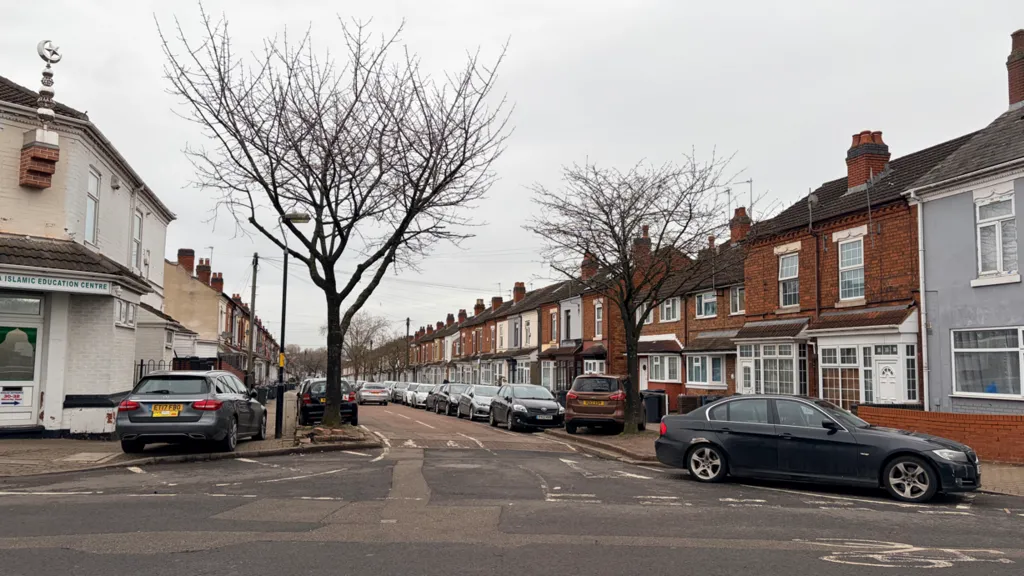
In the heart of Birmingham’s Small Heath, a daily battle is unfolding on narrow residential streets where cars line pavements, double‑park across driveways, and block entire rows of vehicles from moving. For many residents, what was once an occasional inconvenience has now become a relentless, exhausting struggle — one marked by confrontation, fear, and even damage to their vehicles.

“It’s horrendous,” says Yousef Hassan, who has lived in the area for years. Each morning, he steps outside unsure whether he will be able to drive to work. “If someone has double‑parked next to my car, blocking me in, I have to go door‑to‑door asking neighbours if it’s their car. Every day feels like a lottery.” His frustration is echoed across the neighbourhood, where residents say the situation has deteriorated sharply in recent years.
The densely populated district — surrounded by schools, shops, garages, and places of worship — has long struggled with congestion. But locals say the problem has now reached breaking point. Cars are routinely left on double‑yellow lines, abandoned for months, or parked so far onto pavements that pedestrians, wheelchair users, and parents with prams are forced into the road.
For one resident, who asked to be identified only as Pam, the issue has become frightening. Living next to a mosque, she says her family has repeatedly faced hostility when asking drivers not to block their car in. “We are the minority on our road, so when we have spoken to those blocking our car in, we’ve faced hostility and damage to our car,” she says. “It’s intimidating. You don’t know how people will react.”
Her experience is far from unique. Several residents told the BBC they had been shouted at, threatened, or ignored when confronting drivers. Others say they have stopped trying altogether, fearing escalation.
The problem is particularly acute during the school run. Shahista Zamir, head teacher at Regents Park Community School, describes the situation as “hazardous.” With cars double‑parked outside the gates, visibility is dangerously reduced. “Many pupils aren’t tall enough to be spotted by drivers,” she explains. “It means our children’s lives are put at risk.”
Parents share her concerns. Some say they have witnessed near‑misses involving young children forced to weave between parked cars. Others report that emergency vehicles have struggled to pass through the area during peak times.
For residents like Irfan Ali, the issue is not just inconsiderate parking but systemic neglect. He believes local garages and businesses are contributing to the congestion by leaving vehicles on residential streets for long periods. “Cars are always parked on double‑yellow lines and nobody comes around to issue any tickets,” he says. “There are cars that are abandoned and left here for months. It’s getting worse every year.”
Another resident, Sham, worries constantly about his elderly mother, who struggles to navigate pavements blocked by cars. “School children, parents with pushchairs, elders or those in wheelchairs are struggling to walk on pavements because they’re blocked, so they’re having to walk on the road, which is very dangerous,” he says.
The concerns are echoed by community activist Nav “Bearded Bey” Sadiq, who has repeatedly raised the issue with Birmingham City Council. He believes the situation reflects years of neglect. “If anybody is to blame, it’s not the people — you have allowed the people to do what they want to do,” he says. “When you allow people to do as they please, this is what you get.”
Residents say enforcement is sporadic at best. Many claim they rarely see traffic wardens, even in areas where double‑parking is rampant. Some believe that more affluent neighbourhoods receive greater attention, though the council strongly denies this.
Birmingham councillor Majid Mahmood insists the city is aware of the problem and is taking action. “Double parking is an issue we are aware of in a number of neighbourhoods, including Small Heath and Alum Rock,” he says. “We have powers to take enforcement action where a vehicle is parked more than 50cm from the kerb or is parked alongside another vehicle. Enforcement activity is prioritised based on reports, local intelligence and the level of risk to road users, not the affluence of an area.”
But for many residents, the response feels inadequate. They argue that without consistent enforcement, the situation will continue to spiral. Some have suggested introducing resident‑only parking zones, stricter fines, or increased patrols during peak hours. Others believe the council should work more closely with local businesses, schools, and places of worship to manage traffic flow.
Despite the frustration, there is still hope for a solution. Head teacher Shahista Zamir believes progress is possible if the community works together. “It’s important that we work with the local authority and organisations like the mosques, churches, football ground and supermarkets nearby to find a solution together,” she says. Something as simple as encouraging drivers to park slightly further away, she argues, could make a significant difference.
Residents agree that cooperation is key — but they also want to see meaningful action. Many feel they have been raising the alarm for years, only to watch the problem worsen. Some fear that without intervention, it is only a matter of time before a serious accident occurs.

For now, the streets of Small Heath remain a daily obstacle course. Cars sit inches from front doors, pavements are impassable, and tempers flare as residents navigate a landscape that feels increasingly lawless. The sense of community that once defined the area is being strained by frustration and fear.
“We just want to live normally,” says Pam. “We shouldn’t have to face hostility or damage to our cars just for asking people not to block us in. It shouldn’t be this hard.”
As Birmingham City Council reviews its enforcement strategy, residents hope that their voices — long drowned out by the noise of engines and arguments — will finally be heard.
Related News:
 Royal Mail Blames Poor Weather and Sickness for Delayed Deliveries
 Why There’s No Quick Fix in Sight for the Problem of Dazzling Headlights
 Labour Utterly Humiliated by Straight-Talking Mum Who Cut Through Keir Starmer’s Insanity
 Royal Family LIVE: ‘Pariah’ Andrew Mountbatten-Windsor Sparks Fresh Revolt Among Staff
 GMB Issues Bombshell Andrew Update Minutes Into Show as Furious Viewers ‘Switch Off’
 Possessions Stuck in Unsafe Flats Two Years On
 Tributes to Hospital’s First Black Ward Sister
 Renters Furious as Decent Homes Standard Delayed Until 2035
 The Victorian aristocrat who became Britain’s first Muslim lord
 UP IN FLAMES: Huge Blaze Rips Through Odeon Cinema, Students Evacuated
 Motorists Could Face ‘Mandatory’ Driving Ban for Road Offences Under Tougher Laws
 Disability and LGBT Hate Crimes Set to Become Aggravated Offences
 Snow and Rain Warnings as Cold Snap Continues in the UK
 Flooding May Worsen Before It Improves as More Rain Forecast for the UK
 Teacher Who Lied About Cambridge Degree Banned From Profession
 Illegal Skin Lightening Cream Being Sold in UK Butchers, Watchdog Warns
 ‘Just Push Us Into the Sea’: The Frustration of an Area Failed by Politics
 Last‑ditch Call to Save Police Front Counters in London
 Deaf Woman Killed After Night Out With Strangers, Court Hears
 Jet2 Hands Passengers Life Ban After Mid‑Air Brawl
 Adoption Breakdown Ended My Career and Relationship – ‘We’re Told to Get On With It’
 Britain’s Special Needs Spending Crisis Will Be Labour’s Ruin
 Sharron Davies Blames ‘Poor’ Motorway Sign for Speeding
 Break from Wintry Weather as UK Temperatures to Climb to 14 °C
 Two Teens Found Dead at East Yorkshire Holiday Park
 Dad Found in Bed with Daughter 16 Years After Abandoning Her as a Child
 Store at Famous Shopping Village to Close After 18 Years Due to Rising Costs
 I Confronted a Mugger with an 18-Inch Machete in London – No Wonder Tom Cruise is Leaving
 Tesco Announces New Rule for Customer Parking Spaces – ‘We Need These Everywhere!’
 UK-Bound Jet2 Flight from Spain Declares Mid-Air Emergency Over English Channel
 Fury as Jobless-Migrant Households Receive Benefits Worth £10bn – ‘We Need to End This’
 ‘Don’t Make Us Security Guards,’ Says Teacher Stabbed by Pupil
 Closing Factory Workers Paid to Help at Food Bank
 ‘We’ve Been Left Homeless After Our Builder Went Bust’
 Schools in England to Get Budget for Children with Special Needs as Part of SEND Overhaul
 Deer Shooting to Be Facilitated in England to Protect Woodlands
 What’s Next for Andrew Mountbatten-Windsor’s Ex-Wife, Sarah Ferguson?
 Mystery GP on Train Saves Passenger’s Life
 Men Come Forward to Pay £329 Restaurant Bill
 Only 10% of Boys Aged 14–16 Read Daily for Pleasure, National Literacy Trust Finds
 Karen Gillan Reveals What She Misses Most About Scotland’s Food and People
Storm Hernando: Edinburgh Airport Flights Cancelled in US Travel Chaos
Karen Gillan Reveals What She Misses Most About Scotland’s Food and People
Storm Hernando: Edinburgh Airport Flights Cancelled in US Travel Chaos
 BBC Apologises After Racial Slur Aired at BAFTAs by Guest With Tourette’s
 Sadistic Pair Jailed for Blowing Up Sheep
 ‘Mountain Rescue Gives Incredible Satisfaction’
 Will the New SEND Reforms in England Work? You Have Your Say
 Spring‑Like Warmth to Peak on Wednesday with 18 °C Forecast
 BBC Edited a Second Racial Slur Out of BAFTA Ceremony
 UK Winter Nowhere Near a Record Breaker Despite Floods and Storms
 UK Records Warmest Day of the Year as Temperatures Exceed 18 °C
 ‘I Stopped Engaging’ Due to Instagram and YouTube, Woman Tells Landmark Trial
 Grave of Murdered Toddler James Bulger Vandalised
 Outsiders Disrupted Search for Missing Teen Noah Donohoe
 ‘I Almost Died After a Touch‑and‑Go C‑Section’
 Conservation Budgets Hit by Increased Fly‑Tipping Costs
 “It Just Felt Right to Pay for Couple’s Shopping”
 How Responsible Are Climbers for Each Other’s Safety?
 Mayor Spends £20m to Encourage More Bus Trips
 Tipping Point Contestant Who Promised to Use Winnings on IVF Now Has Triplets
 After Decades of Decline, Why Welsh Male Voice Choirs Are Back
 Water Cremation Introduced in UK First
 Crowing Cockerels Must Be Silenced, Council Warns Owner
 Police Brothel Raids Target Organisers, Not Sex Workers
 Muslim Group Wants Mosques to Be Used as Polling Stations Ahead of UK Elections
 Calls Grow to Remove Billboard Following Lyra McKee Graffiti
 Why Aren’t Our Dirtiest Roads Getting Cleaned?
 South East Water Faces £22m Fine for Supply Failures Affecting Hundreds of Thousands
 Sisters Who Could Not Swim Drowned While Paddling in Snowdonia, Inquest Hears
 Yorkshire School Issues Warning Over Social Media Trend Targeting Pupils
 Manchester Students Mourn Ayatollah Amid Protest
 Scots Firefighter Cycles 800 Miles for MND Charity
 Woman, 29, ‘Chucked’ Into Care Home 100 Miles Away
 Family of Girl Groomed by Ian Huntley Beg Medics to Save His Life
 Sarah Everard’s Killer Wayne Couzens ‘Petrified’ After Ian Huntley Prison Attack
 Flats for the blind could be sold to developer
 Community farm appeal to cover thousands in repairs
 Sycamore Gap tree sapling takes root in Manchester
 Undercover officer deceived women with ‘grotesque and cruel’ lies, spycops inquiry told
 Gran Vows to Shield Huntley’s Daughter From Soham Killer’s Funeral