Published: 13 March 2026. The English Chronicle Desk. The English Chronicle Online.
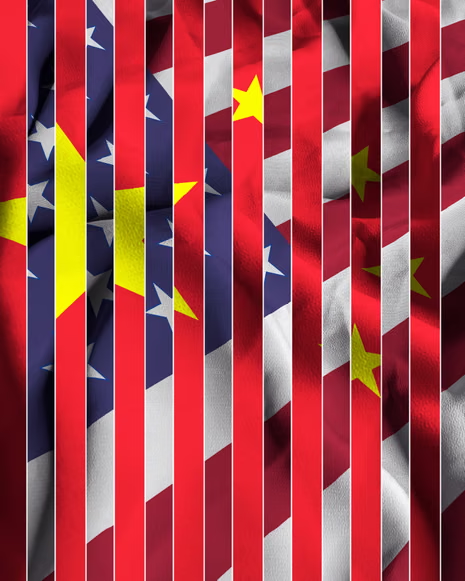
The global landscape of cultural perception is currently undergoing a very dramatic and fascinating transformation. For many decades, the United States stood as the ultimate beacon of global soft power and success. This image of prosperity reached every corner of the world, especially within the borders of China. However, a new and much darker concept known as the kill line is now trending. This term has captivated millions of social media users across the various Chinese digital platforms lately. It represents a perceived threshold in Western society where the middle class suddenly falls into ruin. While Americans once looked down upon Chinese poverty, the roles are starting to reverse quite rapidly.
On one side of the digital divide, Western youth are currently embracing a trend called Chinamaxxing. This movement involves young people in the UK and US adopting traditional Chinese lifestyle habits daily. They are filming themselves drinking hot water and wearing comfortable indoor slippers for their online followers. These creators often use the viral slogan that they are in a very Chinese era. This lighthearted trend suggests a growing fascination with the perceived stability of Eastern cultural practices. It stands in stark contrast to the grim reality described by the kill line narratives. These stories paint a picture of American life as a volatile and dangerous struggle.

In the world of competitive gaming, a kill line marks the point of total player elimination. Chinese netizens have now repurposed this phrase to describe the systemic risks of living abroad. They believe that one medical bill or job loss can trigger a permanent downward spiral. This narrative suggests that the American social safety net has completely vanished for regular people. Such ideas are spreading like wildfire across platforms like Weibo and the popular RedNote app. These posts often feature videos of homeless individuals who once held very high-paying corporate jobs. They serve as a warning to Chinese citizens about the hidden dangers of Western capitalism.
One particularly viral video claimed to show a former American executive living on the streets. Interestingly, fact-checkers later discovered the footage was actually filmed in London several years ago. Despite such inaccuracies, the core message of the kill line resonates deeply with the public. Even official state media outlets in China have begun to adopt this specific terminology. They use it to highlight what they call the structural economic fragility of the West. This represents a significant shift from the aspirational views held during the late twentieth century. Back then, many Chinese families viewed the United States as a land of golden opportunity.
The re-election of Donald Trump and ongoing trade tensions have fueled this change in perspective. Many Chinese commentators argue that the balance of global power is shifting toward the East. They point to the rising rates of homelessness in major American cities as definitive proof. According to recent statistics, homelessness in the US reached a record high during the last year. This data provides plenty of ammunition for those promoting the kill line theory online. It allows the Chinese government to present its own system as a much safer alternative. They emphasize the importance of family support and social stability within their own borders.
However, some experts believe this trend is a clever way to mask domestic issues. China is currently facing its own set of economic challenges, including high youth unemployment rates. By focusing on the kill line abroad, the government can distract citizens from local struggles. This psychological comfort helps maintain social order during times of sluggish economic growth at home. It creates a sense of relief that things could be much worse elsewhere in the world. Nationalistic bloggers have found that criticizing the West is a very lucrative way to gain followers. They provide a steady stream of content that validates the fears of their large audience.
Despite the heavy propaganda, many Chinese people see a grain of truth in these dark reports. They watch videos of urban decay in California and feel a genuine sense of alarm. The idea that a successful person can lose everything overnight is a terrifying thought. To them, the kill line represents the ultimate failure of a purely individualistic society. They contrast this with the collective strength and traditional values found in their own country. Meanwhile, the Chinese government is actively promoting tourism to show off its modern, safe cities. They want the world to see China as a bastion of order and progress.
Western influencers are often invited to tour the country and share their positive experiences online. They showcase high-speed trains, vibrant night markets, and the general ease of daily life there. This helps to bolster the image of China while the US reputation takes a hit. The contrast between the kill line fears and the Chinamaxxing joys is incredibly sharp. It shows how two powerful nations are currently struggling to define their roles on stage. One is dealing with internal social decay while the other manages its rising global influence. This digital tug-of-war reflects the deep complexities of modern international relations and media.
Some brave Chinese writers have attempted to criticize this wave of extreme anti-Western nationalism lately. They argue that obsession with the kill line does not actually solve any local problems. These critics suggest that such content is merely a temporary distraction from real economic pain. However, their essays are often quickly removed by censors to maintain the official state narrative. The government prefers that the public remains focused on the perceived failings of foreign rivals. This ensures that the domestic population remains loyal and appreciative of the current political leadership. It is a powerful tool for maintaining control in a rapidly changing world.

The term kill line has even made its way into high-level diplomatic circles recently. At recent international forums, Chinese journalists have questioned Western officials about this specific social phenomenon. These officials often appear confused by the term, not realizing its massive online popularity. This disconnect shows how differently the two cultures are now processing information and reality. While one side sees a temporary economic dip, the other sees a terminal decline. The stories we tell about each other define the future of our global interactions. For now, the narrative of Western fragility continues to dominate the Chinese internet space.
Ultimately, the rise of the kill line meme signals a new era of global competition. It is no longer just about military might or economic output between these giants. It is about which society can provide a better and more stable life. As young people in the West look East for lifestyle inspiration, the East watches. They see a cautionary tale of what happens when a society loses its social cohesion. Whether these perceptions are entirely accurate or not matters less than their profound cultural impact. The world is watching this unfolding drama through the tiny screens of their mobile phones. Both nations are fighting to control the story of the twenty-first century right now.
Related News:
 Britain deploys RAF specialists to assist Belgium with drone threats
 Night after night, Belgium is on high alert.
 Hitler’s DNA Confirms He Truly Had Only One Testicle
 Ukraine to Get 100 French Rafale Jets in Historic Deal
 Poll Reveals China Leads World in Trusting AI Technology
 US Clears Nvidia AI Chip Sales to China in Policy Shift
 UK New Car Discounts Near £6,000 as Prices Are Slashed
 Anthropic AI Refuses Pentagon’s Safety Demand
 Social Media Trial: Woman Says Addiction Began at Six
 Brady Tkachuk Denies AI Video Claims After Olympic Gold
 Musk’s xAI Permit Sparks Fury Over Power Plant Expansion
 Google at 27: The Untold Story of Ruth Kedar, the Woman Behind the Iconic Logo
 Virgin Trains Moves Closer to Challenging Eurostar Monopoly
 UK Bans Fake Numbers: Scammers Lose Their Trick
 Vibe coding’ named Collins dictionary’s word of the year
 Patients to Test Health at Home to Ease NHS Winter Pressure
 BBC to Apologise Over Edited Trump Speech Amid Backlash
 Palace May Restore Hyphen to Andrew Mountbatten-Windsor’s Name
 Northern Lights may illuminate UK skies this week
 New AI tool could cut wasted efforts in organ transplants
 Greene Pushes Epstein Files Amid Trump Fallout
 December Run-Off in Chile as Election Produces No Winner
 Zelenskyy Signs Fighter Jet Deal Amid Russian Drone Attacks
 Orban Says Ukraine Has ‘No Chance’ as EU Support Continues
 Canada Passes Carney’s First Budget in Tight Parliamentary Vote
 Sundar Pichai Cautions on AI Hype and Market Risks
 Google Chief Urges Caution: Don’t Trust AI Blindly
 Shadow Fleet at Sea: Europe’s Battle Against Illicit Oil Shipping
 Tiny Curacao Makes History as Smallest Nation to Reach World Cup
 Deadly Russian Strikes Hit Western Ukraine, 20 Killed in Ternopil
 Ukraine Peace Plan: Zelensky Ready for Dialogue
 Royal Navy Shadows Russian Warships Entering the Channel
 US Suspends Afghan Immigration After White House Shooting
 Two National Guard Soldiers Critically Injured Near White House
 Georgians Defy Government Crackdown After Year of Protests
 Tokyo court rules Japan’s same-sex marriage ban constitutional
 ‘Extinct’ Antelope Returns to Sahara, Bringing Hope
 American Mother Extradited From UK to U.S. on Murder Charges
 Russia losses Ukraine war peace talks intensify amid rising deaths
 Facebook Slow to Remove Bondi Attack Praise, Anti-Hate Group Claims
 US Cities Erupt in Protests Against Trump’s Venezuela Military Action
 Albanese Opens Door to Bondi Royal Commission Amid Rising Pressure
 Gulf states warn Trump Iran strikes risk wider Middle East war
 Astronomers Prepare for First-Ever Movie of a Black Hole
 EU weighs response amid Greenland tariff crisis with Trump
 Sydney Shark Attack Surge Shocks Australia Beaches
 EU Says US Ties Have Suffered ‘Big Blow’ After Greenland Crisis
 Pornhub blocks new UK users over age checks dispute
 Videos reveal earlier clash before Alex Pretti shooting
 AI breast screening cuts later cancer diagnoses by 12%, study finds
 Israel Moves to Bar MSF From Gaza Operations
 Most Statin Side-Effects Are Not Caused by Drugs, Study Confirms
 Portugal Election Delivers Socialist Win as Far Right Surges
 BT Names New Openreach Chief Amid Major Fibre Expansion
 Tech Trends Set to Transform Life in 2026
 Australian Families Leave Syrian Camp for Home
 Indian University Kicked Out of AI Summit for Claiming Chinese Robot Dog as Its Own Invention
 Andrew Arrest Sparks Republic Debate in Australia
 How Do You Modernise Mango Farming? India’s Growers Urged to Innovate as Climate Change Hits
 Musk Cuts Starlink Access for Russian Forces – Giving Ukraine an Edge at the Front
 Farage Chagos Islands Row Sparks Fury
 Stewart Brand on Musk, Bezos and a Life of Long Thinking
 Hilary Knight speaks out on Trump’s recent hockey remarks
 Has Europe truly learned from the failures of 2022?
 Trump Faces Questions Over Iran Conflict Plan
 Iran Civilian Deaths Surge Past 200 Amid Fear
 Herzog Asio meeting sparks security storm
 Trump rebukes Starmer over Iran strikes
 Iran-Iraq border airstrikes spark new tensions
 Petrol Prices Soar as Retailers Accused of Gouging Amid Global Tension
 Penny Wong silent on Australian crew in sub strike
 Australians on US Submarine in Iranian Warship Strike
 Oil Prices Surge Above $100 Amid Iran War
 India T20 World Cup Triumph Seals Historic Title Defence
 Trump Pressures Congress Over Save America Act
 Iranian Football Squad Asylum Drama Shocks Australia
 Goma Drone Attack Kills Three as Conflict Escalates
 Queensland Protest Laws Spark Free Speech Backlash
 Social Media Giant Trial Reaches Final Jury Decision
 Eswatini Deal Sparks Global Outcry Over US Deportations