Published: 16 March 2026. The English Chronicle Desk. The English Chronicle Online.
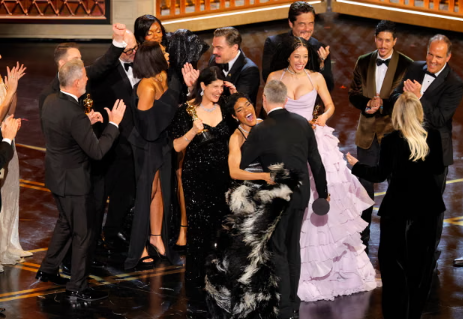
The Oscars 2026 ceremony delivered drama, celebration, and history as Hollywood honoured the year’s finest films. The night belonged largely to One Battle After Another, an ambitious and energetic film directed by Paul Thomas Anderson. After months of awards speculation and intense competition, the production secured six major trophies at the ceremony. The sweeping victory confirmed the film as the clear standout of the Oscars 2026 season.
The big-budget comedy thriller takes inspiration from Thomas Pynchon’s novel Vineland, blending satire with political reflection. Critics praised its sharp storytelling and complex characters, while audiences admired its bold visual style. Those qualities helped the film secure the most significant recognition of the evening, including the prestigious best picture award.
Paul Thomas Anderson, long admired for films like Boogie Nights, There Will Be Blood, and Phantom Thread, finally achieved long-awaited Oscar success. Despite numerous nominations over decades, he had never previously won the famous golden statue. The Oscars 2026 ceremony changed that narrative in spectacular fashion.
Accepting his first award of the evening, Anderson reflected thoughtfully on the film’s inspiration and message. He explained that the story grew from his reflections about the world younger generations will inherit. In a heartfelt moment, he said he wrote the film partly as an apology to his children. The director expressed hope that future generations would restore what he called “common sense and decency” to society.

One Battle After Another collected honours across multiple categories, reinforcing its status as a creative powerhouse. Alongside best picture and best director, the film also secured awards for supporting actor, adapted screenplay, editing, and casting. The casting award held particular significance because it was presented for the first time in Oscar history. Industry professionals had campaigned for decades to recognise casting directors for their essential contributions.
Sean Penn won the supporting actor prize for his commanding role in the film. The victory marked the third Oscar of his long and influential acting career. However, Penn did not attend the ceremony, leaving presenter Kieran Culkin to accept the moment alone. Culkin jokingly remarked that Penn “couldn’t be here tonight or didn’t want to,” drawing laughter from the audience.
Although Anderson’s film dominated the night, another production remained a major presence throughout the ceremony. The period vampire drama Sinners entered the Oscars 2026 race with a record-breaking sixteen nominations. That achievement made it the most nominated film in Academy Awards history.
While it did not match the winning tally of One Battle After Another, the film still achieved impressive success. Sinners secured four major awards, including best actor, original screenplay, original score, and cinematography. The recognition confirmed the film’s powerful impact across multiple creative disciplines.
Michael B Jordan delivered one of the evening’s most emotional speeches after winning best actor. His performance in Sinners had already earned widespread critical praise during the awards season. At the Oscars 2026 ceremony, that acclaim translated into his first Academy Award victory.
Standing on stage, Jordan spoke warmly about the artists who inspired his journey. He reflected on the achievements of Black performers who paved the way for his generation. During the speech, he named several previous Black Oscar winners, expressing gratitude for their influence. His win made him the sixth Black actor to receive the best actor award.
Director Ryan Coogler also celebrated a landmark moment with the film’s original screenplay victory. He became only the second Black filmmaker ever to win the award. The first was Jordan Peele, who famously won for Get Out in 2018. Coogler used his speech to highlight the dedication of his cast and crew.
At one point, he invited the entire cast of Sinners to stand in recognition. He told them they were all winners in his eyes, regardless of trophies. The director also apologised to his children for time spent away during the demanding production schedule.
Another remarkable milestone came through cinematographer Autumn Durald Arkapaw. Her work on Sinners earned the award for best cinematography. The historic victory made her both the first female winner and the first Black recipient in the category’s history. Her achievement was widely celebrated across the film industry and social media.
Elsewhere during the ceremony, Jessie Buckley captured the best actress award for her powerful performance in Hamnet. The Shakespeare-inspired drama was directed by acclaimed filmmaker Chloé Zhao. Buckley’s emotionally rich portrayal captivated audiences and critics throughout the awards season.
The actor’s victory also carried historical significance for Ireland. Buckley became the first Irish performer ever to win the Oscar for best actress. In her speech, she described the award as “the greatest honour” of her career. She dedicated the moment to what she called “the beautiful chaos of a mother’s heart.”
Veteran performer Amy Madigan won best supporting actress for her chilling role in the horror hit Weapons. The award arrived nearly four decades after her first Oscar nomination in 1986. That gap established a new record for the longest time between nominations before a win. The achievement created one of the evening’s most inspiring narratives.
International cinema also received strong recognition during the Oscars 2026 ceremony. Norwegian director Joachim Trier won best international feature film for the moving family drama Sentimental Value. The victory marked the first time Norway had ever secured this prestigious award.
Trier appeared visibly emotional while accepting the prize before a global audience. He described himself simply as a film enthusiast from Norway who loved storytelling. Near the end of his speech, he referenced writer James Baldwin while discussing responsibility toward future generations. The comments highlighted broader social concerns that echoed throughout the ceremony.
The documentary category also carried strong political themes this year. The award went to Mr Nobody Against Putin, a film examining resistance within Russia’s education system. The story follows a teacher challenging strict government policies imposed inside his school.
Co-director David Borenstein used the acceptance speech to deliver a powerful message about civic responsibility. He argued that silence during injustice allows authoritarian systems to grow stronger. According to Borenstein, individuals always face a moral choice when confronting oppression.
Animation also enjoyed a landmark moment during the Oscars 2026 broadcast. The animated fantasy KPop Demon Hunters, produced by Netflix, won both animated feature and original song. The film had already become Netflix’s most watched release worldwide before the ceremony.
Director Maggie Kang spoke passionately about representation during her acceptance speech. She apologised to viewers who waited years to see characters like themselves on screen. Kang dedicated the victory to Korea and Koreans living around the world.
The film’s winning track Golden achieved an additional milestone. It became the first K-pop song ever to win an Academy Award. The victory reflected the continuing global influence of Korean entertainment and culture.
Another Netflix production also celebrated a successful evening at the Oscars 2026 event. Guillermo del Toro’s ambitious adaptation of Frankenstein collected three awards. The film won prizes for production design, costume design, and makeup and hairstyling.

Technical categories featured victories for several blockbuster productions. Avatar: Fire and Ash secured the award for visual effects. Meanwhile, the racing drama F1 earned recognition for its immersive and dynamic sound design.
The ceremony even included a rare tie in the live action short category. Two films shared the award, marking only the seventh tie in Oscar history. The last time such a result occurred was in 2012 during the sound editing category.
Hollywood studios also monitored the ceremony closely for signs of industry momentum. Warner Bros enjoyed a particularly strong evening with eleven awards across multiple films. The achievement represented the studio’s biggest Oscar success since Argo won best picture in 2013.
Comedian Conan O’Brien returned as host for the second consecutive year. He opened the ceremony with a humorous pre-recorded sketch referencing several nominated films. At one moment he joked that he might become the final human host of the Oscars.
Throughout the evening, O’Brien blended satire with commentary about the current global climate. He described the world as chaotic and sometimes frightening, yet filled with creative possibility. According to the host, the Oscars remain meaningful because artists continue striving for hope and progress.
By the ceremony’s closing moments, the impact of the Oscars 2026 celebration felt unmistakable. Historic achievements, emotional speeches, and powerful storytelling shaped an unforgettable night. Above all, the triumph of One Battle After Another confirmed the enduring power of bold and imaginative filmmaking.
Related News:
 UK Banks Granted Reprieve as BoE Delays Basel III Capital Rules Until 2028
 England Grapples with Unprecedented Bluetongue Virus Outbreak: Entire Nation Declared Infected Zone
 Whether You Win or Lose, Some Fights Are Worth Fighting’: The Unlikely Origins of the Largest-Ever Climate Case
 Tragedy Strikes Sylhet Airport: Technician Killed in Boarding Bridge Wheel Explosion
 Singapore Corruption Scandal: Details Emerge on Iswaran’s Luxury Flight and Ties to Tycoon Ong Beng Seng
 100 children from Gaza seek evacuation to the UK for critical medical treatment
 A Budget Crossroads: Stammer Faces Pressure as £50bn Fiscal Hole Threatens Autumn Plans
 Corfu Beyond the Crowds: Discovering Serenity in Southern Villages and Hidden Taverns
 Peter Andre Praises Son Junior’s ‘Quiet Season’ Amid Ongoing Family Dispute
 Massive 641-Mile Storm Set to Batter UK with 15 Hours of Rain and Strong Winds
 Jeremy Clarkson’s Pub: A Sunday Lunch Like No Other
 Scottish Government Mandates Single-Sex Toilets and Changing Facilities in Schools
 Reeves Faces Setback as Labour May Miss Homes Target
 Kate Winslet to Narrate Film Highlighting King’s Environmental Mission
 Trump’s UK Ambassador Urges North Sea Drilling to Strengthen US Ties
 UK Bans Fake Numbers: Scammers Lose Their Trick
 Vibe coding’ named Collins dictionary’s word of the year
BBC to Apologise Over Edited Trump Speech Amid Backlash
Vibe coding’ named Collins dictionary’s word of the year
BBC to Apologise Over Edited Trump Speech Amid Backlash
 Millionaires group urge Reeves to introduce wealth tax to ‘lift kids out of poverty’
 Reeves rejects £1bn plea for NHS redundancy payouts
 PM Condemns Leaks, Vows Loyalty to Ministers and Stability
 Phillipson Accused of Appeasing Unions by Diluting EBacc
 Saka Solidifies Role as Tuchel’s Key England Lieutenant
 Greene Pushes Epstein Files Amid Trump Fallout
 Zelenskyy Signs Fighter Jet Deal Amid Russian Drone Attacks
 Sundar Pichai Cautions on AI Hype and Market Risks
 Shadow Fleet at Sea: Europe’s Battle Against Illicit Oil Shipping
 Snow and Ice Cause Travel Chaos in North Yorkshire
 Director Michael Caton-Jones Reflects on Career and Beginnings
 Inside the Helpline Protecting Missing Children in the UK
 PlayStation PS5 Deals Hit Lowest Prices Ahead of Black Friday
 US Suspends Afghan Immigration After White House Shooting
 Five-Year-Old Dies After Rare Tonsil Surgery Complication
 Starmer Says Labour’s Economic Plan Needs Years to Deliver
 ‘Extinct’ Antelope Returns to Sahara, Bringing Hope
 IndiGo Cancels Hundreds of Flights Amid Pilot Shortages
 Young Britons Face Heaviest Burden from Ageing Population, Lords Warn
 U‑Turn on Farmers’ Inheritance Tax Sparks Political Firestorm
 Khaleda Zia Death in Bangladesh: First Female PM Dies at 80
 Children to Receive Home Vaccines as England Acts
 GMB Union Faces Turmoil Amid Female Leaders’ Claims
 MoJ Prison Leasing Scandal Triggers £100m Public Cost
 Cambridge College Faces Backlash Over Private School Recruitment
 Bereaved Fathers Gain New Paternity Leave Rights in UK
 Minnesota Sues Trump Administration Over ICE Surge
 US Senate rejects resolution limiting Trump military powers
 Woman Jailed for Life After Killing E-Bike Rider in Tragic Mistaken Identity Case
 Sydney Shark Attack Surge Shocks Australia Beaches
 No Gas Boiler Ban as UK Warm Homes Plan Backs Heat Pumps
 Sussan Ley leadership milestone shakes Liberal future
 Police response times face strict new national limits
 Devon hosts first high-density hydro power system
 Pornhub blocks new UK users over age checks dispute
 US Dollar Hits Four-Year Low Amid Market Turmoil
 Salford Attempted Robbery Sees 95-Year-Old Woman Tied Up
 AI breast screening cuts later cancer diagnoses by 12%, study finds
 UK New Car Discounts Near £6,000 as Prices Are Slashed
 Police Doubt Fugitive Dezi Freeman Survived Bushland
 Pneumonia Surge Pushes England Emergency Cases Higher
 Most Statin Side-Effects Are Not Caused by Drugs, Study Confirms
 Julia Donaldson Reveals New Character and Title for Third Gruffalo Book
 Australia’s Opposition Coalition Reunites After Rift
 Portugal Election Delivers Socialist Win as Far Right Surges
 Send spending gap leaves deprived areas behind
 Australian Families Leave Syrian Camp for Home
 Civil Service Pay: Union Urges Ministers to End ‘Barking Mad’ Limits
 UK Job Vacancies Hit Five-Year Pandemic Low
 UK Youth Unemployment Surges Amid Tax Changes
 Half of Britons Avoid GP When Ill, Survey Reveals Growing Concern
 Russian Trade Routed Through British Islands Exposed
 Stewart Brand on Musk, Bezos and a Life of Long Thinking
 Hilary Knight speaks out on Trump’s recent hockey remarks
 Mother Says ‘I Hugged My Daughter’s Killer’ as They Cried Together in Prison
 Penny Wong silent on Australian crew in sub strike
 Thousands Protest Iran Strikes Outside US Embassy London
 UK Oil and Gas Supplies Reassured Amid Middle East Concerns
 Trump Pressures Congress Over Save America Act
 Goma Drone Attack Kills Three as Conflict Escalates
 Queensland Protest Laws Spark Free Speech Backlash
 Social Media Giant Trial Reaches Final Jury Decision