Published: 16 March 2026. The English Chronicle Desk. The English Chronicle Online.
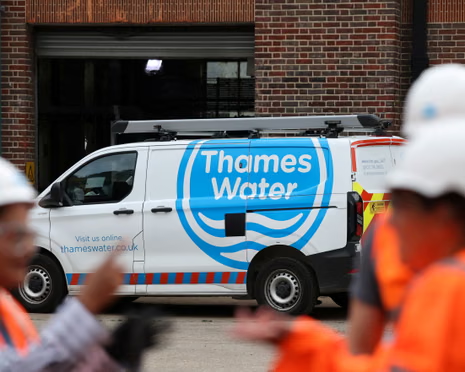
The future of Britain’s largest water supplier has taken a significant turn this week with a massive proposal. Lenders have stepped forward with a substantial ten billion pound rescue plan designed to save the struggling utility giant. This ambitious strategy aims to address the deep financial crisis that has plagued the company for several years. The core of the proposal involves paying off hundreds of millions in fines related to leaks and pollution. By clearing these debts, the investor group hopes to stabilize the firm and prevent a total collapse. This move comes at a critical time for the utility sector across the United Kingdom and Europe. Stakeholders are watching closely as the company navigates through these incredibly complex and difficult financial waters. The Thames rescue plan represents a major effort by private equity firms to maintain corporate control.
A consortium of investment groups and private equity firms has pledged a significant injection of fresh capital. They intend to provide about three billion pounds in cash while raising nearly seven billion in debt. This financial restructuring is specifically designed to avoid a government-handled administration process for the utility firm. Such an administration would essentially result in a temporary nationalisation of the massive water supplier’s operations. Avoiding this outcome is a top priority for the senior creditors who currently hold the debt. They believe that private management remains the most viable path forward for the utility’s long-term health. The proposed Thames rescue would also impact the sixteen million customers living in south-east England today. While water bills are already set to rise sharply until 2030, this plan offers some stability. It aims to hold rates at currently projected levels rather than allowing them to climb higher.

The company has been struggling under the immense weight of seventeen billion pounds in total debt. Much of this financial burden has been built up over many decades since the industry was privatised. In recent years, the firm has effectively been under the control of its primary group of lenders. These creditors include well-known American hedge funds such as Elliott Management and the firm Silver Point Capital. These investors stepped in more heavily after previous shareholders decided to pull their support back in 2024. The supplier has also faced constant criticism regarding its poor environmental record and frequent sewage leaks. These incidents have sparked widespread public anger and led to heavy fines from various regulatory bodies. Public trust in the utility has reached an all-time low following years of high-profile service failures. The Thames rescue proposal seeks to rebuild some of that lost confidence through financial transparency.
Under the new terms, the lenders have committed to paying all existing environmental fines in full. They also plan to make an upfront payment to cover any potential future failures in performance. This proactive approach is intended to satisfy the demands of the industry regulator known as Ofwat. However, the company will still remain subject to any new fines for future pollution or leaks. Both Ofwat and the Environment Agency will continue to monitor the firm’s daily operations very closely. The success of the Thames rescue depends heavily on receiving official approval from these powerful regulatory boards. Part of the deal involves wiping out thirty percent of the debt owed to senior creditors. This sacrifice is seen as a necessary step to ensure the company stays in private hands. Junior creditors, however, would see their investments wiped out entirely under the terms of this deal.
Investors will also face strict limitations on how they receive any returns from the water company. The rescue package mandates that no dividends will be paid to shareholders until at least 2035. This restriction follows a previous eighteen million pound fine for breaking rules regarding dividend payments to investors. The company had paid out cash despite failing to meet environmental and service standards for its customers. By banning dividends, the lenders hope to prove they are prioritizing infrastructure and service over private profit. Furthermore, the consortium has promised that customers will share in any future profits if the firm is sold. This unusual clause is designed to align the interests of the public with those of the investors. Such a move could help soften the blow of the rising bills expected over the next decade. The Thames rescue remains a gamble on the long-term efficiency of the private water model.
The scale of the task ahead is immense given the company’s recent ranking by the Environment Agency. Last year, the utility was named the worst performing water company in the whole of England. Sewage pollution reached a new peak, causing significant damage to local rivers and the wider environment. This environmental crisis has been highlighted recently in the popular Channel Four television drama titled Dirty Business. The show told the troubling story of how private firms have contaminated Britain’s precious natural waterways. This media attention has kept the pressure on the government to take much more decisive action. Many activists are still calling for full nationalisation despite the new ten billion pound private offer. They argue that the Thames rescue might only be a temporary fix for a systemic problem. Nevertheless, the lenders believe their capital can transform the company’s outdated and failing infrastructure.
Negotiations regarding the future of the firm have dragged on for many months without a final resolution. The company has survived lately by tapping into an emergency fund of three billion pounds in loans. This funding was secured through court approval last year during a previous moment of extreme financial distress. The lender group includes traditional investment names like Aberdeen and Insight Investment alongside the US hedge funds. Their diverse interests make reaching a unanimous agreement on the path forward quite a difficult process. The environment secretary, Emma Reynolds, must also give her formal blessing to the proposed rescue package. Other regulators, including the Drinking Water Inspectorate, will also have a say in the final decision. The Thames rescue plan is currently being scrutinized for its technical feasibility and its long-term sustainability. Everyone involved understands that the stakes for the region’s water security could not be higher.

A spokesperson for the lender consortium, known as London and Valley Water, expressed optimism about the plan. They noted that the proposal follows many constructive discussions and detailed feedback from the industry regulators. The plan is specifically designed to return the company to full regulatory compliance as quickly as possible. It also aims to provide clear accountability for reducing the frequency of harmful sewage spills in rivers. This deal is the latest in a series of attempts to prevent a special administration regime. A previous attempt to buy out the company by the firm KKR failed just last June. The board of the water company has cautioned that there is still no certainty of success. They stated that no final decision has been made by the board or the relevant committees. The Thames rescue is currently just a proposal that must pass through several more rigorous tests.
Ofwat has confirmed that it is reviewing the plans carefully to assess their overall impact on service. The regulator wants to ensure the deal strengthens financial resilience for the benefit of all local customers. They are also looking for a guaranteed turnaround in the company’s operational and environmental performance levels. The next few weeks will be crucial as the various parties deliberate on the massive financial offer. If accepted, the deal would represent one of the largest private bailouts in British corporate history. It would mark a definitive attempt to fix the legacy of debt that has crippled the utility. For now, the sixteen million people who rely on the service must wait for a final answer. The Thames rescue remains the most significant hope for avoiding a government takeover of the water supply.
Related News:
 Yorkshire Water Funding Sparks Debate Amid Fines and Pay Row
 Reeves Faces Setback as Labour May Miss Homes Target
 Trump’s UK Ambassador Urges North Sea Drilling to Strengthen US Ties
 Court Hears Challenge Over Water Bills Funding Sewage Fixes
 ABF May Split Primark from Food Division Amid Tough Market
 Rachel Reeves Set to Break Labour Pledge and Raise Income Tax
 UPS Cargo Plane Crash in Kentucky Kills Seven
 M&S Profits More Than Halve After Cyber-Attack
 Tony Blair think tank warns Rachel Reeves must cut taxes if manifesto broken
 Oprah enjoys Meghan’s jam on English muffins
 MPs Press Rachel Reeves to Hike Gambling Taxes
 North Sea oil workers must lose weight or face job loss
 Warning as Britons prepare to spend £4 billion this Black Friday
 Millionaires group urge Reeves to introduce wealth tax to ‘lift kids out of poverty’
 UK toy market enjoys bumper year as ‘kidults’ fuel demand
 Global markets drop amid tech sell-off and China slowdown
 PM Highlights UK Business at G20 in South Africa
 Mossmorran Plant Closure Hits Cowdenbeath Hard
 UK Taskforce Unveils Plan to Streamline Nuclear Reactor Rules
 Steel billionaire Lakshmi Mittal reportedly leaves UK
 Starmer Says Labour’s Economic Plan Needs Years to Deliver
 Virgin Media Fined £23.8m Over Telecare Safety Failures
 Rising Water Bills Lift Troubled Thames Back to Profit
 Sainsbury’s CEO leads business honours in New Year list
 Norfolk Coastal Graves at Risk as Erosion Deepens Family Anguish
 UK Car Sales Pass 2 Million as Chinese Brands Surge
 3,000 Jobs at Risk Without UK Helicopter Order
 Storm Goretti leaves Cornwall homes without power
 China Dependence Threatens UK Energy Supply Chains and Jobs
 ScottishPower Tops List of Worst UK Energy Suppliers
MPs warn AI financial risks threaten UK stability
ScottishPower Tops List of Worst UK Energy Suppliers
MPs warn AI financial risks threaten UK stability
 MPs warn AI financial risks threaten UK stability
 City & Guilds pay surge sparks backlash amid £22m cuts
 No Gas Boiler Ban as UK Warm Homes Plan Backs Heat Pumps
 Judi Dench Champions Fight to Save London’s Green Spaces
 UK joins North Sea wind grid pact with nine European nations
 UK Disposable Income Growth Transforms Eleven Towns and Cities
 Devon hosts first high-density hydro power system
Storm Chandra floods Somerset, triggers major incident declaration
Devon hosts first high-density hydro power system
Storm Chandra floods Somerset, triggers major incident declaration
 Labour Must Revive High Streets to Avoid Election Collapse
 Households in England Face Rising Water Bills in April
 UK New Car Discounts Near £6,000 as Prices Are Slashed
 Study Finds One in Seven England Takeaways Are Dark Kitchens
 Riverford sales surge as UK organic market booms
 UK Pfas Action Plan Faces Criticism From Environmentalists
 Wigan Dump Crisis Sparks Health and Safety Alarm
 Barclays drops Global Counsel after Mandelson link scrutiny
 Norway’s Petrol Car Sales Hit Record Low Amid EV Surge
 Elliott Takes LSEG Stake, Pressures Strategy Shift
 UK Housing Market Shows Early Recovery Signs
 UK economy struggles as growth stalls at 0.1% in late 2025
 Aberdeen Chosen for GB Energy HQ at Marischal Square
 Bank of England Urged to Cut Rates to Spur Growth
 Santos Wins Landmark Greenwashing Case in Court
 Royal Mail Blames Poor Weather and Sickness for Delayed Deliveries
 UK Unemployment Rate Climbs to 5.2% Peak
 British Steel wins Turkey rail boost
 UK Inflation Surprise Sparks Early Rate Cut Hopes
 Deer Shooting England: New Plan to Protect Woods
 Illegal Waste Dumping: New Drone Unit Launched
 UK Sees Record £30.4bn Budget Surplus, Boosting Reeves’ Position
 UK Job Vacancies Hit Five-Year Pandemic Low
 UK Youth Unemployment Surges Amid Tax Changes
 Ministers Urged to Ban Crypto Political Donations
 Strong Rebound for UK Housing Market Sees 6% More Homes
 Group Expands Legal Claim Over South West Water Pollution
 Scotland’s Climate Plans Face Scrutiny Over ‘Science Fiction’ Targets
 Reeves Must Back Defence Plan or Face Dismissal, Says Unite Chief
 Doom Bar Closure Stuns Cornish Brewing Fans
 John Lewis Cancels £500m Build-to-Rent Project
 Switching Energy Deal Can Save £200 as Price Cap Falls
 OBR Reform Row Deepens Before Spring Forecast
 UK house prices rise as market steadies
 Wood burner legal threats spark council row
 Caffè Nero Warns Coffee Prices May Rise Again
 Net Zero Cheaper Than One Fossil Fuel Crisis, UK Told
 John Lewis bonus returns after four years as profits rise
 London Considers New SUV Charges to Improve Road Safety
 UK Pushes NHS and MoD to Buy British Tech
 Wealthy Britons Flee Gulf War but Avoid UK Taxes