Published: 16 March 2026. The English Chronicle Desk. The English Chronicle Online.
The landscape of European finance is currently witnessing a historic and high-stakes drama as two titans clash. Italy’s second-largest lender UniCredit has significantly intensified its long-standing pursuit of the German banking giant Commerzbank today. This massive banking takeover attempt has now reached a critical boiling point within the continental markets. The Milan-based institution recently increased its stake to nearly thirty percent of the German firm’s shares. This aggressive move has triggered intense discussions across the financial hubs of London, Milan, and Frankfurt. Market analysts are watching closely as the potential merger could create a dominant European banking force. However, the path toward this union remains fraught with significant political and corporate hurdles lately.
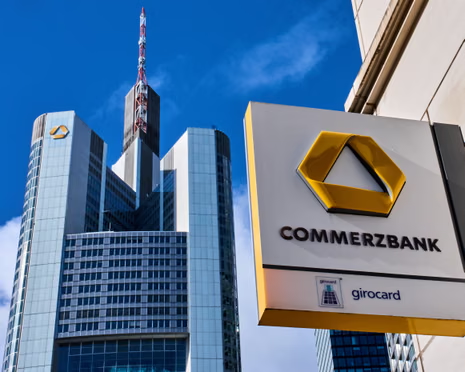
The German government remains a steadfast opponent of this massive and unsolicited multi-billion euro acquisition. Officials in Berlin have consistently voiced their desire for the domestic lender to remain independent. This stance stems from the bank’s vital role in supporting the nation’s unique economic structure. Commerzbank serves as the primary lender to the Mittelstand, which represents the country’s small businesses. These family-owned enterprises form the very backbone of the largest economy within the European Union. A shift in ownership to an Italian firm could disrupt these essential lending relationships significantly. Consequently, the German state continues to hold a twelve percent stake in the Frankfurt-based institution.
This state holding dates back to the global financial crisis that occurred during late 2008. At that time, the government injected billions of euros to save the bank from total collapse. This historical intervention has given the German leadership a powerful voice in all future proceedings. Former leaders previously described the early actions of UniCredit as a direct and unfriendly attack. The current administration under Chancellor Friedrich Merz maintains a similarly cautious and protective view of the bank. They believe that a domestic merger or continued independence serves the national interest much better. This political wall presents the most significant challenge to UniCredit’s ambitious and strategic growth plans.

UniCredit has officially proposed a share swap that values the target bank at thirty billion euros. This offer implies a price of over thirty euros for every single share of Commerzbank. The Italian lender argues that this combination would be a sensible and highly pragmatic measure. They believe the merger will create a much more competitive player on the global stage. Furthermore, the bank’s leadership has signaled a strong willingness to build bridges with all stakeholders. They hope to move past the “cliff-edge” of German law regarding mandatory takeover bids today. By making a formal offer, they intend to foster much more constructive engagement moving forward.
The board of the German lender has historically resisted these advances with considerable and vocal strength. They have spent several years restructuring their operations to improve profitability and maintain their market share. The bank employs approximately forty thousand people across forty different countries around the globe currently. Its deep roots in German history date back to its founding in the year 1870. For many in Germany, the bank is a symbol of national stability and corporate identity. Losing control of such an institution to a foreign entity remains a very sensitive issue. Trade unions have also expressed deep concerns about potential job losses following a full merger.
UniCredit is no stranger to the German market, as it already owns HypoVereinsbank in Munich. This existing presence gives the Italian group a solid foundation for further expansion within the country. They argue that their experience managing a German subsidiary makes them the ideal partner here. The group has successfully returned to profitability after facing its own challenges during the financial crisis. Its leadership remains confident that a unified entity would deliver superior value to all shareholders. They expect to launch the formal offer to the public at the start of May. This timeline follows a crucial shareholder meeting where they seek official approval for the bid.
Other major global investors are also playing a significant role in this developing corporate saga. BlackRock currently holds a stake of nearly six percent in the targeted German financial institution. Additionally, the sovereign wealth fund of Norway maintains a three percent holding in the bank’s equity. These institutional investors will eventually decide if the Italian offer provides enough financial incentive to sell. Their support is essential for any banking takeover to succeed in the modern financial world. If the majority of shareholders favor the deal, the German government might face increasing pressure. The tension between market dynamics and national sovereignty is becoming more evident with every passing day.
The European Central Bank is also monitoring the situation with a very keen and professional eye. Regulators generally favor the creation of larger, cross-border banks to strengthen the entire eurozone’s stability. They believe that a more integrated banking sector can better withstand future global economic shocks. However, they must also ensure that any new entity does not become too large. The balance between fostering competition and maintaining financial safety is a very delicate task indeed. Analysts suggest that this specific case will set a major precedent for future European mergers. If UniCredit succeeds, it may trigger a wave of similar consolidations across the entire continent.
Market reaction on Monday showed a notable rise in the share price of the target. Investors seem to be betting on a higher final offer or a successful acquisition. The financial world is essentially witnessing a chess match between Milan, Frankfurt, and Berlin. Each move is calculated to gain leverage in what has become a very public battle. UniCredit’s chief executive has been praised by some for his bold and decisive strategic vision. Others criticize the aggressive nature of the pursuit in a region that values consensus. The clash of corporate cultures is as significant as the financial figures involved here.
The outcome of this banking takeover will have far-reaching implications for the future of Europe. It tests the limits of the single market and the strength of national economic protections. If the deal fails, it may discourage other firms from attempting large cross-border acquisitions. If it succeeds, the European banking landscape will be forever changed by this new giant. The coming weeks will be filled with intense negotiations and high-level political maneuvering. Both banks are preparing for a long and potentially arduous struggle for corporate control. The English Chronicle will continue to provide detailed updates as this fascinating story unfolds.

As the deadline for the formal offer approaches, the rhetoric is expected to intensify further. Commerzbank is likely to seek alternative strategies to maintain its cherished and long-held independence. This could involve seeking a “White Knight” or proposing its own defensive corporate maneuvers. Meanwhile, UniCredit must convince the German public that it is a reliable and supportive owner. The battle for the hearts and minds of the German Mittelstand has just begun. This is more than just a financial transaction; it is a test of European unity. Every stakeholder is now preparing for what could be the most significant merger of the decade.
In conclusion, the eyes of the global financial community remain fixed on this developing situation. The banking takeover represents a turning point for how business is conducted within the European Union. Whether through a friendly agreement or a hostile acquisition, change is certainly coming to Frankfurt. The resilience of the German banking sector is being tested like never before in history. UniCredit’s persistence suggests they are not willing to walk away from this opportunity easily. We are witnessing the birth of a new era in the history of finance. The final chapter of this epic corporate battle has yet to be written.
The strategic importance of this move cannot be overstated for the Italian banking group’s future. Success would propel them into the top tier of global financial institutions by total assets. For Germany, the stakes involve the very future of its industrial and commercial lending sector. The banking takeover remains a polarizing topic that divides economists and politicians across the region. As the May deadline nears, the pressure on all parties involved will only grow. It is a story of ambition, national pride, and the pursuit of economic scale. Only time will reveal who will emerge victorious in this grand European struggle.
Related News:
 Global markets face turmoil as Hormuz crisis deepens
 UPS Cargo Plane Crash in Kentucky Kills Seven
 US private equity set to acquire UK online retailer Very Group
 Switzerland Rolls Out Charm Offensive to Cut Trump’s 39% Tariffs
 Canada Passes Carney’s First Budget in Tight Parliamentary Vote
 India’s Labour Law Overhaul Sparks Fierce Debate
 Carney’s Alberta Pipeline Deal Sparks Immediate Pushback
 Austrian Airlines Halts Tehran Flights Amid Political Unrest
 Mark Carney Walks Diplomatic Tightrope on China Visit
 Wall Street shaken by Trump tariff shock as markets tumble
 ‘Black Tax’: Burden, Pride and Survival for African Workers
 UK New Car Discounts Near £6,000 as Prices Are Slashed
 Coles Discounts Under Fire in Federal Court
 Trump Tower Gold Coast to Redefine Skyline
 Rory Amon Trial: Alleged Victim Speaks in Court
 Oil Prices Surge as Iran War Jolts Markets
 Gulf shipping crisis as war risk cover pulled
 Gulf shipping crisis sparks food price fears
 Oil Prices Surge Above $100 Amid Iran War
 G7 Weighs Emergency Oil Reserves as Prices Surge
 Brazil Floods Warning as Scientists Urge Fossil Fuel Exit
 Asia Scrambles to Confront Energy Crisis Amid Iran War
 The Truth Behind Rising Energy Costs and Fossil Fuel Myths
 Wealthy Britons Flee Gulf War but Avoid UK Taxes
 China’s crackdown on civil servant perks sparks economic concerns
 Shein UK Faces Allegations of Shifting Majority of Profits to Singapore to Reduce UK Tax
 Reeves Faces Setback as Labour May Miss Homes Target
 Virgin Trains Moves Closer to Challenging Eurostar Monopoly
 Trump’s UK Ambassador Urges North Sea Drilling to Strengthen US Ties
 Ryanair Chief UK Economy ‘Doomed’ Under Labour
 M&S Profits More Than Halve After Cyber-Attack
BBC to Apologise Over Edited Trump Speech Amid Backlash
M&S Profits More Than Halve After Cyber-Attack
BBC to Apologise Over Edited Trump Speech Amid Backlash
 Britain deploys RAF specialists to assist Belgium with drone threats
 Palace May Restore Hyphen to Andrew Mountbatten-Windsor’s Name
 Millionaires group urge Reeves to introduce wealth tax to ‘lift kids out of poverty’
 From Lego to Pokémon: How Adults Are Driving UK Toy Market Growth
 Greene Pushes Epstein Files Amid Trump Fallout
 December Run-Off in Chile as Election Produces No Winner
 Zelenskyy Signs Fighter Jet Deal Amid Russian Drone Attacks
 Shadow Fleet at Sea: Europe’s Battle Against Illicit Oil Shipping
 Tiny Curacao Makes History as Smallest Nation to Reach World Cup
 US Suspends Afghan Immigration After White House Shooting
 Georgians Defy Government Crackdown After Year of Protests
 Starmer Says Labour’s Economic Plan Needs Years to Deliver
 ‘Extinct’ Antelope Returns to Sahara, Bringing Hope
 American Mother Extradited From UK to U.S. on Murder Charges
 Facebook Slow to Remove Bondi Attack Praise, Anti-Hate Group Claims
 FTSE 100 Hits 10,000: UK Market Celebrates Record Year
 Albanese Opens Door to Bondi Royal Commission Amid Rising Pressure
 US Clears Nvidia AI Chip Sales to China in Policy Shift
 Gulf states warn Trump Iran strikes risk wider Middle East war
 EU weighs response amid Greenland tariff crisis with Trump
 Sydney Shark Attack Surge Shocks Australia Beaches
 EU Says US Ties Have Suffered ‘Big Blow’ After Greenland Crisis
 US Dollar Hits Four-Year Low Amid Market Turmoil
 Videos reveal earlier clash before Alex Pretti shooting
 Israel Moves to Bar MSF From Gaza Operations
 Portugal Election Delivers Socialist Win as Far Right Surges
 BT Names New Openreach Chief Amid Major Fibre Expansion
 Australian Families Leave Syrian Camp for Home
 Andrew Arrest Sparks Republic Debate in Australia
 Farage Chagos Islands Row Sparks Fury
 UK Job Vacancies Hit Five-Year Pandemic Low
 UK Youth Unemployment Surges Amid Tax Changes
 Strong Rebound for UK Housing Market Sees 6% More Homes
 Bill Gates ‘Took Responsibility’ Over Epstein Ties in Staff Meeting, Foundation Says
 Hilary Knight speaks out on Trump’s recent hockey remarks
 Has Europe truly learned from the failures of 2022?
 Switching Energy Deal Can Save £200 as Price Cap Falls
 Trump Faces Questions Over Iran Conflict Plan
 Iran Civilian Deaths Surge Past 200 Amid Fear
 Herzog Asio meeting sparks security storm
 Trump rebukes Starmer over Iran strikes
 Iran-Iraq border airstrikes spark new tensions
 Petrol Prices Soar as Retailers Accused of Gouging Amid Global Tension
 Penny Wong silent on Australian crew in sub strike
 Australians on US Submarine in Iranian Warship Strike
 Trump Pressures Congress Over Save America Act
 Goma Drone Attack Kills Three as Conflict Escalates
 Queensland Protest Laws Spark Free Speech Backlash