Published: 16 March 2026. The English Chronicle Desk. The English Chronicle Online.
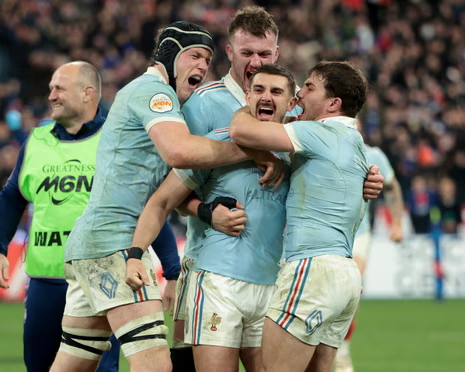
The front page of L’Équipe captured the collective mood with a simple two-word headline: “So Crazy.” This succinct summary did not just apply to the dizzying blur of the final match in Paris. It perfectly reflected the entire 2026 Six Nations championship which has left fans absolutely breathless with excitement. Wales managed to beat Italy who then defeated a very strong Scottish side in Rome. Scotland went on to beat France who then overcame the might of Ireland lately. Ireland eventually beat England who had previously managed to secure a gritty victory against Wales. Rugby is truly a strange and wonderful game that defies any logical prediction or form.
Perhaps that is the single biggest takeaway from this most extraordinary Six Nations of them all. We should spare a thought for those trying to rationalise six weeks of total madness. Many people are likely staring blankly at their breakfast while trying to make sense of it. The world’s oldest championship still manages to refresh parts that other sporting events cannot reach. Amidst the heavy news about player health and finances, we often overlook this timeless truth. Any sport that leaves everyone wanting more must be doing something right for the fans. Saturday provided exhilarating proof that Test rugby played at full throttle is a compelling spectacle.
Those who feared a lack of jeopardy in the early rounds were proved entirely wrong. France have now won back-to-back titles which is a truly massive achievement for their squad. They will certainly be the favourites when the next tournament cycle begins in the new year. However, the glaring difference now is that the rest of the field has improved. Wales earned their first win in three years which brought tears to many fans. Italy deservedly put away both England and Scotland during their impressive run of home form. Ireland’s last-day performance was every bit as impressive as their earlier authoritative triumph at Twickenham.

Scotland claimed a top-half finish with three eventful wins that showcased their creative attacking flair. Then there is the England team who finally showed what happens when they play rugby. One revealing snapshot was the ten-phase attacking set that ended with a brilliant team try. The play was slick and purposeful while showing a level of skill previously missing. Could this be the same team that was unable to escape first gear recently? In fairness, they were not the only squad that displayed a very split personality. Ireland were barely at the races on the opening night before thundering back later.
How did Scotland lose in Rome and then perform so brilliantly against England shortly after? The explanation for these wild swings in performance often lies purely between the cauliflower ears. Rugby is a technical game but it is fundamentally shaped by raw human emotion. This happens to be Andy Farrell’s great strength as a head coach for Ireland. Big Faz knew his older players would not benefit from playing five straight games. Resting key players against Italy ensured their freshness for the subsequent battles in the tournament. Gregor Townsend also deserves credit for staying calm under immense pressure from the national media.
He was canny enough to conjure fabulous wins over England and France with tactical precision. He even managed a comeback win in Wales with some help from the match officials. Saturday night in Paris also had a sprinkling of impactful decisions from the refereeing team. Steve Borthwick will likely be raising several points with World Rugby in the coming days. He was particularly unhappy when a penalty advantage was belatedly changed to a simple knock-on. This happened just as the ball was kicked away prior to a French counterattack. It was a significant twist in a game that was already full of them.
There was also late confusion when players were penalised for a high tackle and knock-on. This caused a long delay before the all-important final kick was taken by Thomas Ramos. It was not hard to appreciate the deep angst felt by the England camp. They were pipped by a last-gasp Ramos howitzer in Lyon only two years ago. Ireland would have snatched the title had the visitors clung on for the win. If they are honest, England will recognise they are hostages to a game. The ability to think straight in chaotic closing stages is becoming an invaluable asset.
Small strategic misjudgments often lead to big ramifications when the clock is ticking down fast. Ramos and Louis Bielle-Biarrey displayed a level of individual mastery that others could not match. Their goal-kicking and try-scoring ability were the difference between winning and losing the trophy. France might be flawed champions in some respects given their recent defensive record lately. No team has ever conceded so many points and still hoisted the silverware aloft. However, they possessed the sniper’s aim and rapier pace for that not to matter. This clinical edge is what separates the best from the rest of the pack.
We must also consider the consistent excellence of players like Stuart McCloskey and Jamison Gibson-Park. The purring Scottish backline and Italy’s anthem-roaring centurions added so much color to the event. Rhys Carré’s prop idol try for Wales in Dublin was another highlight for the viewers. The entire Super Saturday smorgasbord left audiences spoilt for choice from the beginning to end. Having the highest aggregate try count in a championship season was a welcome bonus. There was a conspicuous lack of drab mismatches which kept the global audience engaged. All hail the mighty Six Nations which remains as unpredictable as it ever was.

Statistical analysis of the tournament reveals some fascinating trends regarding the diversity of the modern game. For instance, the current demographic makeup of professional rugby in the UK is shifting significantly. Recent data suggests that approximately 14% of professional players in the English Premiership identify as being from ethnically diverse backgrounds. This is a notable increase from a decade ago when the figure sat at 8%. In the French Top 14, the influence of Pacific Island heritage is even more pronounced. Roughly 20% of players in the top French division have roots in Fiji, Samoa, or Tonga.
These numbers highlight how the sport is evolving beyond its traditional roots into something global. The 2026 championship saw players from over fifteen different nations of birth representing the six core teams. This melting pot of talent contributed to the high skill levels seen in every round. It is this diversity of style and background that fuels the excitement of the Six Nations. When different cultures and sporting philosophies clash on the pitch, the result is usually pure magic. Fans from every background can see themselves reflected in the heroes wearing the national jerseys. This representation is vital for the continued growth of the game in urban areas.
As we look toward the future, the health of the championship seems more robust than ever. The television viewing figures for this year rose by 12% across all major European markets. Digital engagement on social platforms reached a record high during the final weekend of play. It seems the “crazy” nature of the results is exactly what the public wants. We crave the drama of the unknown and the thrill of the underdog victory. Rugby delivers this in spades, provided the teams are willing to take creative risks. The 2026 edition will be remembered as the year that logic finally went out the window.
Related News:
 Sarr Double Sinks Young Liverpool in Carabao Cup
 Nwaneri and Saka Secure Arsenal Win Over Brighton
 Salah & Gravenberch Lead Liverpool to Win Against Villa
 Dyche Criticises Corner Decision as Forest Draw with United
 Granit Xhaka Rescue Earns Everton Draw at Sunderland
 Burn and Joelinton Head Newcastle to Victory Over Bilbao
 Tension and Turmoil at Aston Villa v Maccabi Match
 Bellingham has ‘the edge’ among England No 10s
 Man City Masterclass on Guardiola’s Milestone Day Exposes Liverpool Woes
 Lando Norris Dominates Brazil GP to Strengthen F1 Title Bid
 England cannot afford to be in awe of the All Blacks, warns Jamie George
 VAR Must Rein Its Neck In to Save Football’s Spirit
 Trescothick Hints Pope Will Keep Number Three Spot
 Ronaldo Confirms Final World Cup and Plans Retirement
 Mary Earps’s Manchester United Return Faces Mixed Reception
 Sam Kerr Stars in Chelsea Return with Champions League Double
 This kid is something else: Alex Scott’s rise to England call-up
 UK and Ireland Announce Venues for Euro 2028 Tournament
 Saka Solidifies Role as Tuchel’s Key England Lieutenant
 Former Lion Heskey Warns of Shortage of England Strikers
 Australia Mourns Paralympic Champion Paige Greco
 Irish Hero Parrott Says Goal Brought First Tears in Years
 From heartbreak to glory: Scotland’s dramatic return to the World Cup
 Tiny Curacao Makes History as Smallest Nation to Reach World Cup
 Haiti Qualifies for World Cup Despite Coach Never Visiting Country
 Barcelona Returns to Camp Nou vs Athletic Bilbao
 Moyes Defends Gueye After Dramatic Everton Bust-Up
 Mbappe Scores 4 as Real Madrid Edge Olympiakos
 Man City Lose, Champions League Risk
 Jac Morgan to Miss Six Nations Start After Surgery
 Alexander Isak ends drought as Liverpool stop rot with win at West Ham
 Barcelona, Atletico set for decisive La Liga showdown
 Maxwell withdraws from IPL 2026 after 13 seasons
 Mbappe stars as Real Madrid thrash Athletic, close on Barca
 Australia Face Big Changes as Cummins and Lyon Ruled Out of Ashes
 Van de Ven Tackle Leaves Isak with Fractured Leg
 City Set to Land Semenyo After Chelsea Exit from Transfer Race
 Arrizabalaga Sends Arsenal Through in Dramatic Shootout
 ECB powerless to halt England’s recurring Ashes failures
 Stokes urges empathy for England players amid Ashes struggles
 Damien Martyn in Induced Coma After Meningitis Diagnosis
 Spin Bowling Struggles as Pace Dominates 2025 Ashes Series
 Anthony Joshua Released After Nigeria Car Crash
 Chelsea Sack Looms: Enzo Maresca Relationship Collapses
 Africa’s Superpowers Shine in Cup of Nations Quarter-Finals
 Amorim’s United Future Uncertain Amid Wilcox Tension
 Raducanu Battles Injury as Britain Exit United Cup
 Australia Dominates England: Smith, Head Crush Bowlers in Sydney
 Australian Open Prize Money Hits Record $111.5m
 Nick Kyrgios Faces Singles Struggles at Brisbane Tennis Return
 Nottingham Forest Deny West Ham in Dramatic Late Win
 Manchester United Fan Group Targets Jim Ratcliffe Over Club Chaos
 Morocco sail into Afcon semis after Díaz inspires win
 Wrexham stun Nottingham Forest with Okonkwo FA Cup heroics
 Salah Shines as Egypt Knock Out Ivory Coast at Afcon
 Israeli fans ban questioned after Dutch police dispute evidence
 Geopolitical football: Iran, Trump and the World Cup clash
 Regragui condemns Afcon final chaos after dramatic defeat
 Brahim Díaz’s Panenka Fail Highlights Penalty Risks
 ‘A long time coming’: US table tennis finds its moment
 Mbappé’s Late Penalty Lifts Real Past Nine-Man Rayo
 Women’s FA Cup Could Introduce Seeded Teams from Last 32
 Yamal and Rashford Shine as Barcelona Reach Copa Semis
 Newcastle fans face bleak reality under Saudi ambitions
 ‘Scrutiny and Pressure on Irish Has Reached New Level’ — Rugby Faces Brutal Spotlight After France Defeat
 Hugo Ekitike Becomes Liverpool’s New Cult Hero
 ‘We’re like a family here’: Habib Diarra thrives at Sunderland
 Infantino Faces Russia Threat and Trump Concerns at Uefa Congress
 Hilary Knight speaks out on Trump’s recent hockey remarks
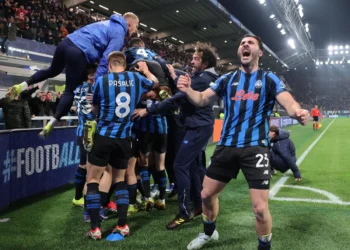 Champions League Thrills as Atalanta and Galatasaray Advance
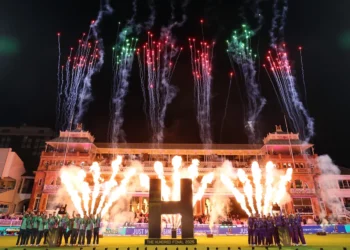 English Cricket Faces Moral Crisis Over Indian Investment
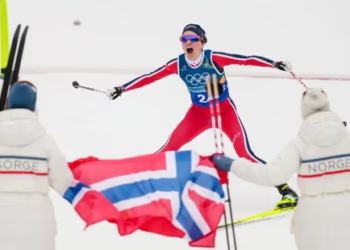 The Norwegian Secret to Dominating the Winter Olympics
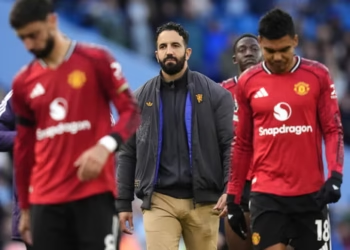 Manchester United Face Huge Bill After Ruben Amorim Exit
 Birmingham City Owners Eye Expansion Into Rugby Union
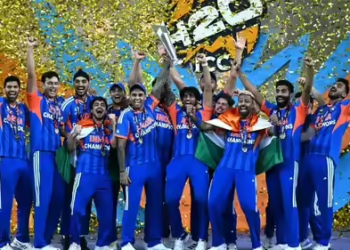 India T20 World Cup Triumph Seals Historic Title Defence
 Port Vale Shock Sunderland in Historic FA Cup Win
 Abramovich Chelsea Sale Cash Faces Jersey Probe
 Cho Stuns Forest as Midtjylland Triumph in the Rain
 Crystal Palace Face Fresh Frustration Against Larnaca
 Iranian Captain Departs Australia Amid Asylum Tension