Published: 16 March 2026. The English Chronicle Desk. The English Chronicle Online.
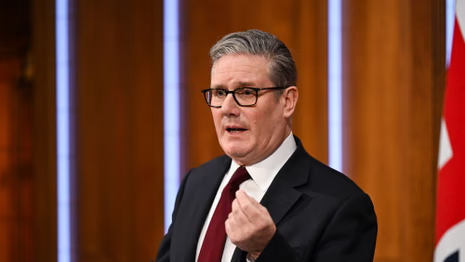
Prime Minister Keir Starmer has delivered a firm message regarding the UK’s military stance. He stated that the nation will not be drawn into the wider war now. This commitment comes as the government prepares to offer financial aid to struggling British households. Families relying on heating oil will soon receive a share of fifty-three million pounds. This support aims to offset the rising costs caused by the ongoing Iran conflict. The Prime Minister emphasized that protecting citizens from financial hardship remains a top priority. He spoke with a sense of urgency about the current global energy crisis. Lower-income households are expected to be the primary beneficiaries of this new funding. Starmer warned that any heating oil suppliers found price gouging would face legal action. The government is prepared to introduce strict market regulations to ensure fair pricing.
At a recent press conference, the Prime Minister addressed concerns about future energy caps. He did not rule out further government intervention if energy costs continue to rise. However, he admitted that predicting oil price trends is currently a very difficult task. Starmer believes that de-escalating the Middle East conflict is the most effective long-term solution. While some allies suggest a larger military presence, the UK remains cautious and measured. Donald Trump has called for international ships to help reopen the Strait of Hormuz. This move would aim to unblock global oil supplies and stabilize the volatile market. So far, the international response to this specific request has been notably quiet. Starmer told reporters that he is currently looking through all the available options. He acknowledged that the decisions ahead for the British government are incredibly difficult.
 The UK is considering sending mine-hunting drones to assist in the Middle East region. This action would be part of a viable plan to reopen shipping lanes. High energy prices will likely persist if these vital maritime routes remain blocked. Starmer is currently discussing these naval strategies with partners in the United States. He is also consulting with Gulf partners and European allies to find balance. The Prime Minister insisted that any action taken would be purely for defense. He reiterated that the UK will not be drawn into the wider war. This statement addresses growing public concern over the prospect of a long conflict. Starmer expressed his desire to see an end to the fighting very quickly. He noted that a prolonged war only increases the danger for everyone involved. Furthermore, the conflict continues to negatively impact the cost of living in Britain.
British ministers have expressed some alarm over the current lack of a peace plan. They are looking for a clear strategy from the United States to end fighting. Starmer reminded the public that a negotiated settlement is the only ultimate goal. He is facing significant pressure to provide more help with domestic energy bills. The current energy price cap is set to finish at the end of June. New price levels will be announced by the government during the month of May. Gas and electricity bills are expected to see a sharp increase very soon. If the conflict in Iran lasts longer, these prices could rise even further. Starmer noted that his natural instinct is to support those who are struggling. He refused to pretend that he knows the economic situation in six months. The best path forward involves reducing the conflict to help the British public.
The Prime Minister also took the time to highlight his commitment to renewables. Investing in green energy will give the UK more control over its supply. Starmer wants the nation to move further and faster toward energy independence. This strategy would protect the country from volatile global markets and price spikes. Many citizens want to stop worrying about their bills going up and down. The government aims to reach a position of energy security as quickly possible. Starmer believes that domestic energy production is the key to long-term economic stability. He promised that the UK will not be drawn into the wider war. By focusing on home-grown power, the UK can distance itself from overseas turmoil. This transition is seen as a vital step for the nation’s future.
Public anxiety regarding the Middle East has reached a peak in recent weeks. Many voters are worried about the potential for a new and costly intervention. Starmer’s rhetoric is designed to provide a sense of calm and domestic focus. He is balancing the need for international security with the needs of workers. The fifty-three million pounds for heating oil is a significant first step. It targets a specific group that often feels forgotten by standard energy caps. The Prime Minister is aware that more support may be needed by autumn. He is keeping all financial options on the table to protect the economy. The English Chronicle understands that further relief packages are currently being drafted behind closed doors.
The geopolitical situation remains fluid as diplomatic efforts continue at the highest levels. Starmer is maintaining a constant dialogue with the Foreign Office and defense chiefs. They are monitoring the Strait of Hormuz for any signs of further escalation. The UK’s potential use of drones is seen as a low-risk strategy. It allows for the clearing of mines without putting many lives at risk. This technical approach aligns with the Prime Minister’s desire for a limited role. He is determined to avoid the mistakes of previous long-term foreign conflicts. The focus remains on maritime safety rather than active combat in the region. Stability in the shipping lanes would provide immediate relief to global oil markets.
Back in London, the political opposition is watching Starmer’s moves with a critical eye. Some argue that the proposed energy support does not go far enough yet. They point to the rising costs of food and transport as additional burdens. Starmer maintains that his approach is fiscally responsible while being compassionate to all. He is wary of making promises that the Treasury cannot keep later. The upcoming announcement in May will be a major test for his leadership. Millions of people will be looking for a sign of financial stability. The Prime Minister insists that de-escalation abroad is the fastest way to help. By avoiding a larger fight, the UK can focus its resources elsewhere.

The transition to renewable energy is also a major part of this narrative. Wind and solar power are being touted as the ultimate shield against war. Starmer believes that the Iran conflict proves the danger of fossil fuel reliance. He wants to accelerate the construction of new offshore wind farms immediately. This would create jobs while also lowering the average household energy bill. The government is looking for ways to streamline the planning process for projects. This would allow green infrastructure to be built much faster than before. Starmer’s vision is a Britain that is both peaceful and self-sufficient. He believes this is the only way to ensure lasting national security.
As the 16th of March progresses, the world remains focused on the Middle East. The Prime Minister’s words have been received with cautious optimism by the markets. Oil prices showed a slight stabilization following his call for diplomatic de-escalation. The UK will continue to play a role on the world stage. However, that role will be defined by diplomacy and the protection of trade. Starmer is making it clear that British boots will not be on ground. This stance is likely to be popular with a weary British public. They are more concerned with their own heating than with distant battles. The Prime Minister has successfully tied foreign policy to the kitchen table. He understands that the two are now more linked than ever before.
In conclusion, the government is walking a very thin line in 2026. They must support their allies while keeping the UK out of combat. They must also manage an economy that is sensitive to global shocks. The promise of fifty-three million pounds is a welcome relief for many. But the shadow of the Iran conflict still looms over the country. Starmer’s leadership will be judged on his ability to maintain this peace. He remains hopeful that a negotiated settlement can be reached in due time. Until then, the focus stays on energy security and protecting the vulnerable. The UK will not be drawn into the wider war at any cost. This is the promise that Keir Starmer has made to the nation.
Related News:
 Tories Push to Dilute Labour’s Workers’ Rights Bill
 Wales May Introduce Four-Day Work Week After Elections
 Trump’s UK Ambassador Urges North Sea Drilling to Strengthen US Ties
 Rachel Reeves Set to Break Labour Pledge and Raise Income Tax
 Thinktanks Urge Rachel Reeves to Reform UK Tax System
 Company linked to Michelle Mone owes £39m in tax
MPs Press Rachel Reeves to Hike Gambling Taxes
Company linked to Michelle Mone owes £39m in tax
MPs Press Rachel Reeves to Hike Gambling Taxes
 Cuts to home insulation funding threaten UK climate goals
 Millionaires group urge Reeves to introduce wealth tax to ‘lift kids out of poverty’
 Canada Passes Carney’s First Budget in Tight Parliamentary Vote
 PM Highlights UK Business at G20 in South Africa
 English Mayors Set to Introduce Tourist Taxes
 India’s Labour Law Overhaul Sparks Fierce Debate
 Carney’s Alberta Pipeline Deal Sparks Immediate Pushback
 Starmer Says Labour’s Economic Plan Needs Years to Deliver
BBC bosses ‘right to stick by their guns’ against Trump, says minister
Starmer Says Labour’s Economic Plan Needs Years to Deliver
BBC bosses ‘right to stick by their guns’ against Trump, says minister
 Closer EU Trade Ties ‘Strategic Necessity’ for UK Firms
 Austrian Airlines Halts Tehran Flights Amid Political Unrest
 Starmer links foreign trips to tackling cost of living crisis
 Mark Carney Walks Diplomatic Tightrope on China Visit
 Government Unveils Northern Powerhouse Rail Plans
 China Dependence Threatens UK Energy Supply Chains and Jobs
 MPs warn AI financial risks threaten UK stability
 MPs warn AI financial risks threaten UK stability
 Trump Fed bid heads to Supreme Court
 Starmer Plans UK-China Visit Amid Business and Diplomatic Goals
 UK Government Borrowing Drops to £11.6bn in December
 Labour Must Revive High Streets to Avoid Election Collapse
 Keir Starmer meets Xi to strengthen UK-China economic relations
 UK food industry urges transition if post-Brexit rules reset
 AstraZeneca China Investment Signals Strategic Shift Abroad
 EU Signals Open Mind on UK Customs Union Talks
 Barclays drops Global Counsel after Mandelson link scrutiny
 Unsustainable gaps in franchise policing, MPs warn
 UK shelves £110m border project amid trade strain
 Sanders Condemns Billionaire ‘Greed’ in California Tax Debate
 Tim Wilson Backs RBA Dual Mandate Amid Inflation Debate
 UK Sees Record £30.4bn Budget Surplus, Boosting Reeves’ Position
 SNP Charging £750 per Ticket for Business Event Featuring ‘Beer and Blether’ with Stephen Flynn
 Tax Reform Tensions Deepen Amid Bill Kelty’s Capital Gains Tax Challenge
 Ministers Urged to Ban Crypto Political Donations
 Reeves Must Back Defence Plan or Face Dismissal, Says Unite Chief
 OBR Reform Row Deepens Before Spring Forecast
 Nissan Sunderland Plant Faces Uncertain Future Under EU Rules
 Reeves Faces Setback as Labour May Miss Homes Target
BBC to Apologise Over Edited Trump Speech Amid Backlash
Reeves Faces Setback as Labour May Miss Homes Target
BBC to Apologise Over Edited Trump Speech Amid Backlash
 Reeves rejects £1bn plea for NHS redundancy payouts
 PM Condemns Leaks, Vows Loyalty to Ministers and Stability
 Greene Pushes Epstein Files Amid Trump Fallout
 December Run-Off in Chile as Election Produces No Winner
 Shadow Fleet at Sea: Europe’s Battle Against Illicit Oil Shipping
 Georgians Defy Government Crackdown After Year of Protests
 ICC to Rule on Duterte’s Provisional Release
 Khaleda Zia Death in Bangladesh: First Female PM Dies at 80
 US Senate rejects resolution limiting Trump military powers
 UK Ministers Drop Foreign Student Targets for Global Education Push
 No Gas Boiler Ban as UK Warm Homes Plan Backs Heat Pumps
 Shinzo Abe’s killer receives life sentence in Japan
 Sussan Ley leadership milestone shakes Liberal future
 EU Says US Ties Have Suffered ‘Big Blow’ After Greenland Crisis
 Police response times face strict new national limits
 US Dollar Hits Four-Year Low Amid Market Turmoil
 UK New Car Discounts Near £6,000 as Prices Are Slashed
 Australia’s Opposition Coalition Reunites After Rift
 BT Names New Openreach Chief Amid Major Fibre Expansion
 Could Manchester Lead the UK’s Economic Revival?
 Australian Families Leave Syrian Camp for Home
 Farage to Name Jenrick as Reform Chancellor Pick
 Civil Service Pay: Union Urges Ministers to End ‘Barking Mad’ Limits
 Antonia Romeo appointment sparks criticism
 Farage Chagos Islands Row Sparks Fury
 UK Job Vacancies Hit Five-Year Pandemic Low
 UK Youth Unemployment Surges Amid Tax Changes
 Reform UK targets workers’ rights repeal
 Strong Rebound for UK Housing Market Sees 6% More Homes
 Russian Trade Routed Through British Islands Exposed
 Thousands Protest Iran Strikes Outside US Embassy London
 UK Oil and Gas Supplies Reassured Amid Middle East Concerns
 Trump Pressures Congress Over Save America Act
 Queensland Protest Laws Spark Free Speech Backlash