Published: 25 March 2026. The English Chronicle Desk. The English Chronicle Online.
The British government is taking a major step to improve safer streets for the public. Ministers are currently preparing the first official guidance for local councils to protect women and girls. This initiative aims to tackle the systemic unfairness that limits how women move through their areas. Active Travel England is leading the project to ensure every neighbourhood feels welcoming and secure. The guidance will focus on practical changes to the physical environment in our local towns. Officials believe that better design can significantly reduce the risks people face when walking home. Many women currently feel forced to avoid certain areas due to poor urban planning. This new framework intends to change that reality by prioritizing safety in every new project.
Current statistics show that safer streets remain a distant dream for many female residents today. Polling commissioned by Active Travel England reveals that eighty-eight percent of women feel very unsafe. These individuals often worry about walking alone once the sun sets in their local community. Nearly three-quarters of women admitted they change their walking routes during the winter months specifically. They do this to avoid dark places that feel dangerous or isolated from public view. Such calculations are exhausting and limit the freedom of millions of people across the country. The government wants to remove these mental burdens by improving the quality of our infrastructure. By focusing on better design, ministers hope to encourage more people to walk every day.

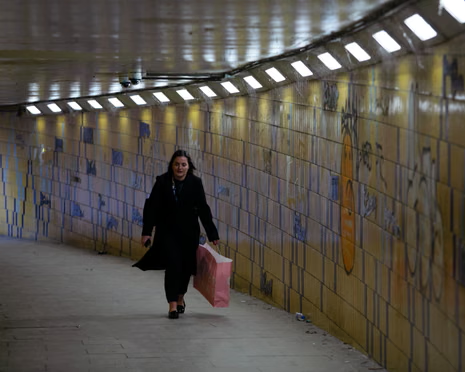
The upcoming guidance will recommend several key physical improvements for councils to implement very soon. This includes installing much better lighting in areas that currently sit in total darkness tonight. Replacing narrow and scary underpasses with street-level crossings is also a very high priority here. CCTV coverage will be reviewed to ensure that busy walking routes are monitored more effectively. These changes aim to make the environment feel more open and less threatening for everyone. Beyond physical builds, the government is looking at successful international schemes to find fresh ideas. Some countries like Spain and Sweden allow bus drivers to stop between official bus stations. This service helps women get closer to their front doors during the late night hours. Such a simple change could make a massive difference for those living in rural areas.
Lilian Greenwood, the local transport minister, recently spoke about the importance of these new safety measures. She described the issue of safer streets as a fundamental matter of fairness for all. Greenwood noted that women and girls generally have lower levels of physical activity than men. This gap exists partly because many women do not feel comfortable exercising outdoors in the evening. If women feel safe, they are more likely to choose walking over using a car. This shift would improve the health of the nation and help the environment as well. The minister emphasized that walking should be a simple and straightforward task for every citizen. No one should have to fret about their journey before they even leave home.
The new guidance will be officially published later this year along with specialized training sessions. Local councils will be invited to bid for central government funding to start these improvements. However, the government will only grant money if the proposed schemes meet very high standards. Active Travel England wants to ensure that every penny spent creates a truly inclusive environment. They believe that looking at transport through a gender lens reveals many hidden design flaws. For example, a route might be quick but feel terrifying if it lacks visibility. By addressing these feelings, councils can create spaces where everyone feels they truly belong. The focus is on making both quiet paths and busy roads feel much safer.
Home Office minister Jess Phillips has also lent her strong support to this nationwide initiative. She stated that the guidance shifts responsibility away from women and onto the actual spaces. For too long, women have been told to change their behaviour to stay safe outside. This new approach suggests that the environment itself must change to protect the vulnerable people. Phillips believes that women deserve to go about their lives without fear of any violence. Whether they are travelling to work or meeting friends, safety should be a basic guarantee. The government is committed to tackling the behaviours and locations that put people at risk. This policy represents a turning point in how we view the safety of women.
Chris Boardman, the commissioner for Active Travel England, says lived experience will guide the final document. He believes it is a terrible thing that freedoms are not equal for all genders. Men and boys often do not think twice about walking to a local shop. In contrast, many women feel they must pay for a taxi to travel short distances. The YouGov poll found that fifty-seven percent of women use taxis to avoid walking alone. This creates a financial burden that men rarely have to face in their daily lives. Boardman insists that his job is to help make every neighbourhood safe for every person. By listening to women, the government can find the best ways to improve our streets.

The push for safer streets follows previous criticism of national planning guidelines released earlier this year. Some observers were shocked when an earlier framework failed to mention the safety of women at all. At that time, some officials questioned why planning and safety were even being linked together. This new guidance proves that the government now understands the vital connection between design and security. Creating a safer world requires more than just policing; it requires thoughtful and inclusive urban design. When streets are bright and open, they naturally discourage crime and foster a sense of community. This benefits everyone, from young children to the elderly living in our busy urban centres.
Greenwood will further argue that improving street safety is a clear political no-brainer for the government. A healthier population leads to a stronger economy and reduced pressure on the National Health Service. However, these goals are impossible to reach if half the population remains afraid to walk. The systemic barriers that prevent women from moving freely must be dismantled with deliberate action now. This guidance is just the beginning of a long-term plan to transform the English landscape. It sends a clear message that the safety of women and girls is a priority. Future generations should be able to walk anywhere at any time without feeling any fear.
In the coming months, local authorities will start reviewing their current transport plans to match these goals. Residents are encouraged to speak up about the areas where they feel most vulnerable today. Public consultations will help identifies the specific spots that require urgent lighting or new pedestrian crossings. Community involvement is essential to ensure the changes actually meet the needs of local women. As councils begin to implement these designs, the face of our cities will slowly change. We can look forward to a future where our streets are designed for everyone. This initiative marks a significant step toward true equality and freedom of movement across England.
Related News:
 Peterborough Mosques Tighten Security After Attack
 Reeves Faces Setback as Labour May Miss Homes Target
 Hospice Cuts Raise Alarm Across England Amid Funding Crisis
 Kate Winslet to Narrate Film Highlighting King’s Environmental Mission
 Green Party Surges Past Labour in Latest UK Poll
 Trump’s UK Ambassador Urges North Sea Drilling to Strengthen US Ties
 Children to Learn Local History in Major Curriculum Overhaul
 French Taxi Driver Cleared in David Lammy Theft Case After Fare Dispute
 UK Bans Fake Numbers: Scammers Lose Their Trick
 Prince William Plants Trees with Brazil’s Nature Heroes
 M&S Profits More Than Halve After Cyber-Attack
 Kent village told to remove flags before Christmas lights go up
 Patients to Test Health at Home to Ease NHS Winter Pressure
 King Charles to Lead Nation in Remembrance Sunday Service
 Palace May Restore Hyphen to Andrew Mountbatten-Windsor’s Name
 Millionaires group urge Reeves to introduce wealth tax to ‘lift kids out of poverty’
 Shouting Works Best to Deter Gulls, UK Study Finds
 Reeves rejects £1bn plea for NHS redundancy payouts
 Northern Lights may illuminate UK skies this week
 PM Condemns Leaks, Vows Loyalty to Ministers and Stability
 Major Rent Reform Ends No-Fault Evictions in England
 Criminal Gangs Pose as Truckers to Hijack UK Supply Chains
 Stroke Patient Mistaken for Drunk, Care Delayed
 Van Dwellers Face Eviction After Park Misuse Sparks Outcry
 Royal Navy Shadows Russian Warships Entering the Channel
 Inside the Helpline Protecting Missing Children in the UK
 Boots Showstopper Beauty Bundle Outshines Many Advent Calendars This Holiday Season
 Labour’s ‘blinkered’ drive to build risks pushing wildlife to point of no return, nature experts warn
 PlayStation PS5 Deals Hit Lowest Prices Ahead of Black Friday
 Five-Year-Old Dies After Rare Tonsil Surgery Complication
 Starmer Says Labour’s Economic Plan Needs Years to Deliver
 More Patients Now Contacting GPs Online, Data Shows
 UK unemployment rises to four-year high of 5.1% before budget
 Wiltshire Police Use Lasso to Catch Rampaging Village Goat
 Children to Receive Home Vaccines as England Acts
 Cambridge College Faces Backlash Over Private School Recruitment
 NHS Violence Crisis: Staff Face Daily Assaults
 Celebrity Campaign Highlights SMA Screening Failures
 Bereaved Fathers Gain New Paternity Leave Rights in UK
 Storm Goretti leaves Cornwall homes without power
 New Documentary Examines Teen’s Zombie Knife Murder
 Woman Jailed for Life After Killing E-Bike Rider in Tragic Mistaken Identity Case
 UK Ministers Drop Foreign Student Targets for Global Education Push
 No Gas Boiler Ban as UK Warm Homes Plan Backs Heat Pumps
 Shinzo Abe’s killer receives life sentence in Japan
 Police response times face strict new national limits
 Labour policing overhaul sparks fears over growing central control
 Devon hosts first high-density hydro power system
 Pornhub blocks new UK users over age checks dispute
 Starmer warns of toxic division politics in Reform challenge
 UK New Car Discounts Near £6,000 as Prices Are Slashed
 Pneumonia Surge Pushes England Emergency Cases Higher
 Palantir contracts face UK halt calls over transparency
 Send spending gap leaves deprived areas behind
 Hidden Crisis: Domestic Abuse Suicide Toll in UK
 Farage to Name Jenrick as Reform Chancellor Pick
 UK MPs Demand Ban on Brazilian Butt Lifts
 Civil Service Pay: Union Urges Ministers to End ‘Barking Mad’ Limits
 Antonia Romeo appointment sparks criticism
 Farage Chagos Islands Row Sparks Fury
 UK Job Vacancies Hit Five-Year Pandemic Low
 UK Youth Unemployment Surges Amid Tax Changes
 Reform UK targets workers’ rights repeal
 Half of Britons Avoid GP When Ill, Survey Reveals Growing Concern
 Strong Rebound for UK Housing Market Sees 6% More Homes
 Russian Trade Routed Through British Islands Exposed
 Mandelson Arrest: Met Apologises to Hoyle
 Rolling Hills and Heritage: A Car-Free Break in Leicestershire
 Switching Energy Deal Can Save £200 as Price Cap Falls
 Mother Says ‘I Hugged My Daughter’s Killer’ as They Cried Together in Prison
 Insulin Evidence in Letby Trial Under Scrutiny After Expert’s GMC Probe Emerges
 Trump rebukes Starmer over Iran strikes
 Gen Z Binge Drinking Surges in Early 20s
 BBC Charter Reform Sparks Independence Battle
 Thousands Protest Iran Strikes Outside US Embassy London
 UK Oil and Gas Supplies Reassured Amid Middle East Concerns
 ‘We can’t go back’: mother of six-year-old cancer survivor fears UK visa changes
 Palantir NHS Contract Sparks Fears Over Data Power
 Yvette Cooper: UK Must Follow Principles, Not US Pressure
 Charity Watchdog Takes Control of Learning Disability Care Home