Published: 26 March 2026. The English Chronicle Desk. The English Chronicle Online.
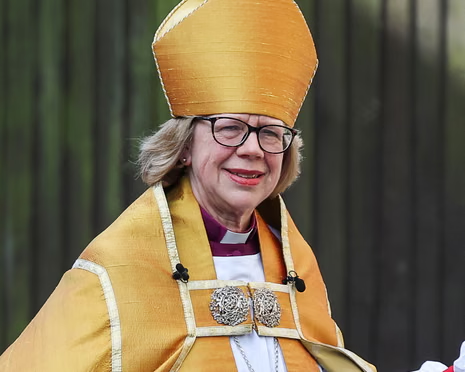
The appointment of Sarah Mullally as the 106th archbishop of Canterbury represents a truly landmark moment for the global Anglican communion. This historic choice marks the first time a woman will lead the Church of England in its long history. Her selection sends a powerful message to parishes across England and the many nations where Anglicans gather today. Many congregants in these regions have historically struggled to accept the leadership of women in the priesthood. This appointment comes only eighteen months after she spoke openly about the many institutional barriers she faced. She highlighted the micro-aggressions that often come with being a woman in a traditional religious space. Now the stained glass ceiling of the church has finally been shattered by her remarkable ascent.
The new archbishop of Canterbury has openly acknowledged the massive weight of responsibility that rests on her. She promised to be a shepherd who is calm and consistent for all of her people. Her first address to the General Synod focused on the themes of service and deep compassion. She spoke of washing feet and caring for others as the core of her ministry. This humble approach is typical of a leader who rose through the ranks of nursing first. Her background as a chief nursing officer informs her approach to leading the national church now. Many observers see her as a safe pair of hands during a very turbulent time. The church has faced years of declining attendance and very painful scandals regarding past abuse.
Sarah Mullally is widely regarded as a competent and collegial leader by those who know her. She is expected to steady the ship after the difficult tenure of her predecessor Justin Welby. Former colleagues describe her as someone who has no interest in being a grand savior. Instead she focuses on solving the practical and contentious issues that still face the church today. This reputation for being solid and stable is precisely why the selection committee chose her. She does not come across as an ambitious person or someone driven by a large ego. Her peers describe her as measured and accomplished in every task she has ever undertaken. She has clearly weighed the costs of taking on such a high-profile global role.

Her educational background differs significantly from the traditional path taken by many previous leaders of the church. Unlike her predecessor who attended Eton and Cambridge, she went to a local comprehensive school instead. She later chose to study nursing at the South Bank Polytechnic to serve the public. Former colleagues at St Thomas’ hospital remember her as being both kind and very pragmatic. Her rise in the medical field was nothing short of meteoric during her early career years. By the age of 37 she was the chief nursing officer for the entire NHS. This role involved a high salary and frequent meetings with the prime minister of Britain. However she eventually left that prestigious career to become a junior priest earning very little.
This transition from a high-powered secular role to a humble religious post defines her character well. Authors who have studied her life describe her as being strikingly ordinary and very private. She is a team player who consistently prefers seeking consensus rather than engaging in conflict. This steady nature will be tested by the pressing issue of safeguarding within the church. The failure to address past abuse allegations led to the resignation of the previous archbishop recently. Reports on serial abusers have caused a near-existential crisis for many faithful members of the church. Mullally has pledged to rebuild the trust that was lost through these systemic failures over decades. She faces the difficult task of modernizing how the church protects the most vulnerable people.
There are many other challenges that will occupy her time as the new archbishop of Canterbury. Equality campaigners feel a sense of betrayal over the stalled moves toward blessing same-sex civil weddings. There are also ongoing disagreements regarding the funds set aside for the pursuit of racial justice. The church is still grappling with its complex legacy regarding the historical practice of slavery. Furthermore the rise of Christian nationalism presents a new set of problems for global Anglican leaders. Divisions within the international church continue to widen over issues of identity and modern theology. Some progressive figures worry that her cautious nature might prevent her from taking bold stances. They fear that a desire for consensus could lead to an absence of strong leadership.
The statistics surrounding the church she now leads highlight the scale of the challenge ahead. Recent data shows that Sunday attendance in the Church of England has dropped significantly over the last decade. In 2024 the church reported that average weekly attendance was approximately 600,000 people across all parishes. This represents a decline of nearly 15% compared to figures recorded just ten years prior. Additionally the church faces a demographic shift as the average age of a congregant is 61. For the archbishop of Canterbury bridging the gap with younger generations is a primary strategic goal. She must also navigate the diverse racial makeup of the global communion which exceeds 85 million members. While white British members are the traditional base the fastest growth is in Sub-Saharan Africa.
The financial health of the Church of England also remains a point of significant internal debate. The Church Commissioners manage an investment fund valued at roughly £10 billion as of recent reports. A portion of this wealth has been linked to historical investments in the transatlantic slave trade. To address this the church has committed £100 million toward a fund for social healing and justice. Some critics argue this amount is insufficient given the historical scale of the profits made. Others believe the focus should remain on maintaining the thousands of crumbling historic church buildings in England. Balancing these fiscal demands requires the pragmatic skills the archbishop of Canterbury learned in the NHS. Her experience managing large government budgets will be an asset in these complex negotiations.

Another factor that influenced the discussion around her appointment was her current age of 64 years. The Church of England requires all bishops to retire when they reach the age of 70. This means she will likely serve in this high office for only about six years total. This is half the time served by Justin Welby during his leadership of the communion. Some see this as a benefit providing a period of stability without a long-term transition. For now the fractious church seems soothed by her unshowy calm and her obvious competence. People are hopeful that she can heal the wounds that have opened in recent years. However it is likely that speculation about her eventual successor will begin fairly soon.
The global reaction to her installation has been a mixture of great hope and some caution. Leaders from the Global South have expressed a variety of opinions on a woman holding this post. In provinces like Nigeria and Uganda where traditional views are strong the reaction has been cool. Yet in North America and New Zealand her appointment is being celebrated as a long-overdue step. The archbishop of Canterbury must find a way to hold these very different groups together. Her background in nursing may provide the perfect metaphor for the healing the church requires now. She has spent her life caring for the sick and managing complex human systems. These skills are exactly what the Anglican communion needs to navigate the coming years successfully.
As she moves into Lambeth Palace she carries the hopes of millions of modern Anglicans. Her story is one of service whether in a hospital ward or a cathedral pulpit. The next six years will define whether the church can truly modernize its ancient structures. She will need every bit of her characteristic pragmatism to succeed in this difficult environment. The eyes of the world are now on the first woman to lead this institution. She remains a solid and stable figure in an increasingly polarized and fast-changing world today. Her journey from a staff nurse to the highest office in the church is complete. Now the real work of shepherding a diverse and often divided flock begins in earnest.
Related News:
 Charities Warn Millions in Ramadan Donations Face Banking Barriers
 Peterborough Mosques Tighten Security After Attack
 Reeves Faces Setback as Labour May Miss Homes Target
 Hospice Cuts Raise Alarm Across England Amid Funding Crisis
 Kate Winslet to Narrate Film Highlighting King’s Environmental Mission
 Green Party Surges Past Labour in Latest UK Poll
 Trump’s UK Ambassador Urges North Sea Drilling to Strengthen US Ties
 French Taxi Driver Cleared in David Lammy Theft Case After Fare Dispute
 UK Bans Fake Numbers: Scammers Lose Their Trick
 M&S Profits More Than Halve After Cyber-Attack
 Kent village told to remove flags before Christmas lights go up
 Patients to Test Health at Home to Ease NHS Winter Pressure
 Palace May Restore Hyphen to Andrew Mountbatten-Windsor’s Name
 Millionaires group urge Reeves to introduce wealth tax to ‘lift kids out of poverty’
 Shouting Works Best to Deter Gulls, UK Study Finds
 Reeves rejects £1bn plea for NHS redundancy payouts
 Northern Lights may illuminate UK skies this week
 PM Condemns Leaks, Vows Loyalty to Ministers and Stability
 Major Rent Reform Ends No-Fault Evictions in England
 Criminal Gangs Pose as Truckers to Hijack UK Supply Chains
 Stroke Patient Mistaken for Drunk, Care Delayed
 Van Dwellers Face Eviction After Park Misuse Sparks Outcry
 Royal Navy Shadows Russian Warships Entering the Channel
 Inside the Helpline Protecting Missing Children in the UK
 Boots Showstopper Beauty Bundle Outshines Many Advent Calendars This Holiday Season
 Labour’s ‘blinkered’ drive to build risks pushing wildlife to point of no return, nature experts warn
 PlayStation PS5 Deals Hit Lowest Prices Ahead of Black Friday
 Five-Year-Old Dies After Rare Tonsil Surgery Complication
 Starmer Says Labour’s Economic Plan Needs Years to Deliver
 More Patients Now Contacting GPs Online, Data Shows
 UK unemployment rises to four-year high of 5.1% before budget
 Wiltshire Police Use Lasso to Catch Rampaging Village Goat
 Children to Receive Home Vaccines as England Acts
 Cambridge College Faces Backlash Over Private School Recruitment
 NHS Violence Crisis: Staff Face Daily Assaults
 Celebrity Campaign Highlights SMA Screening Failures
 Bereaved Fathers Gain New Paternity Leave Rights in UK
 Storm Goretti leaves Cornwall homes without power
 New Documentary Examines Teen’s Zombie Knife Murder
 Woman Jailed for Life After Killing E-Bike Rider in Tragic Mistaken Identity Case
 UK Ministers Drop Foreign Student Targets for Global Education Push
 No Gas Boiler Ban as UK Warm Homes Plan Backs Heat Pumps
 Shinzo Abe’s killer receives life sentence in Japan
 Police response times face strict new national limits
 Labour policing overhaul sparks fears over growing central control
 Devon hosts first high-density hydro power system
 Pornhub blocks new UK users over age checks dispute
 Starmer warns of toxic division politics in Reform challenge
 UK New Car Discounts Near £6,000 as Prices Are Slashed
 Pneumonia Surge Pushes England Emergency Cases Higher
 Palantir contracts face UK halt calls over transparency
 Send spending gap leaves deprived areas behind
 Hidden Crisis: Domestic Abuse Suicide Toll in UK
 Farage to Name Jenrick as Reform Chancellor Pick
 UK MPs Demand Ban on Brazilian Butt Lifts
 Civil Service Pay: Union Urges Ministers to End ‘Barking Mad’ Limits
 Antonia Romeo appointment sparks criticism
 Farage Chagos Islands Row Sparks Fury
 UK Job Vacancies Hit Five-Year Pandemic Low
 UK Youth Unemployment Surges Amid Tax Changes
 Reform UK targets workers’ rights repeal
 Half of Britons Avoid GP When Ill, Survey Reveals Growing Concern
 Strong Rebound for UK Housing Market Sees 6% More Homes
 Russian Trade Routed Through British Islands Exposed
 Mandelson Arrest: Met Apologises to Hoyle
 Rolling Hills and Heritage: A Car-Free Break in Leicestershire
 Switching Energy Deal Can Save £200 as Price Cap Falls
 Mother Says ‘I Hugged My Daughter’s Killer’ as They Cried Together in Prison
 Insulin Evidence in Letby Trial Under Scrutiny After Expert’s GMC Probe Emerges
 Trump rebukes Starmer over Iran strikes
 Gen Z Binge Drinking Surges in Early 20s
 BBC Charter Reform Sparks Independence Battle
 Thousands Protest Iran Strikes Outside US Embassy London
 UK Oil and Gas Supplies Reassured Amid Middle East Concerns
 ‘We can’t go back’: mother of six-year-old cancer survivor fears UK visa changes
 Palantir NHS Contract Sparks Fears Over Data Power
 Yvette Cooper: UK Must Follow Principles, Not US Pressure
 Charity Watchdog Takes Control of Learning Disability Care Home
 Australia Imposes Sudden Travel Ban on Iranian Visitors
 Wes Streeting Backs Starmer Amid Speculation of Leadership