Published: 30 March 2026. The English Chronicle Desk. The English Chronicle Online.
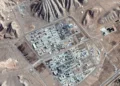
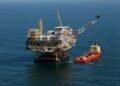
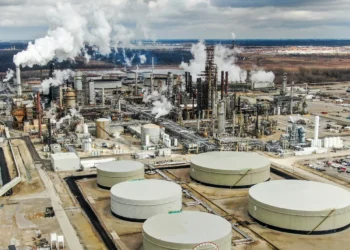
The global energy market faced a fresh wave of volatility during early trading this Monday. Brent crude oil prices climbed rapidly toward a significant peak of $116 per barrel today. This sudden spike followed provocative comments made by Donald Trump regarding Iranian national oil reserves. The former president suggested a plan to seize control of major Iranian export infrastructures soon. His specific mention of Kharg Island sent immediate shockwaves through the international financial trading community. Investors reacted with visible alarm to the prospect of direct interference with Middle Eastern energy.
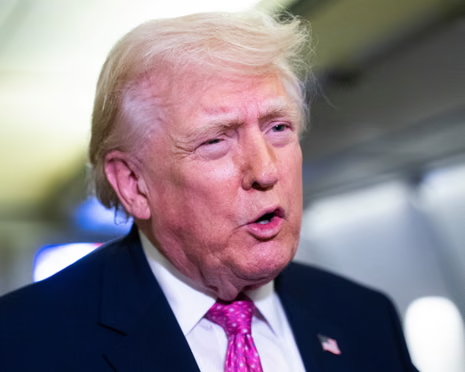
In an interview with the Financial Times, Trump expressed his desire to take the oil. He dismissed critics of such a bold geopolitical move as being remarkably unintelligent individuals indeed. These comments have reignited fears of a massive escalation in the current regional conflict. He noted that the United States currently maintains a wide variety of strategic military options. Whether the military targets Kharg Island remains a point of intense speculation for global analysts. Market participants are now pricing in the high risk of a total supply shutdown.
The impact of these statements was felt most acutely across the major Asian stock markets. Japan’s Nikkei index suffered a heavy blow, falling by 3% in a single session. South Korea’s Kospi followed a similar downward trajectory with a sharp 3.4% loss on Monday. These economies rely heavily on a steady flow of fossil fuels from the Persian Gulf. Any disruption in the Strait of Hormuz poses a systemic threat to their industrial output. Even the Hang Seng index in Hong Kong shed about 1% of its total value.

European markets showed a more tempered but still cautious response to the developing news cycle. The European Stoxx 600 index slipped by a modest 0.1% during the morning trading hours. However, the UK’s FTSE 100 managed to tick up by 0.2% against the general trend. This slight gain was driven largely by the performance of major mining and resource companies. Firms like Rio Tinto and Glencore often see higher valuations when raw material prices rise. Nevertheless, the underlying sentiment across the City of London remains one of deep concern.
Natural gas prices in Europe also experienced an upward shift due to these supply fears. Dutch month-ahead futures rose by 1.6% to reach over €55 per each megawatt-hour today. This increase reflects broader anxieties about the stability of heating and power for the continent. The arrival of 3,500 additional US troops in the Middle East has heightened the tension. Military movements on this scale suggest that the conflict may continue for some time yet. Investors are watching the deployment closely for any signs of an imminent offensive action.
The entry of Houthi rebels from Yemen into the fray has further complicated the situation. Ballistic missiles targeted at Israeli sites mark a dangerous expansion of the ongoing regional war. This development threatens to pull more nations into a direct and costly military confrontation. Analysts at Deutsche Bank have noted that no clear end to the conflict is visible. Fear of a fresh escalation is currently the dominant driver of global market sentiment. The uncertainty surrounding the safety of shipping lanes is reaching a critical breaking point.
Brent crude is now on track for its largest monthly percentage gain in history. Prices have risen by an astounding 59% since the beginning of March this year. This rally surpasses the previous record set during the Iraqi invasion of Kuwait in 1990. At that time, oil prices surged by 46% as global markets braced for war. The current situation reflects a much more complex and interconnected set of global risks. Traders are struggling to find a ceiling for prices in this unpredictable geopolitical environment.
Prime Minister Keir Starmer is scheduled to hold emergency talks later this Monday afternoon. He will meet with senior executives from Shell, BP, and the Norwegian firm Equinor. Finance and shipping industry bosses will also join the high-level discussion at Downing Street. The focus will be on emergency measures to protect the UK from supply shocks. A blockade of the Strait of Hormuz remains the primary fear for the British government. This narrow waterway is essential for a fifth of the world’s daily oil supply.
Earlier this month, Brent crude reached a staggering high of $119.50 for a single barrel. That price point represented the highest level seen since the summer of 2022. Iran has already significantly restricted traffic through the vital maritime corridors in the Gulf region. Senior analysts at Swissquote suggest that crude could even reach $150 or $200 soon. Such extreme price levels would likely trigger a severe and prolonged global economic recession. Demand for fuel would eventually collapse under the weight of such high consumer costs.
Market experts believe that prices above $130 would effectively halt the current economic growth. The inflationary pressure on households would become far too great for most governments to manage. Beyond oil, the prices of industrial metals like aluminium have also jumped by 5%. This followed reports of Iranian strikes against production facilities in Bahrain and the UAE. These targeted attacks on infrastructure demonstrate the high stakes involved in the current hostilities. Every sector of the global economy is feeling the ripple effects of the violence.

Chancellor Rachel Reeves is expected to issue a stern warning to the G7 nations. She will advocate for a faster transition toward clean and domestic renewable energy sources. This strategy aims to insulate the national economy from the volatility of global markets. Reeves will meet virtually with G7 finance and energy ministers to coordinate a response. Energy Secretary Ed Miliband is also participating in these crucial international policy discussions today. They argue that energy security is now inextricably linked to the green energy transition.
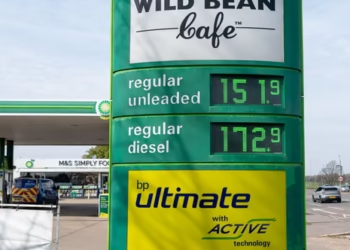
Domestic pressure is mounting as UK motorists face rising costs at the petrol pumps. Industry figures have warned that temporary fuel shortages could soon become a reality here. Average petrol prices have already climbed above the threshold of 150p per litre recently. Supply chains are being squeezed by the logistical nightmare unfolding in the Middle East. Some retailers are concerned about their ability to maintain consistent stock in the coming weeks. Public anxiety is growing as the cost of living continues to be impacted.
The English Chronicle will continue to monitor the situation as it develops throughout the day. The intersection of military action and energy security remains a primary focus for our readers. Diplomatic efforts are ongoing, but the rhetoric from political leaders remains remarkably sharp and divisive. The world is watching to see if a peaceful resolution can still be found. For now, the global economy remains at the mercy of events in the Gulf. The coming days will be decisive for the future of international energy markets.
Related News:
 Reeves Faces Setback as Labour May Miss Homes Target
 Virgin Trains Moves Closer to Challenging Eurostar Monopoly
 Trump’s UK Ambassador Urges North Sea Drilling to Strengthen US Ties
 Ryanair Chief UK Economy ‘Doomed’ Under Labour
 ABF May Split Primark from Food Division Amid Tough Market
 M&S Profits More Than Halve After Cyber-Attack
 Tony Blair think tank warns Rachel Reeves must cut taxes if manifesto broken
 Oprah enjoys Meghan’s jam on English muffins
 Earl of Yarmouth Faces £1.3m Legal Bill Over Family Estate
 Millionaires group urge Reeves to introduce wealth tax to ‘lift kids out of poverty’
 From Lego to Pokémon: How Adults Are Driving UK Toy Market Growth
 UK toy market enjoys bumper year as ‘kidults’ fuel demand
 New laws to bolster UK’s defences against cyber attacks on NHS, transport and energy
 Skims Eyes Global Expansion After Reaching $5 Billion Value
 Global markets drop amid tech sell-off and China slowdown
 Canada Passes Carney’s First Budget in Tight Parliamentary Vote
 PM Highlights UK Business at G20 in South Africa
 Mossmorran Plant Closure Hits Cowdenbeath Hard
 UK Taskforce Unveils Plan to Streamline Nuclear Reactor Rules
 Steel billionaire Lakshmi Mittal reportedly leaves UK
 India’s Labour Law Overhaul Sparks Fierce Debate
 Starmer Says Labour’s Economic Plan Needs Years to Deliver
 Virgin Media Fined £23.8m Over Telecare Safety Failures
 Rising Water Bills Lift Troubled Thames Back to Profit
 Tesla Warns UK That Weak EV Rules Could Threaten Sales
 BP agrees £7.4bn Castrol sale to US investment firm
 Sainsbury’s CEO leads business honours in New Year list
 FTSE 100 Hits 10,000: UK Market Celebrates Record Year
 UK House Prices Fall Sharply at Year-End, Nationwide Reports
 Wessex Water chiefs receive £50,000 extra despite government bonus ban
 German Supermarket Aldi to Open 180 US Stores This Year
 Canada-China trade gains momentum in new strategic partnership
MPs warn AI financial risks threaten UK stability
Canada-China trade gains momentum in new strategic partnership
MPs warn AI financial risks threaten UK stability
 MPs warn AI financial risks threaten UK stability
 B&M and The Works Struggle During Christmas Trading
 US Dollar Hits Four-Year Low Amid Market Turmoil
 Amazon mistakenly signals new global layoffs to employees
 Labour Must Revive High Streets to Avoid Election Collapse
 Households in England Face Rising Water Bills in April
 UK needs new factory to reach 1.3m car target, says industry chief
 UK food industry urges transition if post-Brexit rules reset
 UK New Car Discounts Near £6,000 as Prices Are Slashed
 Study Finds One in Seven England Takeaways Are Dark Kitchens
 Riverford sales surge as UK organic market booms
 Telstra AI jobs cuts as automation drive expands
 BT Names New Openreach Chief Amid Major Fibre Expansion
 AI fears hit UK wealth and comparison sites
 UK Housing Market Shows Early Recovery Signs
 UK economy struggles as growth stalls at 0.1% in late 2025
 Schroders sold to US investor in £9.9bn deal ending family control
 Royal Mail Blames Poor Weather and Sickness for Delayed Deliveries
 British Steel wins Turkey rail boost
 Glencore Approves $2bn Payout Despite Profit Slump
 Sanders Condemns Billionaire ‘Greed’ in California Tax Debate
 UK Job Vacancies Hit Five-Year Pandemic Low
 UK Youth Unemployment Surges Amid Tax Changes
 Ministers Urged to Ban Crypto Political Donations
 Strong Rebound for UK Housing Market Sees 6% More Homes
 HSBC Signals Overhaul Nearing Completion Despite Profit Drop
 Reserve Bank May Hike Rates Twice Amid Persistent Inflation
 Inflation Pressure RBA Policies
 Engie UK Power Networks Deal Seals £10.5bn Buy
 Reeves Must Back Defence Plan or Face Dismissal, Says Unite Chief
 Qantas Revamps Loyalty Program Amid $1.46bn Profit Surge
 Switching Energy Deal Can Save £200 as Price Cap Falls
 UK house prices rise as market steadies
 Oil Prices Surge Above $100 Amid Iran War
 G7 Weighs Emergency Oil Reserves as Prices Surge
 Revealed: UK AI Push Faces Phantom Investment Claims
 Abramovich Chelsea Sale Cash Faces Jersey Probe
 John Lewis bonus returns after four years as profits rise
 Brazil Floods Warning as Scientists Urge Fossil Fuel Exit
 Tesla Enters British Energy Market Following Ofgem Approval
 UK Pushes NHS and MoD to Buy British Tech
 UniCredit’s Bold Move to Reshape European Banking
 UK Wage Growth Slows as Jobs Market Holds Firm
 Charity Watchdog Takes Control of Learning Disability Care Home
 Rising Costs Force Families to Rethink Days Out
 UK inflation held at 3% before global energy price hit
 UK Watchdog Probes Five Firms Over Fake Review Failings