Published: 01 April 2026. The English Chronicle Desk. The English Chronicle Online.
The political landscape of Europe faces a deep crisis of trust and security this week. Leaders across the continent expressed their outrage over shocking allegations involving the Hungarian government and Russia. These accusations stem from leaked audio recordings that seem to reveal a very troubling partnership. The recordings suggest that Hungary might be actively working to undermine collective European Union policies today. Polish and Irish leaders have led the charge in condemning these alleged diplomatic backroom deals. They described the actions of the Hungarian foreign minister as both repulsive and deeply sinister indeed. This scandal arrives at a critical moment for the future of the entire European bloc. It raises urgent questions about the internal unity of the union during these difficult times.
The controversy centers on Péter Szijjártó who serves as the foreign minister for Hungary now. Leaked phone calls supposedly capture him speaking with his Russian counterpart Sergei Lavrov quite recently. In these conversations the Hungarian minister allegedly offered to help amend various EU sanctions lists. He reportedly told the Russian official that he remained always at his disposal for help. Another recording suggests he offered assistance with other sanctions currently affecting the Russian state’s economy. These revelations were brought to light by a joint investigation involving several respected media outlets. The Insider and VSquare worked with regional partners to expose these deeply concerning phone calls. Their report suggests a level of cooperation that many officials find completely unacceptable and dangerous.

The timing of this massive leak is particularly sensitive for the current Hungarian administration. Hungary is preparing for a pivotal election that will determine its leadership for years. Prime Minister Viktor Orbán faces the toughest political battle of his sixteen years in power. His long tenure has often been defined by clashes with the leadership in Brussels lately. Critics have frequently accused his government of weakening democratic institutions and eroding vital media freedoms. This latest scandal adds significant pressure to an already heated and very divisive election campaign. Many citizens are now questioning the true loyalties of their elected officials on the world stage. The international community is watching these developments with a mixture of concern and genuine disbelief.
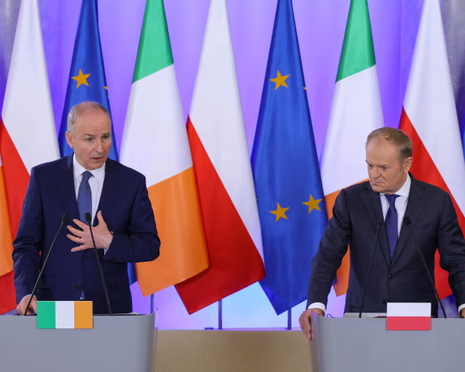
Polish Prime Minister Donald Tusk did not hold back his feelings regarding the leaked audio. He described the recordings as disheartening and a confirmation of a deeply disturbing relationship today. Tusk argued that the evidence reveals a political dependency of Budapest on the Moscow regime. He stated that it is hard to imagine anything more repulsive than this secret coordination. The Polish leader emphasized that an EU minister should never report to a foreign adversary. Such behavior undermines the collective security and the shared values of all member states involved. His words reflect a growing frustration within the bloc over Hungary’s perceived shift toward Russia. This rift threatens to create a permanent divide between Eastern European neighbors in the future.
Ireland’s leader Micheál Martin also voiced his serious concerns about the recent investigative findings today. He noted that the investigation confirmed what many European diplomats had long suspected in private. Martin described the deferential tone found in the conversations as being particularly alarming and sinister. He stated that such a relationship between an EU member and Russia is simply unacceptable. The Irish leader believes this development highlights a broader threat to European democratic stability right now. He called for a thorough examination of how these interactions might have influenced EU policy. His comments echo the sentiments of many leaders who feel betrayed by the Hungarian government. The sense of unease is palpable throughout the halls of power in many capitals.
The top diplomat for the European Union Kaja Kallas also joined the chorus of criticism. She reminded the public that European ministers must work for Europe and not for Russia. Her statement was brief but carried the heavy weight of the official European position today. The implication is that Hungary may be operating as a disruptive force from within the bloc. This creates a strategic nightmare for those trying to maintain a united front against aggression. Kallas has been a vocal advocate for strong sanctions and firm support for Ukraine recently. Seeing a fellow member state potentially coordinate with the Kremlin is a significant diplomatic blow. The unity of the European Union is being tested like never before in recent history.
Péter Szijjártó has notably not denied that these conversations with Sergei Lavrov actually took place. Instead he focused his anger on the fact that his phone was being monitored. The minister called the situation a huge scandal involving the interference of foreign secret services. He claimed that these services intentionally released the audio just before the upcoming national election. Szijjártó posted a video to social media to defend his actions to the Hungarian public. He framed the leak as an attack on Hungarian sovereignty by external actors and enemies. This defensive strategy aims to pivot the conversation away from the content of the calls. He hopes to rally his supporters by casting himself as a victim of espionage.
The upcoming election on April twelfth will be a defining moment for Hungary and Europe. Most current polls suggest that Orbán and his party are trailing behind the rising opposition. Péter Magyar has emerged as a formidable challenger leading the new and energetic Tisza party. Magyar was once a high-ranking member of the ruling party before turning against his peers. He has successfully tapped into the public’s growing fatigue with corruption and international isolationism. This election could potentially end the sixteen-year rule of the Fidesz party and its leaders. A change in leadership would likely shift Hungary’s trajectory back toward the European mainstream again. Conversely an Orbán victory might further solidify the country’s unique and controversial path in Europe.
The global far-right movement is also watching the results of this election with great interest. Orbán has long been a hero to those who champion national sovereignty over international cooperation. His fall from power would be seen as a major setback for these movements worldwide. Many leaders in the West see him as a symbol of the democratic backsliding. They worry that his brand of politics could spread to other vulnerable nations in Europe. This makes the Hungarian vote a matter of significant international importance for everyone involved today. The outcome will signal whether the tide is turning against populist and pro-Russian sentiments. Europe stands at a crossroads where its internal cohesion is the most valuable asset.

Throughout the conflict in Ukraine Hungary has often broken ranks with its many European allies. Orbán has maintained a close relationship with Vladimir Putin despite the ongoing and brutal invasion. He has repeatedly blocked or delayed efforts by Brussels to provide vital aid to Ukraine. This behavior has led many critics to call him a Trojan horse for Russia. These new leaks provide the most direct evidence yet of this suspected secret coordination. They suggest that the obstructionist tactics in Brussels were planned with direct Russian input lately. Such a revelation is damaging to the reputation of the Hungarian diplomatic corps globally. It suggests that confidential EU discussions may have been shared with the Kremlin regularly.
Last week further allegations surfaced regarding the frequency of contact between Szijjártó and Sergei Lavrov. It was claimed that the Hungarian minister routinely shared details of confidential EU meetings recently. After initially dismissing these claims Szijjártó later admitted to conferring with Lavrov on several occasions. He described these talks as standard diplomacy regarding the agendas and decisions of the EU. However most diplomats argue that sharing such details with a non-member state is highly improper. This admission has only served to fuel the fire of the current political scandal. It reinforces the idea that Hungary acts as a bridge for Russian influence in Europe. The trust required for effective international cooperation has been severely damaged by these events.
As the election nears the rhetoric on both sides of the debate is intensifying rapidly. The Hungarian government continues to portray itself as a defender of peace and national interests. Meanwhile the opposition and European leaders see a government that has lost its moral compass. The people of Hungary now face a choice that will resonate across the entire world. They must decide if they want a future aligned with Europe or with Moscow. The leaked audio recordings have provided a stark clarity to the stakes of this vote. Professionalism and responsibility are now demanded from all those who hold public office in Europe. The English Chronicle will continue to follow this developing story as more details emerge. The search for truth and accountability remains the most important task for the free press.
Related News:
 Shock US Raid: Maduro Pleads Not Guilty in Manhattan Court
 Trump Plans Venezuela Meeting, Warns of Cartel Land Strikes
 Mandelson apologises over Epstein ties after public scrutiny
 Rudd successor: Defence chief and former ministers considered
 US Senate rejects resolution limiting Trump military powers
 Trump Calls Greenland Critical for US Security After Denmark Talks
 Trump: Iran Killing Has Stopped, Strike Threats Pulled Back
 Machado Trump medal gesture reshapes Venezuela power struggle
 Trump Receives Machado’s Nobel Medal in White House Meeting
 Iran unrest slows under brutal crackdown and global tensions
 Trump Allies Pursue $200m European Gas Pipeline Deal
 US Considers Asylum for British Jews Amid Rising Antisemitism
 Starmer Challenges US Over Controversial Greenland Deal
 Spoof “Make America Go Away” Caps Rally Denmark Over Greenland
 Trump slams UK ‘stupidity’ over Chagos Islands, eyes Greenland takeover
 UK Presses On With Chagos Handover Despite Trump Criticism
 Kim Jong-un Fires Vice-Premier Over Factory Failures
 Shinzo Abe’s killer receives life sentence in Japan
 Starmer Resists Matching Trump Amid Greenland Tensions
 Netanyahu Accepts Trump’s ‘Board of Peace’ Invitation
 South Korean Ex-PM Jailed 23 Years Over Martial Law Role
 Russia Strikes Kyiv and Kharkiv as Peace Talks Enter Day Two
 Canada Rules Out Free Trade Deal With China Amid US Tensions
 Turnbull urges Albanese to confront Trump’s global ‘bully’ politics
 Snow Threatens Japan Election Turnout Amid Extreme Cold
 Keir Starmer meets Xi to strengthen UK-China economic relations
 Crisis Looms as Liberals Debate Sussan Ley Future
 Cambridge Faces Scrutiny Over Arms Investment Transparency
 Files Link Andrew to Epstein Dinner After Prison Release
 Thousands Protest ICE Operations in Nationwide US Day of Action
 Epstein Files Reveal Trump Officials’ Emails with Financier
 Thousands Protest ICE in New York Against Trump Deportation Campaign
 Trump-Petro Meeting Sparks Hopes of Diplomatic Detente
 Trump softens stance on Chagos Islands deal after Starmer call
 Epstein UAE Emails Shake British Royal Andrew’s Legacy
 Liberal Fallout: Taylor Challenge Casts Shadow Over Sussan Ley’s Leadership
 Ukraine, Russia Meet in Geneva Ahead of War Anniversary
 Brazilian Politician Brothers Sentenced for Marielle Murder
 Jimmy Lai Freed From Fraud Conviction in Rare Hong Kong Court Victory
 Why the Longest State of the Union Was Surprisingly Hollow
 Tommy Robinson Meets Trump Officials at US State Department
 New Zealand Covid Response Praised Despite Lingering Scars
 HMS Dragon to Head to Cyprus Amid Rising Tensions
 Starmer Praised for Stance on Trump and Iran Conflict
 Yvette Cooper: UK Must Follow Principles, Not US Pressure
 UK Ministers Signal Strategic Independence From Trump Demands
 Slovenia Election: A Nation at a Crossroads
 Florida Governor renames Palm Beach Airport for Donald Trump
 Labor Under Fire Over Stalled University Fee Reform
 Big Tech Faces Investigation Over Australia’s Social Media Ban
 Farage Shuns Truss as US Right-Wing Roadshow Hits London
 Trump’s UK Ambassador Urges North Sea Drilling to Strengthen US Ties
BBC to Apologise Over Edited Trump Speech Amid Backlash
Trump’s UK Ambassador Urges North Sea Drilling to Strengthen US Ties
BBC to Apologise Over Edited Trump Speech Amid Backlash
 Millionaires group urge Reeves to introduce wealth tax to ‘lift kids out of poverty’
 Reeves rejects £1bn plea for NHS redundancy payouts
 PM Condemns Leaks, Vows Loyalty to Ministers and Stability
 Greene Pushes Epstein Files Amid Trump Fallout
 Shadow Fleet at Sea: Europe’s Battle Against Illicit Oil Shipping
 Starmer Says Labour’s Economic Plan Needs Years to Deliver
 Khaleda Zia Death in Bangladesh: First Female PM Dies at 80
 No Gas Boiler Ban as UK Warm Homes Plan Backs Heat Pumps
 Sussan Ley leadership milestone shakes Liberal future
 Police response times face strict new national limits
 Australia’s Opposition Coalition Reunites After Rift
 Australian Families Leave Syrian Camp for Home
 Farage to Name Jenrick as Reform Chancellor Pick
 Civil Service Pay: Union Urges Ministers to End ‘Barking Mad’ Limits
 Antonia Romeo appointment sparks criticism
 Farage Chagos Islands Row Sparks Fury
 Reform UK targets workers’ rights repeal
 Russian Trade Routed Through British Islands Exposed
 Mandelson Arrest: Met Apologises to Hoyle
 Germany Faces Backlash Over Scrapped Renewable Heating Mandate
 Thousands Protest Iran Strikes Outside US Embassy London
 UK Oil and Gas Supplies Reassured Amid Middle East Concerns
 Trump Pressures Congress Over Save America Act
 Queensland Protest Laws Spark Free Speech Backlash
 Trump Nato threats expose Iran strategy vacuum
 NHS Satisfaction Rises for First Time Since 2019
 Trump Facing Backlash from Epstein Survivors Over Files