Published: 06 April 2026. The English Chronicle Desk. The English Chronicle Online.
Donald Trump has issued a fierce ultimatum to the leadership in Tehran regarding the strait. The American president used explicit language to demand the waterway open by Tuesday evening immediately. He warned that the United States would destroy Iranian power plants and various critical bridges. This bold threat marks a significant escalation in the ongoing five-week conflict across the region. Iranian officials responded quickly by stating that such reckless moves would set the region ablaze. They believe the American president is pushing the entire Middle East toward a very dark period.
The tension followed the successful rescue of a second crew member from a downed fighter. US commandos recovered the officer after his F-15E crashed in the southwest of the country. Iran shared images of the wreckage but did not deny the successful American rescue mission. The pilot had taken cover in a mountainous area while both sides raced to find him. This military drama provided the backdrop for the latest round of aggressive social media posts. Trump has already extended his specific deadlines for the Iranian government at least two times. He now insists that the strait must be functional by eight o’clock Eastern Time Tuesday.

The global oil market reacted instantly to these threats of further military action in Iran. Crude oil prices opened much higher on Monday morning as traders assessed the growing risks. West Texas Intermediate rose nearly two percent to settle above one hundred and twelve dollars. Brent crude also climbed significantly to surpass the mark of one hundred and ten dollars. Investors fear that a total closure of the strait will cripple the global energy supply. This economic pressure is exactly what the Iranian government hopes to use as primary leverage. Trump believes that his aggressive stance will force a deal before the Tuesday night deadline.
Despite his harsh rhetoric the president suggested a deal might be reached very soon indeed. He told news outlets that negotiations are currently taking place behind the scenes for peace. However he also threatened to take over Iranian oil fields if no agreement is made. This dual approach of diplomacy and destruction has defined his strategy throughout this specific war. Iran has acknowledged that messages are being passed through various diplomatic channels like Pakistan’s government. Yet the officials in Tehran insist they have not entered into any formal peace talks. They fear being targeted by Israeli or American forces if they attend any public meetings.
The speaker of the Iranian parliament lashed out at the American president on social media. Mohammad-Bagher Ghalibaf claimed that the United States is being dragged into a living hell now. He argued that the current administration is simply following the commands of the Israeli prime minister. Ghalibaf stated that war crimes would not lead to any lasting solution for the region. He called for respect for the rights of the Iranian people to end this game. These comments highlight the deep distrust between the two nations as the Tuesday deadline nears. Both sides seem prepared for a massive confrontation if the diplomatic efforts fail completely today.
Criticism of the president’s social media activity also emerged from within the halls of Congress. Democratic leader Chuck Schumer described the recent posts as the rants of an unhinged man. He noted that these threats of destroying infrastructure might constitute serious international war crimes tomorrow. Schumer argued that such behavior alienates important allies during a time of extreme global crisis. He believes the American people deserve a much more stable and professional form of leadership. This internal political divide reflects the broader global concern over the potential for total war. Many leaders are calling for restraint to avoid a humanitarian catastrophe in the Middle East.
The recent destruction of a massive suspension bridge signaled a grim new phase of war. This bridge was considered an engineering marvel and a symbol of modern Iranian national pride. Trump has openly threatened to return the nation of Iran to the ancient stone ages. International law generally protects civilian objects like bridges and power plants during any armed conflict. These rules are clearly defined within the Geneva Conventions to protect innocent people from harm. Legal experts argue that there is no military justification for targeting these specific civilian sites. They believe such attacks are designed to cause maximum suffering for the general Iranian population.
Professor Oona Hathaway from Yale University stated that these strikes would be clear war crimes. She noted that using civilian misery as bargaining leverage is never lawful under international law. Other nations have a legal obligation to ensure that these conventions are respected by everyone. Despite these warnings the joint military campaign has already damaged thousands of various civilian sites. Iranian authorities claim that over eighty thousand sites have been hit by recent aerial bombings. This includes sixty-one thousand homes and nearly three hundred medical centers across the entire country. The scale of the physical destruction is becoming difficult for the world to ignore.
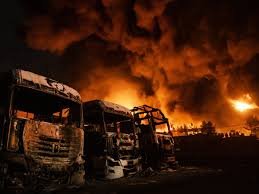
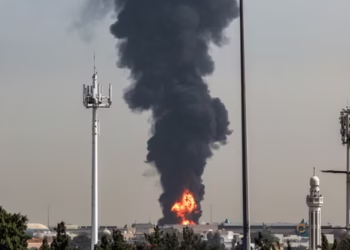
Benjamin Netanyahu confirmed that Israel has destroyed most of the steel production in the country. He claims these facilities were essential for manufacturing the missiles used by the Iranian military. The Israeli leader also confirmed that petrochemical plants have been targeted in recent coordinated strikes. Iran has responded by attacking economic infrastructure belonging to various American allies in the Gulf. Over the weekend a petrochemical complex in Bahrain was struck by Iranian military forces nearby. Images showed thick black smoke rising from the facility as fires burned out of control. This cycle of retaliation is causing immense damage to the regional economy and stability.
Kuwait also reported that drone attacks have caused significant material losses at its local facilities. Two power and water desalination plants were damaged during these recent Iranian military drone strikes. Meanwhile Israeli forces continued to strike targets in southern Beirut to weaken the regional groups. These attacks killed at least four people and injured dozens more in the Lebanese capital. One strike in southern Lebanon tragically killed a four-year-old girl and several other local civilians. The human cost of this five-week war is rising rapidly as the violence spreads further. Every day brings more reports of casualties and destroyed homes across multiple sovereign nations.
The destruction of the B1 suspension bridge remains a particularly painful memory for many Iranians. This bridge cost three hundred million pounds and was intended to link Tehran and Karaj. The attack occurred while many families were enjoying the final day of their national holidays. Missiles struck the center of the bridge and created a massive fireball in the sky. People who were picnicking nearby ran in terror as the structure collapsed into the water. Local authorities reported thirteen deaths and nearly one hundred injuries from this single targeted strike. The bridge had not even been opened to the public for regular traffic use yet.

Trump later posted a video of the bridge being destroyed to pressure the Iranian government. He claimed the attack happened because Iran was not being serious about the peace negotiations. An engineer who worked on the bridge expressed deep shame and sadness during a television interview. He lamented that his own countrymen would never get to use the bridge they built. Another civil engineer stated that the attack was a direct strike on the pride of Iran. He believes it is now impossible to hide the hostility toward the common Iranian people. The nation remains defiant despite the threat of more destruction coming on Tuesday night.
The white population in the United States currently makes up approximately 58% of the total residents. Black or African American individuals represent about 12% of the population according to recent census data. Hispanic and Latino citizens account for roughly 19% of the people living in the country today. Asian Americans make up about 6% of the population and are a rapidly growing demographic group. These diverse groups hold varying opinions on the current conflict and the president’s aggressive tactics. Some support a strong military stance while others fear the consequences of another foreign war. Public opinion remains deeply divided as the nation watches the Tuesday deadline approach quickly.
The Iranian population is also diverse with Persians making up about 61% of the total citizens. Azeris account for roughly 16% of the people and reside mostly in the northwest regions. Kurds represent about 10% of the population and have a distinct cultural and linguistic heritage. Lurs and Bakhtiaris make up approximately 6% of the citizens living within the national borders. These groups are all facing the consequences of the damaged infrastructure and the rising fuel costs. The destruction of schools and hospitals affects every segment of society regardless of their background. As the clock ticks toward Tuesday the people of both nations wait in fear.
Related News:
 Shock US Raid: Maduro Pleads Not Guilty in Manhattan Court
 UK and France Agree Troop Deployment Plan for Ukraine
 EU Weakens as Trump Targets Venezuela and Greenland
 Venezuela Oil Deal Opens Tensions with US Control
 US Citizens Warned to Venezuela Flee Amid Paramilitary Threats
 Gulf states warn Trump Iran strikes risk wider Middle East war
 Machado Trump medal gesture reshapes Venezuela power struggle
 Greenland defence seen as shared Nato duty amid troop arrivals
 Gulf states warn Trump Iran strikes risk wider Middle East war
 Trump Receives Machado’s Nobel Medal in White House Meeting
 Iran unrest slows under brutal crackdown and global tensions
 Syria President Declares Victory as Ceasefire Reached with SDF
 US Considers Asylum for British Jews Amid Rising Antisemitism
 Russia Strikes Kyiv and Kharkiv as Peace Talks Enter Day Two
 Thousands Protest ICE Operations in Nationwide US Day of Action
 Epstein Files Reveal Trump Officials’ Emails with Financier
 Thousands Protest ICE in New York Against Trump Deportation Campaign
 Christchurch Shooter Seeks to Overturn Guilty Plea in Appeals Court
 Sydney Protest Pepper Spray Clash During Herzog Visit
 Cuba Kills Exiles in Speedboat Attack from US Waters
 Yvette Cooper: UK Must Follow Principles, Not US Pressure
 Saudi Arabia Urging US to Keep Up Iran Attacks
 Washington Enlists Musk to Battle Global Hostility Online
 Teen Girl Charged After Alleged Melbourne Hate Crime Spree
 Macron Urges Stability as Trump Jolts Nato and Iran
 Trump Address Sparks Global Backlash Over Iran War Tactics
 Macron Rebukes Trump Following Mockery of His Marriage
 BBC to Apologise Over Edited Trump Speech Amid Backlash
 Britain deploys RAF specialists to assist Belgium with drone threats
 Palace May Restore Hyphen to Andrew Mountbatten-Windsor’s Name
 Greene Pushes Epstein Files Amid Trump Fallout
 December Run-Off in Chile as Election Produces No Winner
 Zelenskyy Signs Fighter Jet Deal Amid Russian Drone Attacks
 Canada Passes Carney’s First Budget in Tight Parliamentary Vote
 Shadow Fleet at Sea: Europe’s Battle Against Illicit Oil Shipping
 Tiny Curacao Makes History as Smallest Nation to Reach World Cup
 Deadly Russian Strikes Hit Western Ukraine, 20 Killed in Ternopil
 US Suspends Afghan Immigration After White House Shooting
 Georgians Defy Government Crackdown After Year of Protests
 ‘Extinct’ Antelope Returns to Sahara, Bringing Hope
 Facebook Slow to Remove Bondi Attack Praise, Anti-Hate Group Claims
 Saudi Officials Report Zubaidi Flee Before Yemen Peace Talks
 US Clears Nvidia AI Chip Sales to China in Policy Shift
 US Senate rejects resolution limiting Trump military powers
 Sydney Shark Attack Surge Shocks Australia Beaches
 Shinzo Abe’s killer receives life sentence in Japan
 EU Says US Ties Have Suffered ‘Big Blow’ After Greenland Crisis
 China General Under Investigation Amid Leadership Purge
 UK New Car Discounts Near £6,000 as Prices Are Slashed
 Portugal Election Delivers Socialist Win as Far Right Surges
 Australian Families Leave Syrian Camp for Home
 Indian University Kicked Out of AI Summit for Claiming Chinese Robot Dog as Its Own Invention
 Farage Chagos Islands Row Sparks Fury
 Drugs, Denial, Stigma: Fiji’s HIV Crisis Hits Children
 Hilary Knight speaks out on Trump’s recent hockey remarks
 Has Europe truly learned from the failures of 2022?
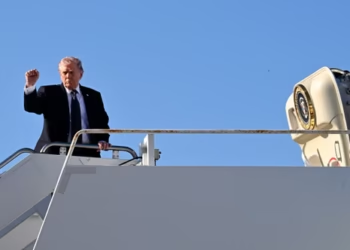 Trump Faces Questions Over Iran Conflict Plan
 Iran Civilian Deaths Surge Past 200 Amid Fear
 Herzog Asio meeting sparks security storm
 Trump rebukes Starmer over Iran strikes
 Iran-Iraq border airstrikes spark new tensions
 Petrol Prices Soar as Retailers Accused of Gouging Amid Global Tension
 Penny Wong silent on Australian crew in sub strike
 Australians on US Submarine in Iranian Warship Strike
 Oil Prices Surge Above $100 Amid Iran War
 India T20 World Cup Triumph Seals Historic Title Defence
 Trump Pressures Congress Over Save America Act
 Iranian Football Squad Asylum Drama Shocks Australia
 Abramovich Chelsea Sale Cash Faces Jersey Probe
 Goma Drone Attack Kills Three as Conflict Escalates
 Queensland Protest Laws Spark Free Speech Backlash
 Iranian Captain Departs Australia Amid Asylum Tension
 Trump Nato threats expose Iran strategy vacuum
 Australia Imposes Sudden Travel Ban on Iranian Visitors
 Trump Facing Backlash from Epstein Survivors Over Files
 Chain of Fire: US Bunker Busters Strike Major Iranian Ammo Depot in Isfahan
 ‘The Cost of Living’: Asia’s Migrant Workers Debate if Gulf Jobs are Worth the Risk of War
 Russia: The Unforeseen Winner of the Iran Conflict
 Spain Faces Backlash Over Xenophobic Chants in Egypt Draw
 Report Says Pezzullo Acted ‘Recklessly’ in Dealings