Published: April 7, 2026. The English Chronicle Desk.
The English Chronicle Online — Investigating the shifting social currents of the digital age.
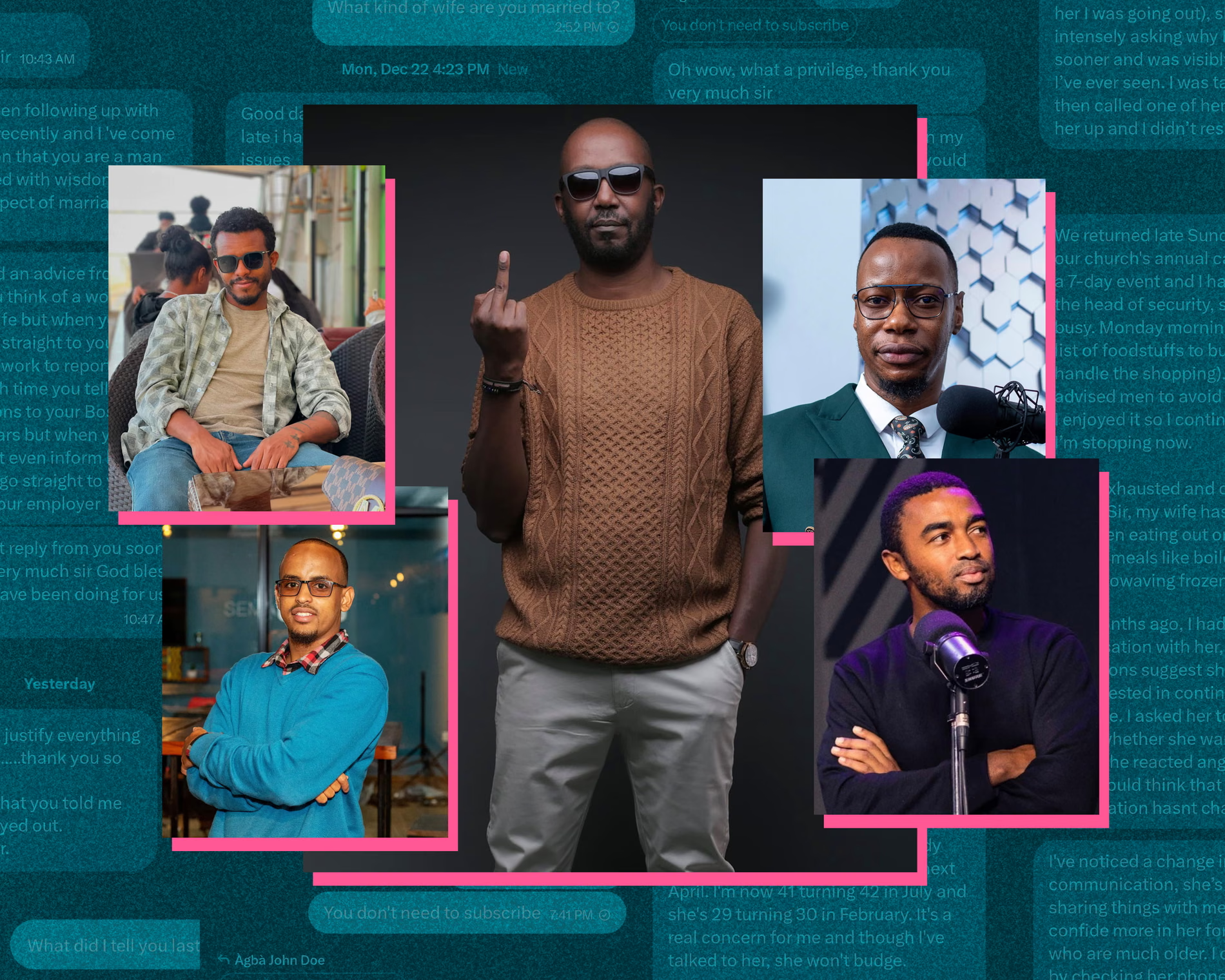
NAIROBI/LAGOS — Beneath the vibrant surface of Africa’s digital transformation, a darker subculture is gaining exponential momentum. Experts are sounding the alarm over the rise of the “manosphere”—a loosely connected network of influencers, podcasts, and social media groups that promote a hyper-masculine, often deeply misogynistic worldview. What began as a “self-help” movement for men navigating a changing economic landscape has, in 2026, mutated into a powerful ideological force that uses terms like “sluts,” “simps,” and “high-value men” to reassert patriarchal control over a new generation.

In countries like Kenya and Nigeria, where over 70% of the population is under 30, these narratives are finding fertile ground. Influencers like the Kenyan “reproductive health specialist” Amerix (Eric Amunga) have built massive following—boasting over 2.3 million followers on X alone—by blending genuine fitness and wellness advice with vitriolic attacks on “feminist influence.” His #MasculinitySaturday hashtag has become a weekly ritual for young men, often advising them to “disengage” from pregnant wives or labeling unmarried women over 30 as “red flags.”
The African manosphere has developed its own distinct dialect, often borrowing from Western “incel” (involuntary celibate) culture but flavoring it with local traditionalist rhetoric.
-
“Simps”: Men perceived as too submissive or respectful toward women.
-
“High-Value Men”: Wealthy, dominant figures who view relationships as transactional.
-
Body Shaming: A central pillar of the movement, where “fat” or “unrefined” women are publicly ridiculed as a means of enforcing social hierarchies.
According to research by Equimundo and UN Women released this March, the real-world impact of this digital rhetoric is quantifiable. Men exposed to “manosphere” content in South Africa were found to be 2.6 times more likely to perpetrate physical violence and 1.8 times more likely to hold views that justify gender-based violence (GBV). For many young men struggling with high unemployment and a sense of “emasculation” in the modern economy, these influencers offer a “cheat code” to power—even if that power is built on the systematic degradation of women.
The rise of the manosphere is part of a broader surge in Tech-Facilitated Gender-Based Violence (TFGBV) across the continent. In Ethiopia, the Centre for Information Resilience (CIR) recently reported that gendered abuse has become so “normalized” that many female activists and journalists have been forced to flee the country or self-censor. While men are typically attacked for their ideas, women in the African digital space are targeted with sexualized abuse, doxing, and deepfake pornography—tactics designed to “elbow them out” of public life entirely.
“The manosphere isn’t just about mean tweets,” says Sarah Johnson, a digital rights activist in Kampala. “It’s a gateway to physical violence. It creates an atmosphere where hitting or threatening a partner is no longer seen as abuse, but as ‘reclaiming leadership.'”
As of April 2026, African governments and tech platforms are under increasing pressure to act. While South Africa’s Film and Publication Board Amendment Act has set new benchmarks for timely content removal, fewer than 40% of African countries have laws specifically protecting women from cyber-harassment. Experts argue that without “safety by design” and a regional framework to hold platforms like X, TikTok, and Meta accountable, the manosphere will continue to profit from the polarization of African society.

For the educators and parents watching this trend unfold in real-time, the challenge is one of critical thinking. “We need to offer boys a version of masculinity that is empathetic and respectful before the algorithm gives them a version that is hateful,” says Ben Vasiliou, a youth advocate. As Africa’s digital future accelerates, the battle for the hearts and minds of its youth is no longer being fought in the classroom—it’s being fought in the palm of their hands.
Related News:
 The Two-Wheeled Renaissance: How Paris Swapped Cars for Bikes and Reclaimed its Soul
 ‘I Know Him in My Bones’: Melissa Gilbert Denies Being ‘Naive’ in Defense of Timothy Busfield
 South Africa’s Garden Route Gem Faces Looming Water Crisis
 Hindu Man’s Stand Sparks Hope in India
 Kenyans Drop Flowers for Valentine’s Bouquets of Cash — Not Everyone Is Impressed
 Five Young People Die in Spain Apartment Block Fire
 Lunar New Year 2026: Celebrations Around the World
 ‘Staggeringly Stupid’ Man Jailed After Tattooing Children
 Snow and Rain Warnings as Cold Snap Continues in the UK
 Suspect in Rhode Island Ice Hockey Shooting Killed Ex‑Wife and Son
 Revealed: The Billions Given to Charity by Ordinary Indians Every Year
 Inland Australia Town Turns Streets into a Beach for Volleyball Contest
 Epstein Eyed Record Label Investment to Access Women, Files Suggest
 Break from Wintry Weather as UK Temperatures to Climb to 14 °C
 Australian Presenter Apologises for Drinking Before Slurred Olympics Report
 What’s Next for Andrew Mountbatten-Windsor’s Ex-Wife, Sarah Ferguson?
 Austrian Climber Found Guilty After Girlfriend Froze to Death on Mountain
 Gold Fever Hits South Africa After Lucky Find in Cattle Pen
 ‘We Pray for Peace’: Indian Filmmaker From Troubled State Who Won a BAFTA
 Exciting’ or ‘Frustrating’? East Coast Reacts to Record Snow
 Chad Shuts Border With Sudan in Bid to Stop Conflict Spreading
 Inside Kyiv’s resolve as conflict nears five‑year mark
 What to Watch for During Trump’s State of the Union Address
 Instagram Investigating AI Profiles ‘Fetishising’ Disabled People
 ‘I Stopped Engaging’ Due to Instagram and YouTube, Woman Tells Landmark Trial
 ‘I Want to Find the Man Who Saved Us from Drowning’
 Kidnapping of Foreigners Soars in Africa’s Lawless Sahel Region
 At Least 169 Killed in South Sudan ‘Surprise’ Attack
 Amazon Says Drones Damaged Three Facilities in UAE and Bahrain
 South African TV Personality Who Planned to Take His Life Dies Aged 61
 Muslim Group Wants Mosques to Be Used as Polling Stations Ahead of UK Elections
 Travellers’ Mobile Home Burnt Down Overnight in Suspected Arson Attack
 Passengers on Dubai‑Dublin Flight ‘Never So Happy to Be Home’
 Why Aren’t Our Dirtiest Roads Getting Cleaned?
 ‘Every Day Feels Like a Month’: Iranians Describe Life Under ‘Constant’ US‑Israeli Strikes
 The Rewilding Cash Grab Driving Farmers Off the Land
 Manchester Students Mourn Ayatollah Amid Protest
 ‘Holiday From Hell’ Leaves UK Couple Stranded in Thailand
 Baba Vanga’s Chilling World War 3 Prediction and Russia’s New Leader
 Tears and Cheers as Controversial Long‑Running Australian Breakfast Radio Show Implodes
 My One-Hour Flight Transfer Left Me Facing 10 Days Stuck in a City Under Attack
 Cocoa Farmers Suffer as Chocolate Market Collapses
 Iranian Players Get Australian Visas After Anthem Protest
 Bodies of Two Chinese Backpackers Found in Floodwaters
 What to Stockpile at Home Amid Iran War Fears
 Wealthy Parents Play Dead After Son Hires Hitman to Kill Them
 Ecuador Deploys 75,000 Forces in Anti-Gang Drive
 Teen Admits Filming Westfield Chair Prank
 Missing Cuba-Bound Aid Ships Spark Urgent Search
 PM Seeks to Reassure Australians Over Fuel Supply
 Horror in the Outback as Crocodile Kills World-Renowned Doctor
 How and When to See April’s Full Pink Moon
 I’ve Lived in a French Village for 35 Years. This is Why They are So Special.
 Michel Rolland: The ‘Spielberg of Wine’ Who Directed the Global Palate
 Status Quo Restored: Netanyahu Intervenes After Police Block Latin Patriarch from Holy Sepulchre
 A Slimmer Sunday: Beatrice and Eugenie to Skip Royal Easter Service Amid Family Health Focus
 ‘Please Keep Her in Your Prayers’: Dad Describes Final Moments Before 7-Year-Old Was Swept to Sea
 ‘Something Wasn’t Right’: UK Families Devastated by Sperm Mix-Up at Northern Cyprus IVF Clinics
 From Fallout to Five-Star: Cold War Nuclear Bunker Gains Holiday Let Permission
 ‘Democracy Manifest’: Iconic ‘Succulent Chinese Meal’ Rant Added to National Film Archive
 A Hero’s Shadow: Activists and Lawmakers Rethink Cesar Chavez Day Following Abuse Claims
 ‘The Final Word’: Kathleen Stock’s Polemic Against Assisted Dying Reshapes the UK Debate
 ‘Silent Neighbors’: China Bans Residential ‘Bone-Ash’ Apartments Amid Qingming Crackdown
 ‘The Cost of Living’: Asia’s Migrant Workers Debate if Gulf Jobs are Worth the Risk of War
 ‘You’re No Longer My Sister’: The Invisible Frontline Dividing Iranian Families
 India Begins Mammoth Census for 1.4 Billion People
 “Homo Sapiens are All of Us”: Artemis II Crew Sends Emotional Message of Unity from Deep Space
 Peretz Targets FA Cup Upset Amid War Concerns
 Apple at 50: Three Products That Changed How We Live
 Pope Leo Urges Peace in First Easter Mass Address
 Silver Linings: Why Global Tourism is Finding “Positives” Amidst Iran War Uncertainty
 ‘I Will Not Abandon Him’: Pauline Hanson Stands by Ben Roberts-Smith After War Crime Charges
 The Spiky Standoff: German Mayors Call for Night-Time ‘Robot Ban’ to Save Hedgehogs
 Weather Tracker: Record March Heat Leaves Western Snowpack at ‘Abysmal’ Lows
 The Great Saddle-Up: Sydney Commuters Ditch the ‘Crazy’ Bowsers for the Bike Lane
 ‘We Will Always Choose Each Other’: Five Defining Moments of Artemis II’s Lunar Flyby
 ‘The Nanny of Bondi’: Accused Pinochet Agent Adriana Rivas to be Extradited to Chile
 ‘The Soul of Spain’: Politicians Clash Over Renewed Push to Move Picasso’s Guernica
 ‘It Was an Accident’: Rohan Dennis Breaks Silence to Attack ‘False Narrative’ Over Wife’s Death
 The ‘Svuota Londra’ Effect: Why the Super-Rich are Swapping Dubai for Milan