Published: April 7, 2026. The English Chronicle Desk.
The English Chronicle Online — Tracking the shifting tectonic plates of the British Union.
LONDON / EDINBURGH / CARDIFF / BELFAST — As the United Kingdom hurtles toward a massive slate of elections on May 7, 2026, the four nations are standing on the precipice of what Scottish First Minister John Swinney has called an “absolutely seismic moment.” For the first time in history, there is a very real prospect that the largest parties in Scotland, Wales, and Northern Ireland will all be led by First Ministers committed to the eventual dissolution of the Union. This “nationalist trifecta” is no longer a fringe theory but a central polling projection that is sending shockwaves through Westminster.

From the Senedd’s expansion to Holyrood’s independence strategy, the 2026 contests represent a fundamental challenge to the traditional two-party dominance of Labour and the Conservatives. While London focuses on local council “churn,” the Celtic nations are preparing for a constitutional recalibration that could make the current “hodgepodge of inertia” in intergovernmental relations finally collapse.
The current political landscape suggests a coordinated surge of nationalist sentiment, though driven by different regional pressures:
-
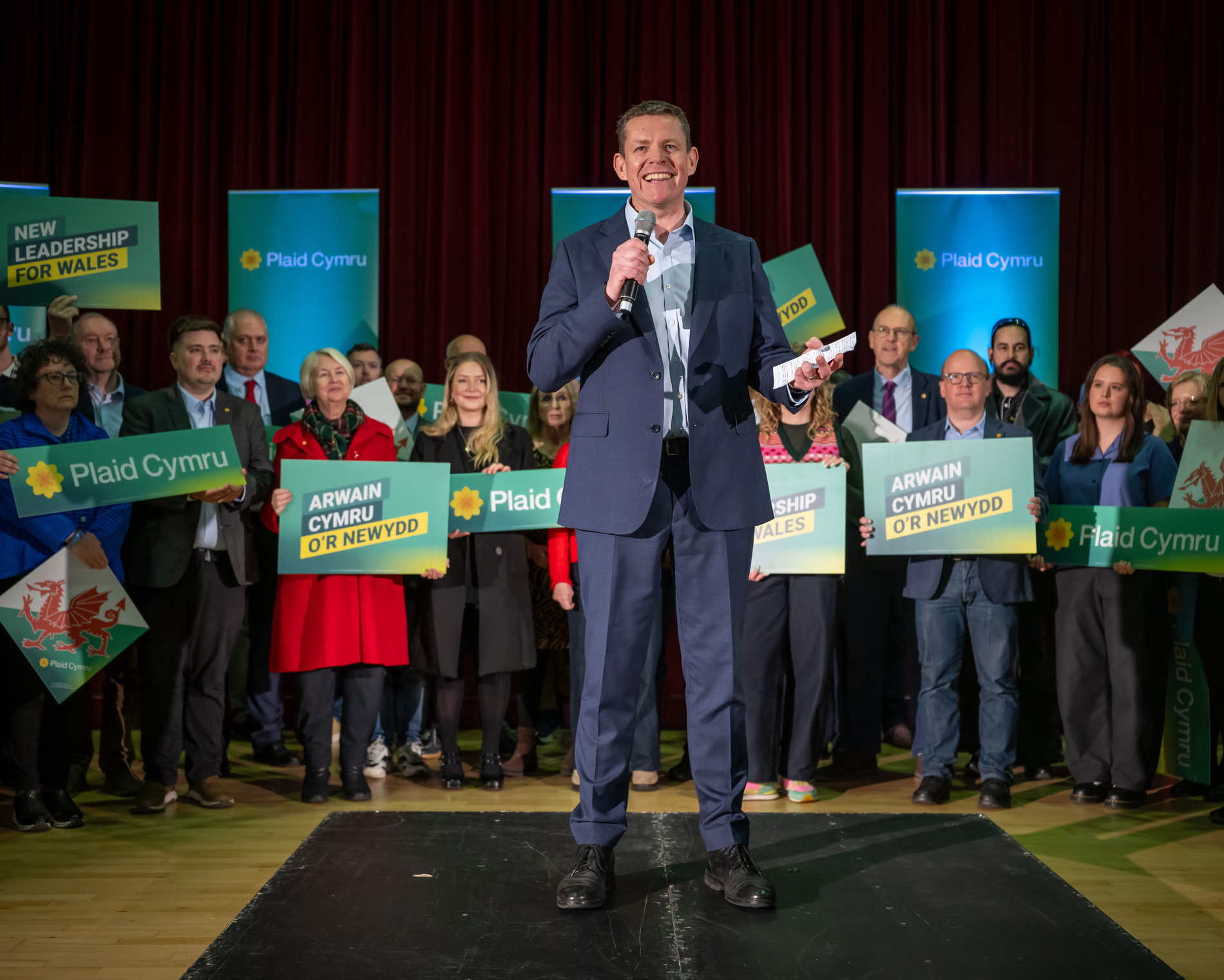
Wales (The Senedd): The most volatile contest of the season. Following the reform to a closed-list proportional system and the expansion from 60 to 96 members, Plaid Cymru is polling as the largest party. Combined with a projected surge for the Welsh Greens, Wales could see its first-ever “pro-independence majority” in the Senedd.
-
Scotland (Holyrood): Despite a setback in the 2024 General Election, the SNP is currently leading the polls for a fifth consecutive term. John Swinney has staked the party’s future on a new “uncontested mandate” strategy, claiming a majority in May would be an undeniable trigger for a second independence referendum.
-
Northern Ireland: Sinn Féin remains the dominant force, holding the status of largest party in the Assembly, local government, and (symbolically) at Westminster. The results in the other nations are expected to further embolden calls for a “border poll” on Irish reunification in the 2030s.
While nationalist leaders frame these wins as a mandate for independence, analysts suggest a more complex “Life & Society” reality. In many areas, the surge for Plaid Cymru and the SNP is being fueled by a “protest vote” against a struggling Westminster establishment. The collapse of Labour’s previously buoyant support in Scotland—falling to 15% in some polls behind both the SNP and Reform UK—indicates that “bread and butter” issues like the cost of living and NHS waiting lists are being channeled through nationalist identity.
” Westminster’s time is up,” John Swinney told delegates at the SNP campaign conference. “There could be no clearer sign to the world that the building blocks of an independent country are being laid.”
The UK government’s response has remained largely dismissive, with Chancellor Rachel Reeves recently reiterating that there will be “no independence referendum” regardless of the Holyrood result. However, constitutional experts warn that “saying no” is no longer a sustainable strategy. The Institute for Government has highlighted that the current funding system—based entirely on English spending priorities—is reaching a breaking point.
The 2026 elections are likely to force a “bold rethink” of how the UK functions as a state. If the nationalists win big, the demand for parity of powers (giving Wales the same justice and policing control as Scotland) and a complete overhaul of the Treasury’s borrowing rules will be impossible to ignore.

Adding a “bum note” to the traditional nationalist-unionist divide is the rise of Reform UK, which is polling strongly in both Wales and Scotland. Their presence as a “third force” is fragmenting the unionist vote, ironically making it easier for nationalist parties to emerge as the largest groups in proportional systems. As the May 7th deadline approaches, the question is no longer just who wins the most seats, but whether the “United” Kingdom can survive a year where three-quarters of its constituent countries have signaled they are ready to leave.
Related News:
 Ministers Accused of Defamation Over Palestine Action Ban and Mass Arrests
 Charlie Kirk Killing Used to Mobilise UK’s Largest Far-Right Rally in Decades
 Jailed Georgian Opposition Leaders Warn UK of Iranian Links to Ruling Party
 Shabana Mahmood Warns Border Failings Are Eroding Trust in States
 Johnson Approved China’s London ‘Super-Embassy’ in 2018
 UK and EU Signal Fresh Push for Defence Cooperation Talks
 Emails Show Epstein Funded Mandelson’s Husband After Jail
 Police Assessing Stansted Airport Private Flights Over Epstein Ties
 Last‑ditch Call to Save Police Front Counters in London
 How Much Could Andrew’s Arrest Hurt the Royal Family?
 Inside Kyiv’s resolve as conflict nears five‑year mark
 US Partially Evacuates Beirut Embassy Amid Rising Iran Tensions
 Muslim Group Wants Mosques to Be Used as Polling Stations Ahead of UK Elections
 Manchester Students Mourn Ayatollah Amid Protest
 UK Must Obey International Law Over Iran, Says Thornberry
 Ecuador Deploys 75,000 Forces in Anti-Gang Drive
 Met Police Resume Arrests for Palestine Action Supporters
 Holyrood Campaign ‘In Meltdown’ as Fifth Reform UK Candidate Quits
 US Lawmaker Demands Testimony Over Sarah Ferguson’s ‘Close Epstein Ties’
 The Last of the Lords: Two Hereditary Peers to Retain Ceremonial Roles Amid Historic Ousting
 Global Crisis: Marco Rubio Convenes Emergency G7 Meeting as Iran Conflict Escalates
 ‘My Daughter is Under the Rubble’: The Human Cost of the Tehran Strikes
 ‘An Evil Man is Dead’: Australian Fugitive Dezi Freeman Shot Dead After 216 Days
 ‘Eye in the Sky’ Blinded: Photos Reveal Destroyed US Radar Jet at Saudi Base
 ‘Full and Immediate Access’: Netanyahu Reverses Palm Sunday Ban on Latin Patriarch
 Power Grab: Myanmar Junta Chief Min Aung Hlaing Nominated as President
 ‘I Dread the Phone Ringing’: Inside the Kennels on the Frontline of Britain’s XL Bully Crisis
 Trump Administration Dismisses 17 Immigration Judges, Sparking Debate Over Judicial Independence
 UK Must Act with Courage and Clarity on Israel-Palestine Conflict, Says Foreign Affairs Committee Report
 Radioactive Leak at UK’s Nuclear Warhead Base Sparks Outcry Over Safety and Secrecy
 Mutual Inconvenience: Why Alaska Was Chosen for the Trump-Putin Summit on Ukraine
 Is the UK Ready to Put Boots on the Ground in Ukraine? Assessing Military Capacity and Challenges
 Tanni Grey-Thompson Faces Abuse Over Opposition to Assisted Dying Bill
 Thousands Gather in London to Protest Donald Trump’s Second UK State Visit
 Mahmood Pledges Reform of Modern Slavery Laws After Court Blocks Deportation Appeal
 A Third of EU Citizens in UK Report Discrimination by Public Bodies Post-Brexit
 Digital ID Plans Ignite Debate Over £600m Treasury Tax Boost and Privacy Concerns
 Public Trust in SNP Hits Historic Low Amid NHS Concerns
 Johnson Suggests Mandelson Linked to China Spy Controversy
 Rachel Reeves signals welfare reform ahead of key budget
 French Taxi Driver Cleared in David Lammy Theft Case After Fare Dispute
 Just Stop Oil Protesters Convicted Amid Climate Defence Row
 Trump Urges Herzog to Grant Netanyahu Full Pardon
 Major Rent Reform Ends No-Fault Evictions in England
 Peers Flood Assisted Dying Bill with 942 Amendments
 US Justice Department Files Lawsuit Against California Over Partisan Voting Maps
 Trump Deploys DHS to Charlotte in Major Arrest Operation
 Plans to Limit Jury Trials Face Retreat After Mounting Opposition
 Starmer China visit raises human rights pressure on Beijing
 Starmer Weighs Fast-Tracking Defence Boost
 Motorists Could Face ‘Mandatory’ Driving Ban for Road Offences Under Tougher Laws
 Snow and Rain Warnings as Cold Snap Continues in the UK
 Dual Nationals Face Scramble for UK Passports as New Rules Come Into Force
 Nine Arrested in France Over Death of Far‑Right Student
 Civil Service Pay: Union Urges Ministers to End ‘Barking Mad’ Limits
 Trump and Chagos Deal Rift Over Iran Strikes
 Epstein Eyed Record Label Investment to Access Women, Files Suggest
 Australian PM Says Former Prince Andrew Has Suffered ‘Extraordinary Fall’ but That Won’t Prompt Republic Referendum
 Farage Chagos Islands Row Sparks Fury
 Grave of Murdered Toddler James Bulger Vandalised
 Labour MP’s Partner Arrested on Suspicion of Spying for China
 Police Scotland Pays £8m Compensation to Staff
 Minister Meets Crews Who Will ‘Take Out’ Iranian Drones
 UK–US Tensions Ease as Starmer and Trump Hold First Call Since Iran Row
 Labour Faces Backlash Over Conscription Warning
 Queensland Protest Laws Spark Free Speech Backlash
 Yvette Cooper: UK Must Follow Principles, Not US Pressure
 Missing Cuba-Bound Aid Ships Spark Urgent Search
 Mandelson’s Phone Messages Requested in Files Release
 UK Forces Ready to Seize Russian Shadow Fleet Vessels
 Families Tortured by Authorities During Investigations Inquiry Told
 Watchdog Probes Police Handling of Andrew Tate Abuse Claims
 Woman Deported from China Over Manx Passport Mix-Up
 Israel Enacts Death Penalty Law for Palestinians Following 12-Hour Debate
 Net Closes on Lyons Clan: Partner Arrested in Dubai as Crime Boss Snared in Bali
 ‘The Final Word’: Kathleen Stock’s Polemic Against Assisted Dying Reshapes the UK Debate
 Open Justice Prevails as Court Rejects Bondi Gunman’s Family Anonymity Bid
 Report Says Pezzullo Acted ‘Recklessly’ in Dealings
 Pope Leo Urges Peace in First Easter Mass Address
 ‘The Soul of Spain’: Politicians Clash Over Renewed Push to Move Picasso’s Guernica